
MPI Q&A

Ministry Notebook
All in this together
Looking after New Zealand’s fisheries is an important job that we all need to contribute to.
The guardianship of our fisheries extends from the way that we fish on the water right through to ensuring the minister receives sound advice to help inform his decisions.
Much of the work that MPI does each year in the fisheries management space is not very visible to recreational fishers, and because of this I want to change our approach to ensure the recreational sector is better informed and involved in fisheries management processes. This new approach includes being more transparent about what we are doing, why we are doing it, and when it will happen.
Each year between 70 and 100 fisheries research reports are published, providing new information to support fisheries management decisions, with about $21,000,000 spent annually getting new scientific information on our fisheries.
MPI does not undertake this research itself; rather, we define the key questions to be answered and make sure that the research is done in a cost-effective and robust way. Working groups including MPI, other scientists and stakeholders (these meetings are open to the public), who meet throughout the year to debate methodology and confirm acceptance of results.
A summary of the latest fisheries-science information is published annually in what is known as the Fisheries Assessment Plenary. This process has been going for the last 31 years. The Plenary is an excellent reference (available online) for finding out information including annual-catch settings (Total Allowable Catch and sector allowances), reported catch, and latest science information for a given species or stock. It provides a vast amount of information split over five volumes (three published in May and two in November) - over 2000 pages in total!
The reason the Plenary is published in two instalments is because the annual catch settings apply to a fishing year that either commences October 1 (most finfish stocks and paua) or April 1 (e.g. rock lobster).
Using this scientific information, along with information from recreational, commercial and customary fishers, we review the performance of all our key fisheries against sustainability limits set out in the Fisheries Act. We prioritise the fisheries we review based on the risk of sustainability concern and the opportunity for increased use. Contrary to the opinion of some, we strongly prioritise fisheries where there is a sustainably concern for review.
The review process in the past has involved us developing options in May each year (for October 1 stocks) and then consulting on those options during June/July, before preparing advice for the Minister for Primary Industries, who makes the final decisions. Changes to catch limits are then notified in the Gazette before the start of the new fishing year on October 1.
A longstanding concern for many recreational fishers is that some of the proposals to change sustainability measures appear to come out of nowhere, putting them on the back foot to contribute or have their say. I definitely do not want this to be the case, so think it is very important that we share new information as it comes to hand. However, I also recognise that we manage a vast array of fisheries across the country, with some 638 fish stocks in our Quota Management System, and not everybody has the time to receive and absorb updates on everything. Getting the balance right and confirming which species are of most interest to you are aspects I’m very interested in.
Expectations are that it will be important to provide the opportunity to work together for some key species, right from receiving new information through to developing options. For practical reasons this could be done with a working group, with opportunities for others to have their say - both before and during the formal consultation - in a variety of ways, such as public drop-in sessions and a specific email address to forward ideas and enquiries to. An example of this approach has been illustrated by the Blue Cod Management Group, which has been responsible for recent proposals in the Marlborough Sounds. The snapper strategy group in Auckland is working along similar lines.
For other species, just having a summary of the new information from MPI and an opportunity to put forward ideas before the consultation could be sufficient.
By the time you read this article, we will have largely created a dedicated recreational team within Fisheries Management that focuses solely on recreational fisheries issues. Even with this dedicated team we will need to carefully decide what issues to prioritise for a collaborative approach alongside how best to communicate. I will be looking to get some feedback on what you think are the key recreational species that could be managed under this new approach. I think we know which these are, but it is important that the recreational sector identifies these to help inform this work. I will be announcing how we will progress and communicate this initiative shortly.
Dave Turner
Director
Fisheries Management
Your questions answered
Question: When we read the court reports regarding fisheries wrong doing, or view the likes of Coast Watch, ‘new’ New Zealanders seem to feature prominently. What is the ministry doing to address this issue, and what can the public do personally about it?”
All New Zealanders and visitors are entitled to gather and catch seafood in accordance with the Fisheries Act and Regulations. Kiwis can be proud of the systems we have in place, allowing a diver to gather crayfish from, say, the shores of our capital or catch a snapper from under the Harbour Bridge in Auckland, or perhaps in more remote areas. However, offending is a real and constant threat to our fishery, and MPI appreciates the concerns and assistance of readers.
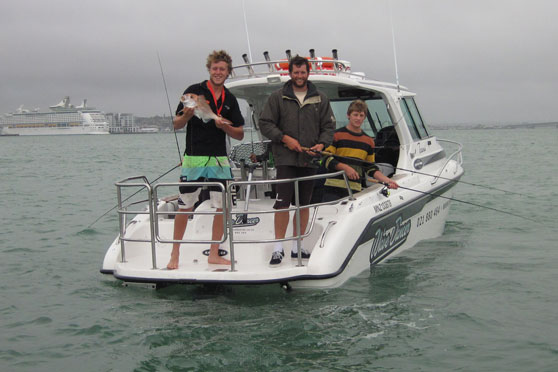 Of course, when it comes to fisheries offending, prevention is always better than cure. Our key approach is to focus on early education and regular monitoring to prevent offending. That means getting the message out to all users of the fishery no matter what their ethnicity.
MPI uses a number of national and local initiatives to educate new arrivals to New Zealand about our rules. Nationally we endeavour to ensure signs are multi-lingual and appropriate to the ethnic background of those observed gathering in the area. We encourage visitors and new residents to download our free NZ Fishing Rules mobile app to assist with species identification and local limits. District managers and their staff often speak at community gatherings and use local radio stations to get our message across. In areas where there is diverse ethnicity, MPI’s compliance staff members have access to brochures in a wide variety of languages, and enables people to take them home and read the local rules in their own time.
We are also open to sensible, affordable ideas on how to get the message across to any fishers, so would love to hear any suggestions readers may have.
Lastly, it is important that members of the public refrain from taking the law into their own hands. If you spot activity you think might be illegal, please draw it to our attention via 0800 4 poacher. The sooner we get information, the sooner we are able to act.


Friday 25 September 2026
Major Bites
 - -
- - Minor Bites
 - -
- - Saturday 26 September 2026
Major Bites
- - Minor Bites
- - 
Fishing Reports Visit Reports
Outer Hauraki Gulf Fishing Report 17/09/26
Spring wind the handbrake. Spring is starting to make its presence felt in the outer... Read More >
Top of the South Fishing Report - 17/09/26
Early snapper in Tasman Bay. Well, spring is finally here, and the days are getting... Read More >
Bream Bay Fishing Report - 17/09/26
Good snapper catches reported. After Tangaroa turned off the fish tap for a month or... Read More >
Bay of Islands Fishing Report - 17/09/26
Pacific bluefin tuna for the lucky few. The last fortnight has seen more fishable days... Read More >
Comments