
IGFA makes record changes

The International Game Fish Association (IGFA) recently announced several changes to its angler recognition programs, including new eligible species for Line Class, Tippet Class and Junior/Smallfry world records; new slam and trophy club programs; standard minimum ratios required for Line Class and Tippet Class world record submissions; and clarifications to its world record requirements.
Approved at the annual IGFA Board of Trustees meeting last January, these new world record categories, angler recognition programs and world record requirements took effect on May 1, 2019.
“For 80 years the IGFA has recognised outstanding angling achievements and set the standard for angling rules and world record catches,” said IGFA President Nehl Horton.
“With the addition of these exciting new record categories and angler recognition programs, and the clarification of our world record requirements, we will continue to make participation in the IGFA’s angler recognition programs more accessible and understandable to anglers around the world.”
Minimum ratio requirement
The minimum ratio for world record catches will be set at half to one for all Line and Tippet Classes. Under this requirement, the weight of the fish must be at least half as much as the Line or Tippet Class that it qualifies for based on pounds. For example, a fish entered for a 15 kg (30 lb) Line Class record must now weigh a minimum of 6.8 kg (15 lb).
This change eliminates the 1:1 minimum ratio previously required for Line Classes greater than 10 kg (20 lb).
World record requirements
IGFA has also made changes to the IGFA’s world record requirements to ensure that they are consistent with the internal record review process and to reduce its risk and potential liability in relation to third party promotions involving world record catches.
Importantly, these changes include the elimination of the requirement that to qualify for an All-Tackle world record, “the fish must be a species commonly fished for with rod and reel in the general area where the catch was made.”
“Eliminating the requirement that a species is ‘commonly fished for’ makes it clear that the IGFA welcomes world record applications from anglers who are passionate about catching lesser known or exotic species,” said Horton.
IGFA has also amended item 3 of its Record Catch Regulations to clarify that, “The IGFA will not recognize or approve any IGFA World Record application where a financial award is offered for obtaining the record.”
“The IGFA has faced legal challenges in the past few years involving disputes that arose from third parties running marketing promotions that offer prizes, awards or bounties for setting IGFA World Records,” Horton said.
“This clarification will eliminate this unnecessary legal risk and free IGFA World Records from undue financial influence.”
Collectively, the expansion of the IGFA World Record and Slam and Trophy Club programs will provide more opportunities for anglers to be recognized by the IGFA, and the changes to the IGFA World Record Requirements will simplify the process of submitting an IGFA World Record.
New bigeye and yellowfin tuna trophy clubs
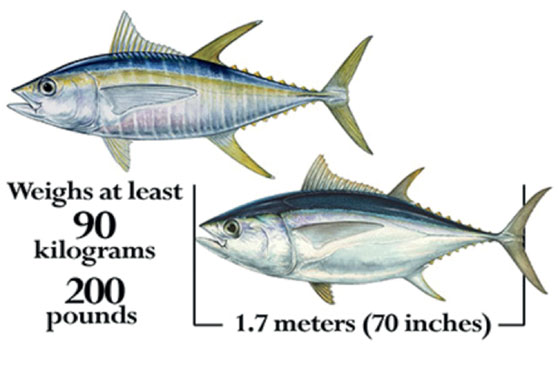
IGFA will add two new opportunities to its prestigious Trophy Club program. Any angler who catches a bigeye tuna (Atlantic or Pacific) or a yellowfin tuna fishing in accordance with IGFA International Angling Rules that weighs at least 90 kg (200 lb) or has a fork length of at least 1.7 m (70 in) will qualify for one of these new trophy clubs.
Bonefish species recognized
IGFA will begin maintaining separate Atlantic and Pacific record categories for bonefish (Albula sp.) in the same way that it does for snook (Centropomus sp.). With at least 11 different species of bonefish found worldwide, this will provide more opportunities for anglers to pursue world record catches of this iconic game fish. Current bonefish records will be reassigned based on where they were caught to reflect these new categories.


Friday 25 September 2026
Major Bites
 - -
- - Minor Bites
 - -
- - Saturday 26 September 2026
Major Bites
- - Minor Bites
- - 
Fishing Reports Visit Reports
Outer Hauraki Gulf Fishing Report 17/09/26
Spring wind the handbrake. Spring is starting to make its presence felt in the outer... Read More >
Top of the South Fishing Report - 17/09/26
Early snapper in Tasman Bay. Well, spring is finally here, and the days are getting... Read More >
Bream Bay Fishing Report - 17/09/26
Good snapper catches reported. After Tangaroa turned off the fish tap for a month or... Read More >
Bay of Islands Fishing Report - 17/09/26
Pacific bluefin tuna for the lucky few. The last fortnight has seen more fishable days... Read More >
Comments