
Getting Ready for Whitebaiting Season

Many whitebaiters are prepping their gear and themselves, getting ready for the 2024 whitebait season. Whitebaiting is a chance to get away from it all, relax in nature, and catch enough for a fritter or two. Being prepared for when the season opens on September 1 will help make this experience even more enjoyable. There are three steps to a better whitebait season:
1. Understanding the rules around whitebaiting.
2. Knowing ways of keeping safe near and in water.
3. Helping protect the environment by preventing pests invading freshwater habitats.
Whitebaiting by the rules
Changes to the Whitebait Fishing Regulations were phased in from 2021-23. These new regulations were designed to support a sustainable, more equitable whitebait fishery and included changing the season length, gear sizes and placement.
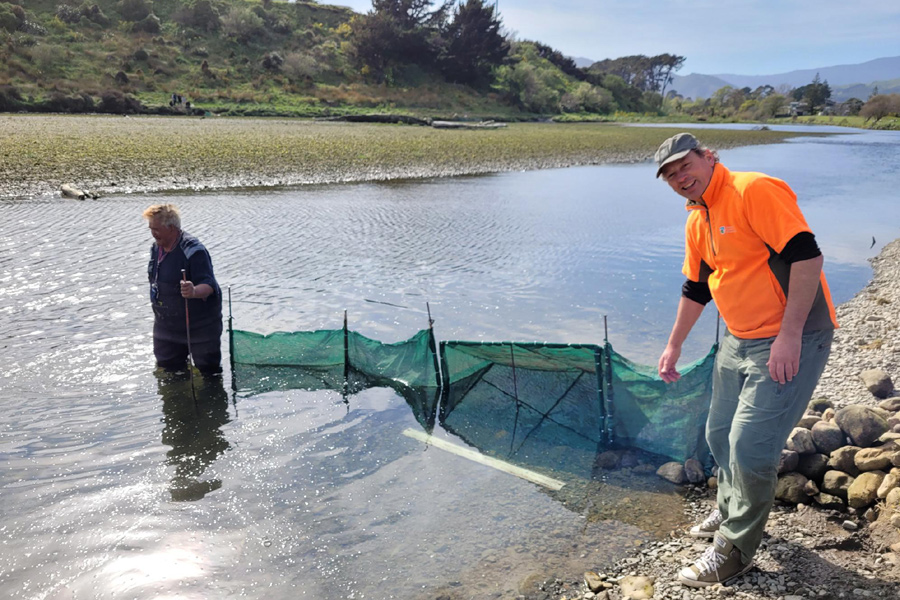 Beautiful day on the Waikanae River during the 2023 whitebait season. Photo: Tony Milner, DOC.
The Department of Conservation is responsible for managing the whitebait fishery, so watch out for DOC rangers on the riverbank between 1 September to 30 October. More information is available on the DOC website. Need to know more? Email [email protected].
Keeping safe
Whitebaiting is a great way to enjoy New Zealand’s environment. However, fishing can be dangerous. Between 2019-2023 four people drowned while whitebaiting. These preventable deaths occurred in the South and North Islands; none were wearing lifejackets.
You can avoid becoming a drowning statistic by following the Water Safety Code’s four simple rules:
1. Being prepared (e.g., knowing the weather and water conditions before setting off).
2. Watching out for yourself and others.
3. Being aware of the dangers (e.g., understanding the area you are fishing in).
4. Knowing your limits (e.g., learning safe ways of rescuing others without putting yourself in danger).
You can also keep yourself safer by following these whitebaiting-specific safety tips.
• Don’t fish from wet rocks – it means waves are likely washing over them.
• Wear a life jacket and wader belt.
• Have two waterproof communication devices on you at all times, such as a mobile phone in a waterproof bag and a VHF radio or a distress beacon.
• Never go on your own, fish with a mate who knows the area, and share your plans and expected time of return with a trusted person. Ask them to look for you at your expected location and call 111 if you don’t return.
Protecting the environment
New Zealand’s lakes, rivers, streams, and wetlands are under threat from invasive freshwater pests such as gold clam and lindavia (lake snow) in the North Island, and didymo (rock snot) in the South Island. Moving gear and boats between waterways can spread freshwater pests. These pests can clog nets, and industrial and domestic water supply filters, and choke waterways, including whitebait habitats. You can help protect the whitebait fishery by preventing the spread of these pests. Whenever moving between waterways, check, clean, and dry your gear including boats that come into contact with water. If you don't want to or cannot treat your gear, make sure you only use it in one waterway.
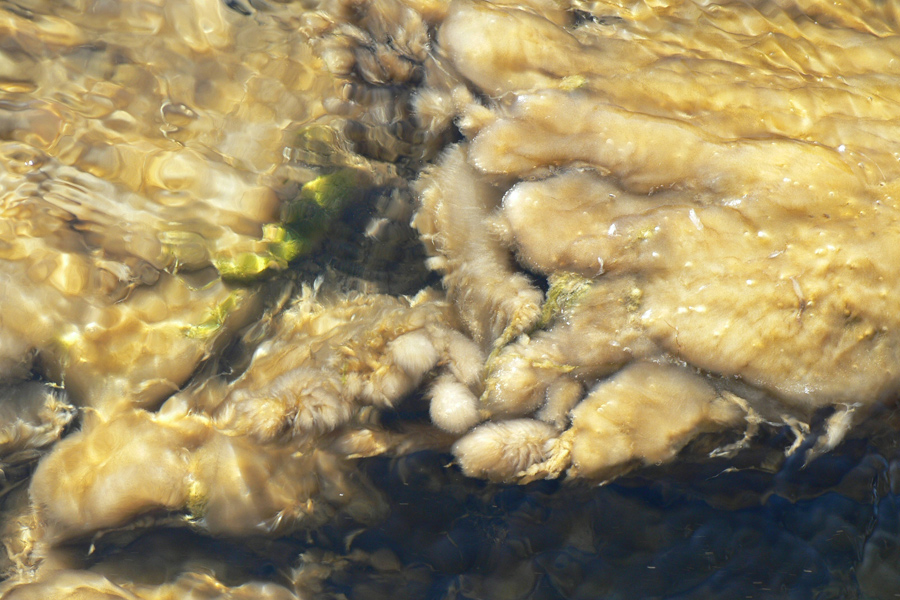 Moving gear and boats between waterways can spread freshwater pests like didymo (rock snot). Photo by Sjaan Bowie, DOC
So, to get the most out of the whitebait season, stick to the rules, keep yourself safe near the water, and look after the freshwater environment.
What are whitebait and what’s special about them?
Whitebait are the young (juveniles) of six freshwater fish species only found in New Zealand – īnanga, kōaro, smelt, and shortjaw, banded, and giant kokopu. Whitebait adults live in freshwater and lay their eggs on riverbanks. Larvae emerge from the eggs and float out to sea, then return swimming upstream about six months later as whitebait. The juvenile whitebait that aren’t caught will swim further upstream, growing into adults and starting their life cycle all over again.
How can you protect whitebait?
• Follow the whitebait fishing regulations.
• Do not fish from an unlicensed structure.
• Fish only in a straight line from a licensed structure (stand).
• Do not set any screen beyond the outer edges of the stand.
• Do not place a screen beyond the whitebait net.
• Only use a screen from the water’s edge at the site being fished.
• Only use one net (scoop or set) at a time from any stand.
• Six metres is the maximum overall length limit for all whitebaiting gear (screens and nets) used from a stand (e.g., 5 metres of screens and 1 metre of net).
• Keep your whitebait catch small and only take what you need.
• Prevent invasive pests spreading by checking, cleaning, and drying your gear.
• Get involved in local community spawning area fencing and adult habitat planting projects.
- Department of Conservation


Sunday 27 September 2026
Major Bites
 -
- Minor Bites
 -
-  -
- Monday 28 September 2026
Major Bites
- - Minor Bites
- - 
Fishing Reports Visit Reports
Outer Hauraki Gulf Fishing Report 17/09/26
Spring wind the handbrake. Spring is starting to make its presence felt in the outer... Read More >
Top of the South Fishing Report - 17/09/26
Early snapper in Tasman Bay. Well, spring is finally here, and the days are getting... Read More >
Bream Bay Fishing Report - 17/09/26
Good snapper catches reported. After Tangaroa turned off the fish tap for a month or... Read More >
Bay of Islands Fishing Report - 17/09/26
Pacific bluefin tuna for the lucky few. The last fortnight has seen more fishable days... Read More >
Comments