
Ford Ranger Hybrid Review

The highly anticipated plug-in hybrid electric version of the best-selling Ford Ranger is now available, and we got our mitts on the flagship Hybrid Stormtrak model for a towing trip to the Coromandel Peninsula.
The backstory
A plug-in hybrid electric vehicle (hybrid) is a type of vehicle that combines a traditional petrol or diesel engine with an electric motor and a rechargeable battery. A hybrid can be plugged in to charge its battery, allowing it to drive a certain distance on electric power alone before calling on the internal combustion engine.
This dual setup offers the best of both worlds: zero-emissions driving for short trips; and the extended range and quick refuelling of a conventional vehicle for longer journeys. And importantly in this case, Ford attests that the Ranger Hybrid doesn’t compromise on 4x4 and towing abilities. That was the specific challenge given to Ford engineers: design a Ranger Hybrid that maintains or improves the performance and capabilities that have made the Ranger the number one vehicle in so many markets, including New Zealand, but also has the benefits of electrification – significantly lower emissions, better fuel economy, and external equipment powering.
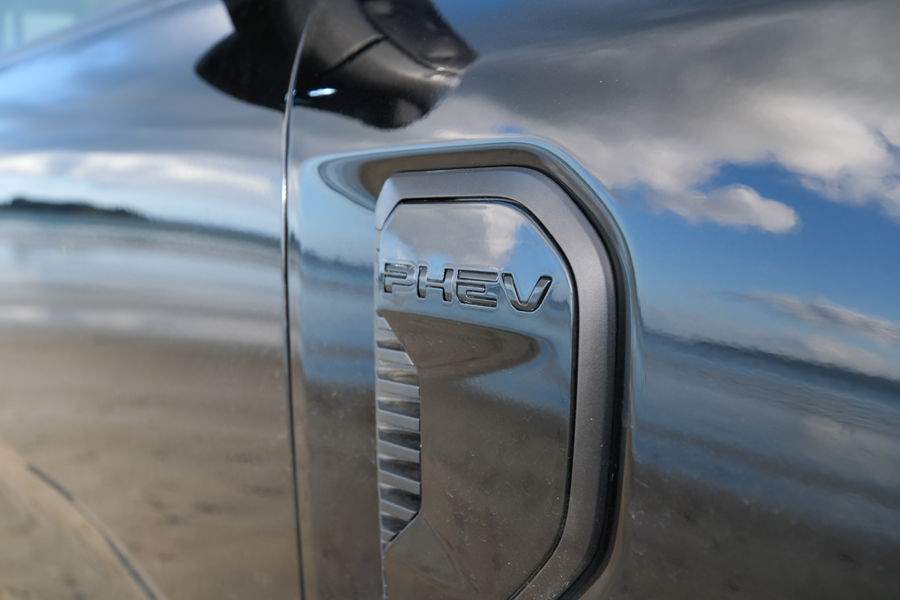 Remember not to put diesel in this one – electricity or petrol is the ticket!
The Ranger Hybrid is available in three models, all sharing the same powertrain, which combines a 138kW/411Nm 2.3-litre turbo-petrol and a 75kW/300Nm electric motor. The XLT ($82,990) and Wildtrak ($89,990) Hybrids are comparable in appearance to their well-regarded turbo-diesel namesakes. In addition, there’s the new Hybrid-only flagship model we tested called the Stormtrak ($94,990).
The technology
The Ford Ranger Hybrid’s 2.3-litre petrol engine is matched to a 75kW electric motor that’s integrated into the 10-speed transmission and served by an 11.8kWh battery. Ford quotes a 49km EV‑only range from this platform. Combined output sits at 207kW and 697Nm, exceeding even the Wildtrak 3.0-litre V6 and Raptor’s on-paper torque figures. The Hybrid also has the 4A automatic-AWD mode (suitable for on-road driving) that’s usually reserved for the V6 and limited-edition bi-turbos like the Tremor.
The Ranger Hybrid can run in four different drive modes: Auto EV (a balance of the two power sources); EV Now (all-electric power, battery charge permitting); EV Later (maintains charge to save the battery for later); and EV Charge (the engine puts more effort into charging the battery).
Much to the delight of keen anglers, the Ranger Hybrid retains the 3,500kg tow rating and hefty payloads (973kg for the XLT; 885kg for the Wildtrak; and 808kg for the Stormtrak). And despite the battery calling for a unique tray design, there’s also no compromise in tray dimensions compared to the regular dual-cab Ranger.
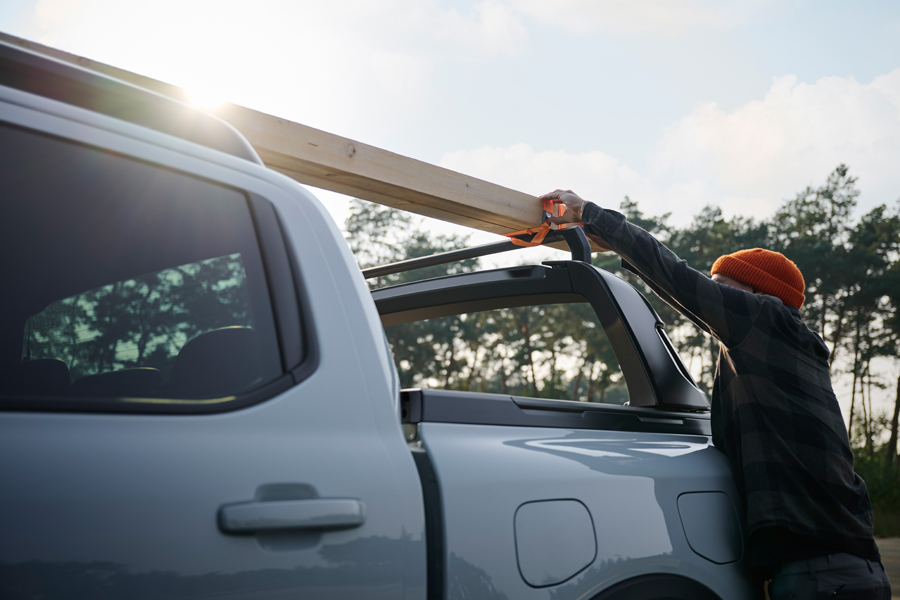 The Flexible Rack System features a sliding load rack that easily moves and locks into five positions along the tub and, together with the folding roof racks, makes it simple to strap on big items.
A huge bonus with the Ranger Hybrid is Pro Power Onboard, which can power external devices such as tools, cooking equipment, camping gear, or fishing gadgetry via the 11.8kWh battery. There’s a 10-amp, 2.3kW socket in the cabin and twin 15-amp, 3.45kW plugs in the tray – equivalent to having a powered caravan site with you at all times – that function even when the vehicle is locked.
All the aforementioned benefits make the price tags seem very palatable, as the Hybrid models offer top-of-the-line performance in addition to cleaner running.
The look and feel
The Stormtrak badge sits atop the Ranger Hybrid hierarchy. It shares the same electrified powertrain as the XLT and Wildtrak but offers a more premium and lifestyle‑focused specification.
The Stormtrak offers exclusive colours (like Chill Grey and Agate Black), unique decals, Bang & Olufsen audio, leather-trimmed seats, and black 18” alloys. There’s also a Flexible Rack System with a sliding load rack that easily moves and locks into five positions along the tub and, together with the folding roof racks, makes it simple to strap on big items like surfcasting rods, surfboards, or ladders.
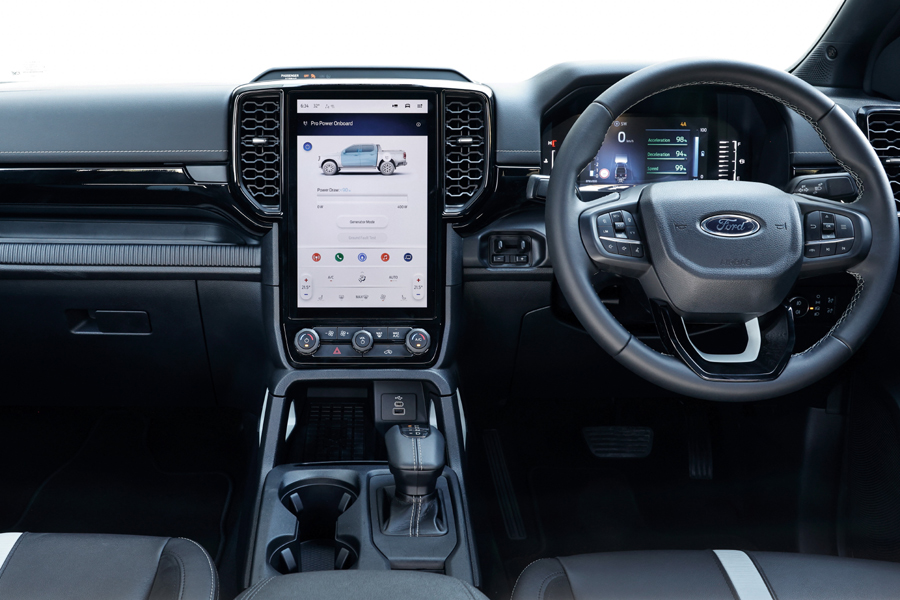 The Stormtrak offers all the mod cons and leather-trimmed seats.
EV‑specific info is integrated into the 12‑inch touchscreen and digital cluster, showing battery charge, EV modes, and regeneration visually, while Android Auto and Apple CarPlay connect seamlessly to your mobile device. The driver and front passenger seats are comfortable and offer 8-way power adjustments and heating, while there’s good leg room for passengers in the back. There are nine airbags and plenty of driver assistance tech – including a 360-degree camera, blind spot monitoring, intelligent adaptive cruise control, lane-keeping system, auto high beam, voice-activated controls, and autonomous emergency braking – to help keep things simple and safe when driving.
Performance
We set off from Auckland towards the Coromandel Peninsula towing a pair of Yamaha FX JetFish PWCs on a double trailer. The Stormtrak’s full tank and a fully charged battery were our launch pad, knowing we’d mix town, open road, gravel and beach driving across our roughly 600km return trip. The towing technology is similar to a diesel Ranger, although the dedicated Tow/Haul mode will optimise the hybrid powertrain and gear shift timing, along with engine braking and steering weight. The Tow/Haul mode blends the petrol and electric engine, like the Auto EV mode.
Although the weight of the two PWCs was only a smidge over a tonne, it was an effortless drive to Whitianga. Here we ditched the PWCs and hitched up an Extreme 745 Game King with a towing weight of around 2.7 tonnes for a sterner test. The reversing camera with direction indicators makes lining up the towball a breeze – no need to shout back and forth with your mate!
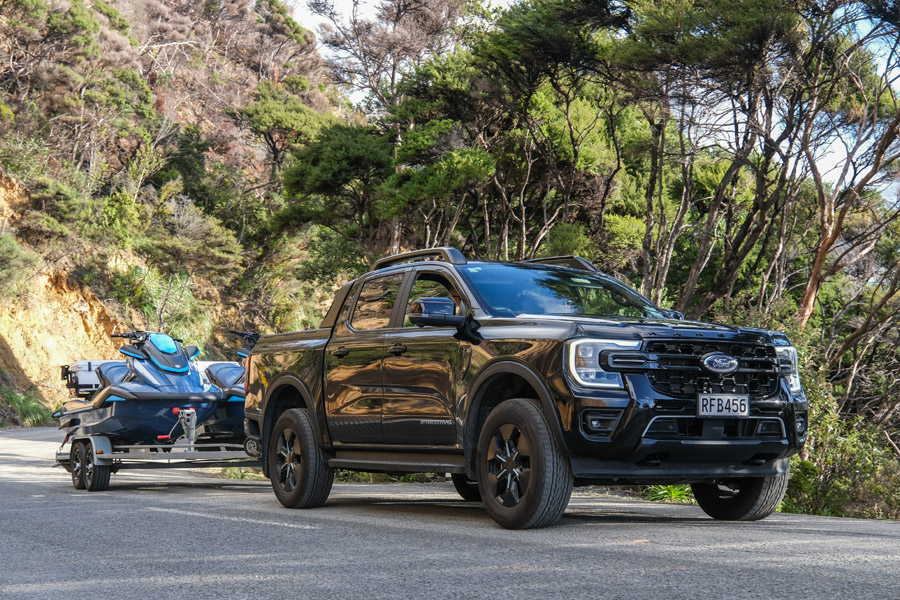 The Ranger Hybrid’s combined output sits at 207kW and 697Nm, exceeding even the Wildtrak 3.0-litre V6 and Raptor’s on-paper torque figures.
Towing remained smooth and effortless with the larger load hanging off the back. It pretty much felt like past experiences towing with the V6 Ranger in 4A automatic-AWD mode – good acceleration with no over-revving, stable around corners, firm and progressive braking, and sound gear selection through the 10-speed gearbox. There’s also peace of mind with Trailer Sway Control (which helps to stabilise the vehicle if trailer sway is detected) and an integrated brake controller for trailers equipped with brakes. Launching and retrieving at the boat ramp was hassle-free, with no need to switch into 4L (low range) for more power and grip. The Ranger Hybrid features Ford’s Pro Trailer Backup Assist, whereby you can dial the trailer direction on the screen and simply focus on managing braking while the trailer is backed. We had a play around with it, and although it worked well, I would probably stick with backing the old-fashioned way as that’s what I’m familiar with!
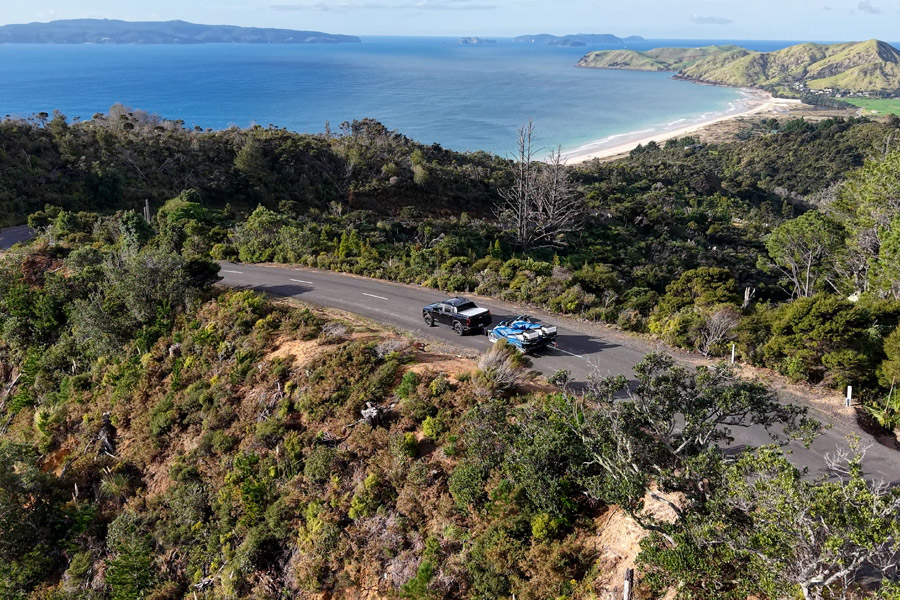 The Ford Ranger Hybrid is the perfect companion for adventure.
After an overnight battery charge (Ford says it takes four hours at its 3.5kW (15A) AC max for a full charge), we hit the windy roads over to Opito Bay. This time we weren’t hauling anything and in EV Now mode – I must admit it was quite a bizarre experience setting off in a whisper‑quiet Ranger! As the electric motor is part of the transmission, in electric-only mode you still have all 10 gears and the option of 4A automatic-AWD. Global user data shows that the average daily journey for Ranger drivers is just 40km, and we managed almost that before burning some gasoline on the trip back to Whitianga.
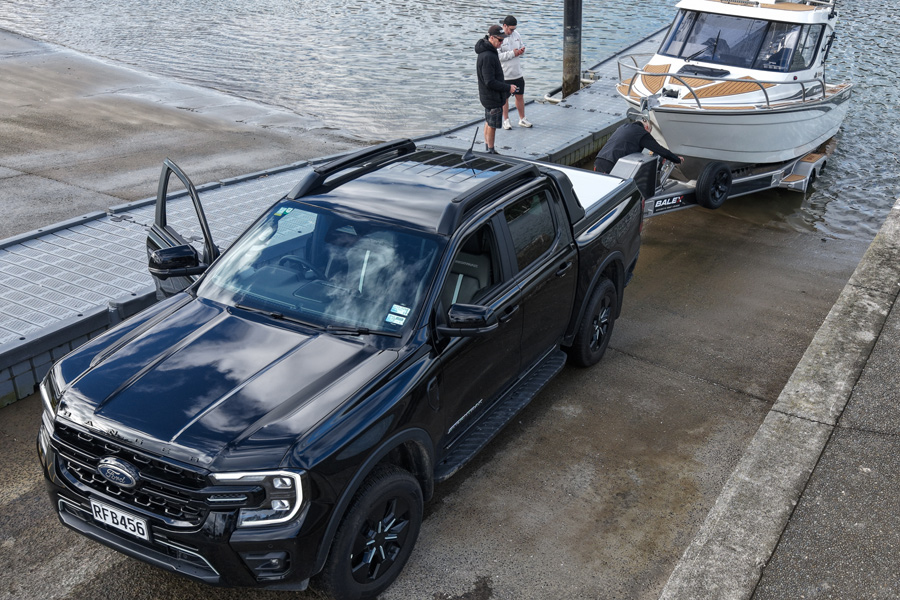 Launching and retrieving a 7.5m boat was hassle-free, with no need to switch into 4L (low range) for more power and grip.
While we didn’t have much opportunity to get off the beaten track, we took the Stormtrak for a spin on the gravel and the beach. Despite the Hybrid’s extra few hundred kilograms of heft, the suspension has been retuned, and there was no perceptible difference in ride quality compared to the diesel models. The Hybrid uses Ford’s on-demand 2-speed transfer case to vary the torque flow to the front wheels. This offers 2H, 4A, 4H, and 4L and a rear diff lock. The Hybrid retains the 800mm wading depth and features additional underbody protection for the battery, but ground clearance is inferior (215mm vs 234mm).
Oh, and the Pro Power Onboard system worked a treat for a quick cook-up of fresh snapper on the beach, powering an induction cooker and a Bradley electric smoker simultaneously. That’s livin’, Barry!
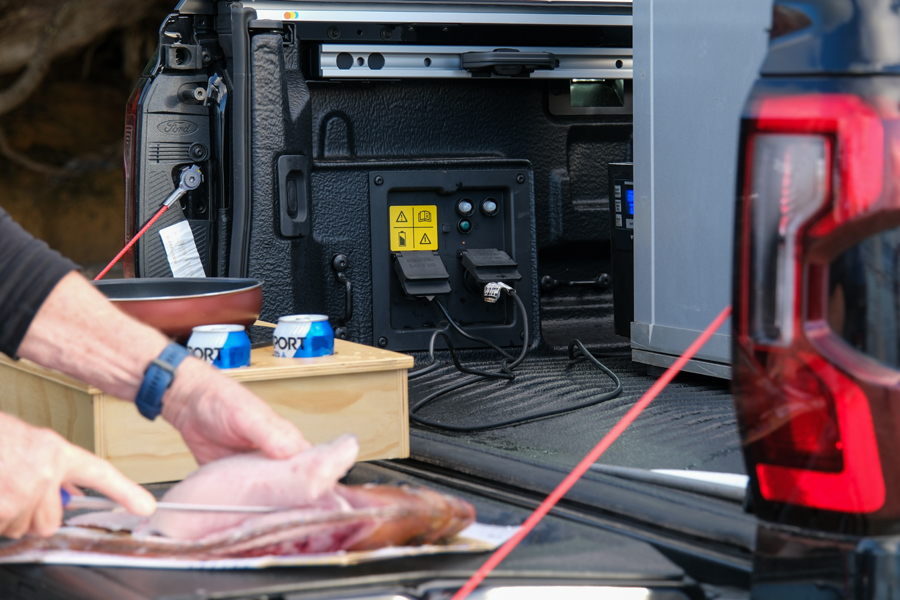 The Pro Power Onboard system worked a treat for a quick cook-up of fresh snapper on the beach, powering an induction cooker and a Bradley electric smoker simultaneously.
Final thoughts
The Ford Ranger Hybrid Stormtrak delivers the best of both worlds for Kiwi fishos who want the Ranger’s proven driving and towing capabilities in conjunction with a quieter, cleaner ride. The hybrid is only available as a wellside, which could limit interest from those needing a cab chassis version and a more specialised deck for work purposes. The real‑world, electric-only range of 30-40km is modest, yet our overall fuel consumption was significantly lower than the diesel Rangers under a similar towing load. While the Stormtrak model does come at a premium, I reckon this is offset not only by the improved fuel efficiency but also by the impressive torque stats, 4A automatic-AWD, mobile power station convenience, high-level trim, and Flexible Rack System.
Specifications
|
Make: |
Ford |
|
Model: |
Ranger Hybrid |
|
Variant: |
Stormtrak |
|
Engine: |
2.3L Turbo Petrol EcoBoost + 75kW electric motor (11.8 kWh battery) |
|
Drive: |
4x4 |
|
Transmission: |
10-speed automatic |
|
Maximum towing capacity: |
3.5 tonne braked |
|
Warranty: |
5-year/150,000km + Battery Electrical Drivetrain Warranty 8-Year/160,000km |
|
Price as tested: |
$94,990 |
- Words by Nick Jones
- Images by Nick Jones and Grant Blair


Major Bites
Minor Bites
Major Bites
Minor Bites

Fishing Reports Visit Reports
Tauranga Fishing Report - 28/05/26
Tarakihi on the bite Trips are few and far between at this time of year,... Read More >
Canterbury Fishing Report - 28/05/26
Fresh and salt turning it on! It is not very often I get to say... Read More >
Bay of Islands Fishing Report - 28/05/26
Lures paying dividends We finally had a break in the SE winds that have been... Read More >
Manukau/West Coast Fishing Report - 28/05/26
Snapper and gurnard in the harbour The weather has finally taken a turn for the... Read More >
Comments