
Daiwa Saltist Reel Review
When you first pick up the outfit
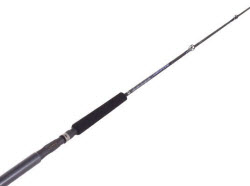
 It feels compact and light with nicely understated blue, silver and black cosmetics and a chunky Powerlift EVA foregrip. The unadorned, unvarnished blank is a pleasingly purposeful carbon matte-black colour.
The Saltist SAA-B 701HFB graphite composite rod is a conventional overhead design rated 12-20 pounds. There is no PE rating printed on the blank, but it’s suitable for PE 1.5-2.
Seven-feet long with seven good-quality Fuji Hardloy guides, plus the tip, a Fuji reel seat and trigger grip, it combines E-glass with graphite using bias construction for a strong, resilient fine diameter blank. Guides are under and over-bound.
Rated ‘medium’ power with a fast action by Daiwa, it’s light and responsive to use, casts a variety of weights well, offers plenty of hook-setting power and has more than enough fish-fighting grunt for the line class. Rods come with a factory five-year warranty
After some time fishing more extreme, short parabolic rods, using a variety of lures, it felt a little strange at first to use a rod with a ‘conventional’ fast-taper, but the Saltist definitely comes into its own cast or setting hooks while bait-fishing. I also used it as a livebaiting rig, slow trolling, bottom fishing and fishing baits under balloons/floats.
With a maximum 10kg rating, it’s hardly a heavy rod, but the blank feels both grunty and forgiving. It ‘hardens up’ in the hands under load like a graphite rod, but the E-glass means it feels more forgiving. I never felt in danger of breaking it – unlike some of the more expensive, high-tech sticks I own.
In a fishing situation, the rod is a real multi-tasker. It easily casts unweighted pilchards, as well as lures and baits weighing as much as two ounces (60g). It’s perfectly suitable for conventional yo-yo style jigging, high-speed vertical jigging and surface popping/stick baiting with suitably sized lures. I also used it in deep water to fish large soft plastics, Daiwa Pirate inchiku jigs and large Bay Rubbers. At a stretch, you could even mechanical jig with it, though it’s hardly the best tool for the job.
I appreciated the rod’s sensitive nature – there’s sufficient graphite in the mix to ensure excellent ‘feel’ through the rod and I like its lightness, which is especially welcome when fishing lures. As a strayline rod, it excels, delivering positive hook-sets even at maximum range, and putting the hurt on stubborn snapper in amongst the stones when required – clamp the thumbs down on the spool and the rod simply absorbs the pressure.
Rod specifications
 Length: 7.0 (1.95m)
Line weight: 12-20 pounds/PE2 (max); best PE1.5 (15-17 pounds)
Best drag: 2.5kg, depending on line weight
Max cast weight: 100g
Construction: bias construction, E-glass-graphite composite
Guides: 7 Fuji Hardloy, plus tip
Reel seat: Fuji wind-down trigger grip
The Saltist LD20 is smart-looking and feels as solid as a brick. Not that it’s heavy or large. Indeed, the compact nature of modern reels is amazing, and Daiwa’s Saltist series has to rate for the most bangs per buck of any reel on the market. In terms of specification and performance for the price, they’re hard to beat.
The LD20 is the upmarket two-speed lever-drag version of
Daiwa’s popular and amazingly powerful Saltist STT20H star-drag reels. I’ve owned an STT20s for a couple of years and it has seen some pretty severe testing, jigging for tropical reef ooglies and spinning up wahoo, Spanish mackerel and yellowfin tuna in the Solomon Islands. It’s pocket battleship.
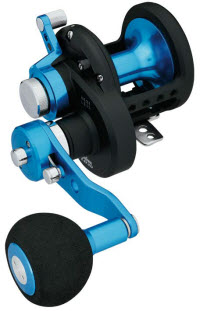
The LD20 is no different, although it looks a lot more impressive with its chunky blue-anodised, machined aluminium handle, spool and drag lever. The all-metal reel body is matte black and the reel handle features a bulbous, soft touch high-density EVA knob.
With a maximum 22lb (10kg) of drag – 13.3/6kg at strike, it offers quite a step up in stopping power from the star-drag Saltist 20. Able to hold 260m of 40ld braid (approx 300m PE3), it has the credentials to tackle some serious fish.
The two-speed mechanism is easy to use. A simple push button on the spindle engages low gear (3.1:1), while a short lever at the base of the handle switches back to high gear (6.1:1).
The LD20 is identical to the LD30 except for line capacity. The LD20’s narrower spool means it’s suitable for jigging as well as general fishing, making it a versatile reel.
The drag
Smooth and powerful. Daiwa’s claim of 10kg-plus at full drag feels about right. As reviewed with the reel spooled with Daiwa 30lb superbraid, full drag certainly tested the knots.
Between free-spool and ‘strike’, the carbon drag is progressive. Past strike, an aggressive cam dials up extra drag very quickly, allowing you to put the brakes on close to the boat or whenever you feel the fish is nearing danger. Unlike conventional lever-drags, the LD20 provides perfect free-spool, despite 10kg of drag.
Casting
Good. The reel cast extremely well, mostly because there is true free-spool with the drag lever dialled all the way back. There’s no cast control, though, so you need to be on the ball with an educated thumb. Nevertheless, as reviewed I was able to make long casts easily and precisely control shorter ones when tossing poppers and stickbaits close to structure.
Other features on the reel include…
The LD20 features a clicker, so is suitable for trolling or bait fishing with the drag disengaged. Helical-cut stainless steel gears are both smooth and super-strong. A dual system anti-reverse is likewise extremely durable.
Other features include shielded ‘super corrosion resistant’ CRBB ball bearings (6), full free-spool and light weight (425.25g).
I have been using the LD20 two-speed model, but there is also a single-speed version with infinite anti-reverse rather than the dual system anti-reverse of the test reel.
Essentially, the reels are otherwise identical.
What we really liked about the outfit
Versatility, low weight and obviously rugged construction. The rod has great feel, but is also very forgiving. The reel looks, feels and performs like a much more expensive model.
This is a useful combination. As reviewed it serves duty as a strayline outfit, light livebaiting, vertical jigging, lure tossing, trolling – just about anything you care to use it for.
Better still, the reel can be used for a variety of fishing styles, perhaps matched with more specialised rods. Perhaps the best thing about the whole Saltist range is its value for money. It’s by no means cheap, but it’s not right up there either in terms of price. The range provides anglers with seriously capable tackle at prices that won’t send them bankrupt.
What we think could be improved
Reel: This is a very useful reel as it stands. Some sort of cast control might be helpful, but you quickly learn to cast the reel without too many mishaps. For many anglers, the single speed might be the better option: simpler and for most fishing situations, more than adequate.
Rod: The rod is an excellent all-rounder that anglers can match with a number of reels in the Daiwa range.
Closer to the top of Daiwa’s extensive range than the bottom, Daiwa’s Saltist range offers amazing value and is worth considering even by ‘serious’ anglers and tackle snobs. It offers quality undreamed of a few years ago, especially at the current retail prices.
Reel specifications Daiwa LD20:
Ratio 6.3:1/3.1:1 (SH200)
One-touch gearshift
Ball bearings 6 CRBB
Dual system anti-reverse
Machined, drilled anodised aluminium power handle
Round ‘speed knob’
Anodised machined aluminium spool
Capacity 350m PE2, 275m PE3
Metal body
Helical-cut SS gears
Lever drag with adjustable pre-set
Carbon drag

Looking to buy?
Head over to Land & Sea, experts in outdoor and fishing gear.
https://www.land-sea.co.nz/products/daiwa
.jpg) |
An original article written for |


Major Bites
Minor Bites
Major Bites
Minor Bites

Fishing Reports Visit Reports
Tauranga Fishing Report - 28/05/26
Tarakihi on the bite Trips are few and far between at this time of year,... Read More >
Canterbury Fishing Report - 28/05/26
Fresh and salt turning it on! It is not very often I get to say... Read More >
Bay of Islands Fishing Report - 28/05/26
Lures paying dividends We finally had a break in the SE winds that have been... Read More >
Manukau/West Coast Fishing Report - 28/05/26
Snapper and gurnard in the harbour The weather has finally taken a turn for the... Read More >
Comments