
Gamefishing Species Guide
Gamefishing & Inshore Species Guide For New Zealand
New Zealand offers some of the most spectacular sportfishing opportunities in the world, hosting a wide variety of gamefish that often reach their maximum size in our waters. The following is a summary of New Zealand's most popular gamefish species including where, when, and how to target them.
Saltwater
Striped marlin
Striped marlin are probably New Zealand’s most recognised gamefish. Famed American writer Zane Grey visited New Zealand shores in 1926 and put New Zealand on the map as a world-class striped marlin fishery. We host the largest striped marlin in the world as attested by the stranglehold Kiwis have on world records for the species in almost every line class.

In the summer months, striped marlin are abundant throughout the top half of the North Island. The east coast gets more pressure due to the more sheltered ports and conditions, but a large number of fish also run down the west coast. You need to wait for the ideal conditions to be able to get across the west coast bars, but when you do manage to get out there, the blue water is often close in and the fishing can be phenomenal. Anglers generally use a spread of lures (supplemented by artificial teasers and dredges) in the early and peak summer season, while livebaiting with skipjack tuna and kahawai is often utilised in autumn at the tail end of the season.
Hot spots are the Bay of Plenty, eastern Coromandel, the entire northeastern coast from Tutukaka through to North Cape, and the Three Kings islands. The Middlesex and King banks off the Three Kings have built a reputation as prime spots to target trophy striped marlin. From February through to late May, they congregate in big numbers to feed on the masses of baitfish attracted by the current upwellings and it isn’t uncommon to have over ten shots a day at fish that grow in excess of 200kg. 70-120kg fish are considered average.
Blue marlin
Catch-data trends suggest that blue marlin are becoming a lot more common in New Zealand’s coastal waters. The Three Kings, North Cape, and the Northland coastline are all hotspots and a good run of Blues can be expected off Waihau Bay and the East Cape during a short time frame, usually around February. Although they are less common off the North Island’s west coast, a good number are caught each season out from ports such as Hokianga and Manukau.
New Zealand’s blues are normally caught on lures along the continental shelf drop-offs. Their average size is usually around the 200kg mark but much bigger fish are frequently encountered and occasionally landed. Granders have been caught in New Zealand waters – the biggest being Lynda Randrup’s 492.4kg blue marlin caught off Cape Runaway in 2020.
Black marlin
Black marlin can be encountered throughout the summer months around the upper half of the North Island coastline. They are a reasonably rare sight in New Zealand waters, with only a handful of captures each year. What they lack in numbers, they more than make up for in size, however! Ross Tudors 464.5kg grander black was caught off Northland in 2022, and numerous fish over 350kg have been taken over the years.
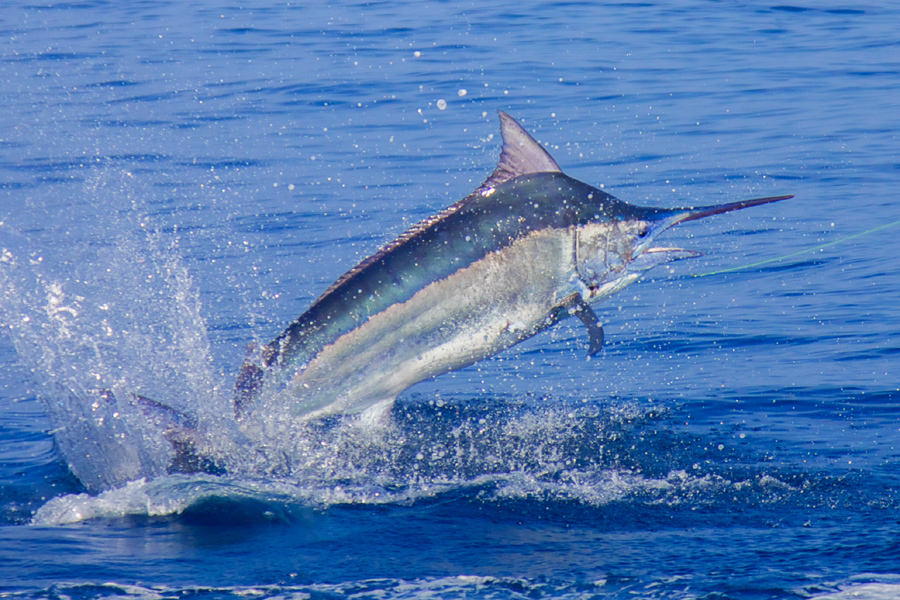
They are more frequently found closer to the coast than the other marlin species and are usually hooked by unsuspecting anglers who are livebaiting off a pinnacle, reef, or headland for kingfish, although they are caught on lures, too. Most are found off Northland’s east coast and the Bay of Plenty.
Broadbill swordfish
The broadbill fishery has developed significantly over the last decade in New Zealand, specifically with the refinement of the daytime deep-dropping technique.
Swordfish hotspots are generally around seamounts, drop-offs, trenches, and canyons anywhere from 350-750m of water. There is structure like this right up and down the entire coastline of NZ, but spots like the Three Kings, Garden Patch, Hokianga Bank, Bream Knolls, Barrier Bank, Mayor Knolls, White Island Knolls, and Ranfurly Banks down to Gisborne are all known areas. These fish grow very large in Kiwi waters, with an the average size of over 100kg.
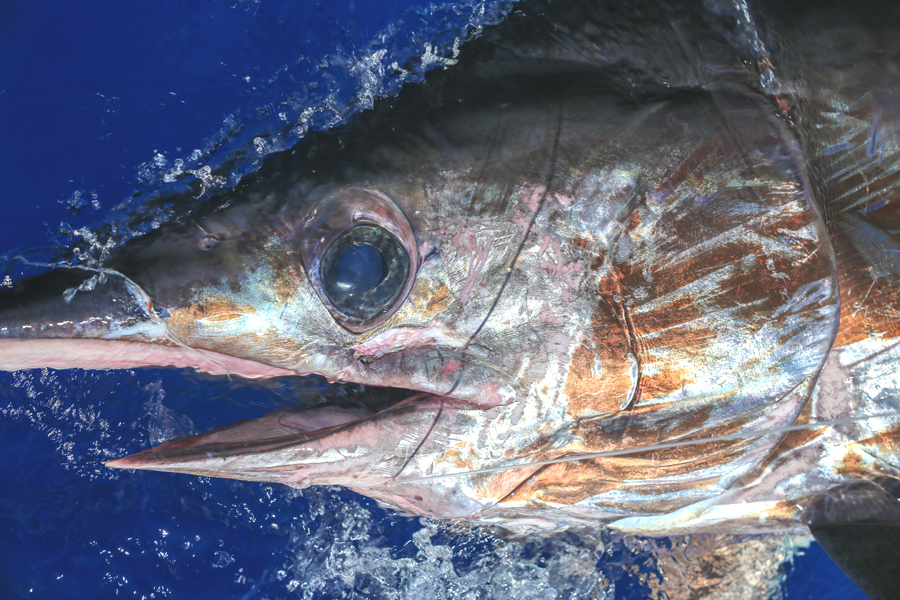
They are available in NZ waters for most of the year, but satellite tagging shows they move to warmer subtropical spawning grounds in spring and come back to our waters in early summer. Most recreational fishing effort is focused from February through to July, with catches peaking in autumn.
Yellowfin tuna
Every summer these powerful predators used to turn up in significant numbers off the upper North Island coastline; however, they are now a less common catch in New Zealand. Many theories abound, including the heavy exploitation of yellowfin in the Pacific by several nations.
They were particularly common in the Bay of Plenty where they would herd great schools of baitfish into ‘meatballs’ which made for spectacular fishing. The fish averaged around 20-35kg but weights tended to fluctuate from season to season. The bigger fish would show early on in December and January with 50-60kg fish not uncommon. Those early fish were normally taken trolling, but as the season progressed and the ‘meatballing’ kicked off around February and March, anglers tended to switch to livebaiting and chunking techniques. In recent years, there has been sporadic meatballing action in the Bay of Plenty once again, so there’s hope the fishery will return to its previous state.
Further north, yellowfin are regularly caught in good numbers as bycatch when trolling for billfish.
Bluefin tuna
From a largely unknown recreational fishery, bluefin tuna are now a highlight on many Kiwi’s fishing calendars. The action begins in summer with schools off the Fiordland coast. The fish then move northwards along the east coast, making their way past Napier and Gisborne around May-June before congregating by the hotspots of East Cape and Waihau Bay from June onwards. In recent years, there’s been great fishing in the Bay of Plenty right up until the beginning of September.
New Zealand’s bluefin seem to travel up the 1,000-1,500m line and often hold over areas of structure, upwellings, temperature breaks, or current convergences. School fish of 30-70kg are the typical catch, although fish over 100kg are regularly taken.
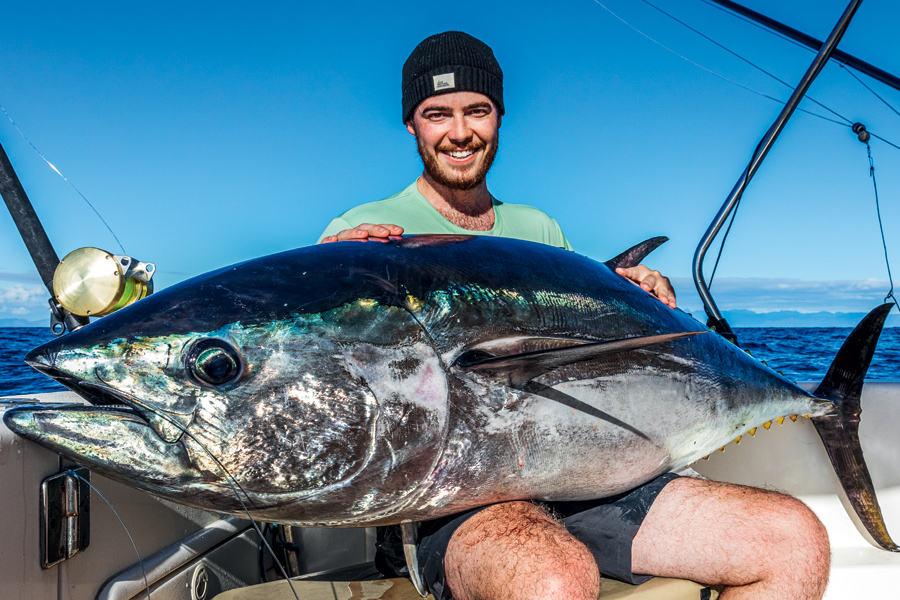
There’s also a winter fishery for large (100kg-plus) southern bluefin off the west coast of the South Island. Boats typically depart from Greymouth and fish around the large, factory trawlers that fish for hoki in the Hokitika Trench.
Bigeye tuna
Bigeye are infrequently caught by recreational anglers but they are targeted in certain areas such as Gisborne in early summer. The average size of bigeye caught in New Zealand is large (80-120kg). Commercial operators target bigeye off East Cape, Bay of Plenty, the Northland coast and the Three Kings Islands in spring and summer, so the recreational fishing opportunities for this species are likely to improve with more knowledge about the fish and their seasonal movements.
Albacore tuna
During the summer months, albacore can be found in big schools all around the northeastern coastline and the entire length of the west coast. They are present year-round but they are most abundant in summer. Winter fish tend to be considerably larger, with fish of over 20kg regularly taken from the Bay of Plenty.
Yellowtail kingfish
Yellowtail kingfish, or simply kingies, are another species that put New Zealand on the map as a major sportfishing destination. Kingfish reach their maximum size in New Zealand with almost all world records coming from our waters. The all-tackle world record stands at 52kg, a size of fish that is held equally in both 15 and 24kg line classes. Both fish came from the Bay of Plenty. These big powerful fish are relatively plentiful and often easy to target, but landing them is another story altogether as they can be unstoppable and normally inhabit relatively foul areas.
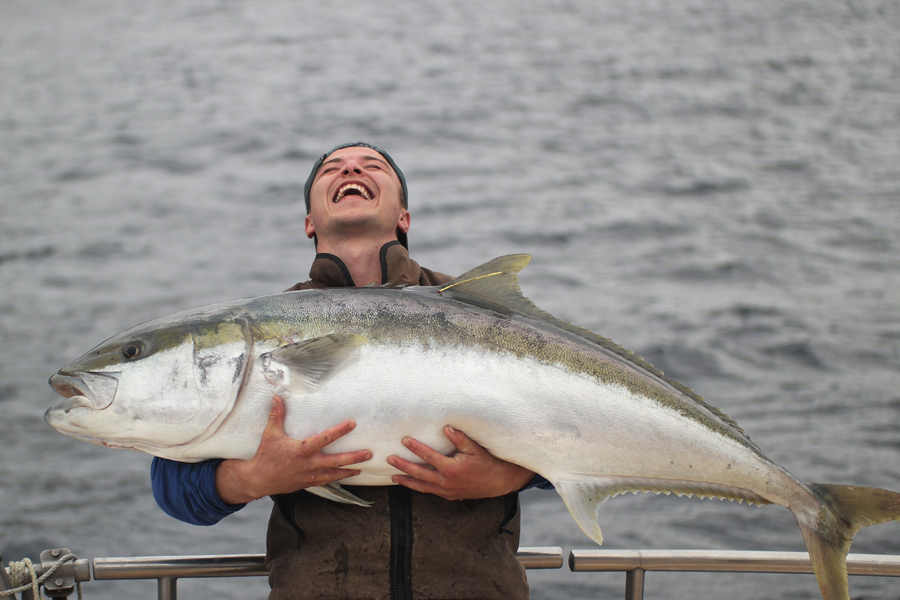
The big kingfish hotspots are the Three Kings Islands, White Island, and the Ranfurly Banks off East Cape. They are found consistently throughout the top half of the North Island in good numbers and stray as far south as the bottom of the South Island in summer. They can be caught year round with winter fish tending to be less common but generally larger. Summer is the best time to target kingfish, and they readily take livebaits, jigs and topwater lures. They are usually found around harbours, rocky headlands, reefs, and deepwater pinnacles, particularly those that are exposed to reasonable tidal current.
Snapper
Snapper are the bread-and-butter fish for the majority of New Zealanders. They are found consistently around the entire North Island but are less widespread further south. The average size of fish is around 1-2kg, but the really big specimens get up to 15kg and can put up an impressive fight. The hotspots are Nelson and the Marlborough Sounds in the South Island, East Cape, Bay of Plenty, Coromandel, Hauraki Gulf, Bay of Islands and the entire northern coast, and the west coast down past Taranaki.
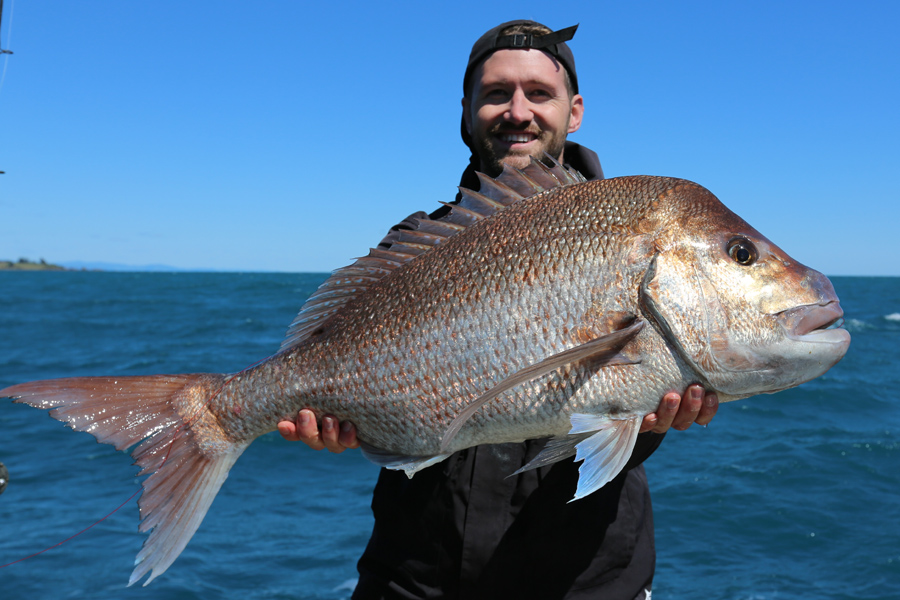
Snapper will be found on almost every reef, harbour and channel, and are just as likely to be taken from the shore as from a boat. Dead baits on unweighted or ledger rigs, softbaits, and metal lures like kabura and inchiku slowjigs are typically employed to catch snapper.
Kahawai
Kahawai are widespread throughout New Zealand and will be found from estuaries to the outer islands, often forming large surface schools. They are streamlined, powerful fish with an average size of around 1-2kg.
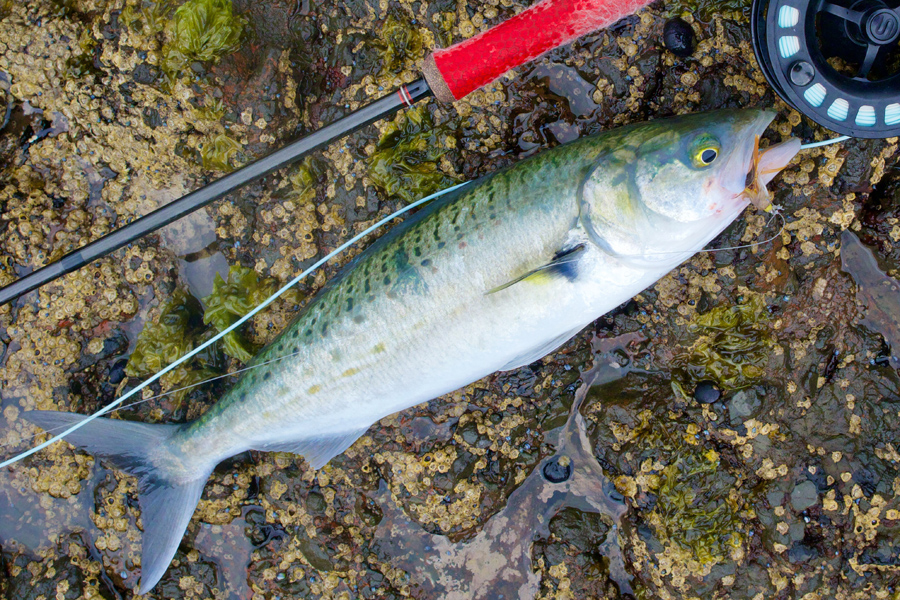
Their tremendous fighting ability has earned them a reputation as a top light tackle game fish, especially on salt-water fly tackle which they are readily caught on. They can be found year-round and will be enticed by plenty of berley.
Trevally
New Zealand’s silver trevally are another top light tackle sportfish. They are found consistently around the North Island and at the top of the South Island. They inhabit a range of environs from shallow bays through to offshore reefs and islands, where they form great surface schools and feed on krill.
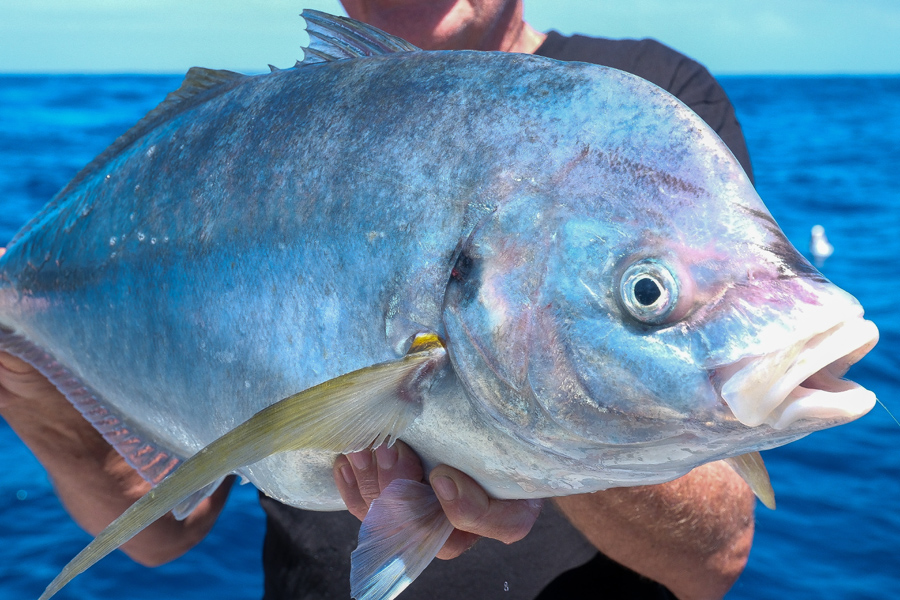
They have an average size of 2-3kg, although they grow up to 10kg. Like kahawai, they put up an impressive fight for their size and are a formidable opponent on light tackle.
Freshwater
Trout
The New Zealand trout fishery is undoubtedly as good as it gets. Almost every freshwater system hosts both brown and rainbow trout that grow exceptionally large by world standards. The North Island has predominantly rainbows, with Lake Taupo and the Rotorua lakes being the most popular locations. Fish & Game control the stock levels in New Zealand, ensuring anglers are satisfied with both the number and size of fish. The main fishing season runs from the start of October to the end of April, although many waterways are open year-round. A multitude of guides are available in both regions to ensure you have the best chance at finding action.
The Tongariro River is the major spawning river for Lake Taupo. During the winter months of May through to September, rainbows averaging around the 5lb mark pour up this river in their thousands, making it a favourite destination for many anglers.
For a backcountry experience close to Taupo, the central plateau offers some of the finest flyfishing in the world. Gin-clear waters and trophy trout attract anglers looking for the trout stalking experience of a lifetime.
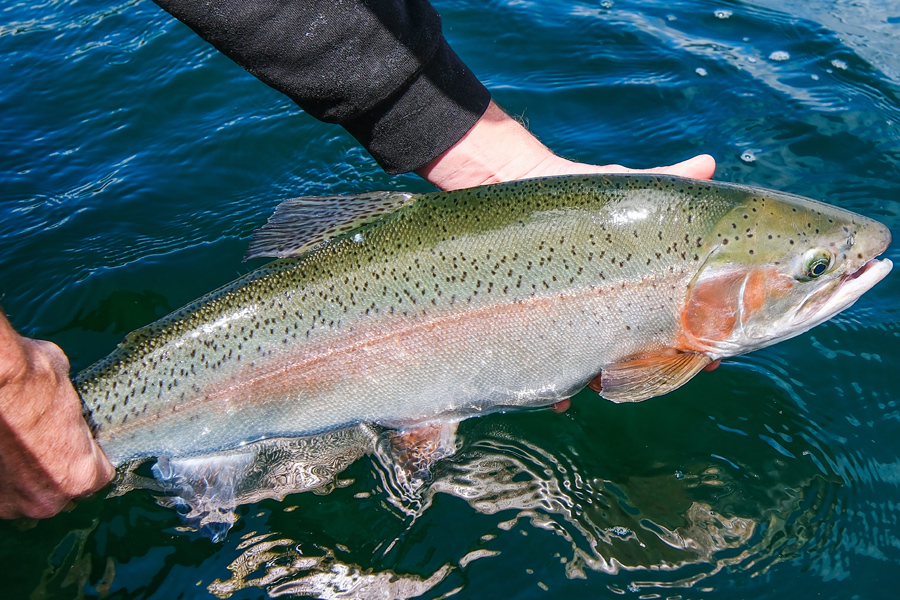
Other hot spots are Lakes Aniwhenua and Waikarimoana where you can have a crack at the spawning rainbows in the winter or fish for both browns and rainbows cruising around the edges during the summer months. The Hawkes Bay region has many excellent rivers and streams that can be fished all year round and host resident fish as well as sea run fish in the lower reaches.
In the South Island, the brown trout is the predominant species, with the majority of its rivers and lakes holding good numbers of them. The Southern Alps run the length of the island and feed a multitude of rivers of varying sizes. This provides numerous options and makes it a superb destination for those wanting to get into the backcountry and stalk trophy trout. The entire South Island is a Mecca for trout fishermen but the favoured areas are Nelson, the sparsely populated West Coast, Fiordland, Southland and Otago. The Tekapo canals are famous for producing world-record-size trout but receive plenty of angling pressure.
All areas provide year-round fishing but summer is the prime time when the conditions are settled and the insect life is abundant.
Salmon
The South Island has the only sea-run salmon fishery in the southern hemisphere. Quinnat salmon introduced from North America around the turn of the century successfully established in the major snow-fed rivers, particularly in Canterbury. Salmon have a life cycle of three or four years, with larger fish returning to the river they were hatched from.
Rivers like the Waimakari, Rakaia and Rangitata have fish returning from November until April with the peak of the run around February. Fish are caught throughout the rivers from the sea around the mouth up to the headwaters, with best fishing just after a flood. Most commonly quinnat salmon are taken on metal lures like Z spinners, but they will take streamer type feather lures fished on a heavy fly rod.
Chinook salmon are also targeted in the Tekapo canals, usually on softbaits and spinners. These fish are usually escapees from salmon farms, but there are some hatchery and wild-bred fish, too.
Fishing Reports Visit Reports
Manukau/West Coast Fishing Report - 15/10/26
Big spring snapper in 60 metres. The El Niño weather pattern isn’t going to be... Read More >
Rotorua Fishing Report - 15/10/26
Solid start to the season! The Rotorua lakes have all started the season well, and... Read More >
Tutukaka Fishing Report - 15/10/26
Big snapper in shallow. Things remain relatively quiet on the fishing front out of Tutukaka,... Read More >
Tauranga Fishing Report - 15/10/26
Bait and temperature on the rise. It’s been great to get out and see some... Read More >


Monday 19 October 2026
Major Bites
 - -
- - Minor Bites
 - -
- - Tuesday 20 October 2026
Major Bites
-  -
- Minor Bites
- - 
Latest Articles
Yellowfin Tuna Trolling & Topwater Fishing
October 2026If there’s one thing the last season has taught Kiwi anglers, it’s that yellowfin can be found in places – and conditions – that might surprise... Read More >
Trout Fishing in Rabbit Country
October 2026Early to mid-December is a great time to be fishing for both trout and perch... Read More >
Spearfishing Tips & Tricks
September 2026The South Seas Spearo team provide some salient advice for spearfishers about how to get the most out of their time in the salt this season... Read More >
New Fishing Tackle - Spring 2026
September 2026Check out these hot new products, fresh out this spring... Read More >
NZ Saltwater Fly Fishing Seasons
September 2026Sandflats and mudflats are beautiful fish-rich habitats that are particularly suited to fly fishing... Read More >
Comments