
Fishing Rigs - The Strayline Rig

There are many different styles and variations to stray-lining, however the common theme is that it involves using the bare minimum of weight to get your rig and bait to the bottom. Ideally, the bait should slowly float down in the current just making contact with the bottom.
This way the bait is presented naturally covers a larger area as it drifts about, and is more likely to be picked up by scavenging fish.
A sliding hook is not IGFA legal so if you are fishing for records then ensure the keeper hook is fixed.
The two most popular rigs are as follows.
The kiwi rig: This can be assembled with two hooks fixed or with a sliding hook (NB: a sliding hook is not IGFA legal and will disqualify any record), the sinker is placed on top of the hooks and is able to run up and down the leader only.


The rig allows the angler to keep in constant contact with the bait.
Method: Use about 1.5 to 2 metres of trace (60 to 80lb depending on the species targeted) and attach both the keeper (tie first) & terminal hooks using a snell knot. Run a small ball sinker down on top of the keeper hook then attach the rig to your mainline using a swivel - tie this with either a uni or clinch knot.
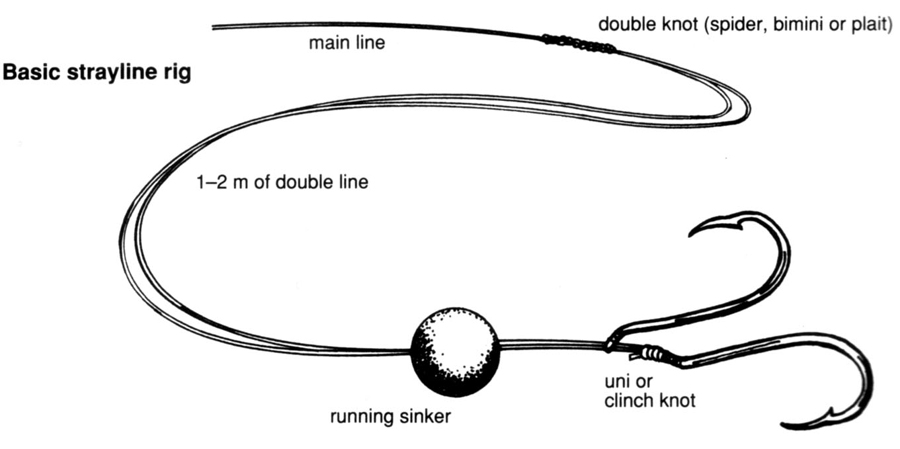
Aussie stray line rig. This is a similar rig except the sinker sits above your swivel. This allows the sinker to let the main line run through it.
Is a good way to allow your bait to float off the bottom with a natural wavy motion. It can be a little harder to detect bites with this rig, especially when fish are feeding tentatively. This does allow big oily baits to wave around in the current with litle/no weight on them to spook those wary fish.
Method: Use about 1.5 to 2 metres of trace (60 to 80lb depending on the species targeted) and attach both the keeper (tie first) & terminal hooks using a snell knot. Run a small ball sinker up the mainline then attach the rig to your mainline using either a uni or clinch knot.
Fishing Reports Visit Reports
Manukau/West Coast Fishing Report - 15/10/26
Big spring snapper in 60 metres. The El Niño weather pattern isn’t going to be... Read More >
Rotorua Fishing Report - 15/10/26
Solid start to the season! The Rotorua lakes have all started the season well, and... Read More >
Tutukaka Fishing Report - 15/10/26
Big snapper in shallow. Things remain relatively quiet on the fishing front out of Tutukaka,... Read More >
Tauranga Fishing Report - 15/10/26
Bait and temperature on the rise. It’s been great to get out and see some... Read More >


Friday 23 October 2026
Major Bites
 - -
- - Minor Bites
 - -
- - Saturday 24 October 2026
Major Bites
 - -
- - Minor Bites
- -
Comments