
Workups and Seasonal Changes
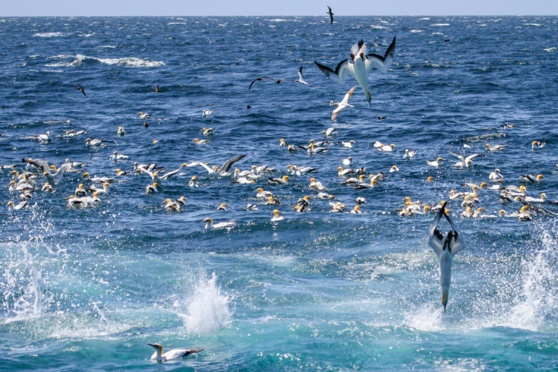
Seasonal changes and water temperatures significantly influence bait movement, fish behaviour, and successful fishing strategies in New Zealand waters. This is particularly true for snapper fishing in the inner and outer Hauraki Gulf and lower Northland coasts (Whangārei and Bream Bay area). By learning the patterns and understanding the different fishing seasons, you can catch more (and better) fish.
Spring (September–November)
The spring workup season is a highly anticipated time for fishing in the Hauraki Gulf and lower Northland (Bream Bay), particularly for snapper. The abundant bait that was out wide over winter begins to move closer inshore. As the temperature rises and the days lengthen, it brings about significant changes in fish behaviour and presents excellent opportunities for anglers.
A key characteristic of spring is the arrival of pre-spawning snapper. The bait arrives and the snapper are not far behind, moving closer inshore. Finding active workups is a primary strategy during spring. Look for mammals, diving gannets, shearwaters and terns, as these indicate feeding activity. Even if the obvious workups aren’t present, snapper will still feed at bite times during this period in areas that the bait moves through. Groups of gannets sitting on the water can indicate the presence of bait yet to be driven to the surface. The birds will sit on the bait as they need to conserve their energy and/or digest their previous feed. Staying in these areas and waiting for the ‘dinner gong’ to go off (when mammals or other predators round up the bait) can be very rewarding. The spring workups are considered by some to offer lure fishing at its best!
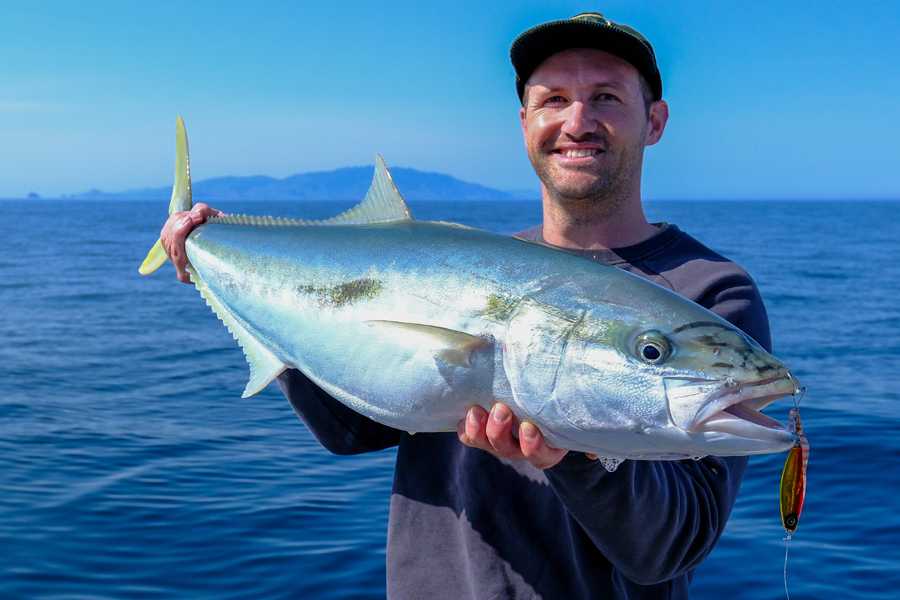 Kingfish are a regular encounter when fishing slowjigs around the spring workups. Photo: Josh Williams.
Planning is also very important and can be the difference between a successful trip and an unsuccessful one. Look at the tides, sun and moon to coordinate the best times to fish. I find that for four days up to a full moon, the workups get really intense and spread out over large areas. The new moon is also another great time with high coefficient (bigger tides).
When fishing workups, it’s important to observe proper etiquette, such as not driving into the middle of them and putting down bait. Fishing the ‘exhaust’ – the area down-current from the main activity, where the natural berley trail flows – is the most effective method. This is where the fish scraps drift down to waiting snapper and can be anywhere from 20 to 100 metres away from the workup (depending on depth and current). Using a drogue will help control your drift and keep lures in the strike zone. Workups in spring tend to be closer inshore compared to those in autumn, making them more accessible for small boats.
On quieter days, or if workups are not present, successful strategies will involve adapting your approach. You can look for occasional gannets dropping in over a large area, which might indicate scattered baitfish. Use your sounder to locate areas where baitfish are holding, as patches of snapper may be nearby. Another effective strategy when bait or birds are not evident is to target areas where the fish graze on the bottom. These are often found along contour lines and ‘squiggles’ on your chartplotter, where fish feed on shellfish, crustaceans, and worms.
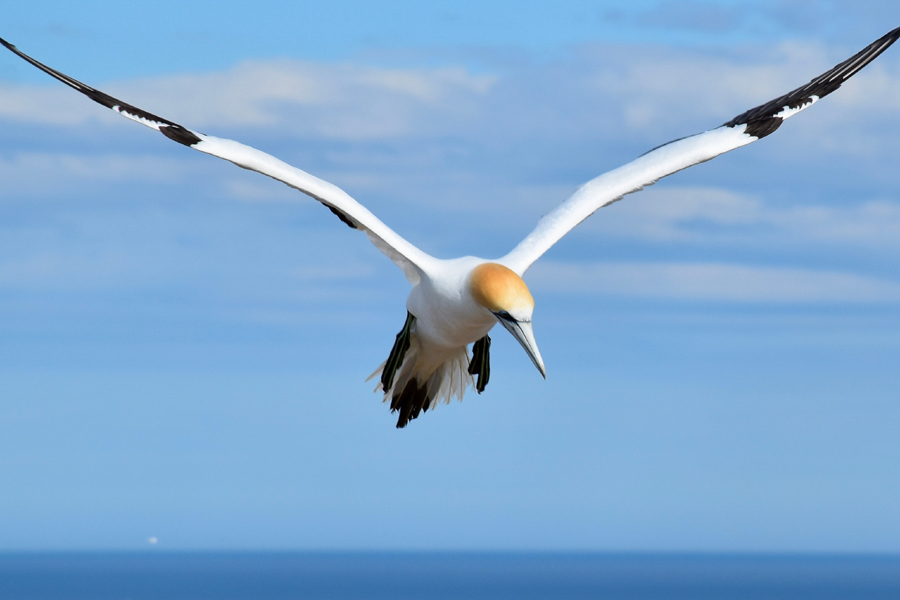 Nik has observed that for four days leading up to a full moon, gannet activity tends to intensify and spread out over large areas.
Slow-jigging methods, such as employing slow-pitch, kabura, inchiku, knife, and a variety of other metal jigs, are commonly used and extremely effective during spring. Experimentation is key. Snapper can show a preference for specific colours or combinations on different days. While orange is a popular colour, yellow or pink might work better on some occasions. In fact, I swear by pink when the first aggregation of big male snapper come in around September. For some reason the bigger ones want the pink-coloured jig. Another trick I’ve noticed is that orange colours come into their own at evening change of light and catch more (and better) fish.
Try different weights too, as this affects the lure’s movement. Heavier lures (around 200g) can sometimes entice a bite due to their more vertical angle and different effect on the skirt. The saying ‘big bait, big fish’ also works with lures at times!
Summer (December–February)
Summer fishing brings about significant changes compared to other seasons. The intense spring workup fishing can last up to the middle or end of December and even into January some years, depending on the season. Around late December and early January, as water temperatures rise to the desired spawning levels, snapper that have been feeding on abundant bait start to spawn, and their feeding can become less intense.
During this period, fishing tends to be better right out wide in deeper water or closer to inner harbour channels as the fish move in to spawn. They feed hard on the bottom on shellfish and crustaceans as baitfish are less abundant (anchovy schools tend to come in a bit later in summer/autumn). Fish are inclined to move up inner harbour channels on the incoming tide (not feeding intensely as they are in spawning mode). I prefer the outgoing tide as the fish become hungry after spawning (i.e., think like a fish). A key observation about snapper behaviour in the Waitematā Harbour is that they primarily move up the inner harbour channels on the right-hand side (North Shore side) with the incoming tide when they are not eating. Then they come out on the other (CBD) side on the left-hand side with the outgoing tide after they have spawned and are therefore hungry.
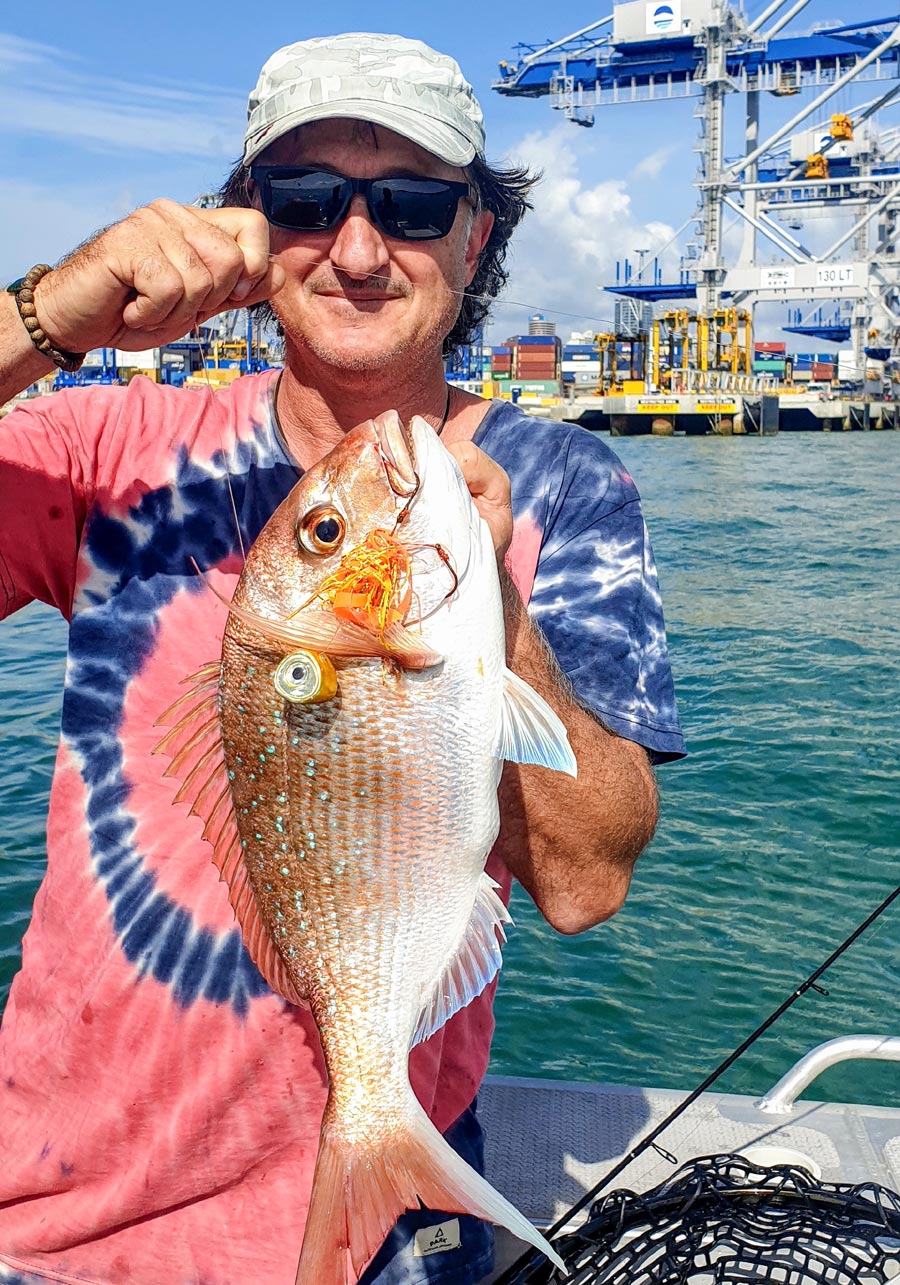 When fishing the Waitemata Harbour in summer, Nik prefers fishing the outgoing tide on the CBD (southern) side.
Fishing strategies need to be adapted to these seasonal and temperature-related changes. Successful strategies in the harbours include using slow-jig lures dragged on the bottom in the shallower waters (to target the fish feeding on shellfish and crustaceans on the bottom). Heavier lures might provoke strikes due to frustration or territorial behaviour. Softbaits are also very effective dragged on the bottom, bringing them to the attention of the post-spawn fish as they feed on the bottom.
I find that in summer, dawn and dusk are often the best bite times with less boat traffic. Due to spawning, smaller fish can be more abundant during the bright daylight, with bigger ones coming on the bite during the change of light. Fishing with light gear in this shallow water can result in exciting fights with these hungry, aggressive snapper. Light gear (i.e., 4kg braid and 10-20lb trace) seems to also catch more fish as the baits look more natural.
Something else I have noticed is short bite times. If you can line up a bite time (solunar) with change of light, you’ll increase your chances massively! I have often found that lightly weighted blue/silver softbaits on light 4kg gear work really well!
During this period, when snapper fishing slows down due to spawning, it's a good time to target other species. John dory are particularly abundant during this time, likely attracted by the large numbers of small spawning snapper in the inner harbours, which are a favourite food source. To target john dory, you can use berley and catch fresh livebait like yellowtail mackerel, piper, or small kahawai with a sabiki rig. Rig the livebait through the skin in the neck. Snipping the tail fins off kahawai can slow them down and increase your success rate. A sturdy setup with a one-hook dropper rig, 60-80lb trace, and a 10/0 hook is recommended, especially as kingfish are often caught as a bycatch. Big jigs are also another way to weed out the small snapper and catch a john dory.
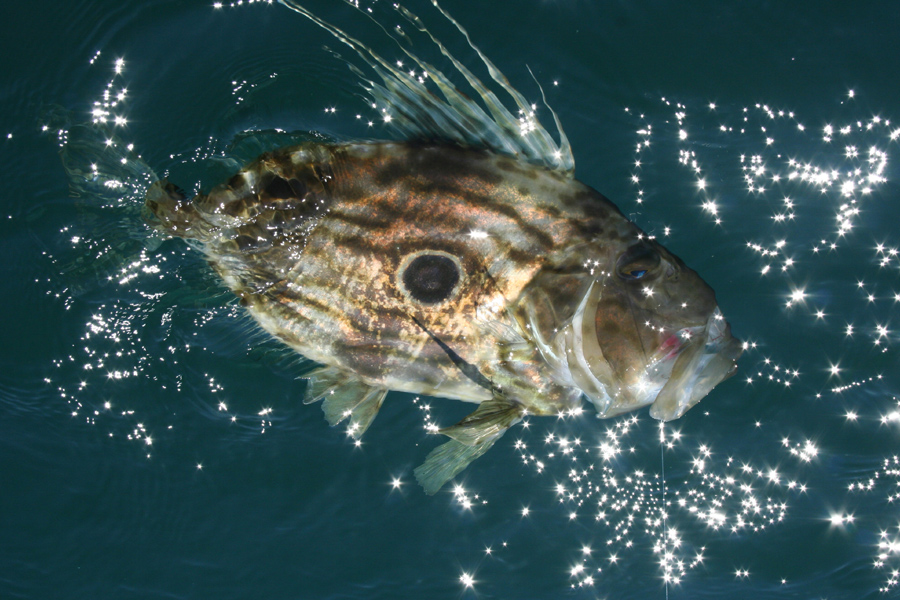 The summer period, when snapper fishing slows down due to spawning, is a good time to target other species like john dory. Photo: Grant Blair.
The other areas that fish productively in summer are out deep (50 to 60-plus metres). In the Hauraki Gulf we will head out to areas off Great Barrier Island to find the last workups of the season (out from Tryphena, the Pigeons, the Broken Islands, Port Fitzroy and Katherine Bay). Even without obvious surface workups, mid-water activity can occur in deeper water during summer.
In January, workups can be found northeast of the Hen & Chicks (in around 60 to 80-plus metres) with gannets and dolphins present. The best action here for bigger snapper in the 50cm to 60cm-plus range tends to be in the mid-water zone, with smaller fish on the bottom. The ‘stop and drop’ method with heavy, slow jigs (150-240g) is effective in finding and hooking these suspended fish (use multi-coloured braid to keep track of your depth). Look at the sounder to see what depth the fish are at, then simply drop then stop when you reach the desired depth.
Workup etiquette still applies in summer – wait for the workup to build, avoid driving through the middle, and fish the ‘exhaust’ down-current from the main activity, using a drogue to control your drift.
Autumn (March – May)
Autumn is considered by many to bring some of the best fishing in the Hauraki Gulf and beyond. Typically, as the weather cools after summer from March to May, the Hauraki Gulf offers fishing that rivals or betters any other season. The weather improves, with less heat and wind leading to more consistent weather patterns. This colder weather and the cooling water temperature heralds the return of more intense and longer-lasting workups, which hold good snapper in terms of both numbers and size. You may also find fewer boats out on the water, allowing you to have areas all to yourself (nobody driving through the workups)!
These workups in autumn tend to be off Tiritiri Matangi and Kawau Islands out to the ‘Middle Ground’ and over towards Coromandel in the Hauraki Gulf. Further north they are usually along the coast, right up and past Whangārei. South and north of the Hen & Chicks also fish well over the autumn months. This time of year coincides with the anchovy run, but there’s plenty of other baitfish around too, including pilchards and mackerel. The anchovy schools and other bait are followed by mammals, larger snapper, and other predators. Finding the bait means finding the consistent fishing. In late autumn (May), intense pilchard workups can occur in the cooler water temperatures, attracting large numbers of predators, especially kingfish.
Successful strategies during this time include having a good set of binoculars (7x50) for finding the birds (gannets but also petrels and other sea birds). Having a good sea anchor to ensure a successful drift (0.4-0.6 knots) is paramount and can be the difference between little to no fish or a full bin.
Beyond snapper, the abundance of bait attracts other predators. In the past, skipjack tuna have stuck around until June feeding on this plentiful food, and kingfish and trevally are commonly encountered during this period of abundance. We will target them using light spinning gear with lures (jigs and softbaits). Over May and June, large trevally, often in the 4-5kg range, tend to turn up just west of Channel Island down to the sunken barges off Fantail Bay.
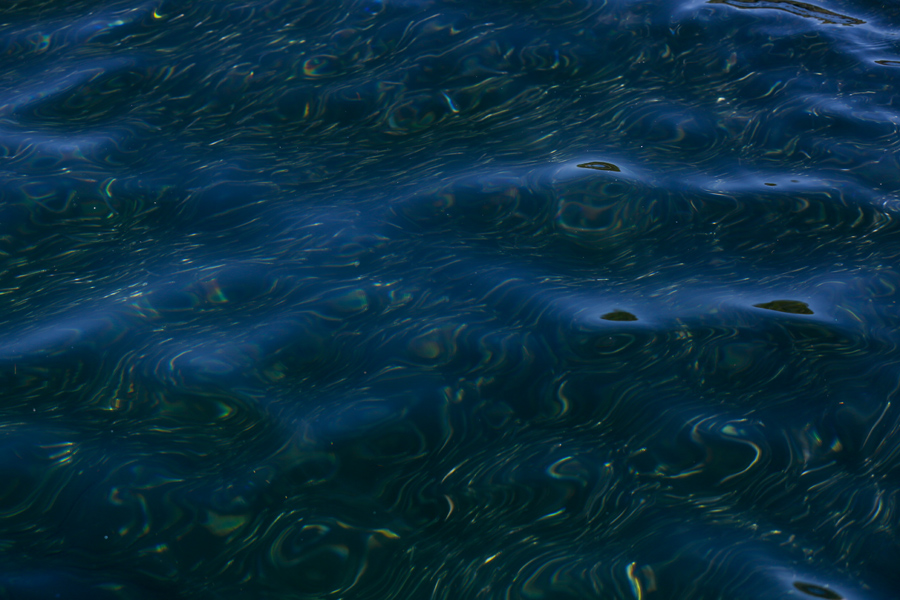 Autumn anchovy schools are followed by snapper, kingfish, kahawai, and other predators.
Slow-jigging techniques combined with kabura, inchiku/bottomship, knife/pencil and slow-pitch jigs are very effective in autumn conditions. Colours I have noticed work well in autumn are yellow and orange – not to say other colours won’t work, but I notice some colours are more consistent during different seasons, as I’ve talked about above. Some days, the right technique specific to each type of lure is required to make the fish bite. Other days, you just need to drop it down. If you feel bites on the drop, stop the jig and hold on! This ‘drop and stop’ technique works on all jigs. If you get to the bottom, then you need to apply the right technique to move the lure through the water column, giving it the most irresistible movement.
Here are some basic tips on lure movement techniques:
• Kaburas are the easiest to use. You simply drop these lures to the bottom (unless you feel a knock on the way down, in which case engage the reel into gear). Once on the bottom, wind slowly (adjusting your speed until you get bites). If you get bites, don't strike, as you want the little fish to attract a bigger one (you will know when a fish is on). Wind until the bites stop, then drop again and repeat.
• Inchikus/bottomships are effective in workups using the same technique as kaburas. Otherwise, you can work them on the bottom by lifting and dropping the rod (they usually hit on the drop).
• Pencil/knife jigs are very effective as they dart out sideways, mimicking an injured fish to drive instinctual attacks. I use a slow, mechanical jigging action and find again that they usually hit on the drop motion!
• Slow-pitch is a style best searched for on the web as there are a multitude of jig profiles and techniques. This is a very fun and effective way to fish!
Winter (June – August)
Winter fishing in New Zealand waters, particularly in the Hauraki Gulf, can be surprisingly productive and is considered by some to offer the chance of catching a personal best snapper. The workups in winter tend to be out wider in the Hauraki Gulf. These workups can potentially last for days on end and cover vast areas. They are usually out past Anchorite Rock, around Little Barrier and out into the Craddock Channel. They are also further north through Te Arai, Mangawhai, past the Hen & Chicks, and even out to the Mokes. Nature comes alive in the Gulf during winter with the arrival of pilchards, attracting mammals and gannets and of course big snapper and kingfish.
Other baitfish also arrive in huge quantities during winter, including jack mackerel and sanma. A huge biomass of baitfish came into the area north, south and east of the Hen & Chicks in early winter this year. The ‘drop and stop’ technique came into its own for both kingfish and snapper in 60 to 80 metres of water. Heavier jigs (150-200g) are often preferred in workups during winter, to get down to the hungry snapper quickly and stay in the strike zone. Knife/pencil and inchiku/bottom shipstyles regularly outperform kaburas in these situations.
Unfortunately, the sharks also turn up in these huge winter baitballs, often taking the biggest fish and our lures! However, on a positive note, this huge winter biomass meant yellowfin tuna were hanging around the Hen & Chicks in June this year!
While workups are great fun, targeting bigger snapper away from the competition of workups can be effective. These larger fish tend to graze in areas holding crustaceans, shellfish, crabs, and worms such as the ‘squiggles’, north of Anchorite and the top of Coromandel. Fishing these ‘paddock grazers’ often involves using the sounder and chartplotter to locate suitable terrain – look for changes in depth and current (and fish sign!). These areas are often found on contour lines where there is a change of depth with sand banks and small reefs.
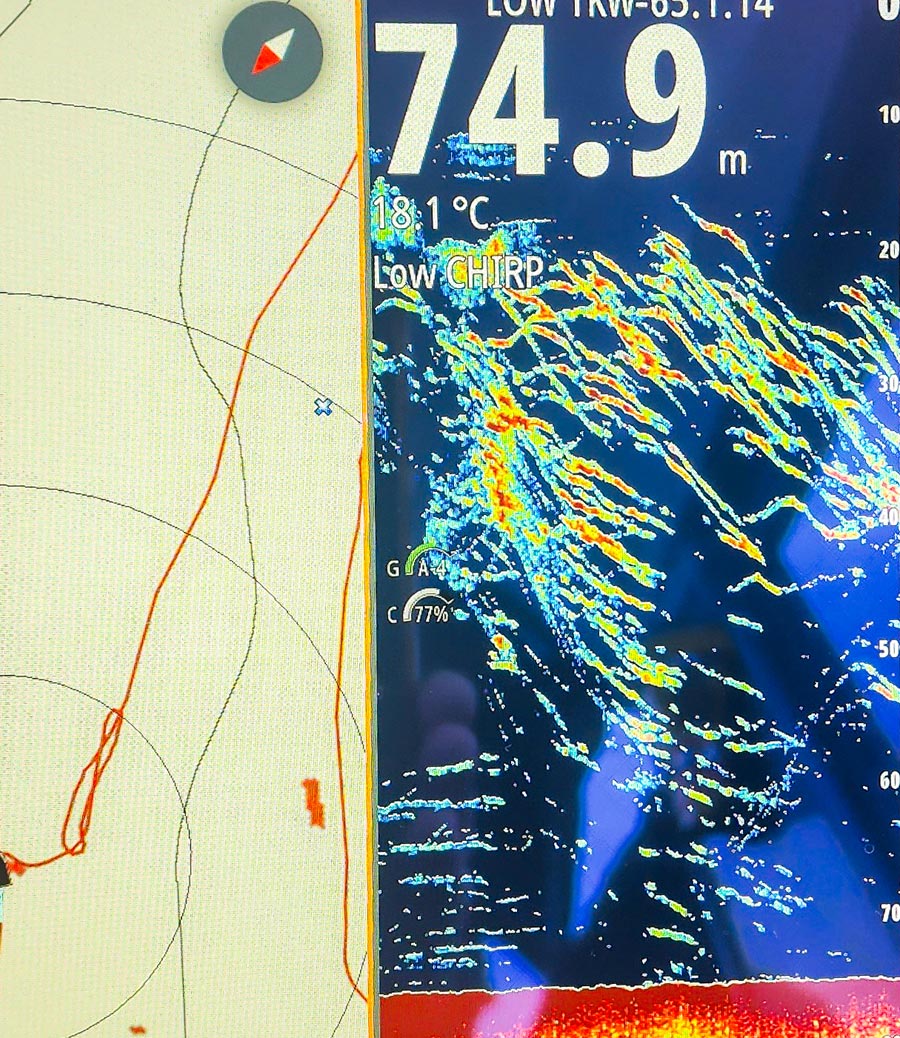
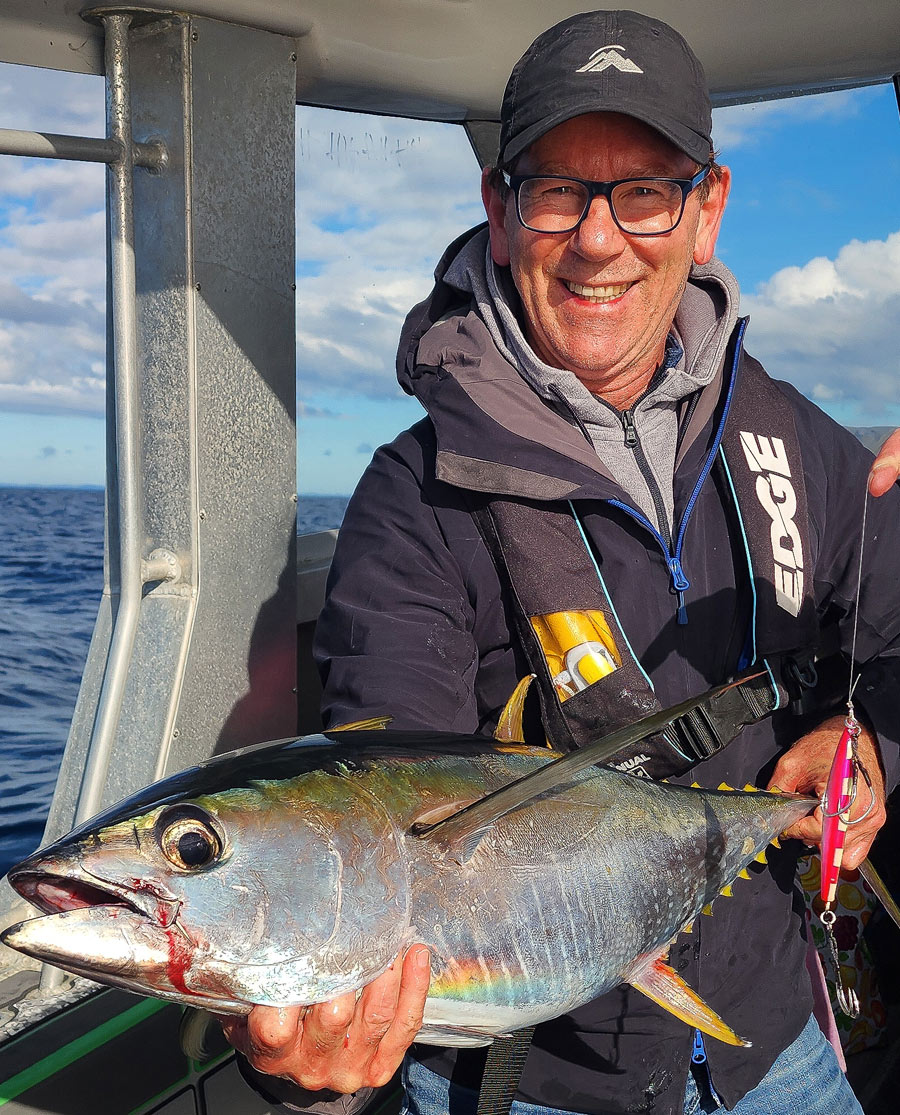 Huge winter baitballs around the Hen & Chicks Islands attract all sorts of predators, including sharks and yellowfin tuna!
Again, heavier lures (around 150-200g) are recommended to target these bigger fish feeding on the bottom. I’ve noted that dull colours like brown, gold, and a little yellow or orange work well in such zones. Slowly dragging lures or lifting them only a few winds off the bottom in ‘paddock grazing’ areas is regularly successful. Softbaits can also be effective in these 40- to 60-metre areas with 2-4oz weights – again, dull colours like ‘new penny’ are suggested. Elevator heads, as opposed to conventional jigheads, can be great for this deeper style of softbaiting.
Auckland offers two very different harbours for winter fishing. The Waitematā Harbour shallows (two to 15 metres) provide good baitfishing opportunities using local bait sources like pilchards and livebaits with light straylining gear. Fishing during the change of light (dawn and dusk) is often productive. The Manukau Harbour shallows (three to 20 metres) are good for targeting gurnard and kahawai using flasher/dropper rigs (red, orange, and chartreuse work well) around slack tide due to strong currents. Berley is important in the Manukau. Areas like the Little Huia Bank can also be productive throughout the tides, and trevally can be caught there on softbaits in the current.
Every season in the Hauraki Gulf and lower Northland waters presents excellent fishing opportunities, with abundant bait attracting predatory fish. Adapting techniques to target both workup activity and the grazing behaviour of snapper away from workups is the key to year-round fishing success.
Good luck out there and tight lines!
- By Nik Key
Fishing Reports Visit Reports
Manukau/West Coast Fishing Report - 15/10/26
Big spring snapper in 60 metres. The El Niño weather pattern isn’t going to be... Read More >
Rotorua Fishing Report - 15/10/26
Solid start to the season! The Rotorua lakes have all started the season well, and... Read More >
Tutukaka Fishing Report - 15/10/26
Big snapper in shallow. Things remain relatively quiet on the fishing front out of Tutukaka,... Read More >
Tauranga Fishing Report - 15/10/26
Bait and temperature on the rise. It’s been great to get out and see some... Read More >


Tuesday 27 October 2026
Major Bites
 - -
- - Minor Bites
 - -
- - Wednesday 28 October 2026
Major Bites
- - Minor Bites
- -
Comments