
Winter Snapper Basics
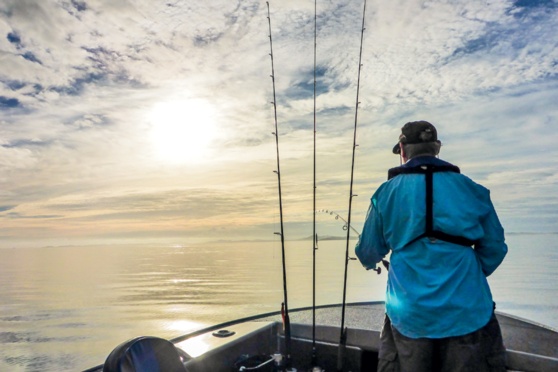
Fishing for snapper in winter is usually slower than in the warmer months and most fishermen are happy with modest catches at this time of year. But winter fishing is also more challenging and interesting, and the sense of achievement is greater when you are successful and can put a feed of fresh fish on the table at this time of year.
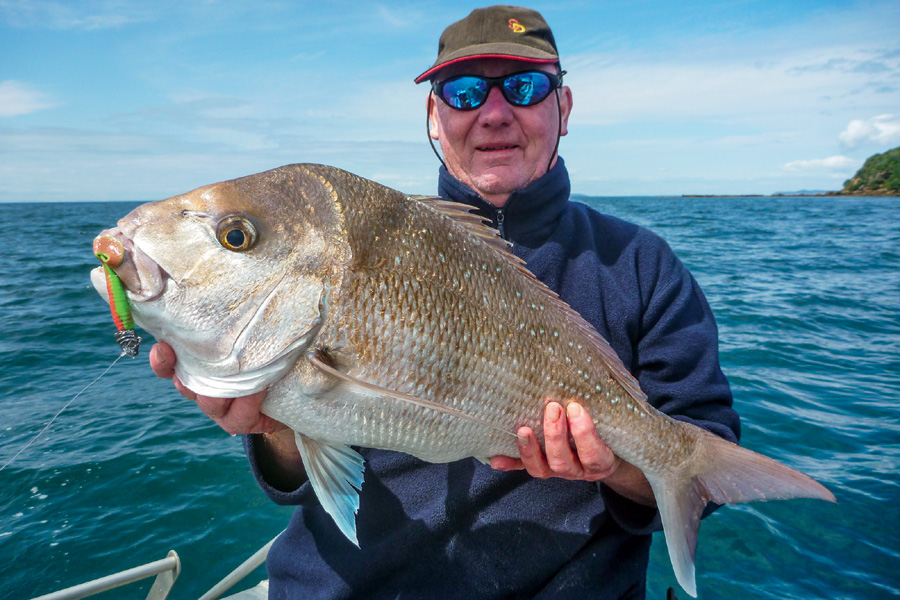
I enjoy winter snapper fishing. With shorter days I don’t have to get up so early to fish the dawn and the same applies in the evening – I can fish the change of light and still be home and cleaned up at a reasonable hour. A lot of people stop fishing in winter too, making it easy to get a park at any ramp, any time, and there are no queues to launch and retrieve either. (Yes, OK, while this article is encouraging winter fishing, I’d actually prefer it if not too many anglers take up the challenge!)
When water temperatures drop over the winter months, it affects snapper in several ways.
The first is in distribution: the shallower inshore regions have more of their mass exposed to the surface, so chill down (and warm up) more quickly. When the water cools down the majority of snapper move from shallow out to deeper waters, where the greater water mass holds the temperature up a bit better. For example, the following are some ballpark figures for annual temperature variations in different regions of the Hauraki Gulf:
• Inshore variation: 12 degrees
• Central area variation: 7 degrees
• Outer region variation: 5 degrees
So, you can see that water temperatures are much more stable in the deeper water than in close to the coast. Generally, snapper in the north do not move so far or for so long as in the colder southern parts of their range.
The degree of movement seems to vary a bit depending on the severity of any given winter, too. I can remember some very cold winters when I first moved to the Hauraki region 40 years ago when the inshore water temperature dropped to around 11°C. Then, the snapper seemed to be nonexistent in inshore waters during the core mid-winter months. Recent milder winters have seen better numbers of snapper lingering in inshore grounds.
Size matters
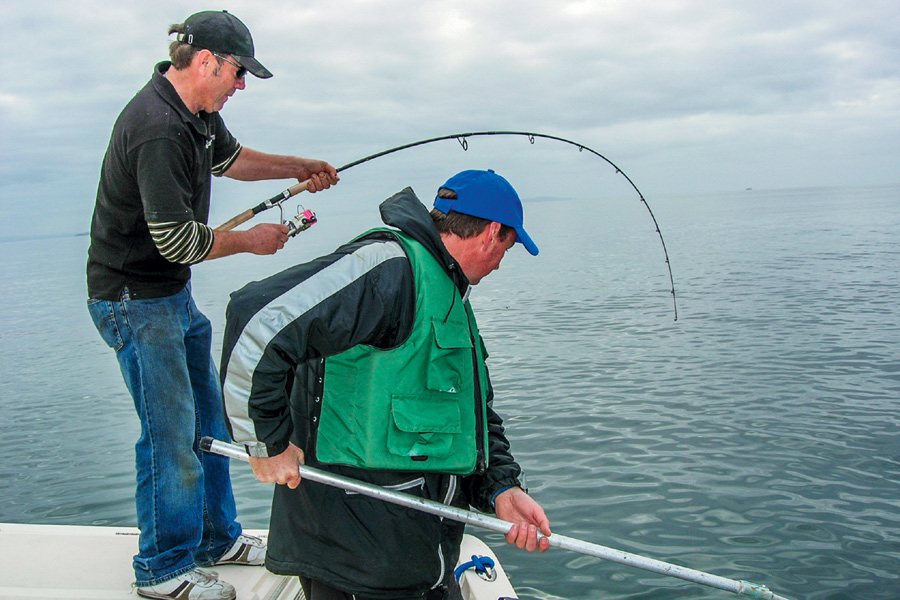
A second variable affecting snapper distribution in the colder months is the size of the individual snapper. The law of thermal mass means that the bigger a fish’s body is, the more heat it can conserve and the colder the water it can stand. Consequently, more smaller snapper move out to deeper water than big fish when the
water gets cold. Although there are still some small fish about inshore in winter (mainly in the medium depth channels (15-25m), this thermal sorting-sieve will help you catch a better size of fish, on average, in winter.
Finding the fish
There are several places to concentrate your search for inshore winter snapper in the north.
• The biggest fish will often be tucked up in areas of shallow foul (say 2-12m) with plenty of rocks and weed.
• ‘Funnel’ areas where there is good tidal water movement (e.g. channel edges) in 12-25m can hold reasonable numbers of snapper in winter as there is always plenty of food to be had.• Fish sometimes hold in shallow reef country near river mouths and in harbours in winter. They can feed well just after a winter flood has flushed out a lot of food and the water salinity is starting to return to normal. A couple of tidal sequences after the rain stops can be a good time.
• A storm smashing into a rocky coast will break up and disturb lots of food items. Try for big fish in close right on the heels of a storm. Don’t risk dangerous conditions, though.
Bait in winter
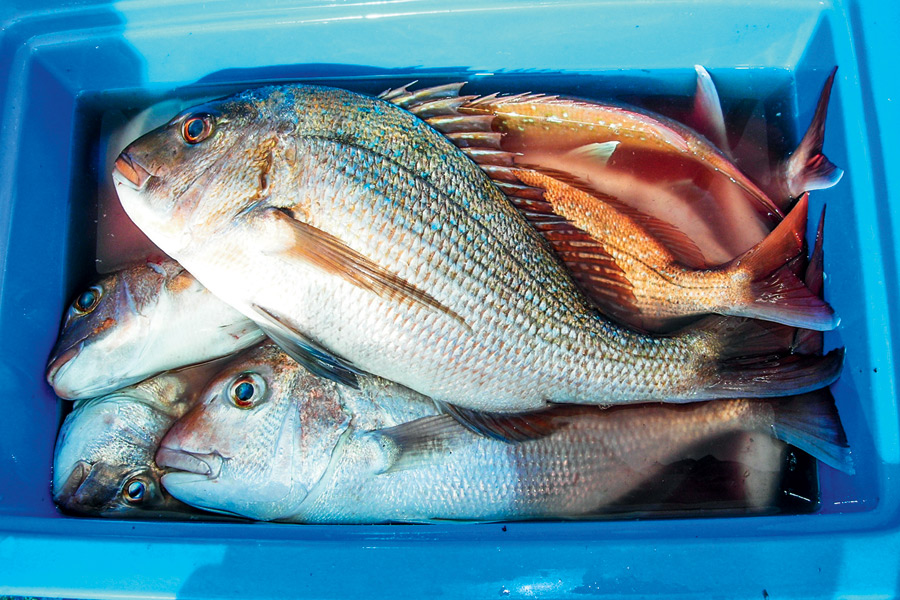
Colder winter water temperatures slow the metabolism of snapper, making them much less interested in feeding at this time. They may only come on the bite for short periods (the length of the ‘bite time’ is much reduced) and even then, they seldom feed very aggressively, often toying and picking at baits. These fish can be frustrating to fish for, and a change of tactics may be required.
• Berley can help get fish interested in feeding and tempt them out of the heavy foul to where fishing for them is more practical. However, if there is likely to be a barracouta presence in the area you are fishing, berley can be counterproductive. If you do decide to use it, release it hard on the bottom for minimum snake attraction.
• In winter, snapper often play with the bait for a long time before they take properly and move off. This means that tough baits that can take a bit of a mauling and still stay on the hooks are required. Favourites that have produced the goods for me are salted skipjack or cut baits from freshly caught whole jack mackerel.
• In inshore shallow waters, use a strayline rig with the least sinker weight and lightest line and leader that you think is practical. Monofilament can be an advantage over braid as the stretch means fish are less likely to feel the line. Likewise, smaller baits can be more effective as they are more easily taken by picky fish. A halfmatchbox size is about right.
• Let the fish run – resist the temptation to strike until the fish has finally taken the bait firmly and started to move off. • Use sensitive tackle and treat every tiny nibble as a decent fish. Regularly, the very lightest bites are from the biggest snapper.
• Often the fish will only bite for a very short period of time and you must take advantage of this. Check the advertised bite times (try www.fishing.net.nz/ bite-times), change of light, and appropriate tide periods and plan to be on your spot and ready to go at the right time. You must make maximum use of the short feeding time, so have back-up tackle ready to go should you get snagged or bitten off.
• There are big fish in the shallows, but they are not in great numbers and they are not feeding aggressively. Wrap up warm, take a thermos flask and be prepared for a long wait between bites if bait fishing in skinny water. Keep noise and vibration to a minimum.
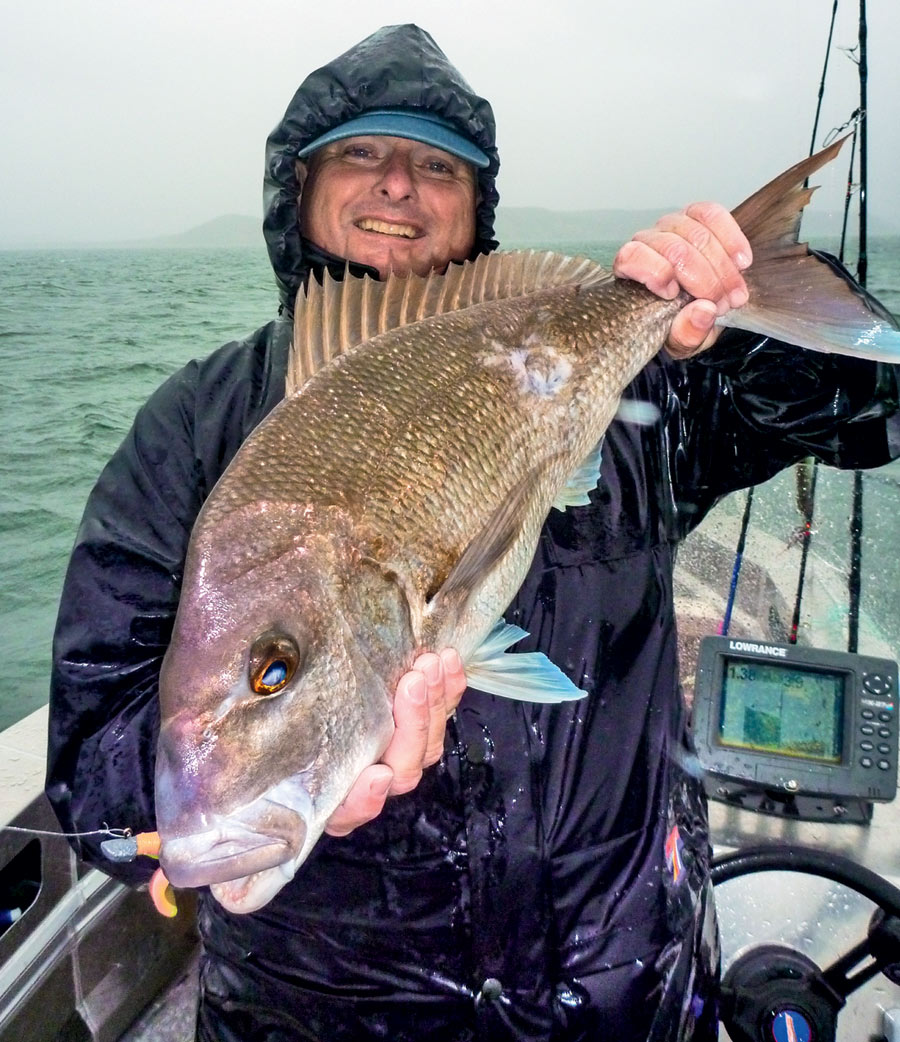
Cold water softplastics
The weedy, rocky inshore zone ordinarily gets little pressure – most boats won’t go right into the shallows, often preferring to use berley to try and entice the fish out of the inshore foul.
Fish tucked up in this heavy country in winter are often not really in a feeding mood for much of the time but will snap at a well-presented soft-plastic lure. In these shallow areas, the fish feel exposed and are more comfortable in times of low visibility such as first and last light, or when there is a heavy shadow cast by the land (or a heavy overcast sky). A decent white-water wash for the fish to hunt under can offer cover and this usually means turbulence that will expose food for snapper as well. For these wary fish, approach quietly and cast well away from boat.
• Standard soft-plastic tackle includes a spin rod and reel loaded with braid rated around 4-6kg (although it may well break at considerably more than this). Braid copes well with weed, often cutting itself free if snagged. In gnarly terrain, working the lure a little above the bottom helps reduce tackle losses (lighter heads come into their own here, as they don’t sink so fast), and lead-head jigs ride hook point up, reducing snagging further.
• Often, if you do hang up, it is just the nose of the lead-head that has dipped into the weed. A sharp jerk will usually tip the jig up and it will pull free.
• A ‘Texas-style’ rig with a worm hook and sliding head weight can be rigged ‘weedless’ too, with the hook point skimmed just under the surface of the tail and popping up under the bite of a fish.
• At this time of year, sluggish fish require slower retrieves. I prefer smaller tails that fussy fish can inhale easily (4” is a favourite) and one with lots
of action at the slow retrieve speeds required, such as a grub tail. Natural colours such as greens and browns work better for me than some of the eyewateringly bright models.
Dress for the conditions
To prevent too much angler suffering, dress for the weather. Early mornings can be damn cold, especially when you add the wind-rush factor of travelling in an open boat or a sea breeze. Layer up with multiple levels of winter clothing, with the top layer being a windproof garment, such as a parka. This way you can stay comfortable by shedding layers as the day warms up.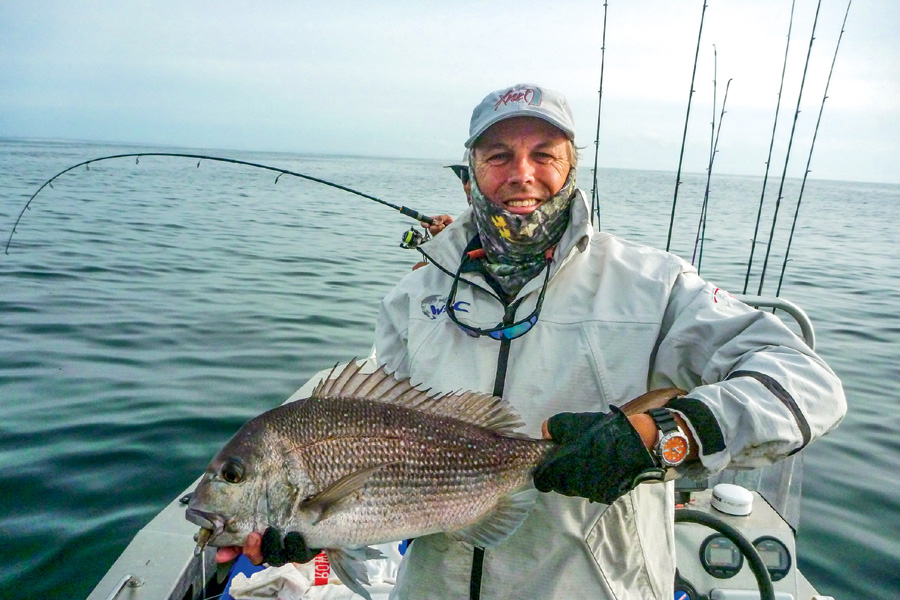
Gloves will help keep the hands warm while traveling (you will probably have to take them off when you start fishing) and sunnies and a neck gaiter will help cut the wind-rush on your face and stop your eyeballs freezing. East-coast fishermen are often heading directly into the rising sun and will need sunnies anyway. A hot drink in a thermos can be a life saver, too.
If you can bear the pre-dawn cold, get out there early and you can be home, usually with a feed, by midday. This leaves plenty of time to wash the gear and process the catch. If you prefer to fish the other end of the day, the good news is that in winter night comes early, so when the bite stops or darkness comes, you can knock off and be home at a reasonable hour to warm your feet by the fire and hopefully work your way through a feed of freshly caught winter snapper!
Fishing Reports Visit Reports
Outer Hauraki Gulf Fishing Report 17/09/26
Spring wind the handbrake. Spring is starting to make its presence felt in the outer... Read More >
Top of the South Fishing Report - 17/09/26
Early snapper in Tasman Bay. Well, spring is finally here, and the days are getting... Read More >
Bream Bay Fishing Report - 17/09/26
Good snapper catches reported. After Tangaroa turned off the fish tap for a month or... Read More >
Bay of Islands Fishing Report - 17/09/26
Pacific bluefin tuna for the lucky few. The last fortnight has seen more fishable days... Read More >


Friday 25 September 2026
Major Bites
 - -
- - Minor Bites
 - -
- - Saturday 26 September 2026
Major Bites
- - Minor Bites
- -
Comments