
What Trace to Use?
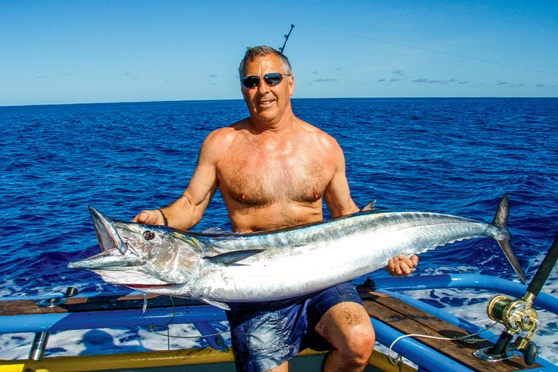
Experienced angler John Eichelsheim has been exposed to most fishing techniques and species available to Kiwi fishers – from marlin through to carp, baits through to lures – and there is one thing that is common to almost every form of fishing: trace. John shares his thoughts on this essential piece of terminal tackle…
The trace, or leader, is the piece of terminal tackle that connects your main line – the length of nylon monofilament (mono), GSP braid (braid) or fly line wound onto your reel’s spool – to the hook or lure that catches the fish.
A leader minimises the risk of fish with sharp teeth biting through the line, provides better abrasion resistance should the line/trace come into contact with a fish’s body, the sea floor or objects in the water, and helps to control fish at the boat. Sometimes a trace also allows more vigorous casting.
The length, thickness, colour and type of trace material you select depend on the gear you are using, your fishing style and the sort of fish you are trying to catch.
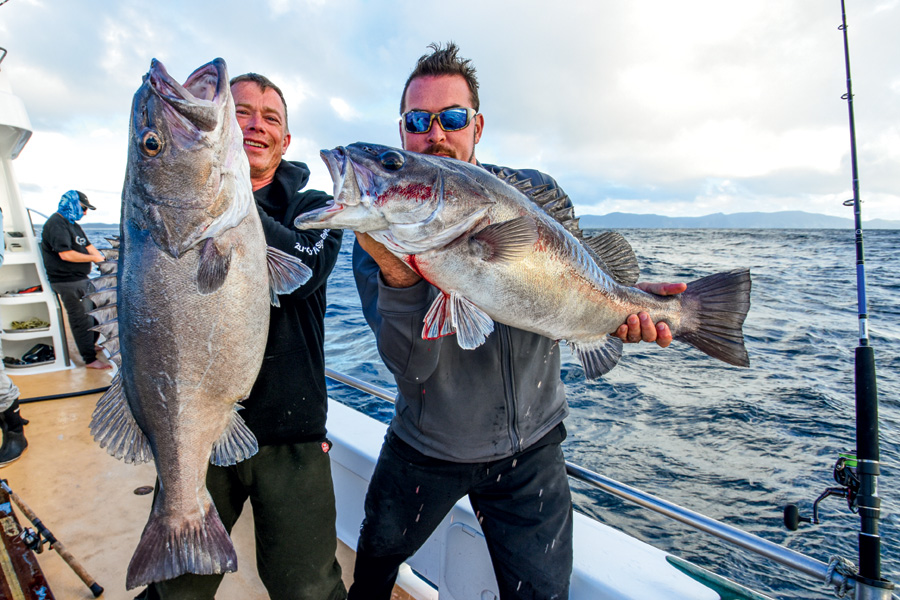
The length, thickness, colour and type of trace material you select depend on the gear you are using, your fishing style and the sort of fish you are trying to catch.
Nylon or fluorocarbon?
For most fishing applications a length of nylon monofilament, usually thicker than the mainline to provide good abrasion resistance, is the usual leader choice.
You can use any old nylon as trace, but these days most people buy mono sold specifically as trace material. Dedicated trace nylon will exhibit varying combinations of desirable traits, such as high abrasion resistance, stiffness (or limpness) and high or low visibility. These qualities are imparted during the manufacturing process.
Fluorocarbon trace is becoming increasingly popular. Compared to nylon monofilament, it has superior abrasion resistance, better strength-to-diameter ratio, doesn’t float on the surface and is allegedly less visible in water.
Other trace materials are sometimes used. GSP (braid), Kevlar or other braided/woven lines are popular with American bass fishers and are used as hook links by carp fishers around the world. Where toothy critters are the target, fishers choose either single-strand Monel wire or stainless-steel wire cable, often nylon coated.
I predominantly fish soft-plastics, so I tend to favour fluorocarbon trace. The exceptions are topwater fishing and jigging, where I prefer nylon traces (see below).
In my bait fishing days, I used nylon most of the time, but fluorocarbon wasn’t universally available in New Zealand 20 years ago and was very expensive to boot. Now when I fish with bait, I regularly use fluorocarbon, particularly for stray-lining and almost always when fishing a livebait.
I’m not a fish, so can’t say whether fluorocarbon is really harder to see in the water – its manufacturers claim it is less visible than nylon monofilament because of the way it refracts light. I’ll take their word for it.
I started using fluorocarbon in the mid-1990s when it became popular with the fly fishing fraternity. A fluorocarbon trace could spell the difference between success and failure when the water was clear and trout were finicky. These days fly fishers seldom use anything else.
Back then we also used fluorocarbon to catch wary yellowfin tuna, which would sometimes refuse livebaits or bait cubes presented on monofilament trace. When tuna were bite-shy, fine diameter traces had to be used, and fluorocarbon is generally finer in diameter than nylon in a given breaking strain. It also has better abrasion resistance and, with its neutral buoyancy, sinks the bait more naturally through the water column.
It was expensive, but worth it for the extra bites. The only negatives were fluoro’s vulnerability to a poorly-tied knot and to shock loads, but since we were fishing monofilament main lines, this wasn’t as big an issue as it can be with non-stretch braided lines.
For soft-plastics fishing I use fluorocarbon trace almost exclusively, the only exception is when I fish deep water where it doesn’t offer any advantages. As mentioned, I use nylon when top-water fishing and jigging. Top-water lures and jigs trigger reaction bites, so fish don’t have time to closely examine lures and traces before attacking them.
Nylon has more stretch than fluorocarbon and copes better with shock loads, which is a good thing when 25kg-plus of rampaging kingfish is on the line and 12kg or more of drag pressure is dialled into the reel.
Nylon is the right choice whenever visibility isn’t an issue: at night, or in low light conditions, or in deep water where it’s dark all the time. Nylon is also perfect for tying up ledger/dropper rigs.
How long and how thick?
For marlin fishing, traces are often thick and longer than the fish’s body to protect against abrasion and tail-wrapping, and to give the deckhand (the trace- or wire-man) something to grab onto when the fish is boat-side.
In New Zealand, traditional marlin traces were typically 200kg breaking strain or heavier (so thick) and up to nine metres long, but the current trend is towards much lighter traces. With the popularity of wind-on leaders spliced directly onto the main line, they’re a lot shorter too.
For most other fishing applications, trace length is tailored to suit. For soft-bait fishing, I like to start with at least a rod length of fluorocarbon trace. With lure changes, break-offs and the trimming of damaged sections, it will become progressively shorter during a fishing session. Once it gets down to a couple of metres long, I replace the whole trace.
For bait fishing, a metre-and-a-half of trace is usually ample. When fishing for snapper, kahawai, trevally and many other inshore species, a trace of between 15 and 27kg breaking strain is usual. For this type of fishing, it’s not so much about the strength as it is about abrasion resistance, so in some instances thicker is better, even if it’s not stronger.
Light tackle fishers often go lighter on their traces, trading abrasion/bite-off resistance for the advantages of inconspicuous terminal tackle. However, some species, such as blue cod, are seldom bite-shy, so trace thickness isn’t vital.
I used to fish a very light leader when stray-lining for big snapper, or sometimes no ‘proper’ leader at all, instead knotting a few centimetres of relatively thick nylon trace at the hook end to protect against bite-offs. I could hide the super-short trace in the bait, creating a very inconspicuous rig that would often fool wary snapper. However, it provided no protection when a snapper bored into the kelp, nor did it guard against damage from sharp scales or gill plates.
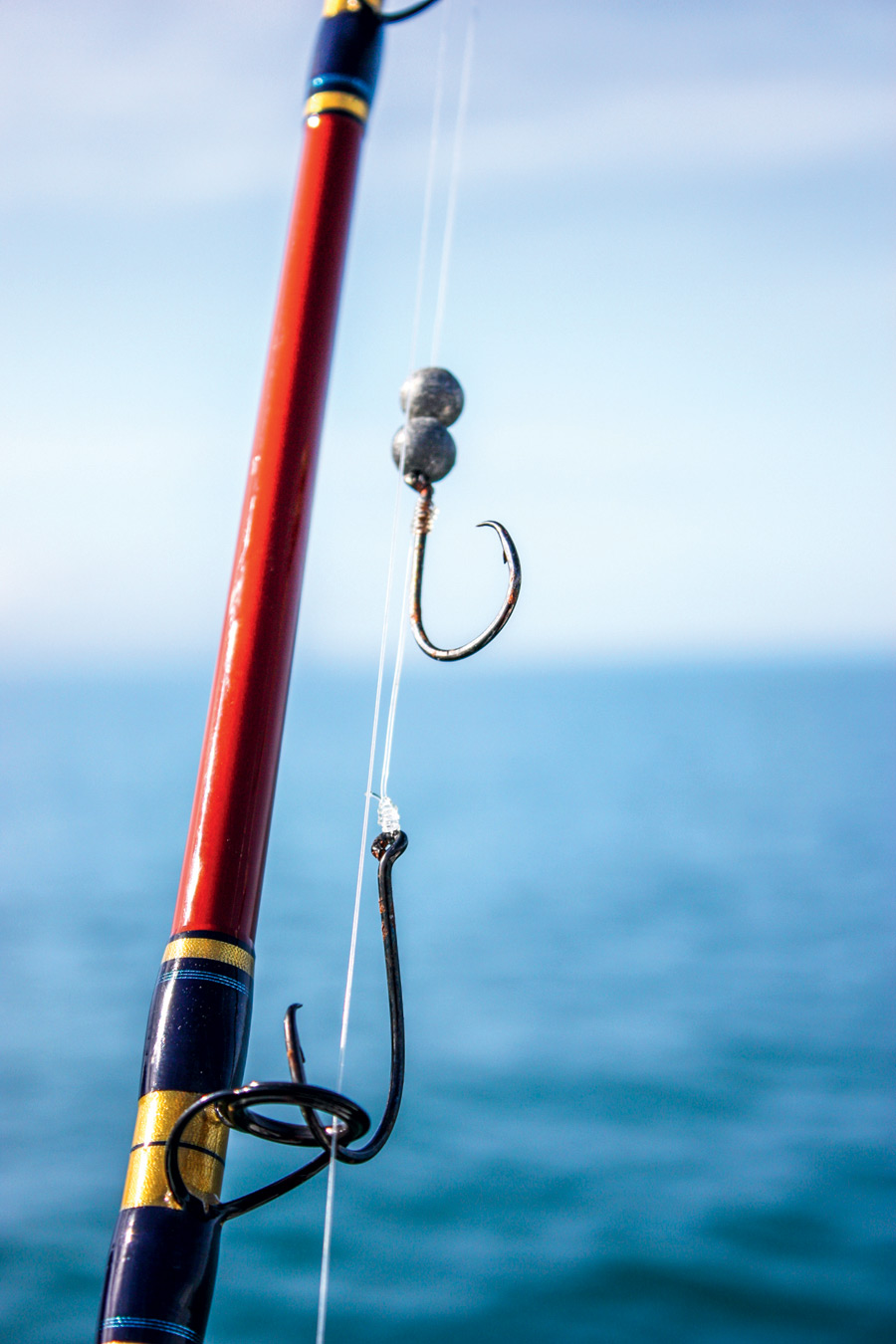
The writer uses only a very short section of heavier mono trace in his straylining rigs to prevent bite-offs.
I always think the trade-off is between a measure of protection against bite-offs/abrasion and getting the bites – if the trace is too thick and visible, fish may be wary of biting, particularly in clear, shallow water.
Trace length is similarly 1-1.5 metres for most livebaiting applications, with its thickness depending on the tackle used (lighter trace with lighter tackle) and the size of the livebait. Always use lighter trace with small baits and for fishing near the surface in clear water.
For targeting kingfish, traces usually range between 60 and 150 pounds (27-70kg); traces any heavier are reserved for deep water fishing.
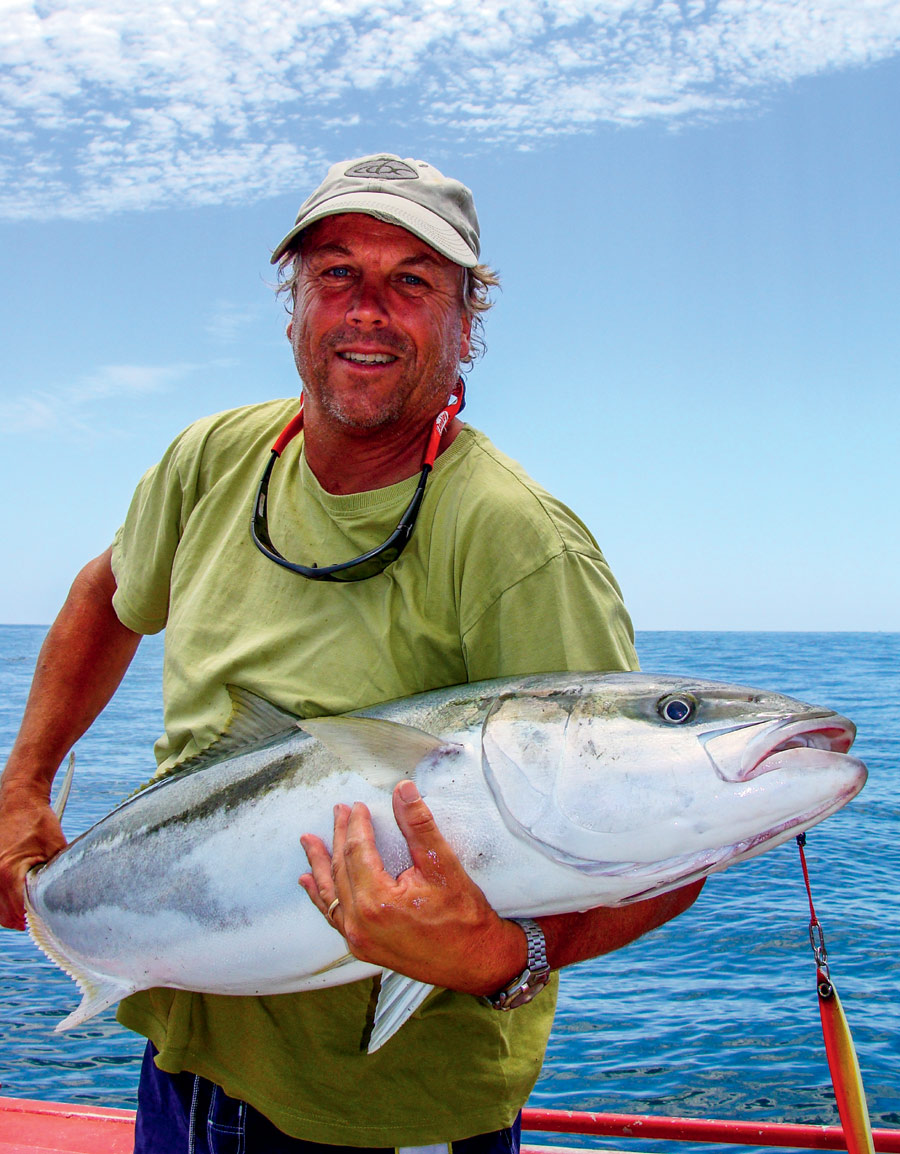
For targeting kingfish, traces usually range between 27-70kg (60-150 pounds). Traces any heavier are reserved for deep water fishing.
Fly fishers tend to use long traces, especially with floating fly lines. They are typically at least a rod length, but can be up to twice as long because thick, highly visible fly lines easily spook fish. These leaders are often tapered, from thickest at the fly line end to thinnest at the fly end, to better ‘turn over’ the fly during the cast and to present it as subtly as possible. A fine tippet usually connects the fly to the trace.
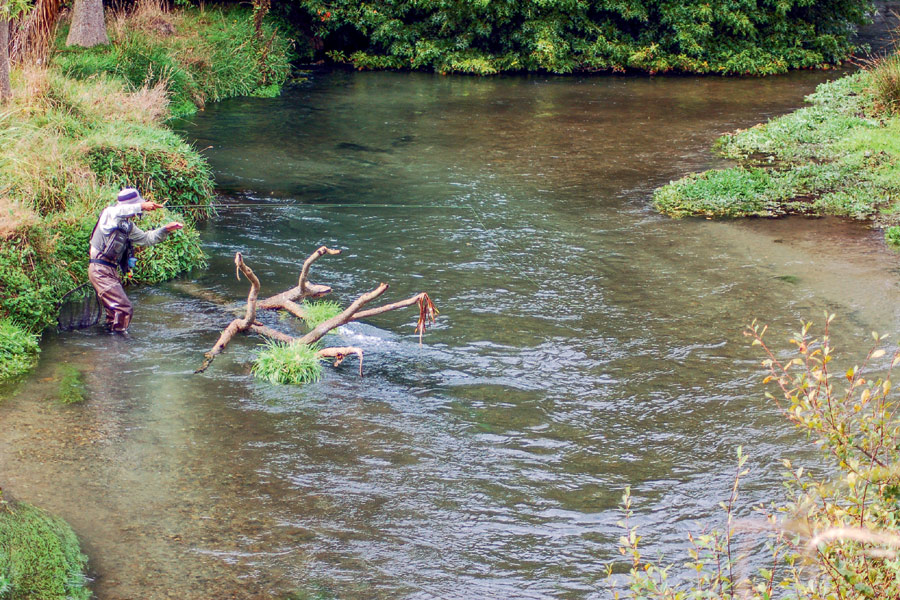
Freshwater leaders are often tapered, from thickest at the fly line end to thinnest at the fly end, to better 'turn over' the fly during the cast and to present it as subtly as possible.
Trace length is less of an issue when using sinking lines or saltwater fly fishing (where traces can also be thicker), but fly fishing leaders are usually fine in diameter as they are often presenting very small flies. Dry fly and nymph fishers sometimes use tippets of less than 2kg breaking strain.
Light as you dare
I’ve always been an advocate of using a trace that’s as thin as you feel you can get away with. It’s all about getting bites and thick traces are easier for fish to see and feel. By using light leaders, you run the risk of losing the odd fish to break-offs or abraded/bitten through traces, but you’ll get far more bites.
On the other hand, if you are losing fish through repeated trace failures, change to a thicker leader – there’s no value in leaving hooks in fish because your tackle isn’t up to the job.
|
|
|

Fishing Reports Visit Reports
Outer Hauraki Gulf Fishing Report 17/09/26
Spring wind the handbrake. Spring is starting to make its presence felt in the outer... Read More >
Top of the South Fishing Report - 17/09/26
Early snapper in Tasman Bay. Well, spring is finally here, and the days are getting... Read More >
Bream Bay Fishing Report - 17/09/26
Good snapper catches reported. After Tangaroa turned off the fish tap for a month or... Read More >
Bay of Islands Fishing Report - 17/09/26
Pacific bluefin tuna for the lucky few. The last fortnight has seen more fishable days... Read More >


Monday 21 September 2026
Major Bites
 - -
- - Minor Bites
 - -
- - Tuesday 22 September 2026
Major Bites
- - Minor Bites
- -
Comments