
Using cicadas for Trout

I love the new year. After all, the months of January and February see both brown and rainbow trout throwing caution to the wind and feeding hard on many different types of terrestrial insects. Fish that were very picky and hard to catch become easier, with the big fish now able to be enticed up to feed off the surface.
Over this period the sun is hot, the daylight hours are long, and the countryside comes alive with large insects. Many of these are terrestrials, a group of insects that is not born in the water as mayflies, stoneflies and caddis are. These terrestrials include beetles, crickets, grasshoppers and spiders, but the king of all terrestrials for the fly fisherman is the cicada - during the height of summer the ever-waiting trout are just lining these insects up to smash them!
Once the new year rolls around, our rivers are usually running very clear and long periods of settled weather see many of them low and easily wadable. The snow melt has gone from the tops of all but the highest mountain peaks, and the fresh winds of the pre-Christmas period have changed to become light, warm zephyrs that carry many insects in the air. The daytime air temperatures are now in the mid to high twenties - ideal conditions to bring the cicadas on to fill the summer air with their loud constant chirping.
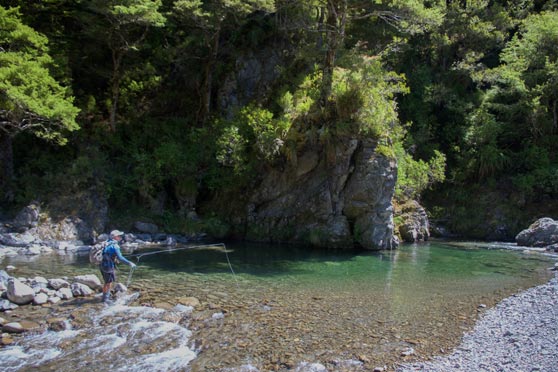
Forty-two different types of cicadas are found in New Zealand and its islands. Our cicadas vary from other types around the world and can be found high up in our mountainous regions.
The life of a cicada
Here’s a simple overview of their life cycle. The female cicada bores holes in twigs and leaves to lay its eggs. Once the larvae hatch, they drop to the ground and burrow into the soil. During this nymphal stage the cicada can live underground for anything between two and thirteen years. (In North America there is a species of cicada that lives up to seventeen years underground before surfacing, making the cicada the longest-lived insect on the planet.)
While underground, the nymphs burrow through the dirt with strong front legs and feed on the root juice of trees. The cicada nymph lives underground until the outside air temperature and conditions are right (mid to high twenties degrees), then burrow up to the outside world and shed their exoskeleton to become adults. You will often see the exoskeleton of the nymph left clinging to the bark of large trees or on the exterior of houses.
The first cicadas of the season start to chirp in late November, but by January the high-pitched sound of cicadas in the trees is deafening, with the summer air filled by their song.
Initially cicadas are heard high up in the canopy, but as more of the insects emerge, they will drop down to be very low in the trees.
Cicadas co me after the brown and green beetles, so before they arrive en masse, the trout – already accustomed to taking beetles – are predominately looking up to feed. This is why cicada imitations become the most valuable fly pattern for the river and, in some cases, the lake angler, upon arriving in numbers.
The size of Kiwi cicadas vary from 2cm up to 4cm, making them quite the mouthful for eager trout. They are also packed full of goodness, so it would take a lot of caddis or mayfly nymphs to provide a meal equivalent to half a dozen good-sized cicadas.
When it comes to flying, cicadas don’t have the grace or agility of a damsel fly or dragonfly, so once the wind begins to pick up in the afternoon, many cicadas end up in the water. Upon hitting the water’s surface, they cannot launch themselves back into flight, so must wait to hopefully get blown to a bank before pulling themselves free. This makes them a very easy meal for any fish looking upwards – often you will see fish move from quite a distance away to smash cicadas when trapped on the water’s surface.
Cicada opportunities and tactics
Cicadas can be found around all types of water, from small spring creeks and tussock-flanked streams up in the high country, to large, bush-lined freestone rivers. I prefer to explore steep, bouldery rivers with sections that are inaccessible over the early part of the season. In late summer these gorges can finally be negotiated and, hopefully, the less educated fish will oblige, taking to the large imitations being offered.
Smaller rivers can usually be covered by sight fishing only. Conversely, on larger freestone rivers, it is just not possible to sight-fish everything, so a mixture of sight and blind fishing is deployed to cover the likely-looking water.
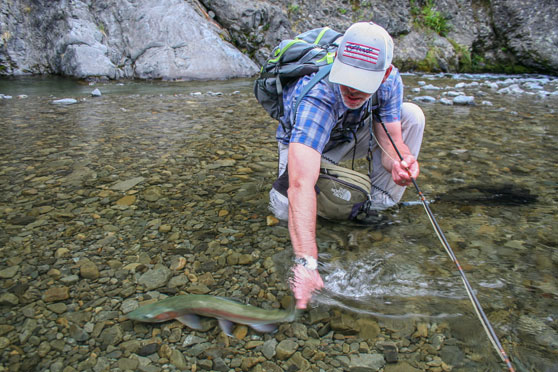
Large size 6 and 8 cicada patterns have the power to drag the fish up from all sorts of depths. When it comes to specific cicada patterns, there are some very good imitations sold commercially nowadays. Which one(s) you choose depends on where you fish, as the colour and size of the cicadas can vary geographically. My favourite imitative patterns are Russell Anderson’s ‘Russell's Cicada’ and Clark Reid’s ‘Fugly Cicada’. Both fly tiers are exceptional trout fishing guides around the Central North Island and their imitations are very successful. (Peter Carty also has some very good terrestrial patterns that work really well; Peter is also one the most respected guides in the country.)
It is amazing to see your oversized dry fly dancing down the heavy current, then suddenly see a flash of gold or silver smash the cicada off the water’s surface.
One very effective part of the river to target with cicada patterns is just to the inside edge of the main current, especially alongside the eye of the pool, where the water has just tumbled down the rapid to spill into the pool. Most of the fish in this part of the pool will be deep, and as the cicada sits in the still water next to the fast current the fish will see the imitation and often speed upward to engulf the fly before the current sweeps it away.
Fishing cicadas is not just limited to rivers: some of the insect-based or bush-lined lakes can produce some awesome fishing. For example, the North Island lakes such as Otamangakau, Aniwhenua and Rotoaira all produce some wonderful dry-fly fishing.
When fishing dry flies, it pays to make the leader as long as can still be handled during casting to help provide a drag-free drift. To give you some idea, if fishing a large dry only, my total leader length is over one and a half rod lengths, but if using the cicada pattern as an indicator first thing in the morning, I cut the leader to the dry back a little, then attach another 1-1½ metres of tippet to the nymph. I often fish this way in the early morning to hedge my bets; once the dry has been taken a couple of times, I cut the nymph off and continue to fish the dry only for the rest of the day.
The leader setup is usually made up of a 9 or 10ft (2.75-3m) tapered leader; fly-fishing terms are all in imperial measurements, so when you purchase a tapered leader it will be measured in feet and pounds. The leader will taper down to 8 or 10lb (3.5 or 4.5kg) – that means it will hold lots of energy in the air and turn over my long 16-18ft leaders.
I attach one to two metres of 8lb or 7lb fluorocarbon from the tip of the tapered leader, depending on where I am fishing. I use fluorocarbon because it is stiffer than normal monofilament and holds more energy, so turns my leader over every time.
However, if having trouble turning over long leaders, try a floating polyleader instead – they work exceptionally well.
That sorted, the large cicada imitation dry fly is cast downwind and allowed to drift with the wind – until a trout hopefully rises to take it. Often you will see and hear huge rises out on the lake when the fish are locked on cicadas and smashing them off the surface.
As already alluded to, the angler can also fish one or two nymphs underneath the large cicada dry fly to cover varying depths, as well as help the dry to settle when the wind picks up, so it has a more natural drift down the wind lanes.
If fishing in faster currents found in the back country, where you tend to be targeting larger fish, it pays to use heavy leaders - under 7lb or 8lb is not recommended.
Don't worry if your cicada pattern lands hard on the water, as the real thing always hits the water with a splash; there is nothing subtle about a cicada hitting the water.
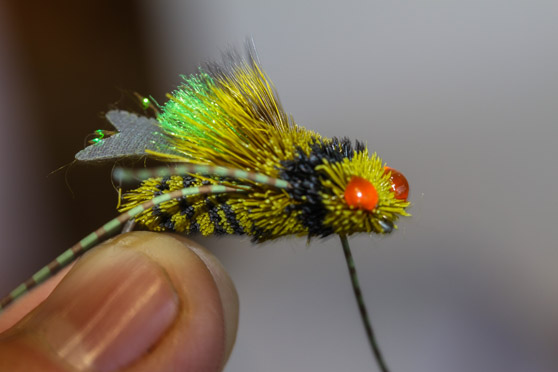
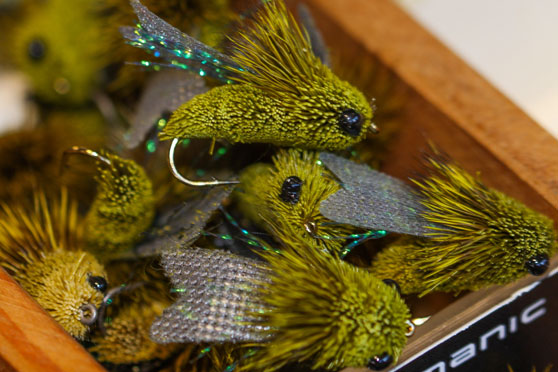
Some of the more realistic cicada patterns can be quite difficult to see on the surface, as they’re olive or brown in colour. My own ties always include a large white post which is visible no matter how boisterous the currents are. Many imitations are tied with deer or elk hair and trimmed. My own patterns are tied as large general representations that look more like a large stimulator with rubber legs and a large spotting post on top.
New Zealander flyfishers are generally a little scared to fish large dry flies; instead, most tend to go out and nymph-fish hard all year round. So if casting large dries to sighted fish is something you’ve not experienced before, then make getting out and fishing some cicada patterns a goal this summer. Once you have seen everything unfold before your eyes and pulled a couple of large rainbows and wily old brownies to the surface, it will become absolutely addictive.
Fishing Reports Visit Reports
Outer Hauraki Gulf Fishing Report 17/09/26
Spring wind the handbrake. Spring is starting to make its presence felt in the outer... Read More >
Top of the South Fishing Report - 17/09/26
Early snapper in Tasman Bay. Well, spring is finally here, and the days are getting... Read More >
Bream Bay Fishing Report - 17/09/26
Good snapper catches reported. After Tangaroa turned off the fish tap for a month or... Read More >
Bay of Islands Fishing Report - 17/09/26
Pacific bluefin tuna for the lucky few. The last fortnight has seen more fishable days... Read More >



Friday 25 September 2026
Major Bites
 - -
- - Minor Bites
 - -
- - Saturday 26 September 2026
Major Bites
- - Minor Bites
- -
Comments