
Using bite times

Ever wondered how one fishing trip can be a roaring success, yet the next one to the same spot can be about as useful as a chocolate teapot? A lot of anglers put it down to ‘bite times’ – Hauraki Gulf charter skipper Nick Jones explains further…
I tend to think of bite times as occurring on different temporal levels: there are generally distinct periods of time within each incoming tide, outgoing tide, day, week, month, season, year, or even sequence of years, when the fishing is better relative to other times.
In some areas like the Hauraki Gulf, these bite times have a huge influence on the outcome of any fishing trip. That’s why it’s important to understand some of the factors that can determine the bite times.
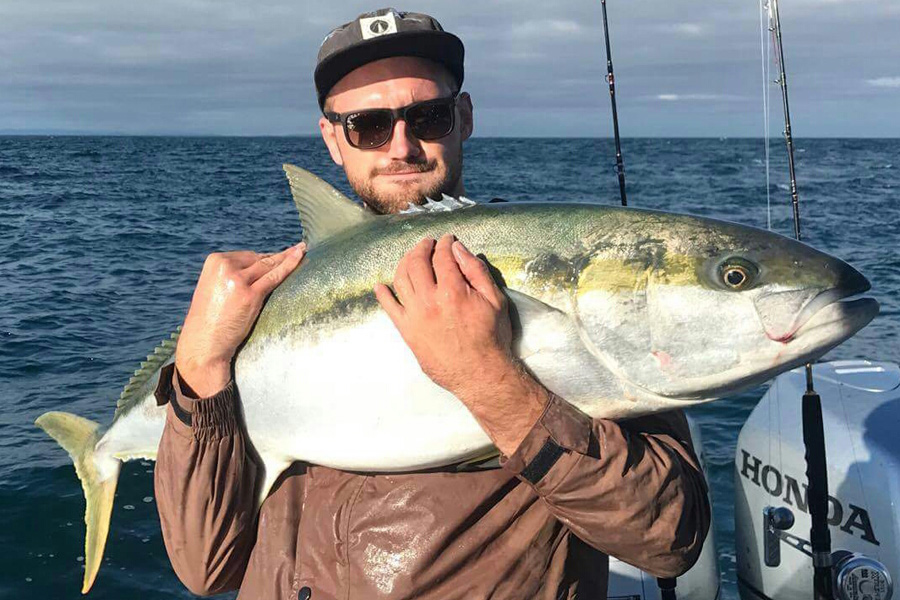
Tides
For salt water fishing, tides are probably the biggest factor affecting fish behaviour. While intertidal areas, such as mudflats, will obviously see fish activity affected in a big way, the tidal flow influences fish behaviour in deeper water, too.
In New Zealand, tides are semi-diurnal, meaning there are roughly two highs and two lows over a 24-hour period, caused by the moon’s gravitational pull as the earth spins on its axis.
When stray-lining baits or fishing lures for snapper, the fishing is usually better with some tidal flow present, as this encourages fish to feed more actively and decisively. That’s why days with bigger tidal ranges (i.e. when the gravitational forces of the sun and moon are closely aligned) generally produce better.
The last hour before and after a tide change is often a good time for fishing in the Hauraki Gulf, with fish feeding hard just before and after this slow period. In saying that, though, I have experienced phenomenal slow-jig fishing right on slack tide – generally immediately after telling my clients not to expect much action!
Some spots can really fire up for kingfish over a change of tide too, as baitfish move over to the other side of a pin or reef, thereby becoming more vulnerable to attack.
Lastly, in some high-current fishing situations, slack tide is the preferred fishing time – but mainly because it’s easier to get baits down to the fish.
The moon
As the moon has the biggest influence on tides and nightly illumination, it is no surprise that many fishers blame the moon phase for a lousy trip!
In my experience, fishing is often productive leading up to full and new moons. This could be attributed to growing tidal ranges, given that spring tides occur during the full and new moon. However, the fishing is often terrible for one or two days right on the new moon, but especially the full moon – a phenomenon experienced by many fishers and one of life’s biggest mysteries!
Theories for this include the fact that fish have already had multiple days of feeding hard, which can’t be sustained, right through to the full-moon glow facilitating nocturnal feeding, meaning less feeding activity during the day.
Most ‘fishing calendars’ reflect the solunar calendar. The solunar theory is based on the hypothesis that animals and fish move according to the location of the moon and sun in comparison to their bodies.
The basic calculation for the major solunar bite time (when fish are most active) maintains the fishing will be best when the moon is directly overhead or directly underfoot (i.e. halfway between moonrise and moonset). This happens roughly twice over a 24-hour period, so you generally have one, sometimes two, chances at the solunar bite time during daylight hours.
Solunar bite times are useful to track in the Hauraki Gulf; often when the fishing is great over slack tide, it coincides with the major solunar bite time.
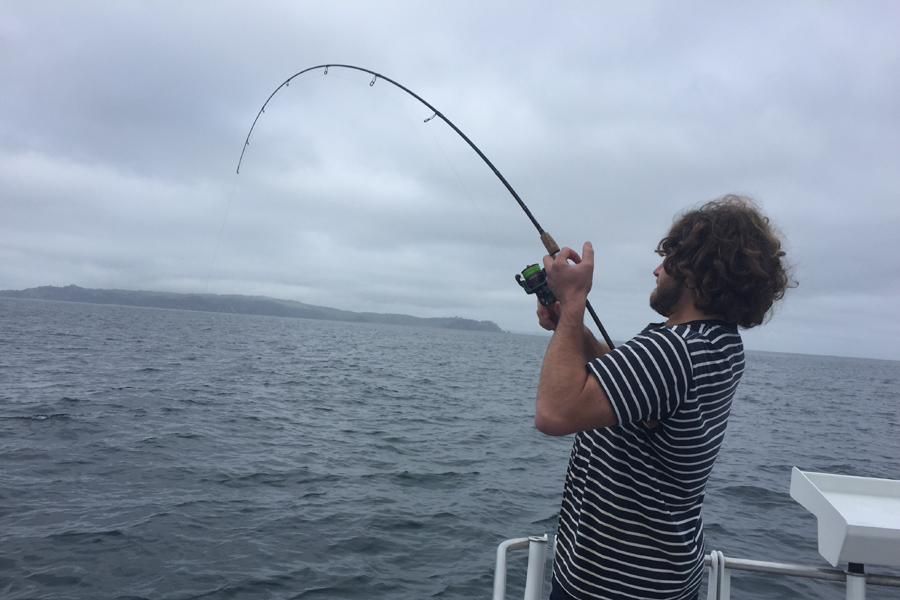
The sun
Change of light is my favourite time of the day to drop a line; it is common knowledge that fish feed hard as the sun is rising or going down.
Sunrises and sunsets mean the ‘changing of the guard’ in terms of fish species and, consequently, the last or first chance for a given species to feed for the day or night.
Some fish species do not sleep, instead adopting a ‘rest’ mode. I believe large, sagacious snapper often rest during the day, evidenced by the most successful big snapper anglers in the Bay of Islands fishing right through the night. In the Hauraki Gulf we have had great snapper fishing on kabura-type lures in 55m of water in the pre-dawn gloom, so you can never get out there too early.
In my experience, when the water’s warmer, fish are more active during sunsets and sunrises. Early morning is also the best time to catch live baits, which become notoriously difficult to catch in some areas once the sun gets up. Daybreak is also the best time to fool a kingfish in shallow water.
Seasons
As all fish have seasonal feeding and reproductive cycles, understanding these can be hugely beneficial. Many fishers believe fish metabolisms slow down in winter and therefore feed less. While this may be true, the best conditioned kingfish and snapper I’ve seen were caught in winter. I believe that feeding hard to maintain a decent layer of body fat is important for fish during the colder months.
Fish are easier to catch when feeding hard, which is why spring, with the pilchard run, and autumn, with the anchovy run, can be great times of year for snapper fishing in the Hauraki Gulf. In saying this, I have experienced days where there seems to be too many baitfish around and you can’t get the fish to bite!
Last summer we experienced some tough slow-jig fishing for snapper – the fish were there, but hard to catch. I’m not sure whether this was related to: spawning activity (fish that fed hard to put on condition during spring may have become more focussed on reproduction as summer progressed); the water being too warm to sustain extended feeding activity; or simply that the longer days spread out the feeding opportunities over an extended period. I’m therefore hoping that if the conditions were favourable for spawning and the subsequent survival of snapper fry, last summer’s poor fishing may lead to some bumper fishing in coming years!
Weather
I often find good fishing occurs on overcast or drizzly days, especially in shallow or clear water. Such days just feel fishy when heading out, probably because of positive associations from past experiences in similar conditions.
Fishing can be tough during storm fronts and when the barometric pressure has dived. However, immediately before the barometric pressure drops and after a big storm can be very good. Fish are either stocking up before the storm or hungry after hunkering down to wait out the bad weather.
Periods of heavy rain make coastal water more turbid, and if using unscented lures that rely on being seen, be aware that their effectiveness will be reduced in such conditions. On the flip side, when the water is super clear, it pays to downsize your leader diameter and/ or use fluorocarbon. I often find that 60-80lb fluorocarbon leader out-fishes 100- 120lb fluorocarbon at the Mokohinaus when live-baiting for kingfish, but leader diameter makes less difference in the murkier waters closer to Auckland.
The previous day
In my opinion, the very best way to predict the bite is knowing when the fish were on the bite the day before, then adding an hour for the progression of the daily tide cycle. Recent intel is key, as is being a charter skipper regularly out on the water – a huge advantage.
It almost goes without saying, but the more up-to-date the report, the better. If I had a great bite say two hours before high tide on Saturday, I will plan my day so I’m fishing and not travelling at the same time on Sunday. On some days the bite can be painfully short, so make the most of it.
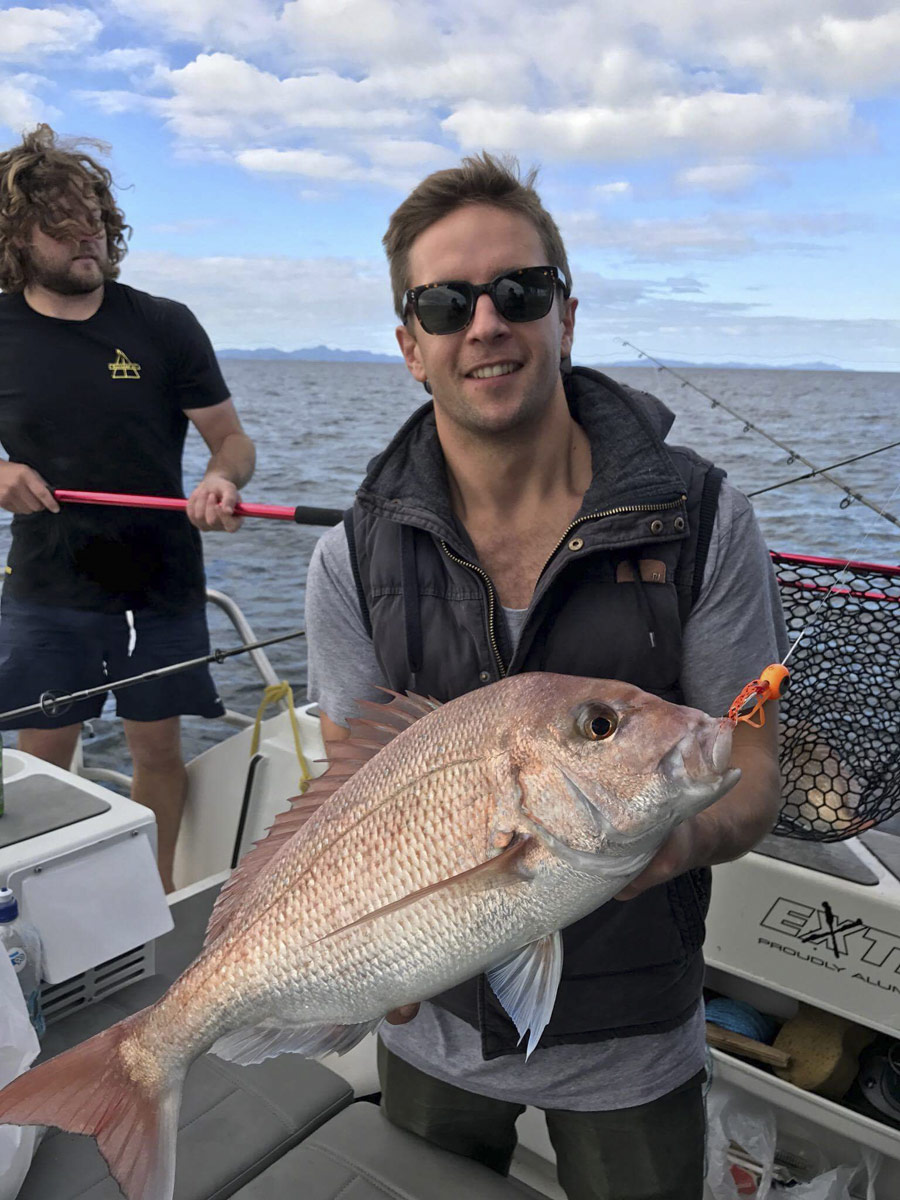
In summary
If you want to plan the optimal fishing trip, look for the following scenario: a major solunar bite time that coincides with a sunrise or sunset, in the period leading up to a full or new moon, with large tides that are flowing, overcast skies, dropping barometric pressure, and great fishing the day before!
But really, what keen angler can wait for this perfect scenario? Just get out there when you can; if the above factors are looking unfavourable, that doesn’t automatically mean you won’t have a good day. Fishing is as much science as it is smoke and mirrors. After all, it’s the mystery and intrigue associated with saltwater fishing that keeps us coming back for more.
I’ve yet to find a fishing oracle to accurately predict the quality of fishing at any given time, but if you put as many of these factors in your favour as possible, your chances of having a great day will definitely increase.
|
|

Fishing Reports Visit Reports
Outer Hauraki Gulf Fishing Report 17/09/26
Spring wind the handbrake. Spring is starting to make its presence felt in the outer... Read More >
Top of the South Fishing Report - 17/09/26
Early snapper in Tasman Bay. Well, spring is finally here, and the days are getting... Read More >
Bream Bay Fishing Report - 17/09/26
Good snapper catches reported. After Tangaroa turned off the fish tap for a month or... Read More >
Bay of Islands Fishing Report - 17/09/26
Pacific bluefin tuna for the lucky few. The last fortnight has seen more fishable days... Read More >


Sunday 27 September 2026
Major Bites
 -
- Minor Bites
 -
-  -
- Monday 28 September 2026
Major Bites
- - Minor Bites
- -
Comments