
Using a drogue while drift fishing
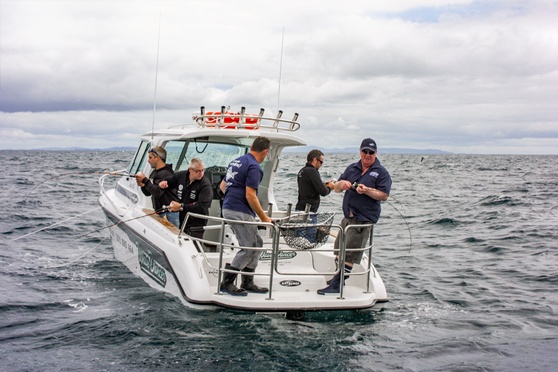
One of the most essential pieces of kit for any angler who deploys lures or baits on the drift is a decent drogue. Mark Kitteridge explains why…
Many keen anglers know that lures or baits can be fished very effectively by drifting, rather than anchoring up in one spot and hoping the fish will be drawn to their baits (although there are a couple of handy sea-anchor tips for those who like to anchor up and berley, too!).
The great thing about drift fishing is that it ensures new territory is constantly encountered, making it much more likely that good numbers of hungry fish will be found.
However, the presence of wind can make this a challenge, pushing the boat along at drift speeds that either prevent the lighter baits or lures from reaching the bottom or which make them skip along the seafloor too quickly for the fish to intercept and eat. When this happens you need a drogue – a device that acts like a parachute, slowing the boat down so you can still fish.
Drogues come in a variety of sizes, enabling them to cater for vessels in small to mid-range sizes. Unfortunately, the bigger launches (over nine metres, say) can have a huge amount of windage and weigh a great deal; combine that with winds over 20 knots and a decent swell, and even the best products can potentially fail due to the phenomenal amounts of pressure generated.
They are available in a variety of designs, but most are made so the water pressure spreads them out wide, before being funnelled down by their tapered form to escape out the much smaller hole at the rear.
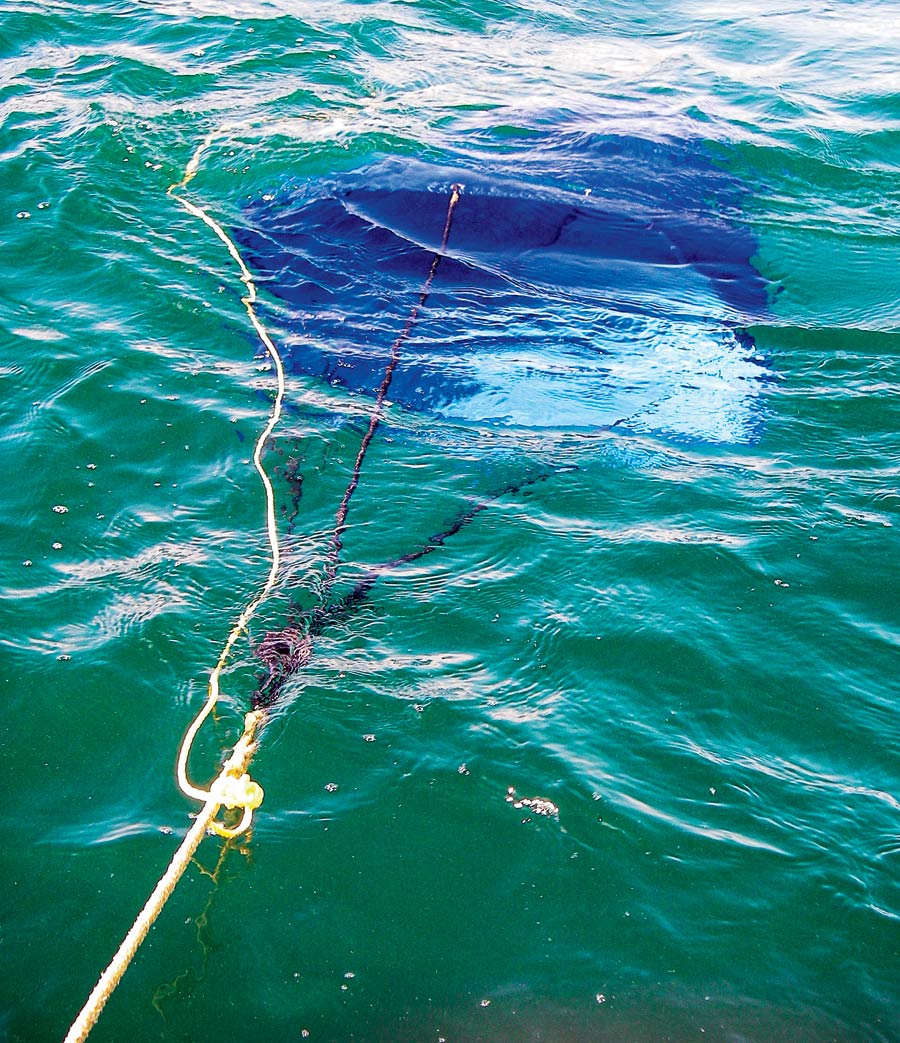
Most drogues capture the water and funnel it through a much smaller hole at the rear.
A thick, soft main rope connects to the chute’s lighter parachute cords, making handling kinder on office-worker hands.
A second rope trailing from a loop at the drogue’s rear is there to collapse the drogue, making retrieval a breeze. I am constantly amazed by how many drogues don’t have this simple component – they sure give a good workout to those who must repeatedly pull them in, especially on big boats. Just make sure this rope is longer than the mainline though, or the chute won’t be able to inflate.
The addition of a float to one side of the drogue can be handy too; this stops the drogue from spinning around in rough conditions and twisting up the mainline.
It’s also worth considering incorporating some form of shock-absorbing device into the main rope, so the sudden loading caused by rough seas is reduced. This might take the form of a stretchy, heavy-duty rubber damper; a simple boat fender tied midway along the rope serves a similar purpose.
Where to attach your drogue
Sea anchors can be attached to a stern corner or mid-ship cleat/bollard on bigger boats in moderate sea conditions, but safety is more important with smaller craft; in this instance drogues are better deployed off the bow so the boat is kept pointing into the oncoming swells.

Small boat owners can attach their drogue's main rope to the bow and tie the chute-collapsing cord off further back, so the drogue can be deployed from a more convenient location.
If access is restricted to the boat’s bow area, tie off the main drogue rope to the bow bollard before heading out and bring the rest of the rope and the drogue itself back into the cockpit with you and the crew. Now all that remains is for you to attach the second drogue-collapsing rope to a handy place so the drogue can be deployed and retrieved from the cockpit throughout the day.
What are the benefits of a drogue?
• As already mentioned, the drogue acts like a parachute, slowing the boat’s drift speed so baits or lures can be deployed more naturally or effectively.
• Sea anchors can be used to harness the current and overcome the wind direction. Sometimes the wind and tide can be relatively slight, but they effectively cancel each other out so the boat remains in one position, crawls along at snail’s pace, or moves in an undesirable direction. By placing a drogue in the water, more of the current’s power is captured, causing the boat to move with the current and cover new ground again.
• A sea anchor can also be used to create extra conflict between the wind and tide, making the boat travel sideways – a bit like pressure squeezing a lemon pip out – which is great if you want to fish along drop-offs, ridges, gutters or structures running at right angles to the current.
• Here’s one for bait fishers when fishing in wind-against-the-tide situations, a scenario that sees the baits and berley heading back under the boat and up along the anchor rope. Very frustrating! By deploying a drogue from the stern, the current is caught, causing the boat to swing back around and your baits and berley to head out and away from the boat again.
• A stern-deployed drogue can also be used to catch the current and stop anchored boats from swinging from side to side in the wind, enabling anglers to stay in better contact with lures or baits, and enabling the fish to find and eat their offerings more easily.
• The last advantage concerns safety rather than fishing: the ability for a sea anchor to point the boat’s bow into the prevailing wind and swells can’t be overstated, especially when the boat is small, conditions are ugly and perhaps the motor fails!
Pro Tips
• Add a ‘shock absorber’ to your drogue rope to dampen the effects of the waves
• A buoy added to your drogue will prevent it from spinning and twisting up the warps
• Small floats added to the trip rope will decrease the likelihood of it fouling the propeller
• In rough conditions, run your drogue off the bow to prevent swamping
• When straylining baits at anchor, deploy the drogue to align the boa
|
|

Fishing Reports Visit Reports
Outer Hauraki Gulf Fishing Report 17/09/26
Spring wind the handbrake. Spring is starting to make its presence felt in the outer... Read More >
Top of the South Fishing Report - 17/09/26
Early snapper in Tasman Bay. Well, spring is finally here, and the days are getting... Read More >
Bream Bay Fishing Report - 17/09/26
Good snapper catches reported. After Tangaroa turned off the fish tap for a month or... Read More >
Bay of Islands Fishing Report - 17/09/26
Pacific bluefin tuna for the lucky few. The last fortnight has seen more fishable days... Read More >


Monday 28 September 2026
Major Bites
 - -
- - Minor Bites
 - -
- - Tuesday 29 September 2026
Major Bites
- - Minor Bites
- -
Comments