
Troutfishing With Cicada Fly Patterns

The sound of summer: that never-ending crescendo of crickets on acid… otherwise known as cicadas.
They’re those harmless little bugs with sticky feet that freak everyone out when they land on them. They’re the noisy wee bugs that you used to hold by the wings and chase girls at school with. And they’re like a McDonald’s Big Mac (with extra cheese) to hungry summer trout.
Cicada is a generic term for an insect that has over 3,000 varieties around the world. In New Zealand, we have 42 unique species and subspecies (I used to think there was just one!). They have prominent, wide-set eyes, short stubby antennae, and membranous front wings. They typically live in trees, feeding on watery sap, and lay their eggs in a split in the bark. Though cicadas’ life cycles can range from one to nine years as underground nymphs, once they emerge above ground as adults, they last only a few months. Each year, not on a set date, but when the weather is just right, the mating call of the cicada rings out loud and true. And to trout fishermen everywhere, that is music.
I always used to carry a few cicada patterns with me on the river, but even when the sound of cicadas was deafening, I never had much success with it. Then, one day as the sun beat down, I could see a big old trout slowly swimming side to side in the shallows under an overhanging willow. Occasionally, there was a loud plop as something was engulfed from the water’s surface. With no real plan, I pulled off my nymph setup and fired a cicada pattern across the water (I had not even taken my indicator off). Straining to see in the glare of the water, I watched the fly drift downstream. Then, as if from a script, the trout rose to the surface and engulfed the black cicada pattern. I didn’t even need to strike – he was well hooked and came quickly to the shore. That was my first cicada experience, and, just like that big old trout, I have been hooked ever since!
Recently, on a trip to the Tauranga-Taupo (the mighty T.T.), I decided to keep one trout for dinner, which I had caught on a nymph. When I opened him up, I noticed some hard lumps in the gut cavity. On closer examination, he was full of half-digested cicadas. As Norman Marsh wrote in his book Trout Stream Insects in New Zealand, “May the backcountry angler tread in peril of fishless days who does not include in his repertoire of trout flies one that at least looks something like a cicada.”
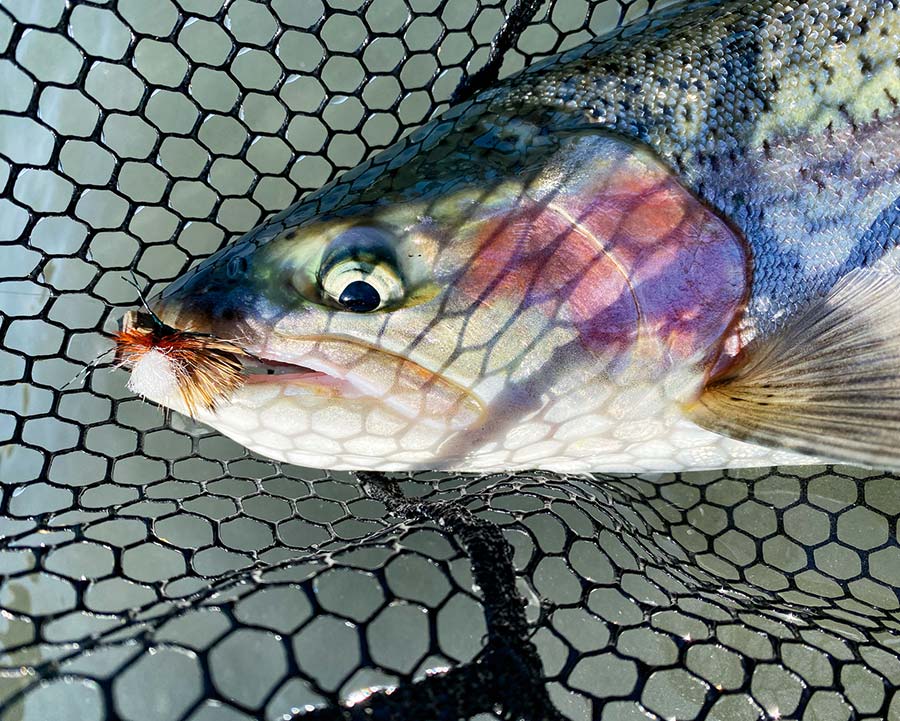
A PMX style cicada fly proves its worth.
Fishing in the Taupo region is harder in summer. The fish are more resident and the water is typically clearer. But there is also an increase in the numbers of browns and bigger rainbows, plus a plethora of small rainbows. When the cicadas start to sing, you know it’s going to be a fun day.
Cicada fly patterns are numerous, with different shapes, colours and sizes, and made out of everything from deer hair to plastic. They can be found in all good tackle shops, and it’s always advisable to carry one or two varieties. When choosing which patterns to go with, ask around at the tackle shop to find out what has been working lately.
Cicadas can be found near all types of water, from small grass-edged spring streams, to large bush-lined rivers. Smaller, shallower rivers are best fished by line of sight: see the trout, and then fish downwind, if possible. Even if they seem not to be feeding, the offer of a juicy cicada will often wake a dozing trout. In larger, deeper rivers you need to be able to read the water and look for where the trout might be located.
Try casting cicada patterns to the edge of the main current, especially alongside the edges of pools where the water has stilled. In the less turbulent water, trout will tend to be lying deeper, but will often hit the cicada on the surface before it drifts off again into the faster current. When your quietly drifting cicada gets smashed from below, there is an overwhelming rush of excitement – the same feeling as when a huge marlin hits your lure.
Cicada fishing has a lot of variables to consider (in addition to choosing the right fly pattern). For example, the longer the leader, the less impact your fly line will have on the drift. I have also found that casting downwind (where possible) helps aid the cast and presentation. It’s not a big issue should the cicada plop on landing, as the naturals will do that anyway, but if you want to avoid the unnecessary commotion, a simple solution is to raise the rod tip upwards just as the fly is about to land and it will fall much softer onto the surface.
Cicada fishing is a unique method of fishing, and there is simply nothing better than the sudden splash as your cicada is smashed off the surface by a hungry trout.
I asked a few top fly fishermen how they target fish feeding on cicadas and here is what they had to say...
Chris Dore
While fish may be on cicada, consider something a little more subtle until the heat of the day, when they really get going. This is especially important on pressured waters where the fish see a lot of artificial flies, often presented poorly.
Another trick is to fish a small beetle, or an emerger pattern on a small dropper, to get the eat from more wary fish.
Consider your pattern. A solid, deer hair silhouette pattern may go well in the height of summer, however, a softer PMX (or similar profile) may be needed if the fish aren’t firmly engaged. Do you want a high riding, palmered body pattern to bounce through that pocket water? Or will a flush floating, flat-back cicada-style fly be more appropriate in those calmer edge waters?
Fish don’t always want a heavy presentation plopped in front of their face. Long drifts with enough slack line to ensure a good drift are still important mid-summer, so remember your reaches, piles and longer, lighter tippets for regular success.
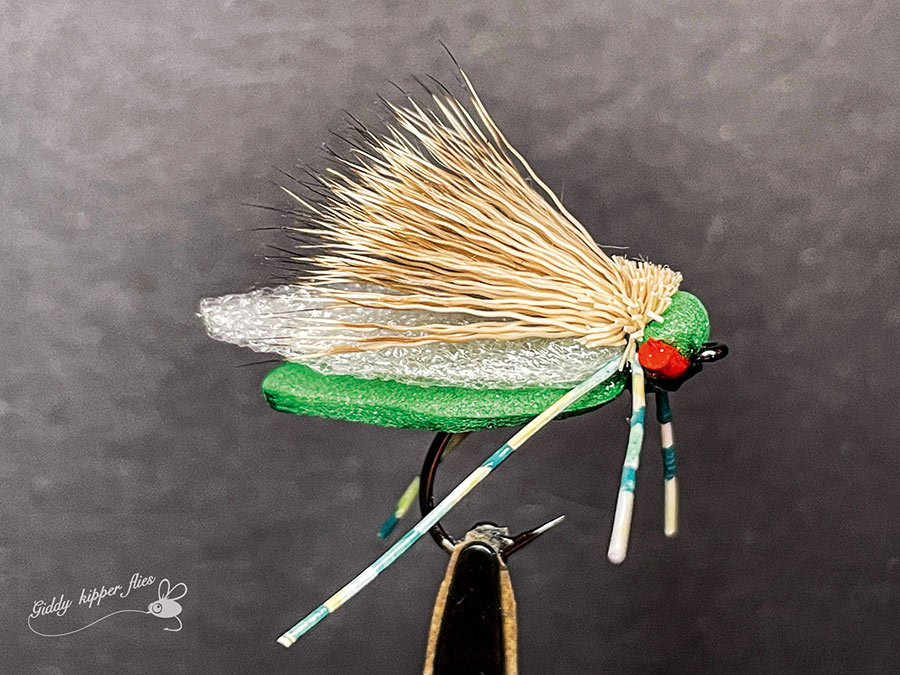 A foam cicada imitation, tied by Kiddy Kipper Flies.
Matt Butler
Fly fishing for big trout with imitation cicadas is the holy grail of summer dry fly season in New Zealand. Depending on where you are in the country, this can peak at different times, with the first cicada action generally starting around the lower South Island in mid-late November. As our rivers vary, so can our cicadas – from the massive and deafening bush variety, to the tiny bright green or brown high-country cicadas that are just a little larger than your fingernail. This means that you should be adjusting your flies and techniques depending on the region.
Big black/bushy cicada flies used on bush-lined backcountry rivers can be slammed down on the water to attract attention, while the mini variety in our South Island high country usually require a delicate and drag free drift if they are to be considered a meal.
There are a few things to be mindful of when fishing cicadas, particular on wary fish. Sometimes when a fish is dormant on a rivers edge, a cicada chucked loudly on their tail or a few feet to the side will entice an eat, but if it lands on their nose they will likely be spooked. This can also be a handy trick when targeting a fish deep in a pool: rather than casting far with the risk of lining the fish, land the fly directly above its head. All too often you will see that fish then turn vertical and chase the fly downstream for a eat.
However, always keep in mind that a downstream eat requires extra patience or you risk pulling the fly directly from its mouth. Wait until the fish has eaten the fly and dipped back into the water, then strike by sharply pulling your rod in the opposite direction that the eat took place. This will give you the best chance of burying the hook into the back of the mouth and greatly improve the likelihood of it not popping out during the fight.
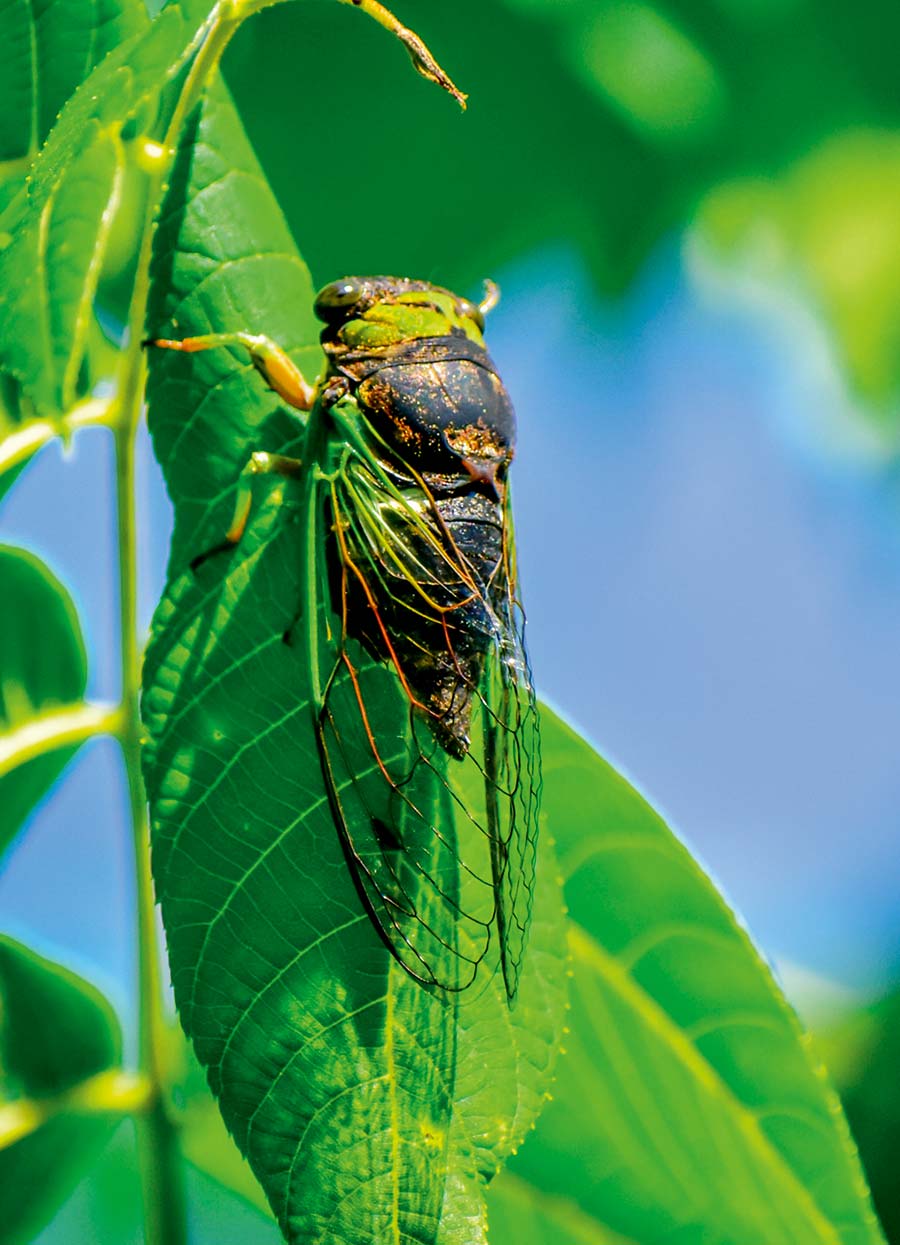
Cicada in New Zealand vary in both colour and size.
Steve also spoke to a few Kiwi fly-tiers to find out what their preferred cicada pattern is...
The Giddy Kipper
@giddy_kipper_flies
Foam Cicada
Hook: #10 long shank
Thread: Textreme 6/0
Body: Green craft foam cut free hand
Underbody: Lava lace in fluoro orange
Under wing: Closed cell packaging foam
Wing: Deer hair
Legs: Rubber strands from core of bungee cord
Matt Bailey
@Mbailey_flytying
Deer-Hair Cicada
Hook: Size 6 Mustad R43 dry fly hook.
Thread: UNI-Thread 6/0 (black).
Body: Black deer hair, spun and shaved with razor (touched up with green marker for colour variation)
Wings: Coq-de-Leon feathers tied origami style.
Eyes: Gulff Motor Oil UV Resin.

April 2022 - Steve Dickinson
New Zealand Fishing News Magazine.
Copyright: NZ Fishing Media Ltd.
Re-publishing elsewhere is prohibited
Fishing Reports Visit Reports
Outer Hauraki Gulf Fishing Report 17/09/26
Spring wind the handbrake. Spring is starting to make its presence felt in the outer... Read More >
Top of the South Fishing Report - 17/09/26
Early snapper in Tasman Bay. Well, spring is finally here, and the days are getting... Read More >
Bream Bay Fishing Report - 17/09/26
Good snapper catches reported. After Tangaroa turned off the fish tap for a month or... Read More >
Bay of Islands Fishing Report - 17/09/26
Pacific bluefin tuna for the lucky few. The last fortnight has seen more fishable days... Read More >



Friday 25 September 2026
Major Bites
 - -
- - Minor Bites
 - -
- - Saturday 26 September 2026
Major Bites
- - Minor Bites
- -
Comments