
Top tips for rigging leaders

Terminal rigging is a critical contributor to angling success. Using the right techniques and components makes all the difference. Here Adam Clancey details some advanced rigging tips.
 With advances in modern fishing tackle, reels are getting smaller and lighter with drags capable of sustaining incredible runs, rods as thin as a piece of pasta are able to knock over massive fish, and gossamer-thin lines are strong enough to pull a tractor backwards.
In the past if someone landed a billfish or big tuna on a small eggbeater or overhead reel the size most people use for snapper, people would have called it lucky or a fluke, but with modern tackle such feats are commonplace.
To get the most from modern rods, reels and lines it is really important to get your end game right. By this I mean your traces, knots, lures and attachments, as these have developed in tandem with lightweight modern tackle and modern fishing techniques to handle the workload.
Take me to your leader
Strong leader and trace connections are vital for modern fishing systems and connections are what I am most quizzed about when talking about fishing. The choice of leader/trace material is either monofilament nylon or fluorocarbon and on the odd occasion, wire.
The first thing to consider is the difference between a leader or a trace and which you are using. I would classify a leader as a length of material between your main line and your terminal rig – for example, a shock leader on a surfcasting rig or a casting leader on a soft-bait rig.
Sometimes your leader will be connected directly to the lure; at other times it will incorporate some other elements. When connecting a lure with a leader knot, 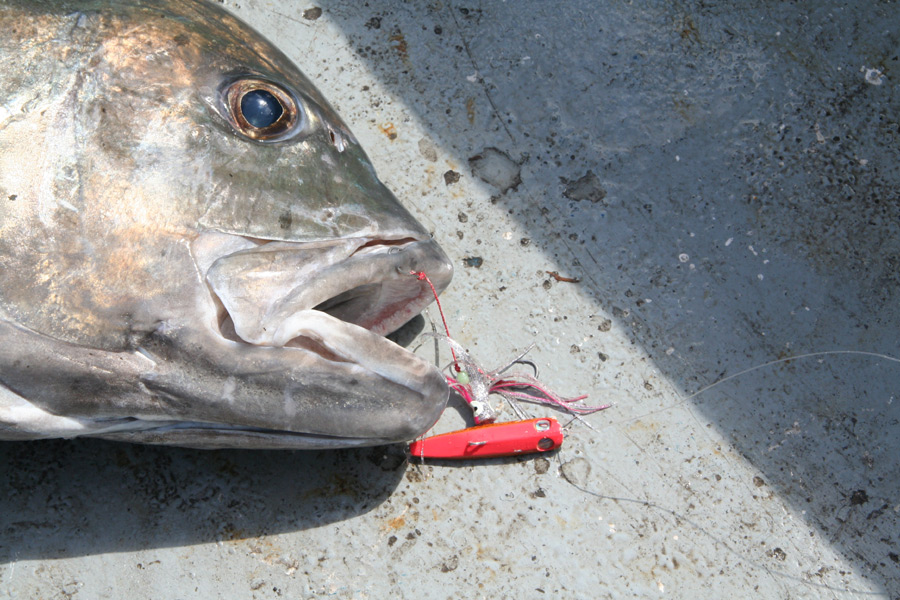 knot choice is very important: you have to consider how strong the knot is, as well as its bulk if it needs to pass through the rod guides during casting.
Casting leaders are good because they reduce wind knots and also allow you to apply more force to the cast, achieving greater distance. Also, dependant on your set-up, they act as a defence against bust-offs in rough terrain and aid when playing and landing fish close to the boat.
Making connections
My personal approach to traces or leaders in the lighter line weights (up to about 20kg breaking strain) is to use a back-to-back uni-knot for joining braid to monofilament nylon or mono to fluorocarbon. When I tie a back-to-back uni-knot with very light mono or braid mainline I tend to double it over to add extra strength to the knot.
 With mid-weight leaders of 20-40kg, a well tied Albright knot works well, but can be a bit bulky. When I am using heavy leader and braid, the FG or PR knots are the way to go because they are very strong and flow through the guides freely without clattering. This is excellent for top-water fishing or deep jigging.
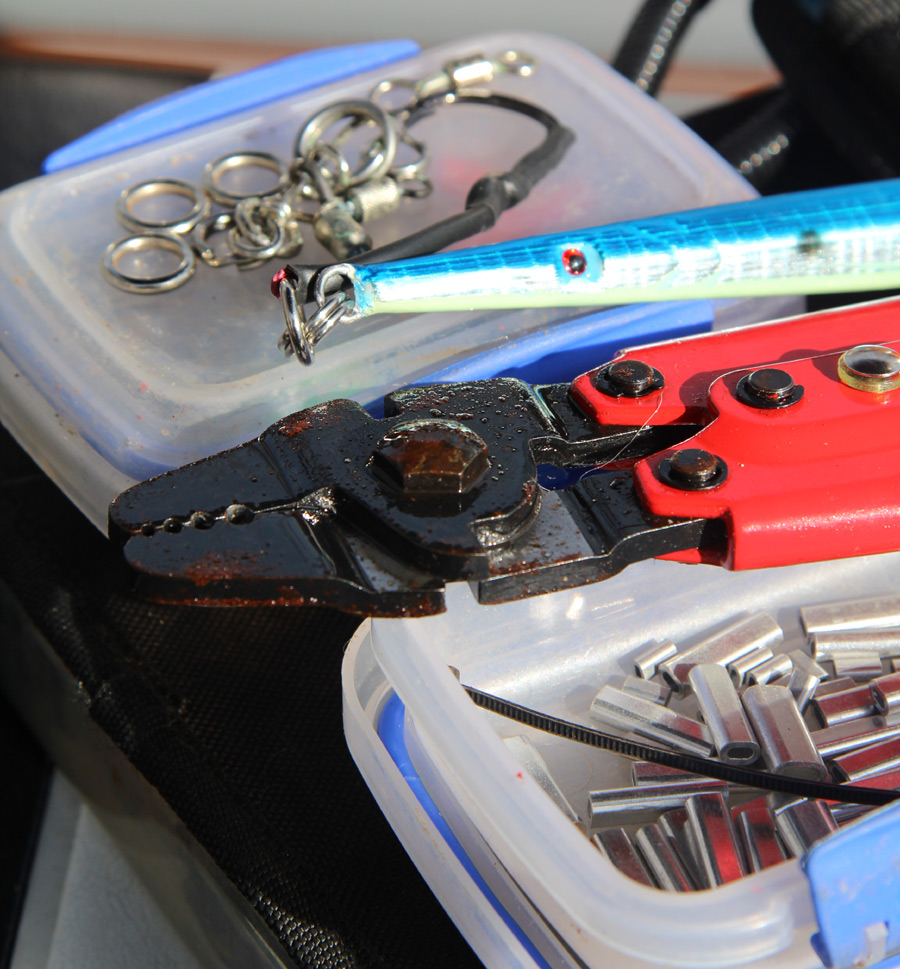
If you are just using a short trace (connected to your mainline by a swivel) as a protection against bite-offs and scuffing, but not meant to be wound on, I find a simple uni-knot in the lighter weights works fine. When it comes to heavier traces (over 50kg), knots really become too bulky and stiff; this is when a good alloy crimp is a better option.
Componentry
Swivels, rings and clips are a lot more in vogue these days and much modern lure technology involves using a solid ring, a split ring and maybe even a swivel. The good old brass barrel swivel is no good for this and you need to look at the latest small, ultra-strong products available for this style of rigging. Most of this terminal tackle has a weight rating that gives a clear indication of its application. It is amazing the strength they are building into good quality split rings and swivels these days. These compact components make the lure/terminal tackle system work well, with very low failure rates.
Some assistance, please
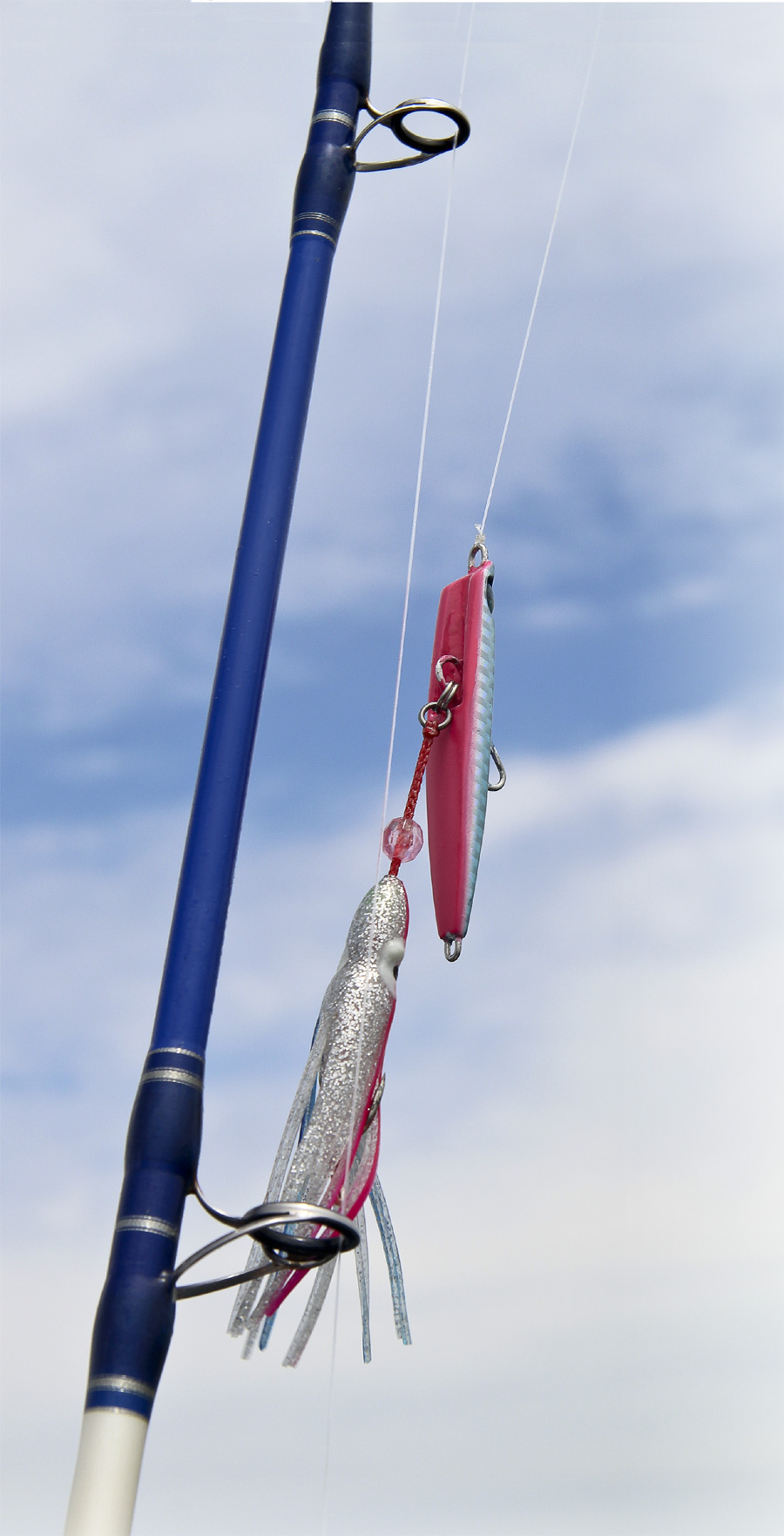
Another part of the business end commonly used with slow pitch, micro and inchiku-style lures is the assist-hook rig. Fortunately specialist tackle stores support these products well and you can get a range of assist hooks to suit every situation or buy assist cord and other components to build your own custom rigs. Assist rigs are becoming highly specialised as we discover more about these new styles of fishing – we can now get assist rigs with monofilament in the core to reduce hook fouling.
The right hook
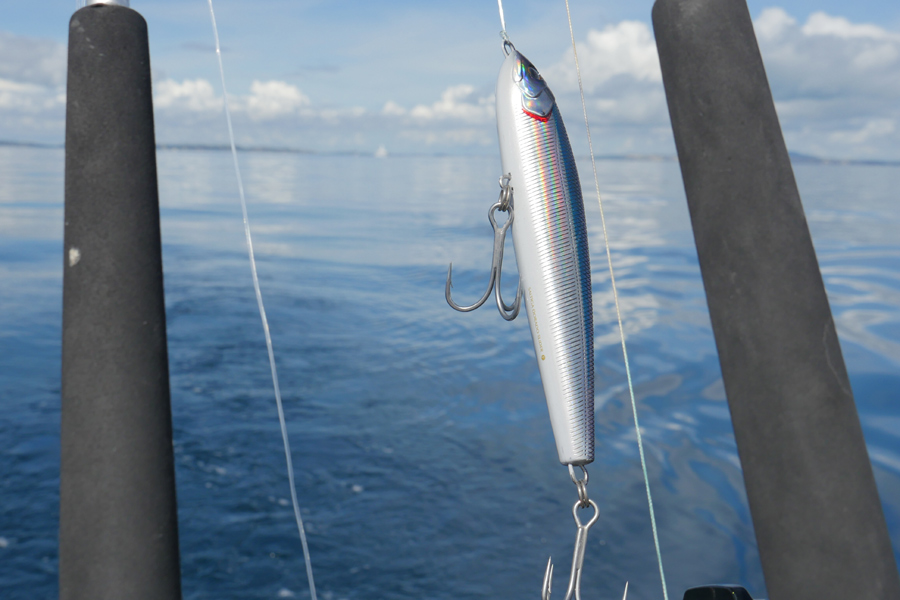
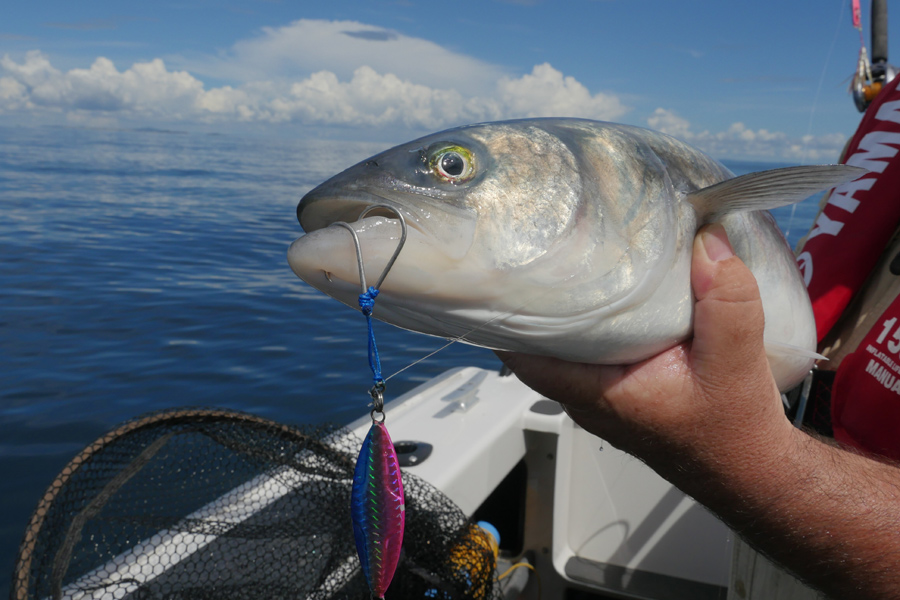 The final element in most rigs is the hook or lure. Many lures are sold without hooks to allow for specialist rigging, and again, split rings and hooks need to be of the right strength but also allow the lure to swim with the best action. I have recently found that some stick-baits have a better action when fitted with trebles than with multiple singles and also that inline-eye hooks are great for running single hooks on jigs and minnows without adding extra split rings.
Hook choice is really important with some forms of fishing, especially live-baiting. Some forms of live-baiting use relatively small baitfish like mackerel which are presented to a huge kingfish or marlin. You can’t pin this size bait with a 10/0 hook as you will either kill it or it won’t be able to swim in a way that is attractive to predators. You need to rig your bait on a small hook, but the hook still needs to be strong and sharp enough to hook and handle a large game fish on heavy line.
 On the other hand, when live-baiting with a big kahawai or skipjack you need a hook that has a gape wide enough to ensure a good hook up. Too small a gape can result in the bait being spat back at you after a solid strike because the hook turns in on the live bait and does not hook-up the predator.
Hook points are also very important: make sure the point is strong enough to stand up to rigours of the style of fishing you are doing. Some hooks have long points which, while very sharp, can easily roll over on hard-mouthed fish; other hooks have very short, thick points which don’t roll, but can be harder to set using light line. Hook points that have a cutting edge are good but they can wear a hole after a time and fall out.
There is a lot to consider when rigging if you want to include landed fish in your end game.
|
|

Fishing Reports Visit Reports
Manukau/West Coast Fishing Report - 15/10/26
Big spring snapper in 60 metres. The El Niño weather pattern isn’t going to be... Read More >
Rotorua Fishing Report - 15/10/26
Solid start to the season! The Rotorua lakes have all started the season well, and... Read More >
Tutukaka Fishing Report - 15/10/26
Big snapper in shallow. Things remain relatively quiet on the fishing front out of Tutukaka,... Read More >
Tauranga Fishing Report - 15/10/26
Bait and temperature on the rise. It’s been great to get out and see some... Read More >


Sunday 18 October 2026
Major Bites
 - -
- - Minor Bites
 - -
- - Monday 19 October 2026
Major Bites
 - -
- - Minor Bites
 - -
- -
Comments