
Targeting the Anchovy Run
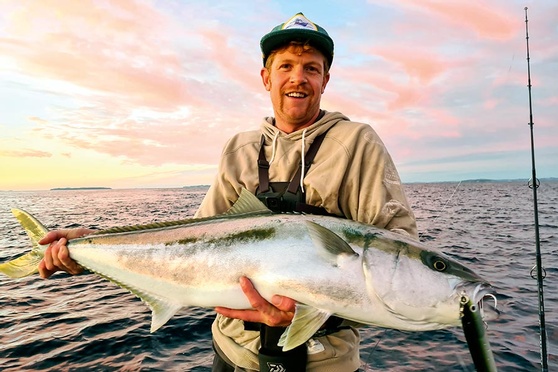
There is never a dull moment in the Hauraki Gulf fishery, with the various angling opportunities changing each season. The next ‘thing’ to look forward to is the arrival of the annual anchovy run, explains Nick Jones…
The end of summer generally signals the start of an exciting couple of months for the inshore Hauraki Gulf fisher. Snapper begin feeding harder, kingfish are around in good numbers and the gulf lays on a veritable banquet for such predators in the form of masses of anchovies.
The anchovy
The anchovies found in New Zealand, kokowhaawhaa Engraulis australis, are a small silver baitfish species that form dense schools in our inshore waters from spring through to winter. Their numbers seem to peak around late summer and autumn, and then tail off into winter. They are planktivorous and have an unusually large gaping mouth to assist with their feeding. As a small fish averaging around 5-10cm, they make perfect fodder for a variety of bird, mammal and fish species in the gulf.
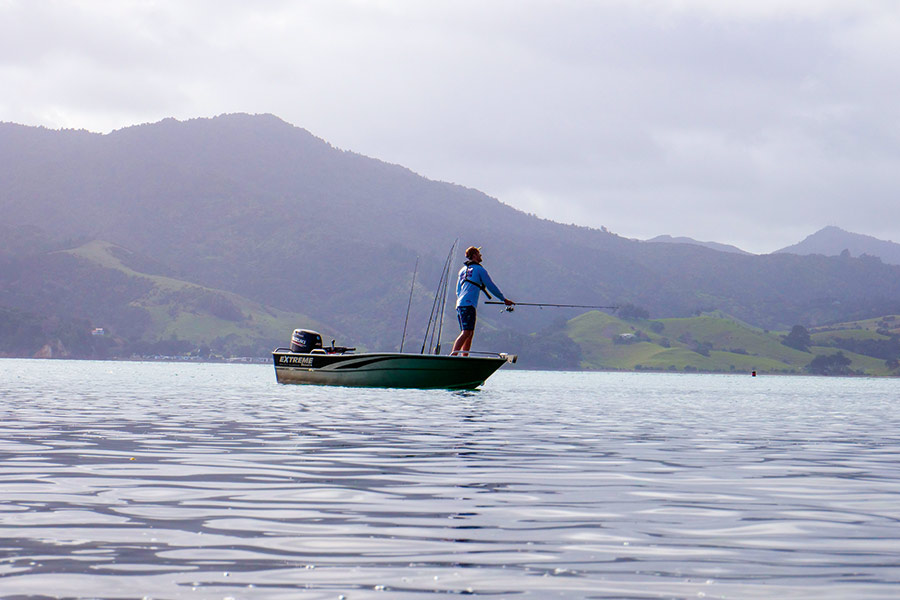
Anchovy action is made for small boats.
How to find the anchovy schools
Over the next couple of months, anchovy schools will be found all around the Gulf – from the harbours and estuaries right out to the deeper areas towards the Barrier islands and the top of the Coromandel. Classic inshore locations to find anchovy action include the Rangitoto Channel, northern Rangitoto, Administration Bay, East Coast Bays, inside Kawau Island, Motuihe Channel, south of the David Rocks and Maria Island, Tamaki Strait and the bottom end of Waiheke.
Anchovy schools aren’t hard to stumble across as a variety of bird species generally give away their presence. Squawking terns, shearwaters, gannets, gulls, shags and little blue penguins can all be good indicators. Obviously, if the birds are actively feeding that’s the best sign, but don’t ignore rafts of shearwaters sitting idly on the surface – they may just be having a breather until the anchovies are once again worked up to the surface by predatory fish.
On calm days, you can often spy the silver anchovies flashing close to the surface or kahawai and kingfish boiling on the surface as they feed. Even though anchovies are small, because the schools can be so dense they will show up on your sounder too – generally as quite a fuzzy return in the upper half of the water column. At other times, the sounder will simply be loaded with bigger fish!
How to fish the anchovy schools
Fishing the anchovy schools can be amazing one day, and an exercise in frustration the next. I believe this is simply due to the sheer quantity of food available for predatory fish species – when fish are fulling up on a single species, they tend to become selective and harder to fool. The best approach is to work out your target species, and fish accordingly.
Kahawai
The best approach for targeting the fat kahawai around the anchovy action is to match the hatch and concentrate on fishing near the surface. Lightly weighted small 3-5” soft-baits in silver or blue, micro-jigs and flies are your best bets when trying to nab a couple for the smoker or fresh sashimi.
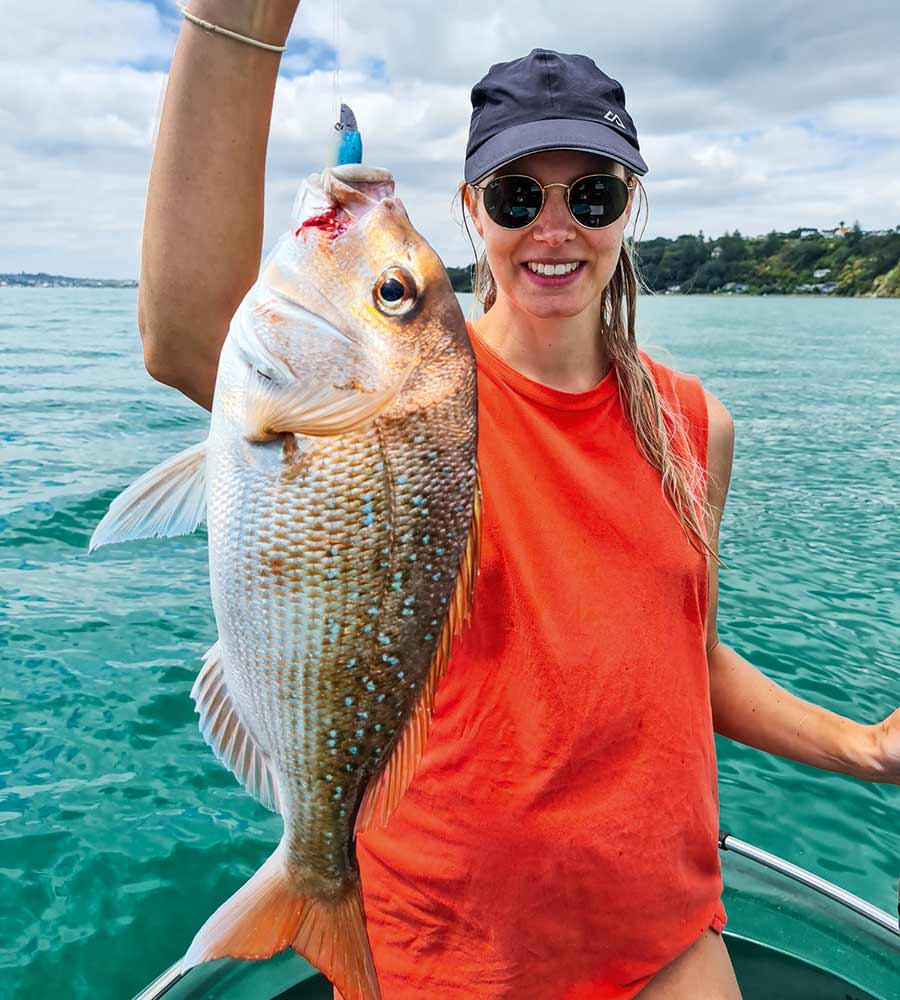
Fishing small blue soft-baits along the bottom is a good approach around the inshore anchovy schools.
Snapper
Snapper are generally a trickier proposition to pluck from the anchovy schools than kahawai. As snapper will be feeding on both live anchovies and ‘left-overs’ drifting down the water column, soft-baits and micro-jigs are great options. Cast these out and let them sink with occasional twitches, then work them back along the bottom. If you’re having issues getting past the kahawai, try casting around the fringes of the surface activity or use heavier weighted jig heads.
In shallower areas under 10m, snapper will often surprise you by taking lures close to the surface, so it pays to work the full scope of the water column. In depths around 20m, we have had good success fishing anchovy action that has side-tracked us on the way out wide by using 150g Daiwa Kohga and Pirate jigs. If the snapper are present and hungry, anything will work!
Bait-fishers do well this time of year around the anchovies, especially if the action is spread out over a wide area. You can even catch a few anchovies for bait on very small sabiki rigs, or if you’re lucky enough you can scoop them up directly from a meatball with a fine-mesh net. A little wriggling anchovy dropped to the bottom is dynamite for snapper.
Kingfish
Over my last few years chartering in the gulf, I’ve increasingly realised that kingfish love taking advantage of the anchovy feast. Although the greenbacks feed on anchovies, they also gorge on the jack mackerel and pilchards that prey on the anchovies themselves. While you can livebait with anchovies, I find the best way to snag the larger 12kg+ kings is with a big jack mackerel. The jacks are easily caught around the anchovy schools on sabikis and can either be instantly deployed or chucked in the tank for a more targeted approach.
Although the kings will feed around the anchovy schools in open waters, there are certain areas where these predators concentrate. After seasons of observation and trial and error, we target a few inshore areas where the bait gets pushed into reefs or shorelines with the tide. It seems the kings use the structure either as cover from which to pounce on schools pushed past with the tide, or a gathering area in between feeding forays. Slow-trolling a couple of live jack mackerels is the perfect approach to entice a bite or two from the kings, as it allows you to cover some ground between the areas of structure and the bait schools and means you can use the boat to pull fish away from the reef upon hooking up.
Another useful approach for kingfish is to have a stickbait setup ready for when the kings pack attack bait on the surface. Kingfish boils are much larger and violent than those of kahawai – therefore they aren’t hard to spot – but the action can be all over in a matter of seconds. An imitation pilchard or mackerel stick-bait cast into a school of kings boiling should see you hooked up in a couple of sweeps. I remember one of my favourite mornings catching kings by the anchovy schools. It was flat calm, and we simply sat in the middle of the bird action keeping our eyes peeled for surface feeding kings. As soon as they boiled up, we would blast over to them at 30 knots and fire in the stickbaits – speed fishing at its finest!
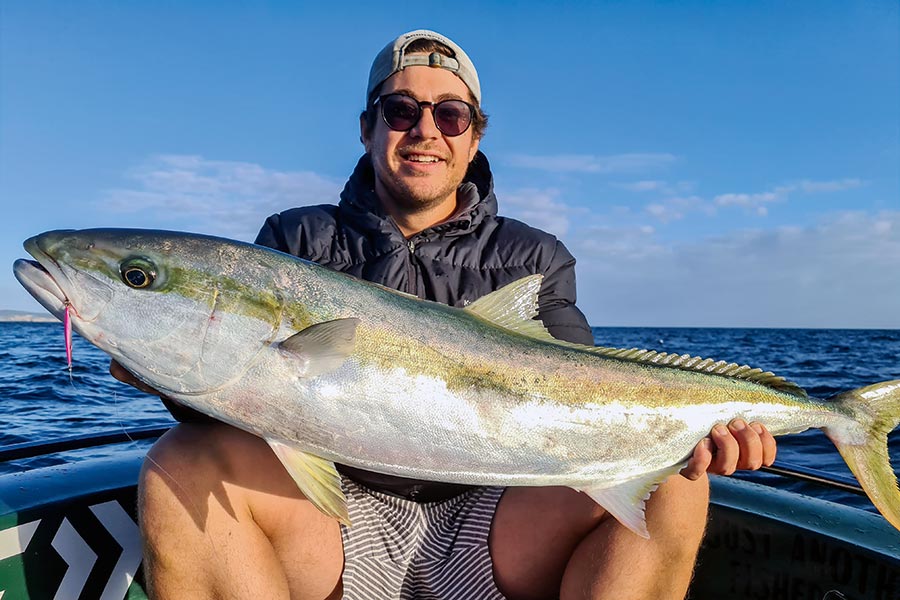
Kingfish will feed on both anchovies and larger prey at this time of year, so don't be surprised if one takes your micro-jig!

March 2021 - Nick Jones
New Zealand Fishing News Magazine.
Copyright: NZ Fishing Media Ltd.
Re-publishing elsewhere is prohibited
Fishing Reports Visit Reports
Tauranga Fishing Report - 28/05/26
Tarakihi on the bite Trips are few and far between at this time of year,... Read More >
Canterbury Fishing Report - 28/05/26
Fresh and salt turning it on! It is not very often I get to say... Read More >
Bay of Islands Fishing Report - 28/05/26
Lures paying dividends We finally had a break in the SE winds that have been... Read More >
Manukau/West Coast Fishing Report - 28/05/26
Snapper and gurnard in the harbour The weather has finally taken a turn for the... Read More >


Major Bites
Minor Bites
Major Bites
Minor Bites
Comments