
Tackling tackle storage
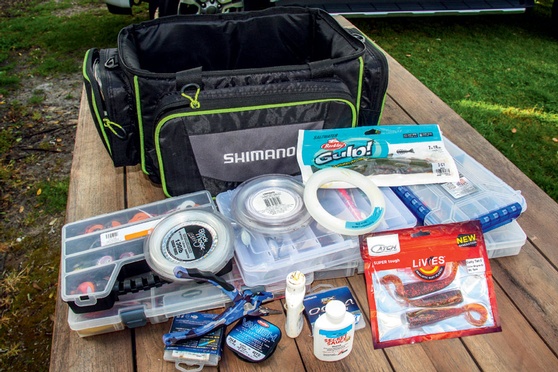
Saltwater is extremely corrosive, so getting salt spray, or worse, flooding your tackle box with saltwater will pretty much destroy anything metal inside it. It might take a while, but rust, as they say, never sleeps!
Fishing tackle will inevitably be exposed to salt water. Bags get wet, tackle boxes tip over or are dropped and waves and spray can wash over your gear.
Even if none of these things happen, simply returning hooks, swivels and lures to your tackle box after use introduces salt-laden moisture. And while smart anglers keep used terminal tackle separate from unused stuff, most of us are not that organised – my tackle boxes are a mixture of old and new tackle, and yes, corrosion is a problem.
Flambeau offer Zerust treated tackle boxes which go some way to eliminating the effects of salt.
If you want your tackle to still be serviceable when you need it, organisation, care and storage and are keys. Editor Grant Dixon has a Railblaza container attached to the side of his bait board. All the used tackle is placed in it, and when the boat is washed with a freshwater/Saltaway mix, the container and gear is flushed clean. Once dry and salt-free, the tackle is place back in the appropriate container.
There are so many different fishing disciplines these days, all with different tackle requirements, we tend to own much more terminal tackle than we used to. Fortunately there are lots of ways to store and organise it, at home and in the field.
Soft versus hard
Tackle storage systems range from simple undivided plastic boxes through multi-drawer tackle boxes, stacker boxes, lure boxes, various soft tackle storage systems, many of them incorporating stacked multi-compartment plastic boxes, to tackle wallets, lure rolls and more.
You can use any sort of container to store and carry fishing tackle, especially if you only want to store a small quantity, but most fishers use tackle storage systems designed and manufactured for the purpose.
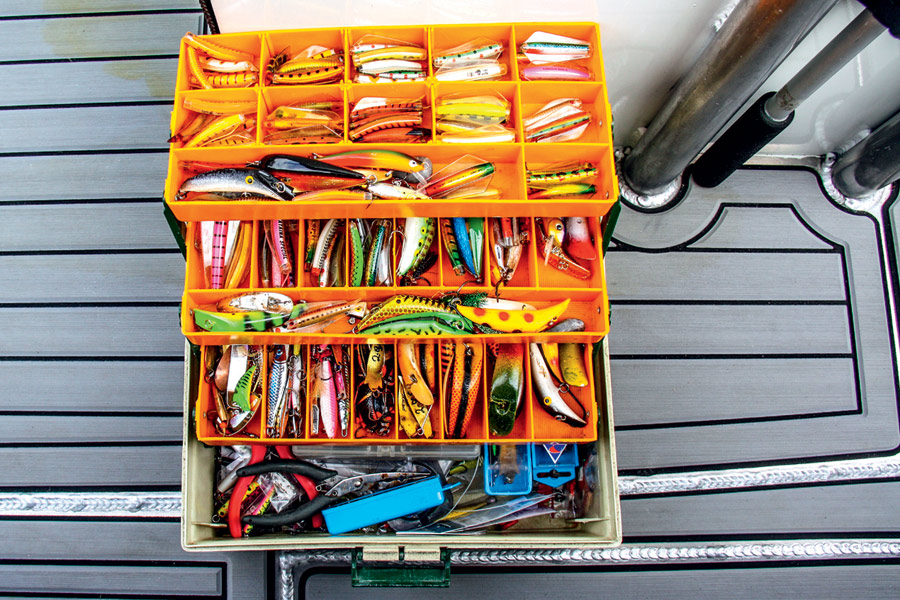
Large multi-drawer, multi-level tackle boxes have their uses, but for a lot of fishing scenarios, they are simply too large, too bulky and in some cases too fragile to use in small boats. I prefer using large tackle boxes to store tackle at home.
As already stated, my preference is for soft tackle bags into which I load the gear I need. These are available in huge range of sizes, but for most fishing situations, a small bag is better than a large one. No point carrying more gear than you need, ‘cos it will get wet eventually…
The best soft bags have useful pockets, are at least water-resistant – some have rugged, waterproof bases and can survive water sloshing around on deck – and have decent carry handles or shoulder straps. Look out for good quality zips: good ones last for years while others stop working after a couple of trips.
Some soft tackle bags feature racks which accept plastic tackle boxes. This can be handy, but sometimes you end up taking far more tackle than you need, risking damage to unused gear.

Specialised tackle boxes are also available. Some are designed for hard-bodied lures or large jigs, suspending them vertically so the hooks don’t tangle, while others have special compartments.
But most tackle storage boxes are fairly simple – variations on compartmentalised clear plastic boxes. In many cases the dividers can be shifted around to configure compartments to meet your needs.
Some tackle bags/boxes are set up as back packs. These are popular with land based anglers, allowing them to carry a good selection of gear on their backs. The best ones are water resistant with multiple pockets/compartments and shelving for generic tackle boxes which can be changed out to suit the occasion.
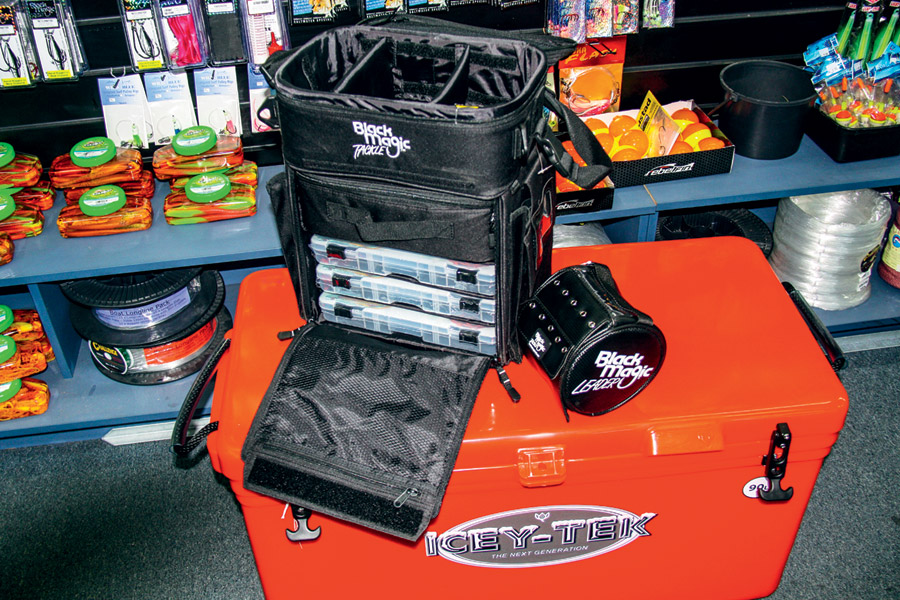
Another option for land based fishers (and boaties as well) is a rugged drybag. These are extremely versatile and some of the come with shoulder straps so they can be carried like a back pack. Simply load up the modular tackle boxes and other r gear you need for the day, seal up the bag and the gear is safe, even if you take an unplanned swim.
Take only what you need
One of the keys to keeping your terminal tackle in a usable state is to pack only as much as you need for the day/trip. That way, should the worst happen, you only risk damage to the gear you’ve taken fishing. Too often – and I’m guilty of this too – we take everything, all the terminal tackle we own, when we go fishing, running the risk of all of it getting wet.
I store most of my fishing tackle at home, where it’s safe and dry. I use a variety of plastic storage boxes containing numerous generic tackle boxes, drawers and cabinets, as well as large tackle boxes and bags for this purpose. All of it is roughly organised by fishing discipline, e.g flyfishing gear is in this cabinet/box/boxes, soft baits over here, big game gear in these bags and so on.
I have a lot of tackle, so it takes up a fair bit of space, but the principal is the same regardless of how much gear you have: store the bulk of it safe at home and organise the gear you will take fishing into smaller boxes or bags from there.
Mix and match

I’m a great believer in organising my tackle for different fishing styles. By using small to medium sized plastic boxes, I can organise all my jig heads for soft plastics fishing. Before I go soft plastics fishing, I’ll throw the box of jig heads into a tackle bag, along with a couple of spools of trace material and a selection of soft plastic lures in their packets, preferably neatly stored in a lure wallet or even in a large zip-lock plastic bag.
If I think I might fish micro-jigs as well, it’s a simple matter to toss in a small box containing jigs, spare hooks, split rings and accessories. The same deal if I’m considering fishing sliders, slow jigs or inchikus: toss in another tackle box with a selection of lures, spare skirts and hooks, along with split-ring pliers.
Think you might chase a few kingfish? Into the tackle bag goes a box of topwater lures, some heavy trace material and maybe a wallet containing pre-rigged livebait traces. Don’t forget the sabikis if you are after live bait.
Or maybe heavy jigging is the better option? A selection of jigs in various weights, neatly stored in a jig roll, a small box of assist hook rigs, split rings, solid rings and perhaps some kevlar cord and spare jig hooks, along with trace material and perhaps a bobbin for tying PR knots, goes into the tackle bag and we’re set.
Gamefishing? I have a dedicated tackle bag with lures in lure wallets, trace, spare hooks, crimps, crimping pliers, snap-swivels, gloves – anything I might need for a day chasing big game fish. It’s a simple matter of picking up the right bag.
By roughly organising your gear into fishing styles/disciplines, it’s easy to prepare for a fishing trip by mixing and matching tackle to suit the sort of fishing you expect to do.
It’s almost a modular system and very flexible – just add additional tackle boxes, or remove them if you don’t need them.
Travelling light
Most of the time I only carry a couple of boxes of terminal tackle when I go fishing, so I can cover at least two fishing styles. Occasionally, though, I want to travel light without limiting my options. If that’s the case, I’ll organise a small tackle box with a selection of terminal tackle to cover several different style of fishing.
This is what I do when kayak fishing, for instance. The small tackle box I use is waterproof when closed and large enough to hold a good selection of terminal tackle. I usually only carry a small selection – a few hooks, a few sinkers, a few jigheads, a couple of jigs, a slider or two – so if the tackle gets wet, which happens often when kayak fishing, I’m only risking a few bits and pieces.
When I head over to the Gold Coast to see family, I always pack a small tackle box with hard-bodied lures, jig heads and assorted micro-jigs and spinners. It weighs very little but, in conjunction with a light travel rod and a small spinning reel, it allows me to enjoy some light tackle fishing in and around Surfers Paradise. Beats shopping.
I make similar targeted tackle selections for other overseas fishing expeditions, obviously packing more gear for multi-day trips and fishing holidays, tailored to the fishing location and the type of fishing I expect to be doing.
I make similar selections for stay-away fishing expeditions here in New Zealand, choosing the tackle I think I will need, but being very selective so as not to over-pack.
|
|
|

Fishing Reports Visit Reports
Manukau/West Coast Fishing Report - 15/10/26
Big spring snapper in 60 metres. The El Niño weather pattern isn’t going to be... Read More >
Rotorua Fishing Report - 15/10/26
Solid start to the season! The Rotorua lakes have all started the season well, and... Read More >
Tutukaka Fishing Report - 15/10/26
Big snapper in shallow. Things remain relatively quiet on the fishing front out of Tutukaka,... Read More >
Tauranga Fishing Report - 15/10/26
Bait and temperature on the rise. It’s been great to get out and see some... Read More >



Friday 16 October 2026
Major Bites
 - -
- - Minor Bites
 -
-  -
- Saturday 17 October 2026
Major Bites
-  -
- Minor Bites
- -
Comments