
Surfcasting - tips for reading the beach

Your initial excitement starts to wane as the expected ‘rod benders’ don’t happen. What’s wrong? You’re wondering about what you need to do to get some fish up on the beach with you.
Sometimes there’s nothing wrong at all. Fish, for one reason or another, can go off the bite and even leave the most delectable of baits alone. Or maybe you haven’t just got the bait in quite the right place. This month I’ll discuss a few extra things you can do turn the fussy little beggars out there into tasty fillets.
Casting
The ability to smack out a huge, long distance cast is a bonus, NOT a necessity.
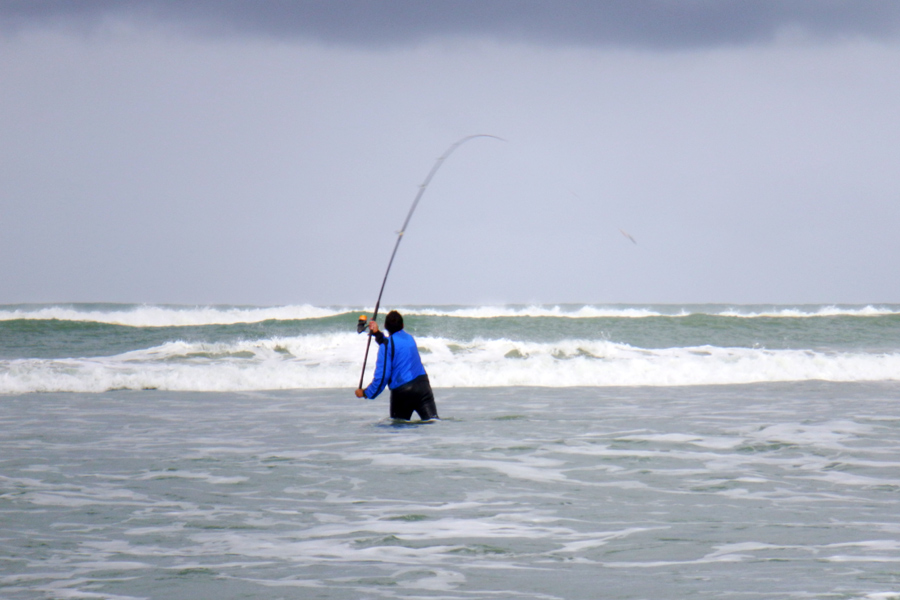 The old adage “fish your feet first” works just as well today as it has ever has. By all means practice casting until you get big distances, but for goodness sake don’t go for the big ‘ego’ hit every time! (Unless, of course, you know that’s where the fish are.) The best ego trip is had by the guy with the fullest fish bin at the end of the day, not the biggest caster!
If you fish two rods and can’t stop yourself ‘horizon casting’ (I have fished with a guy like this in the past), then do it with one rod only. Use the other rod to cast short as this can very often be the more productive, especially in the twilight or early evening hours.
If I’m using two rods, I certainly bang the first one out as far as I can and keep the second rod short. Very short! I then move them in or out as time progresses until I find the fish. Then I’ll place them both in that vicinity.
It’s not rocket science, is it?
Time of day
Generally, the two best times of the day to fish are the morning and early evening twilight hours. These are often referred to as the change of light periods. This is not to say you won’t catch fish at other times, because you will, but the change of light periods are more productive because fish feed more actively at these times.
Some beaches fish better at different stages of the tide. Either time spent on the beach or a bit of local knowledge will help you with this. Combine this knowledge with the change of light periods and watch your catch rate improve!
Another good point is that overcast days can extend the change of light periods rather dramatically. Some fish species don’t like clear, bright water and tend to stick to the deeper and therefore darker spots. Fish like snapper and blue moki tend to be ‘change of light’ fish. Others like the light. Aggressive feeders such as kahawai, trevally and kingfish love the light because it helps them spot their prey.
The best thing to do, then, is arrive at the beach with all the necessary gear and baits to change tactics during the day. Fish for snapper at the start of the day and switch to targeting kahawai or kingfish as the light increases.
Targeting the species
Hearing a rumour a few years ago, my son Blair and I headed off to Napier’s Town Reef after snapper. Strange indeed, as the Town Reef is known as a crash-hot blue moki spot!
Rumours turned out to be true because we had a great old time on snapper around the 2kg mark! We kept half a dozen or so and headed back to the car park with the leftover pilchards sitting on top of the bait bucket.
As we got there this guy and his wife drove up. He obviously assumed we’d been after blue moki, because on seeing the pilchards, and without shifting his tired freckle from his seat, he said, “You’re gunna have to learn how to target your species!”
We didn’t show him the snapper we’d caught as, knowing this guy, the next day he and his cronies would be there and he’d be telling all and sundry that it was him who had caught snapper there the night before!
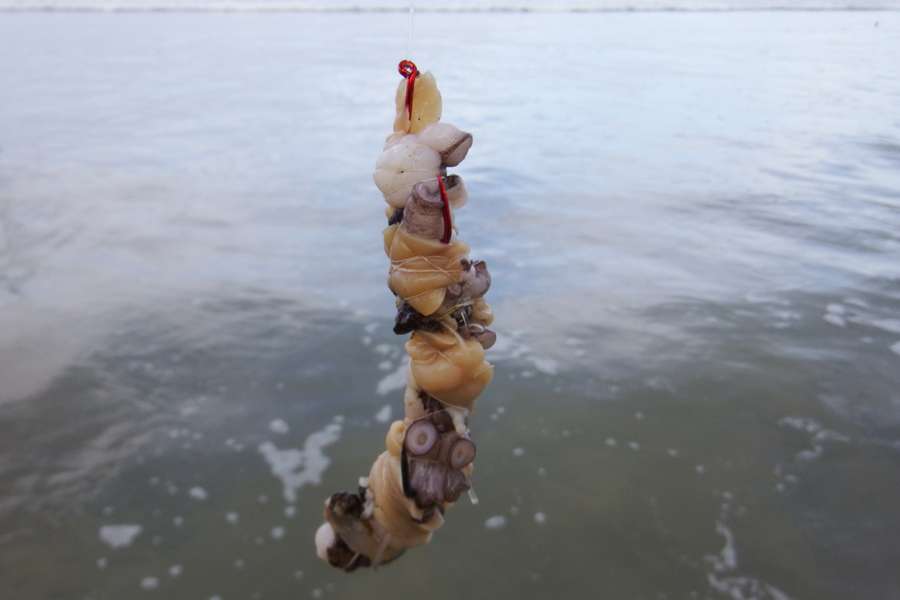 While there are exceptions to every rule, different species like different baits. Some species, like snapper and kahawai, will scoff down almost anything. I once caught a snapper at Te Awanga Reef on a leftover chip after a feed of fish and chips! Other species can be fussy. Blue moki, spotted dogfish and parore are rarely caught on fish baits, much preferring shellfish or crustacean. Changing bait types regularly when the fishing is slow can make all the difference.
My final tip is a method to bring big fish from well away. For durability, tie on an octopus tentacle or a piece of squid. Then over-bind it with some fresh shellfish such as tuatua or mussel. The little picker fish with attack the shellfish and the activity will bring big fish to see what all the fuss is about – a sort of living berley bait! If the bigger fish is a snapper, he’ll find the intact occy or squid and be a prime candidate for a spot on your dinner plate!
|
|

Fishing Reports Visit Reports
Canterbury Fishing Report - 01/10/26
Freshwater season underway. Wow, it’s October already, and our freshwater season is underway, and the... Read More >
Top of the South Fishing Report - 01/10/26
Snapper about but not yet firing. It’s certainly nice to see daylight savings upon us... Read More >
Hauraki Gulf Fishing Report 01/10/26
Big reds in the shallows. The weather has made getting out on the water challenging... Read More >
Bay of Islands Fishing Report - 01/10/26
Snapper moving in. A few Pacific bluefin are still gracing the weigh stations with last... Read More >



Saturday 10 October 2026
Major Bites
 - -
- - Minor Bites
 - -
- - Sunday 11 October 2026
Major Bites
- - Minor Bites
-  -
-
Comments