
Surfcasting tips for lemonfish
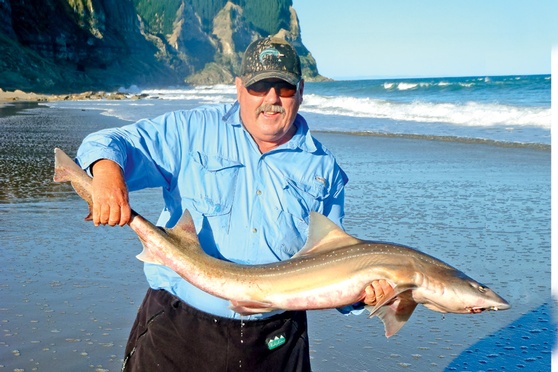
Muddy-brown ocean swells might be crashing down in front of you, providing a most unwelcome sight, but down underneath, amongst the murkiness, swims a very worthy surf-casting target. Gary Kemsley reveals...
Ever caught a Mustelus lenticulatus? You might have. Mustelus lenticulatus is the scientific name for this species commonly found in New Zealand waters, but depending on where you live, you may know them by the various names of spotted smoothhound, rig, lemonfish or spotty shark.
An important commercial species, these medium-sized sharks are targeted in near-shore waters by gill-netting, but seldom caught by sports fishers. Although this shark favours cooler waters, such as the beaches around Christchurch and further south, as well as on the west coast around Hokitika, I’ve also caught them on Ninety Mile Beach and along the east coast of the North Island in the middle of summer.
Club fishers chasing points are usually tuned into local lemonfish populations, yet the average weekend surfcaster wouldn’t even know they’re present.
So why is this? Well, it is the shark’s eating habits that keep it secret on some beaches, as they only like eating crabs, crayfish, prawns and a few other obscure shellfish. If no one is using those types of baits, very few lemonfish will be caught. I say ‘very few’, because one in a thousand will take a squid or fish bait; I have caught a few and seen others caught on pilchards, but usually only on days when they are prolific and competition for food is intense. The lemonfish is seldom seen unless brought in by a net or hook.
Lemonfish are a mobile species. You will find them on one beach for a few days and then they are gone. They come inshore in the spring and summer, when the larger females drop their pups.
Often the young pups show up in catches when they are very small.
The lemonfish is a bronzy-brown on top with numerous white spots covering the dorsal area. The belly is white. They do not have any teeth, just crushers in their mouths for dealing with the crabs they eat.
So where do you find them? Lemonfish will show up everywhere, but the best spots to fish for them are the big surf beaches where there is plenty of wave action. These conditions cause crabs to be exposed by the surging waves, allowing them to be easily caught by the lemonfish. Consequently, there’s no need to hunt out deep holes on the beach to find these fish, and no need to cast a mile to get past the waves: they will come to your feet to feed when the surf is up. On rare occasions you may see them free-swimming in less than a metre of water in the foaming surf.
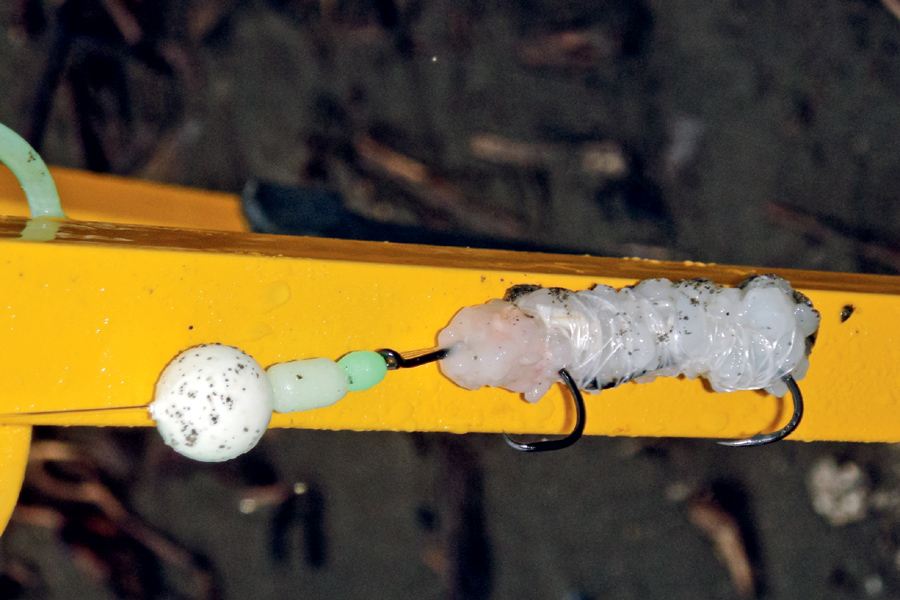
Any surf-fishing rig will work on these fish. They are confident biters and hook-up well when re-curved or circle hooks are used. I like clipped-down rigs that allow me to cast to more distant targets, but have also caught plenty on two-hook ledger rigs, with two baits sometimes proving more attractive than my clipped-down rigs. The rig’s droppers do tend to tangle during the fight though, giving the fish a chance to break the line.
One interesting trait with lemonfish is the way they back up after taking the bait. This may cause the line to tighten when the bait is taken, followed by an immediate slackening of the line. If you’re not watching, the shark may just sit down and eat the bait without you realising it’s there. It therefore pays to treat lines that go slack with suspicion and check what’s going on.
I use re-curve hooks and breakaway sinkers when fishing for spotty sharks. That way, when they pull the sinker out, the circle hook sets itself. J-type hooks may just fall out.
Once hooked, lemonfish typically make long sustained runs, pulling hard and resisting, eventually working back and forth in the dip at the water’s edge, using the surge of the waves to their advantage when the surf is running. Impatient anglers can break them off at this stage. Once bellied in the shallows, they thrash around, and must be allowed to run out again if a large set of waves comes through. Take your time though, and they are manageable. Gaff any big ones you plan on keeping; fish for release or smaller specimens can be grabbed by the tail and dragged out.
How big do these sharks get? I have landed two of 16.5kg, and every year a fish about that size will be the biggest caught by our club members. The biggest I have heard of is a 23kg specimen caught by Dick Lash, and it is our Pania Surfcasting Club record.
Lemonfish are easily caught by gill-netting, and even though they might be prolific in one area, they will move away following a sustained effort by commercial fishers – something we saw time and again in northern Hawkes Bay a few years back.
As this indicates, lemonfish can be great to eat, but if you want to keep one, fillet it straight away, or behead and gut it, then trim all the fins off. This is called ‘trunking’ and stops the worst of the ammonia taste tainting the flesh.
Everyone has a different recipe for lemonfish. Some popular ways to cook it include: deep fried (as in a fish and chip shop special); cubed and curried; or simply shallow fried with herbs. Others prefer lemonfish smoked.
So give lemons a go wherever you fish, offering them crabs, prawns or crayfish, as they will be there. Besides, everything else eats these baits too, so you’re not lessening your chances. In fact, you’re opening up your options.
I FISHED IN A CONTEST
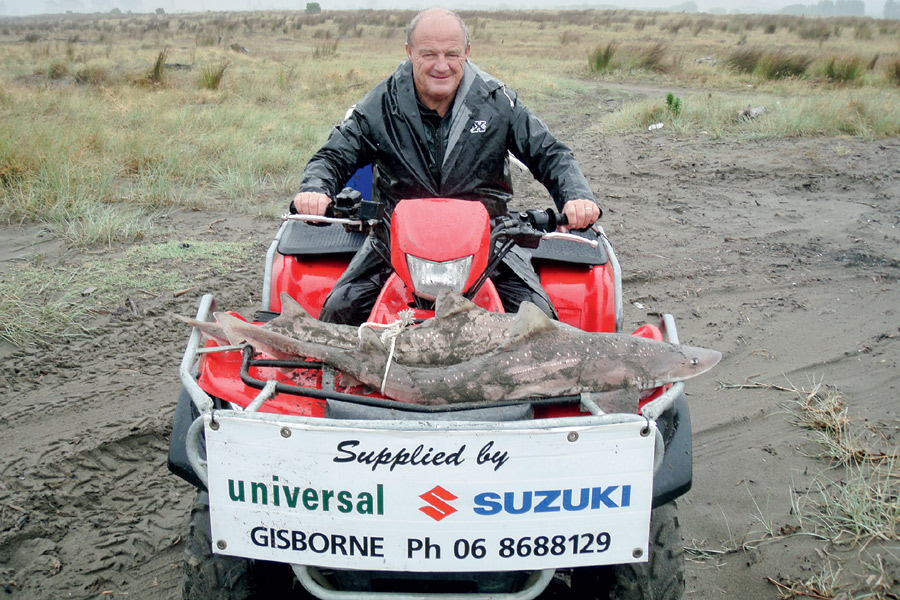
at Gisborne a few years ago. It was rough to say the least, with two- to three-metre swells rolling in from the horizon. So I readied my gear for lemonfish, as I knew they would be there. Crayfish went on as bait while waiting for start time, followed by some time spent watching the swells. In the process I noticed a small gutter, indicated by a calm patch in the turmoil – and that is where I cast at start time. I wasn’t too surprised when my bait was grabbed almost immediately, and after quite a struggle I landed a beautiful 10kg lemonfish – the perfect competition fish on a day like this. Then, half an hour later, I was hooked up again to a similar-sized fish. This time I was lucky to get it in though, as I was bowled over by a tree drifting around in the surf. This saw me end up underwater and the rod lost briefly from my hands, before I fortunately got my act together again and landed the fish. A short time later an official from the club called in to see if any fish had been caught. The two fish he picked up from me and took away for weighing turned out to be the first- and second-placed fish that day, and proves that if you can get a line out, then it’s worth fishing for lemonfish.
|
|

Fishing Reports Visit Reports
Outer Hauraki Gulf Fishing Report 17/09/26
Spring wind the handbrake. Spring is starting to make its presence felt in the outer... Read More >
Top of the South Fishing Report - 17/09/26
Early snapper in Tasman Bay. Well, spring is finally here, and the days are getting... Read More >
Bream Bay Fishing Report - 17/09/26
Good snapper catches reported. After Tangaroa turned off the fish tap for a month or... Read More >
Bay of Islands Fishing Report - 17/09/26
Pacific bluefin tuna for the lucky few. The last fortnight has seen more fishable days... Read More >


Friday 25 September 2026
Major Bites
 - -
- - Minor Bites
 - -
- - Saturday 26 September 2026
Major Bites
- - Minor Bites
- -
Comments