
Surfcasting tips for beach and rock
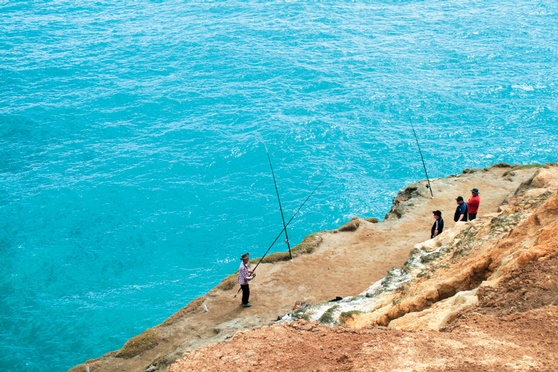
Surfcasting and rock fishing are the two main branches of the land-based saltwater fishing scene in New Zealand. There are quite defined groups of people doing each, and plenty – like Andy Macleod – who practice both.
Good numbers of the surfcasting fraternity are members of various so-called ‘surfcasting’ clubs affiliated to the New Zealand Angling and Casting Association. On the rock-fishing side are ultra-dedicated members of the New Zealand Land Based Game Fishing Club, in addition to plenty of unaffiliated anglers. These are generalisations of course, but they do help us to understand the land-based scene in New Zealand.
Although the core skills of baiting up and casting are essentially the same in both disciplines, otherwise the two require different sets of abilities and present different prospects.
Rock fishing
Although popular throughout the country, it is predictably practiced more in the populous North Island, where our more sought-after species – especially snapper – are available. Rock fishing from deep tidal platforms can offer the opportunity to sit right on top of fish, deploy berley to bring them around, and then utilise a wide range of land-based fishing techniques, including live-baiting, spinning, stray-lining, float fishing and bottom fishing.
Logistically, rock fishing is considerably simpler than surfcasting. But it is more active too, with lots of casting and retrieving required, usually plenty of small reef species about to pick away at baits, and rough, weedy terrain giving fish plenty of opportunities to run for cover and break you off. This is a particular issue when large fish – usually kingfish and snapper – are hooked.
Rock-fishing options and prospects vary from one part of the country to the other. For example, the geology of the Wellington coastline means there are very few genuinely top-class rock-fishing spots. Yes, there are plenty of decent rocks in the well-pickedover waters of Wellington Harbour, but the more productive open coast is dominated by beaches and scrappy, shallow coastline. However, generally speaking, rock fishing is more productive than surfcasting for a few reasons:
- Rocks and reef provide great shelter and habitat for a range of marine plants, shellfish, crustaceans and fish species, thereby creating attractive ecosystems for hungry fish.
- Rocks afford access to deeper water, meaning fish are present over longer periods of time, particularly during brighter daytime hours.
- Rocky points often catch current, bringing fish past on a virtual conveyer belt at different stages of the tide.
- It is possible to attract fish to you with berley, observe them, and target them accordingly – a real advantage over the comparatively ‘blind’ approach of surfcasting.
For these reasons, if forced to choose between rock fishing and surfcasting, I’d choose rock fishing (although I’ll explain shortly why I hope I never have to make that choice…).
On the flip-side there are some other factors (I won’t call them negatives) to consider. The first of these is safety. Surfcasting has its hazards too, but rock fishing is typically more dangerous. In fact, it’s often reported as the most dangerous sport in New Zealand, due to anglers getting washed off the rocks and experiencing terrible injuries – even ending in death. The dangers are there, most notably in the form of big waves, so they must be respected. That said, I also believe most accidents can be avoided with a big dose of common sense.
Rock fishing is also a much more active sport than surfcasting. Although bottom fishing can be practised off the rocks, normally more labour-intensive techniques such as live-baiting, stray-lining and spinning are used. And even when bottom fishing is practised, baits tend to need replacing more often than off the beach, due to the prevalence of small reef species and baitfish. Other tasks like berleying add to the task list and usually make for a pretty physical day. Overall, though, a decent effort tends to pay dividends: in many of the best rock-fishing spots around New Zealand, fish (especially kahawai) can be caught all day long and the access to deep water means that now and again some really special fish (including huge sharks) will cruise through the berley. For these reasons, in my opinion, serious rock fishing is the pinnacle of landbased fishing in New Zealand.

Surfcasting
At first glance it can be hard to see how surfcasting could even compete with rock fishing. Many of our beaches are of the goldensand surf variety, so simply getting a bait to land in water deep enough to hold fish is a challenge much of the time. And even if you do find fish, it still might seem like they’re poor cousins – why would a fish swim there when it could swim around the edges of deep tidal platforms where fishermen can just about drop a baited hook on its head?
Well, some very worthy fish do actually enter the shallow coastline fringes, where beaches dominate, and it can come as a great surprise to the uninitiated that twenty-pound snapper and many other large and worthy fish frequent the shallowest fringes of our beaches often enough to get caught by surfcasters.
Surfcasting in calm conditions on deep beaches can be enjoyed by anyone who’s able to cast a sinker 20 metres, but most surfcasting conditions present greater challenges. For example, challenges such as shallow beaches, steep wave faces, and the best looking water well ‘out the back’. Worse still, there might be an onshore wind, meaning that even the very best surfcasters can’t reach the fish. Get the picture?
Yes, the logistics of surfcasting can be infinitely more problematic than those facing rock fishing. But in a way this is what helps to keep fish on our beaches – conditions dictate that not every day is a surfcasting day.
The dedicated surfcaster has a pretty extensive toolkit of skills and techniques to overcome those challenges, aided greatly in recent times by new technology and innovations. To name a few: breakout sinkers, long-casting modern surf rods, ‘clip down’ rigs, and long-cast spool designs. The combination of these advantages allow surfcasting to continue on days which anglers could have only dreamed about 25 years ago.
Okay, you might be saying, that’s all good, but are there any fish on the beaches? I can honestly say YES! It might be hard to imagine fish lurking under the blanket of water in front of you, when all you can see is waves, white-water and a barren, sandy foreshore, but they do.
The organised surfcaster will always use two rods, as this doubles the chances of success. But it also requires a regular rotation of baits, casting and retrieving. So serious surfcasting tends to be an active pastime, too. Not as active as rock fishing, sure, but it does involve pacing a beat up and down the beach. Only once both rods are deployed and spare rigs are ready to go, will the serious surfcaster allow himself to relax and enjoy the beach in the way most people expect him to (i.e. bum parked in a deck chair).
In terms of the fishing, I have a massive soft spot for deep beaches (think Canterbury’s east coast beaches, Torere in the Bay of Plenty, and Whakaki in Hawkes Bay). These beaches can hold huge numbers of fish and it’s not uncommon for surfcasters to catch 20-30 fish in a session, putting them in the company of decent rock-fishing spots on the productivity scale. Shallower surf beaches are harder work, but are often made up of the softer, fine sands that support shellfish and crustaceans, and therefore some of the finest land-based fish available – big snapper and trevally – are definite possibilities.
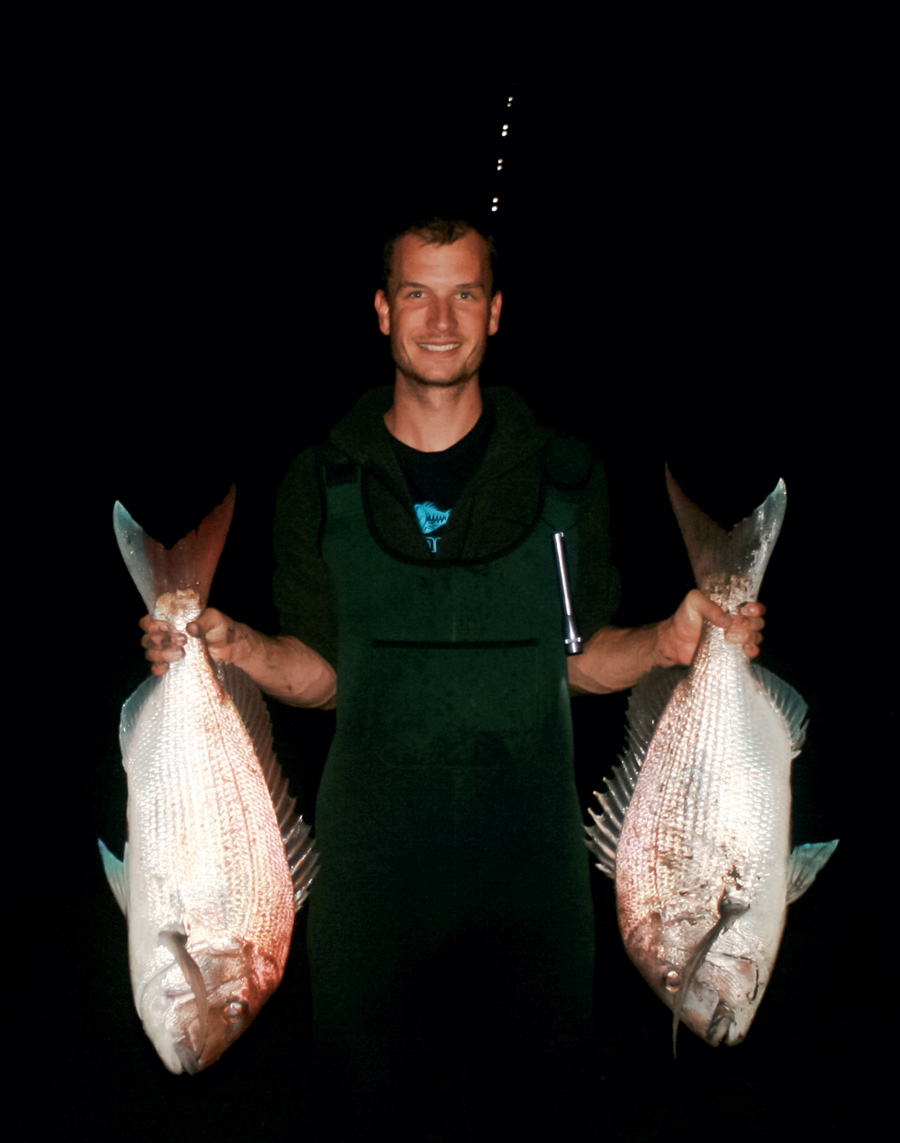
Another key positive for open, clean beaches is the lack of reef ‘pickers’ which can reduce your baits to nothing in minutes. It is therefore often possible to leave baits out for as long as half an hour knowing they haven’t been picked off the hook. You can never say that on the rocks.
As already mentioned, new technologies and techniques are making surfcasting easier than it’s ever been before. It’s also accounting for more great fish. Slide-baiting, for example, has boomed in recent years as a beach-fishing technique, and now kingfish – previously the exclusive domain of boat and rock fishers – are being regularly caught off the beach.
To get everything out of land-based saltwater fishing in New Zealand, I recommend building your rock- and surf-fishing skills, but that is up to you. You might live in an area of great beaches and rock platforms and decide to focus on just one. Fair enough. However, if you are more broadly interested in catching great fish from the shore, do both.
Here, in Wellington, land-based anglers need beach-fishing skills to taste regular success, but many go on annual pilgrimages to more northerly parts, where the rocks produce the fish and accordingly have built those skills, too.
Seasons can also play a part. At certain times of the year (spring), fish move onto the beaches; at other times you need to be casting into the deeper water rocks provide.
To illustrate my point, I have a vivid memory of a September club-fishing comp here in Wellington where I walked two hours in the dark to get to the renowned Boom Rock (a deep sea platform), all in the hope of catching six kahawai. I didn’t catch one – I didn’t even see one. But after the two-hour walk back to the car I bumped into several members of the club who’d caught them hand-overfist off Makara Beach right next to river mouth and car park. River mouths are a pretty good place to catch kahawai in spring!
|
|

Fishing Reports Visit Reports
Tauranga Fishing Report - 28/05/26
Tarakihi on the bite Trips are few and far between at this time of year,... Read More >
Canterbury Fishing Report - 28/05/26
Fresh and salt turning it on! It is not very often I get to say... Read More >
Bay of Islands Fishing Report - 28/05/26
Lures paying dividends We finally had a break in the SE winds that have been... Read More >
Manukau/West Coast Fishing Report - 28/05/26
Snapper and gurnard in the harbour The weather has finally taken a turn for the... Read More >


Major Bites
Minor Bites
Major Bites
Minor Bites
Comments