
Surfcasting - techniques for using small baits

This year I’ve been determined not to let the cold and dark of winter put paid to my fishing ambitions, so when good weather presented itself in mid-June, my mate Matthew Grainger and I decided to target some big winter moochers from the rocks.
One advantage of short winter days is you don’t have to rise quite so early to catch the change of light. A 5.30am start and a bracing hour’s walk had us on the rock in a calm, grey dawn. My only reservation was the pancake-flat sea conditions, which in my experience don’t augur well for big snapper ambitions.
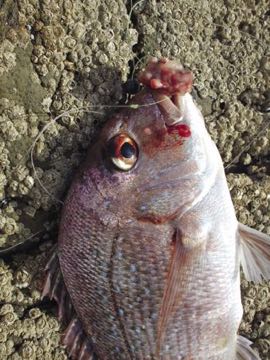 In went the berley - a rich brew of minced salmon, pilchard cubes and breadcrumbs. Our stray-line baits arced out not long after, and in short order we’d caught a brace of kahawai which we butchered into big snapper baits and set on the bottom. Meantime, we persevered with the stray-lining and found that snapper had become the dominant fish, with a few pannies entering the landing net. But as the sun got higher in the sky things slowed down, with our casts into the berley going unloved and our big baits on the bottom retrieved more or less untouched.
I decided that a good berley blitz was required, so busily set about cubing more pilchards. Matt was getting nibbles on the stray-line gear, but no joy on the hook-ups, so we decided these were the pan-sized snapper nervously flitting around in the berley below us. We hoped that bigger, wiser snapper might be down a bit deeper out of sight, as they often are. But alas, there were no head-thumping hook-ups, and even the smaller ones got wary as the sun climbed higher and more light filled the water.
Considering our situation, we decided a different approach was required to make the most of the day. There were plenty of snapper around, just nothing big, so on a bright day with flat seas we decided that targeting them was the best plan of attack – our Plan B.
Immediately downsizing to our lighter gear, we began sending out small cuts of pilchard and kahawai bait. With no wind on the water, we used a combination of unweighted stray-line baits and others with quarter-ounce ball sinkers on top. This is really enjoyable fishing, with minimum effort required to flick baits out, and the small hooked fish pulsing around energetically on the end of the line. For a while we had a productive time, so stored a few fish away in an adjacent rock pool of cool seawater.
 In the slow period that followed I decided to take a bite to eat and gut the fish, noticing as I did so that they were chock-full of cubed pilchards from our berley trail – a reminder of just how effective berleying is at holding fish. (Even when I don’t see fish in the berley, those I do catch are always full of morsels I’ve sent into the water over the course of the day.)
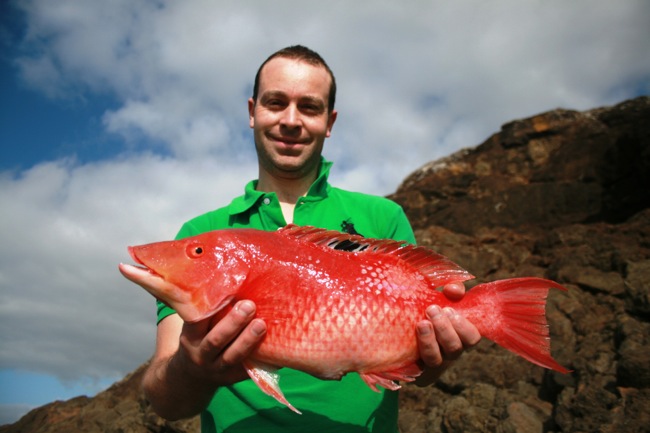
The fishing was slow through lunchtime and into early afternoon, until I got an encouraging hook-up. Whatever it was took a couple of short bursts of line from the light gear I was using and zipped around at reasonable speed. I thought this might be the biggest snapper of the day, perhaps something in the 2-3kg range. However, after working it up the water column, I saw colour that looked a bit too pink even for a snapper. Sure enough, up popped a big red pigfish – not a target species, but a bit of a buzz all the same.
Catching unusual and non-target species is a byproduct of downsizing baits and hooks on the rocks. Over the years I’ve seen red moki, tarakihi and porae accounted for on small baits, whilst blue maomao and sweep are fairly common victims. Of course the subtlety of your approach will also fool bigger fish at the back of the berley that you don’t know are there – I’ve had some memorable scraps with rat kingfish, big trevally and snapper.
 Later that afternoon the snapper re-appeared in the berley. The sea was still dead-flat, so we were able to fish exclusively with small, unweighted baits and position ourselves right down at the waterline. This meant we could keep all our line nice and low to avoid any ‘belly’ from what little wind there was. The baits sunk down slowly through the berley, and more snapper came up onto the rock. Fishing in the Snapper 1 region, a few of these fish were in between the old (27cm) and new (30cm) minimum size limits, so went back into the water after careful handling.
Even though we were catching fish regularly, we did notice there were a few subtleties to our success: the smaller baits and lighter tackle were essential (with our occasional redeployment of heavier gear bearing no fruit at all); a ‘berley blitz’ got the fish excited and solicited more bites; the bites were coming down deep, away from the brightness of the surface; and a small gut to our left generating the odd bit of white water was helpful for stirring up the water and making the fish more willing to bite.
As the sun started to drop, we pegged our hopes on a late afternoon bite, but it never happened, so our thoughts shifted to the prospect of getting back in time to watch the All Blacks test. Soon after, we packed up and made our hour’s walk back, washed up, filleted some truly delicious looking pannies, and made it to the pub 10 minutes after kickoff. We’d missed two great ABs’ tries, but a cold pint and hot pizza made up for that.
Short winter days do have their advantages I mused, remembering some crazy mid-summer trips where I’d fished for 15 hours a day and somehow managed to fit in big walks, meals and some sleep in between. You can only do that for so long – this winter lark was much more civilised!
My final reflection was just how lucky we are to live in a country where rock fishing delivers the goods, even in the depths of winter.
Our Plan B
The secrets to the success of our Plan B on the day were:
Having light gear on hand: Small hooks, thin-diameter line and responsive rod tips are all massively beneficial. They enable you to cast and work small baits much more effectively than heavier, stiffer tackle. Most LBG fishermen will already be prepared with such gear for catching live baits.
Berley, berley berley: These smaller fish respond enthusiastically to berley and will often move up into full view, whilst their bigger, wiser cousins hang back. Seeing them in the berley enables you to monitor their behaviour and see how they are biting on the day. In turn, this helps you to see whether they are taking baits ‘on the drop’ or after you have given it a twitch.
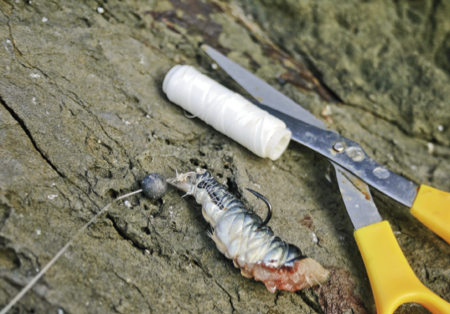
Keeping baits small: Smaller fish might be the only ones biting on the day, but even they can be wary. Smaller, tidily presented baits can make all the difference. Make sure you bring a pair of scissors and some bait-elastic.
Minimising the sinker weight: Use as little lead on your baits as possible (none if you can get away with it). Wind and current generally mean some weight is needed, though your lighter line will mean quarter or half-ounce sinkers are as heavy as you’ll need to go.
Making it a focus: We did keep big baits out on the bottom all day, but our focus was very much on the smaller fish in the berley. It was our persistence throughout the course of the day that secured us a good bag of fish in the end. Continuing to use heavier stray-lining gear in the hope of bigger fish would have seen us go home with a much reduced catch.
 |
This article is reproduced with permission of |
Fishing Reports Visit Reports
Outer Hauraki Gulf Fishing Report 17/09/26
Spring wind the handbrake. Spring is starting to make its presence felt in the outer... Read More >
Top of the South Fishing Report - 17/09/26
Early snapper in Tasman Bay. Well, spring is finally here, and the days are getting... Read More >
Bream Bay Fishing Report - 17/09/26
Good snapper catches reported. After Tangaroa turned off the fish tap for a month or... Read More >
Bay of Islands Fishing Report - 17/09/26
Pacific bluefin tuna for the lucky few. The last fortnight has seen more fishable days... Read More >



Saturday 26 September 2026
Major Bites
 - -
- - Minor Bites
 - -
- - Sunday 27 September 2026
Major Bites
- Minor Bites
 - -
- -
Comments