
Surfcasting off the beach
There is a diverse range of fish that most people don’t catch when sea fishing in southern waters, as they don’t target them.
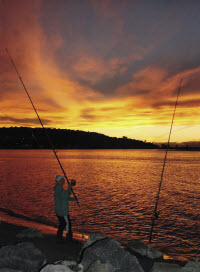 Desirable fish such as elephant fish, rig, school shark and blue moki can be caught off the South Island’s beaches, but for each species you need to know how to catch them. Having the right bait is often a deciding factor, but so is knowing the locations and time of year to target specific species. Consequently, by knowing more about your quarry before fishing for them, you will increase your catch-rate tenfold. While there will always be by-catch, welcome or not, targeting a certain fish (perhaps it fights well or is good on the dinner plate) and catching it is one of the most satisfying aspects of sea fishing. So let’s run through the four top species.
Rig (or spotted shark/smoothhound)
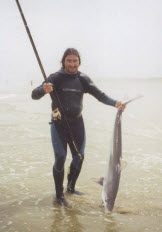 These sharks are well worth targeting, as they fight hard and taste great. Rig move inshore along South Island beaches from October to May, but in the winter months they move into deeper water, so getting your timing right is important.
Rig are fascinating in that they feed almost exclusively on crustaceans (crabs, shrimps, small crayfish), so unless you are using one of these baits, you are unlikely to catch them! For many anglers, half a paddle crab is a well-proven bait, although the increasing availability of prawns in supermarkets gives anglers another bait choice.
Fishing into gutters on sandy beaches at low tide is a good option, as are steeper gravel beaches with a moderate surf churning up the bottom sediments, as this situation tends to attract rig closer inshore.
Rig is also a great target species for long-liners. A long-line deployed off the beach (by electric kontiki, kayak or surfboard) baited with paddle crabs, is a sure way to catch rig.
Elephant fish
These bizarre, metallic-silver fish – a type of highly-modified shark – are also a seasonal species in the South Island, and are present in shallow, coastal waters from October to March.
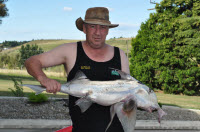 Elephant fish are also specialist feeders: they love shellfish baits, with the tuatua being best of all. Same as rig, they eat crustaceans too, so are often caught when targeting these sharks. ‘Elies’ like sandy beaches in particular, especially those with deep gutters, which you can find by noting areas where the waves smooth out as they come ashore. An offshore wind is best.
Unlike rig, which will feed in a moderate surf and discoloured water, elephant fish prefer still and clear sea conditions. Low tide, around the change of light, is a particularly good time to target them, as they tend to come in close to feed at such times. Areas close to rivermouths often have increased marine productivity and dense shellfish beds, so are good places to target elies. But check that the nearby river(s) is running low and clear prior to starting fishing for them.
Elephant fish usually pick up the bait and swim inshore, causing your line to suddenly slacken off – a characteristic sign of an elie take. So wind to remove any slack before striking gently, and the elphantfish should be on.
These bizarre fish fight quite hard and use their massive pectoral fins to ‘fly’ through the water.
School sharks
Otherwise known as ‘grey boys’ or tope, these sharks are not as selective as rig and elephant fish, but taking the time to choose the best-possible bait will still increase your chances of catching them. These predatory fish feed on other fish, including live prey. Use a large, oily fish bait or a chunk bait (salmon smolt are very effective). On the whole, the larger the bait, the larger the shark attracted. Smaller ones can be caught on squid (these dogfish-sized schoolies are known as ‘pencils’), but for the big boys – which can reach 40 kilograms – use a jack mackerel or whole salmon smolt for bait.
School sharks tend to be a species of the open gravel beaches around the South Island, and, like rig and elies, they are seasonal. Although they can be caught all year round, most are taken from October to May. Same as the other two species, schoolies are a top ‘fish and chip fish’ (sometimes sold as flake), so are great when cooked in batter. They also fight hard – to the point they are considered a premier gamefish in the UK).
Blue moki
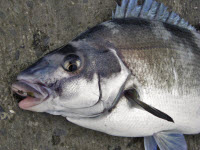 Moving away from the shark realm, blue moki are a very underrated and overlooked fish in the South Island. This is unfortunate, as blue moki are quite common in many areas, fight hard, are good eating, and reach around 7 or 8kg in size.
Admittedly moki are more challenging to catch than many other species; not only do they have a specialised diet, they also only feed in shallow water during periods of low light, with late evening and on through the night being best. As for the preferred baits, these include crayfish flesh, mussels and paua guts.
Moki can be caught all year round, and as they prefer the sandy gutters between, or close to, rocky reefs, the coastline from Kaikoura all the way up to Ward (near Cape Campbell) on the east coast is dotted with prime beaches for catching them. I suggest using a GPS to mark out any gutters and prime areas adjoining exposed reefs at low tide, then returning to fish for them at night, preferably in still sea conditions with clear water.
Moki have small mouths, so a compact but very strong hook is required. Rather than biting the bait, the moki sucks it in, so quite a small strike ensures a hook up.
Due to the recent set-net ban, moki populations are set to increase in many areas, opening up the line-fishing opportunities further, so give them a go, as you might be pleasantly surprised.
All the species profiled can be caught on a standard ledger rig, but it is presenting the right bait that makes the difference. Use good quality 4/0-6/0 hooks for rig and elephant fish, 5/0-8/0 for school shark, and 3/0-4/0 hooks for moki, due to their smaller mouths.
So make the most of the fishing opportunities available along the sweeping open beaches that comprise much of the South Island’s coastline and have a go for these four species. I am quietly optimistic that our inshore fisheries are to some extent recovering, perhaps as a result of stringent controls on inshore fish-stock quotas over the last decade, so now is the time to target them.
Top locations (a few suggestions)
Rig: Waimakariri River mouth to South Brighton Beach; Amberely Beach; Hapuku River mouth, Kaikoura; Birdlings Flat to 5km along Kaitorete Spit; surf beaches near Rangitata and Rakaia River mouths; steep gravel beaches on the West Coast from Ross to Greymouth; and also surf beaches from Westport to Karamea and Tasman Bay.
Elephant fish: Spencer Park to the Waimakariri River mouth; Karaki Beach (north side of the Waimakariri mouth); Taumutu Beach to Rakaia Rivermouth; surf beaches adjoining the Rangitata and Opihi River mouths; and Conway Flats (Kaikoura Region).
School sharks: Any steep gravel beach on the West Coast; Kaikoura Region and along the Canterbury Bight, with the beaches from the Rakaia to Rangitata River mouths – Dorie and Pendarves Beaches in particular – being favoured. Pick a beach with a fair amount of current.
Blue moki: Any beach along the Otago and Kaikoura coast where there are offshore reefs. In Canterbury, the reefs just south of Timaru are worth a look, as are those around Oamaru and Moeraki. The surf beaches from Goose Bay up to Ward have literally hundreds of offshore reefs suitable for targeting moki.
 |
This article is reproduced with express permission of |
Fishing Reports Visit Reports
Outer Hauraki Gulf Fishing Report 17/09/26
Spring wind the handbrake. Spring is starting to make its presence felt in the outer... Read More >
Top of the South Fishing Report - 17/09/26
Early snapper in Tasman Bay. Well, spring is finally here, and the days are getting... Read More >
Bream Bay Fishing Report - 17/09/26
Good snapper catches reported. After Tangaroa turned off the fish tap for a month or... Read More >
Bay of Islands Fishing Report - 17/09/26
Pacific bluefin tuna for the lucky few. The last fortnight has seen more fishable days... Read More >


Friday 25 September 2026
Major Bites
 - -
- - Minor Bites
 - -
- - Saturday 26 September 2026
Major Bites
- - Minor Bites
- -
Comments