
Surfcasting for big snapper
Catching big snapper in Spring
October is the month when some keen surfcasters hunt for big inshore snapper. Kane Wigglesworth shares some tips and techniques to target the fish of a lifetime.
Whilst large snapper can be caught almost any month during the year somewhere on our coast, these October fish follow the massive schools of pilchards and anchovies into the surf zone under huge kahawai boil ups, picking off the slower baitfish, grabbing any opportunistic scraps, and smashing any crabs lured out by the chance for a free feed. This strategy enables the snapper to gain condition fast before spawning takes place in early summer.
This month is also the time when the more seasoned anglers come out of their winter hibernation and start applying more time and effort into targeting these legendary beasts, which often surpass the magical 20lb (9.1kg) mark and can even push past 30lb (13.6kg)!
What follows are some basic preparations I undertake before hitting the beach, as well as what to look for in a fishing spot, and some basic baits and rigs that will hopefully help you to capture that submarine-sized trophy snapper this spring.
Check your gear!
While you may have come out of ‘storage’ relatively unscathed, the gear you stashed away over the cooler months may not be up to standard now. ‘Rust never sleeps’ is very true of fishing tackle – although ‘corrosion’ is perhaps more accurate in this instance.
And what’s your main line like? Is it filled to within 2-3mm of the spool’s lip? Is it still shiny and free of abrasion? If it suddenly becomes ‘hairy’ or snaps easily for no apparent reason, you may have a cracked or chipped rod-guide insert, or possibly your reel’s line roller is not turning due to lack of lubrication. (I’ve witnessed anglers lose solid fish due to the line snapping, then blame it on their line for being too light or, even worse, faulty – until they eventually find out otherwise.)
To my way of thinking, basic things such as new nylon and hooks are of small cost when compared to petrol and all the time you’ve spent chasing a trophy. To have something that’s relatively small and inexpensive let you down when finally hooked up on that trophy-sized snapper is an unnecessary tragedy.
The bits
I like to fish with a fine-diameter 8kg breaking-strain nylon, and find Black Magic High-viz Surf/Supple Surf or Suffix Elite Camo have fantastic distance-casting properties.
The line is matched to an eight-metre shock leader of 30 to 40lb (14-18kg) breaking strain, and all my traces are fluorocarbon, as this material holds its shape in the rough and tumble of the surf, and is very durable, especially in the weights of 40 to 50lb (18-23kg) I prefer. Either Black Magic Fluoro or Berkley Pro Spec fits the bill nicely here.
I always like to have several premade traces in a trace wallet or resealable bags. The traces can vary in length to suit long-cast pulley rigs, running rigs, or two-hook ledgers – some as flashers, and with or without bling (lumo skirts, beads, floats etc), to cover any beach type you may be fishing. If the traces or leaders show signs of wear and tear while fishing, change them straight away!
Whatever rig configuration utilised at the time, hooks in sizes 4/0 or 5/0 are all that’s necessary – I do not believe you need to throw the largest bait out to catch a horse-sized snapper – but make sure they’re ultra-sharp. I find Gamakatsu Octopus Circle hooks set with ease, without the need to strike hard, particularly if fishing more than one rod in beach rod-holders.
BOS Breakout Sinkers are without doubt the best all-round sinker I use in the surf, enabling my rods to be set firmly with a nice even bend in them, minimising the amount of weed and sticks that catch on their line in the surf zone. This also aids in bite detection: if my back is turned or I’m busy with a second rod, I’m able to instantly see if my rod has straightened. If so, I race over and check for anything on the end, as not all big snapper will haul the rod hard over at this time of year (I’ve had a couple 20lb-plus fish simply lift the sinker and swim slightly towards the beach). And although the ‘slacky’ won’t always result in a hook-up, if the sinker wires have pulled, it’s still encouraging to know I’ve most likely had a bite.
If you fish at night, tip lights or reflector tape can massively improve your bite detection and subsequent hook-ups. A good headlamp can also be very useful, as can a spotlight, but avoid flashing light around carelessly in the surf as it can spook the fish coming into the shallows to feed.
I generally choose not to use a gaff to secure a large fish in the surf, as I’ve seen too many good fish lost by careless gaff swipes and lunges. A good angler has the ability to read the surf so the waves and their reel’s drag direct their fish onto the beach. Simply lower your rod angle and lead the fish in the direction you want it to go. But don’t use your reel like a winch or you risk snapping the line – I’ve lost count of the number of times I’ve seen this happen to impatient anglers.
If it seems your gear is not up to scratch, get it to your local tackle store for servicing or repairing – it’s simply not worth the heartache.
Plan your destination according to the conditions
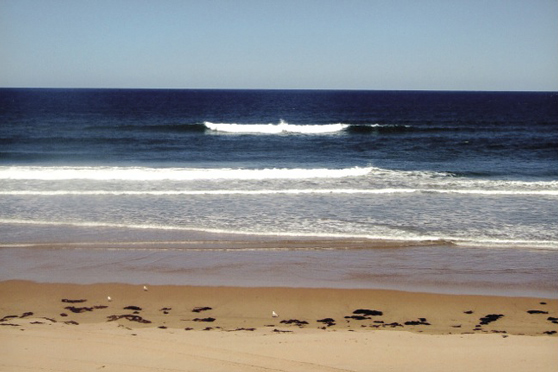
Big snapper can be caught in almost any surf conditions, from millpond flat to four-metre breaking surf. I like somewhere in between – ideally a metre or so of surf when fishing one of the many Hawkes Bay beaches I favour. This enables me to pick a spot on the beach where there is a more noticeable sand bar or reef structure that is getting washed about (indicated by white-water surf breaks), ideally just out of casting distance, so I can deposit my baits into the channel inside the structure – or, alternatively, to the prevailing current side. These conditions create a natural fish-berley corridor, the big snapper hanging around nearby to get all the crabs, beach worms and shellfish being uncovered and deposited, along with any stray baitfish seeking cover in the white water.
The better Hawkes Bay beaches – such as Ocean Beach, Whirinaki, Mohaka, Waihua, Whakaki, Nuhaka and Mahanga – all have desirable features such as reefs or sand bars that produce plentiful big snapper tucker. However, before picking one of these locations, I usually consult ‘Uncle Google’ and visit swellmap.com to find the best conditions and wind directions, as well as sea temperatures. We’re lucky here in Hawkes Bay, as we have a couple of blocking capes that protect us from big northerly and southerly blows, and if you are prepared to drive a couple of hours north of Napier to the Mahia Peninsula, there is also shelter from excessively big easterly or southerly swell conditions.
If the sea is flat and hard to read, search the beach for large noticeable wash-up points of shells, empty or full, as these are probably good spots to prospect. Last October I pulled up to Mohaka Beach an hour before dark to catch up with a mate who’d landed a nice 10.5kg snapper two days earlier around midday. He was packing up and about to head off, complaining that it had been a waste of time – he’d sat in the same spot all day for just one kahawai. I told him he was silly leaving at the best time of the day (change of light), but he was getting tired and scratchy so off he went.
Then, as I was unloading my quad bike to head down the beach, I noticed a huge work-up of gannets and kahawai just out of casting range, but a mere 300 metres down the beach from where he had been fishing. I decided this was too good an opportunity to pass up; there had to be snapper near all this activity.
I was not disappointed. I cast two pre-made baited traces out, and it took just two minutes for the first rod to tip over. A good scrap followed, resulting in a 5kg snapper on the sand. Then, just as I beached that fish, my other rod belted over and a very feisty, solid snapper took off down the beach. Five minutes later, a stubborn 11.5kg snapper – which did not want to come out of the wash – was slid up the beach. Had Bones not driven off, he may have experienced a rather hectic evening, as the snapper continued to bite well for another couple of hours!
In short, be prepared to move about a bit if you’re not having much joy in one spot – but, by the same token, try to have confidence in your chosen spot, as it’s hard to stay focused if always second-guessing your spot choice.
Change of light is always my favourite time of the day, predominately evening rather than morning, as this is when I’ve had most of my big snapper success. As far as moon phases go, I love fishing night-time full moons for big snapper – the daytime fishing can be slow at this phase, though.
I have observed that most of my daytime captures of big snapper have come when large-swell conditions and/or discoloured water are present, the murk perhaps allowing the big brutes to sneak up on their prey in daylight. I’ve also noticed that sudden fronts and storms – thunderstorms in particular – get them biting something chronic. I just love a good thunderstorm when targeting big snaps!
Baits and rigs
Nothing too fancy required here. As already mentioned, I like to have a variety of traces made up for different situations, but find myself predominantly using self-made long-cast pulley rigs to streamline my cast for maximum casting distance if needed. However, I can always button off on ‘the spinach’ and drop baits closer to shore if conditions are right. I have seen many a snapper caught just in behind the wave break on steep, shelving, shingle beaches.
The long-cast pulley rig covers me for all the beach types I fish, whether wading a surf beach like the Ninety Mile or Mahanga, or fishing a deep-water beach like Blacks Beach or Whakaki. When using this rig, I have more options about where I can put my baits – and as the tides push us back more on surf beaches, this can be the difference between catching or not.
I’m a firm believer in the adding of luminous beads, tubing or needle skirts when fishing at night time – these will increase your snapper catch rate!
Another worthwhile addition I make to some of my traces involves incorporating small foam or plastic floats so my baits are lifted up off the bottom, protecting them from paddle crab or lice attack. The added advantage of this is that the bait becomes more noticeable to any passing fish – but does become a target for kahawai too, which are suckers for floated baits.
A big snapper will eat almost anything. The good old favourite, pilchards, would have accounted for 80 percent of the big snaps I’ve landed over the years, but other favourites include salted skipjack, fresh mullet, crayfish and octopus.
Our Pania Surfcasting Club record fish of 14.4kg was caught on a KS 1/0 Black Magic hook and a cube of pilchard, proving big snaps will eat very small baits. Generally my baits are the size of my thumb – such baits don’t reduce my casting distance, as big baits do.
Whatever bait you use, make sure the presentation is good. I’m very particular about this, always making sure my hook point remains well clear of the bait to enable a positive hook-up. I also use plenty of bait-elastic, even on firm baits, to keep the bait together and prevent the hooks from burying themselves back into the bait.
You’ve been waiting all year for that big red October snapper to come snooping through the surf to find your bait, so make sure your offering and presentation are tops!
Fishing Reports Visit Reports
Outer Hauraki Gulf Fishing Report 17/09/26
Spring wind the handbrake. Spring is starting to make its presence felt in the outer... Read More >
Top of the South Fishing Report - 17/09/26
Early snapper in Tasman Bay. Well, spring is finally here, and the days are getting... Read More >
Bream Bay Fishing Report - 17/09/26
Good snapper catches reported. After Tangaroa turned off the fish tap for a month or... Read More >
Bay of Islands Fishing Report - 17/09/26
Pacific bluefin tuna for the lucky few. The last fortnight has seen more fishable days... Read More >


Friday 25 September 2026
Major Bites
 - -
- - Minor Bites
 - -
- - Saturday 26 September 2026
Major Bites
- - Minor Bites
- -
Comments