
Superlines - an overview
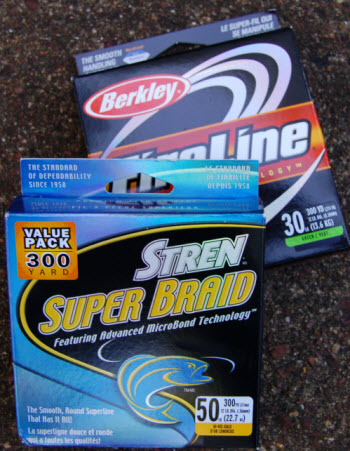 In the last couple of columns I’ve raved about gel-spun polyethylene lines. As you may guessed, I really like them.
It has to be said though that they’re not everyone’s cup of tea and, as explained in my last peice, they’re not suitable for all styles of fishing. They’re also expensive.
Because of these factors, and others like their unforgiving nature, poor knot strength and difficult handling characteristics, it’s unlikely gel-spun superlines will ever replace nylon.
Manufacturers don’t expect them to. Rather, superlines will complement nylon and give anglers another weapon in their arsenals.
Those anglers who use superlines regularly soon adapt to gel-spun’s special properties and change their fishing technique to suit. Once they have mastered these new ways of fishing, most find superlines’ advantages far outweigh their disadvantages.
Here are a few of the things I’ve found that helped me get the best from superlines in the couple of years I’ve been using them.
Tackle set-up Don’t choose too big a reel (superlines are much thinner than equivalent monofilament lines) but make sure it is sturdy enough to cope with the extra stresses and strains superlines exert (essentially you’re fishing much stronger line than the reel was designed to take).
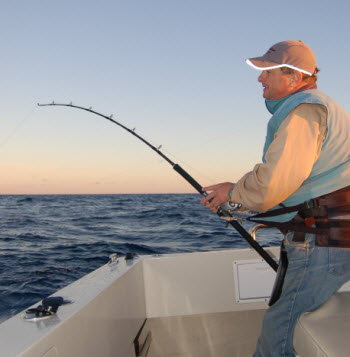 Big reels take an awful lot of polyethylene line to fill. Alternatively, use a normal reel for the line class but fill most of it with backing (this is a good option with smaller reels too) and top-shot with the required length of super braid, Fusion or Fireline.
If it’s a game reel you’re filling, several hundred meters of gel-spun is advisable but 100 or 150 metres may be enough on a baitcaster, small overhead or spinning reel.
Opinions differ as to the best backing material. Some people say dacron is best, others prefer nylon. On smaller reels nylon seems to be fine but it’s very important that it’s packed down good and tight before being top-shotted with gel-spun.
The same is true with Dacron, a more popular backing choice on bigger reels, because superbraid in particular has a habit of burying itself deeply into any poorly packed backing material. Some people like to lay the backing in an exaggerated cross-weave pattern to lessen the chance of this happening.
When joining the polyethylene to the backing, double it over before tying it, regardless of the knot you use. There are several (complicated) knots devised for tying braids. I’ve found uni-knots (with the braid doubled over) as good as anything and use this knot almost exclusively. The same knot can be used at the terminal tackle end if you want nylon to the hook though a variation of the ‘no-name’ knot is also OK. Some manufacturersreccommend a dab of super glue to stop knots slipping. Fused lines are less trouble but it still pays to double them over before tying to your backing.
Most people like to attach a short length of nylon to the end of their superline. It’s not strictly neccesary, particularly when lure fishing, but it’s handy if you want to make lots of terminal tackle changes. A well tied joining knot (perhaps reinforced with super glue) will give you confidence and help your fishing. You can use one of the knots suggested by the line’s manufacturer or else try the knot illustrated here. Alternatively, tie a small swivel into the system (remember that small swivels are not especially strong), then you can change your nylon at will.
For bait fishing, nylon traces are accepted practice though fish bite quite well even if braid is fished right down to the hook. Braid traces are good on toothy critters too and short lengths of super braid are sold as saltwater flyfishing tippet material to combat fish with sharp teeth.
When using superlines, bear in mind their lack of stretch.
Everything is more positive. Your’e directly connected with your bait or lure and can feel every bump through the line. Your movements at the rod end are transmitted with negligible energy loss to the hook which makes hook-sets extremely positive. The downside of this is that it’s easy to rip hooks right out of a fish’s mouth by striking too enthusiatically. In some cases it’s possible to break the line or the hook for the same reason. A technique adjustment is needed and hook-set strikes should become little more than a firm lifting of the rod.
The same is true of jigging. Instead of the exaggerated lifting motion so often practiced by jig fishers, a gentle wrist flick is all that’s needed when you use polyethylene lines. The action of the lure is much more realistic worked this way and you’ll catch a lot more fish. Take care setting the hook, though – your immediate response is probably to strike savagely as soon as the fish hits (this will only lose you jigs if you’re fishing superlines) – gently does it.
Rod choice is important. Softer rods than you might normallyuse with nylon of the same breaking strain will reduce break-offs and keep more fish on your hook. Don’t be too extreme though because the rod still needs to have enough grunt to handle the line without rupturing. Keep reel drag settings lower than you would for equivalent nylon lines for the same reasons.
Don’t fish too small a hooks. Small hooks are easily ripped out because superlines don’t cushion shocks like nylon. Hooks that are too light will likewise fail. The same goes for every aspect of your tackle when fishing superlines–they must be of good quality and strong enough to cope with the stress.
Surfcasters gain huge benefits from superlines. Both braids and fused lines cast well and their fine diameters mean less air resistance and longer casts. Once they’re in the water, the same property allows the use of smaller sinkers and lines are less effected by current and wave action. Most people can expect at least a 25perecent improvement in their casting distance if they change to superlines.
Bite detection is superb and it’s possible to set the hook even when you have 120 metres of line and more in the water. The long rods used in surf fishing mean break-offs are less common and playing fish is easier than with short, stiff boat rods. Shock leaders are reccommended not least because fine diameter braid plays havoc with casting fingers. Beware tangles and birdsnests too – they’re all but impossible to unpick.
Once you’ve got the hang of fishing with superlines, nylon feels impossibly vague. On those occasions you have to use nylon, I guarantee it’ll take you a while to readjust to its stretchiness. Once you’ve adjusted it’ll feel perfectly normal again, but you’ll still miss the sensitivity nostretch gives you. If you haven’t tried one of the gel-spun lines, you should, just to feel the difference – you can always go back to nylon if you don’t like it.
A Blast from the Past! - this article originally appeared in NZ Fisherman magazine - January 1997
|
|
January 1997 - by John EichelSheim |

Fishing Reports Visit Reports
Outer Hauraki Gulf Fishing Report 17/09/26
Spring wind the handbrake. Spring is starting to make its presence felt in the outer... Read More >
Top of the South Fishing Report - 17/09/26
Early snapper in Tasman Bay. Well, spring is finally here, and the days are getting... Read More >
Bream Bay Fishing Report - 17/09/26
Good snapper catches reported. After Tangaroa turned off the fish tap for a month or... Read More >
Bay of Islands Fishing Report - 17/09/26
Pacific bluefin tuna for the lucky few. The last fortnight has seen more fishable days... Read More >



Friday 25 September 2026
Major Bites
 - -
- - Minor Bites
 - -
- - Saturday 26 September 2026
Major Bites
- - Minor Bites
- -
Comments