
Spearfishing Tips & Tricks

It’s fair to say that spearfishing has experienced a bit of a renaissance over the past decade. There are now more spearos in New Zealand waters than ever before, and this is thanks in part to publications such as NZ Fishing News educating readers about the sport and encouraging them to experience first-hand the joys of the underwater world.
The exposure of spearfishing on numerous fishing shows over the past decade has certainly helped as well, although I’m sure there are times that our show, South Seas Spearo, has had the opposite effect, dissuading viewers from taking the plunge given the dangerous situations our ragtag crew often find themselves in.
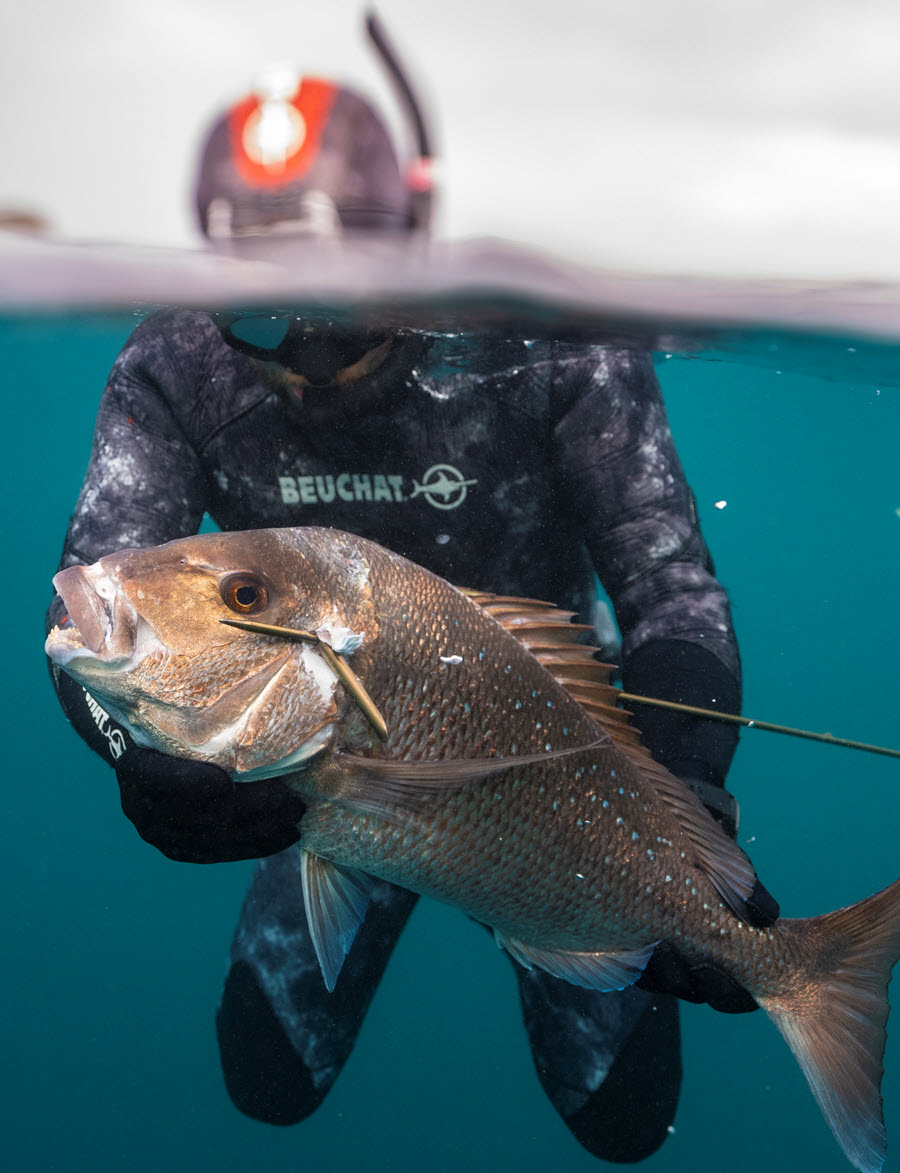
What was once considered to be a bit of a ‘dark art’ is now well and truly out in the light, but despite all the exposure in print, broadcast, and online, for newbies wanting to dip their toes in, it can still be tricky to know exactly where to start.
And for those who have recently taken the plunge, improving can be difficult – I myself can attest to the fact that it’s not easy to ‘level up’ from eager beginner to cold-water killer. Before starting the show, I’d developed many bad spearfishing habits that I was quite unaware of, given that I was pretty much self-taught. So, rather than simply spouting on about our recent spearfishing adventures at home and abroad, we thought that, with spring upon us, now would be a good time to harness the team’s collective experience to provide a little salient advice about how to get the most out of your time in the salt this season.
Dave Shaw
I’ll start things off with a simple trick that many people overlook – ‘burning’ your mask. I’ve just returned from a holiday with my extended family to Rarotonga and Aitutaki, where snorkelling was high on the agenda. However, on the first afternoon I noticed that many of the masks being used, although brand new and bought for the trip, were fogging up badly.
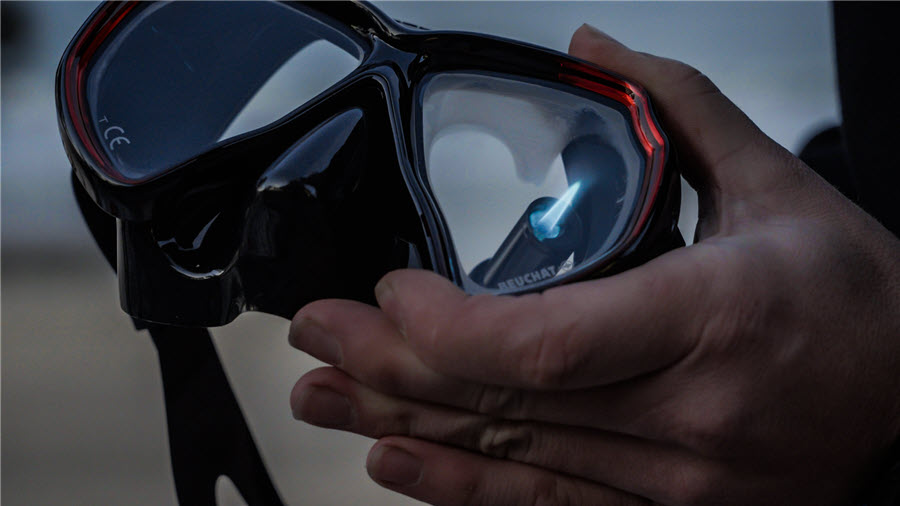
The enthusiasm and enjoyment of everyone were doubled after I gave each of the foggy masks a once-over with a lighter and a bit of toothpaste. It’s a crying shame how many people put up with a fogged-up mask when the solution is so simple. Here’s a little video that best demonstrates what’s involved (although be warned, this only works on tempered glass masks):
Julian Hansford
Picking up from where Dave left off, once your mask has stopped fogging, try to avoid taking it off your face as much as possible. The more exposure to the air it gets, the more it’ll fog up, especially in the summer months when it’s a bit more humid. When I’m diving commercially or for the show, my mask pretty much stays on all day. The only downside is that you end up with quite a ‘baked in’ mask mark when you eventually remove it!
Jordy Bardin
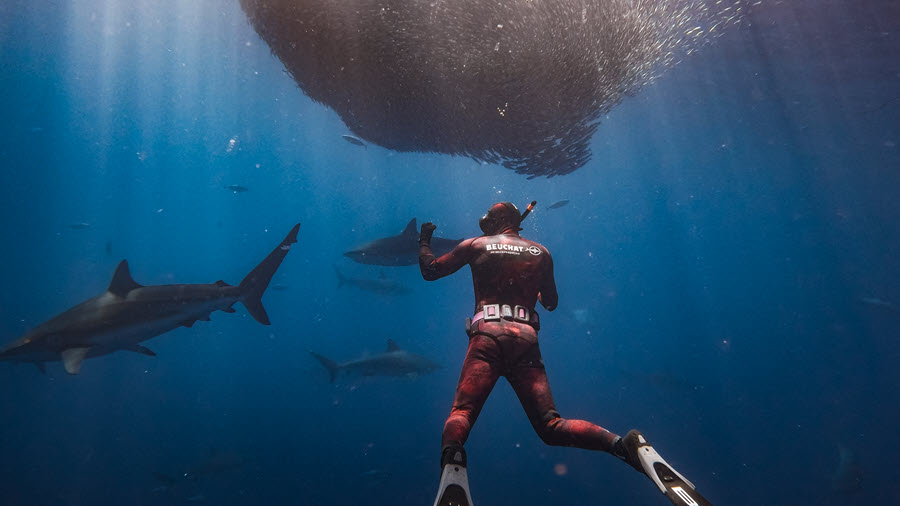
I know it sounds cliché, but my advice is to learn how to RELAX! You may think you’re relaxed, but when you are getting buzzed by dozens of huge bluefin tuna, it can be pretty bloody hard – trust me, I know!
The way we move and hold ourselves in the water not only affects how much energy we are burning (and therefore our breath hold), but also the way that fish will interact with us. Even small amounts of tension can result in rigid or jerky movements, which can be enough to deter fish. And fish are smarter than we think! They’ll pick up on our body language and react accordingly; therefore, improving the ability to fully relax will not only increase your breath hold and the duration of your dive, but also help you get closer to fish, increasing your chance of success.
But it’s easier said than done. As someone with a busy mind, it can be really difficult to fully relax and take control of your body, so to improve your relaxation while spearfishing, I would suggest learning how to use the ‘body scan’ technique for freediving. You can learn more about this online or through a freedive course.
Sam Wild
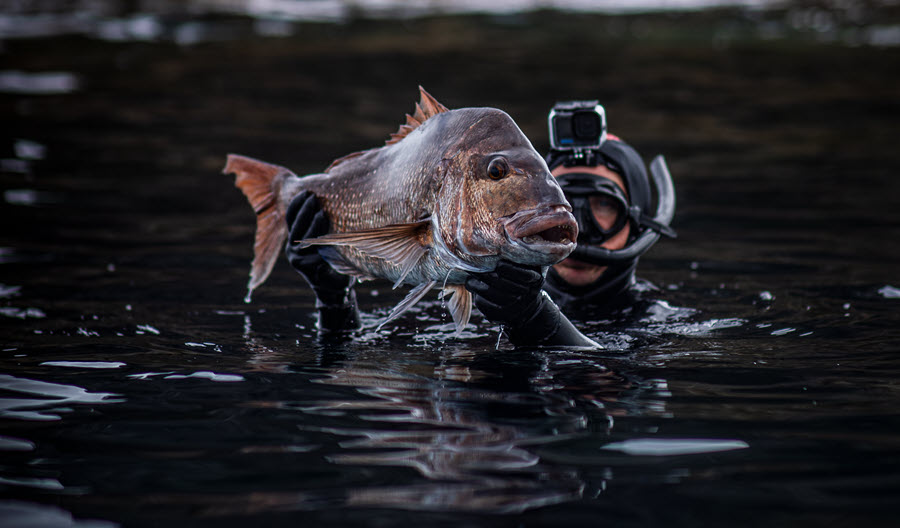
My big one would be that you don’t have to chase fish around. Practising neutral body language and putting yourself in a likely area, then just staying still and keeping calm, can work well with the species we target here in New Zealand. When I first started spearfishing, I used to bomb down and cover heaps of ground in an effort to find fish, but I do a lot less of that now. It might sound counterintuitive, but acting aloof and disinterested is sometimes the best way to appear attractive. Come to think of it, the same tactic worked pretty well for me most Friday nights in my youth!
Ant Niterl
If you’re relatively new to diving like me, don’t make the mistake of trying to be ‘tough’ and dive through any pain you feel in your ears if you’re unable to equalise. You can push through a bit of discomfort or through a niggly injury, but don’t play games with your ears – you’ll just get injured and have a terrible time. I pushed my luck on our mission last year on the south coast and ended up losing my hearing for the best part of a week. It’s not worth the risk!
Kieran Andrews
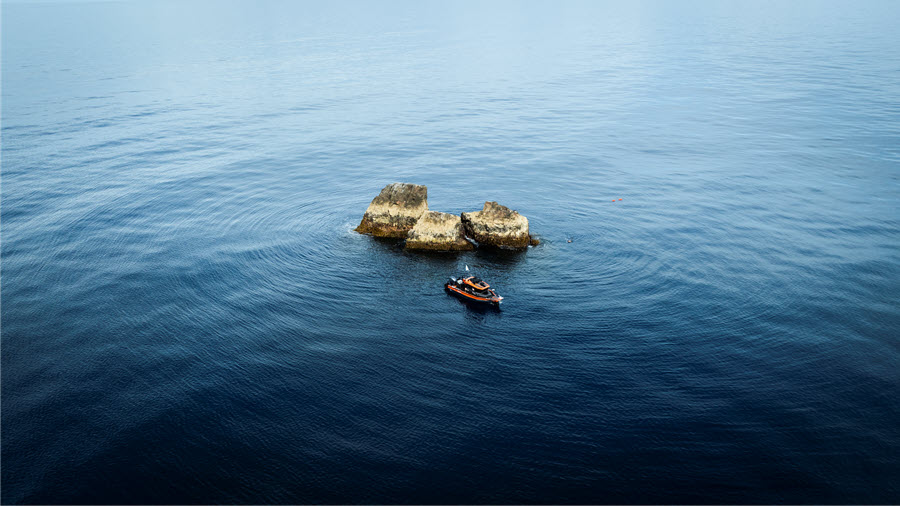
Keeping the sun behind you is the spearfishing equivalent of ‘keeping the wind in your face’ when hunting – it reduces the effectiveness of one of a fish’s key senses. It conceals your approach by breaking up your silhouette, and diving with the sun at your back should mean you have the strongest available light to help you spot fish.
Dwane Herbert
Every speargun has a sweet spot in terms of power – load it up with rubbers too heavy and it can throw off the accuracy, but use too little and you may not have the power needed to penetrate a big fish at range. There are a lot of other variables at play as well – the weight of your spear shaft, the length of your gun, the diameter of the rubbers, and your own strength/ability to load. You might get lucky and get a gun that shoots straight right off the shelf, but in my experience, a bit of tweaking can often be required to improve accuracy and reliability, especially for more powerful bluewater rigs.
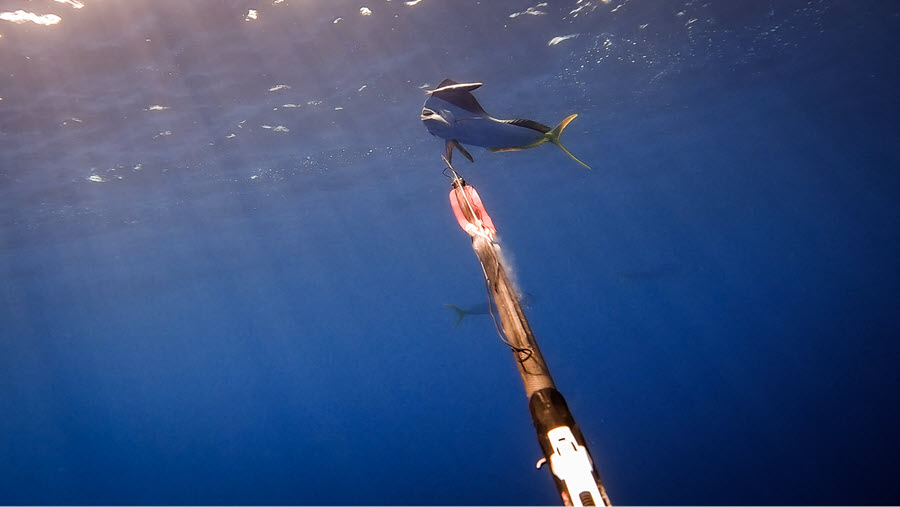
You’ve just got to experiment and talk to those in the know; a good place to start would be your local dive shop or experienced retailer. I’ve found wearing a head camera allows me to slow the footage down to see if there’s any bending or warping in the spear as it leaves the gun – a bit of a wobble in flight is normal, but too much flex should definitely be avoided.
Tim Barnett
Find the fin stiffness that best suits you. I’ve run a variety of different fins over the years, but I’ve found that a softer blade suits my style of diving. When looking at fins, it can be a bit overwhelming given how many options are available these days and the various individual elements – foot pockets, price, stiffness, blade material (usually either plastic, fibreglass or carbon fibre).
Whilst swimming speed underwater and on the surface is important, I think comfort trumps power – if you feel like your ankles are going to snap off after an hour of diving, you really should try something a little softer. Personally, I spend a lot longer in the water than most spearos; my usual day of commercial diving lasts around eight hours, so I’ve got to be as energy efficient as possible. Slow and steady wins the race.
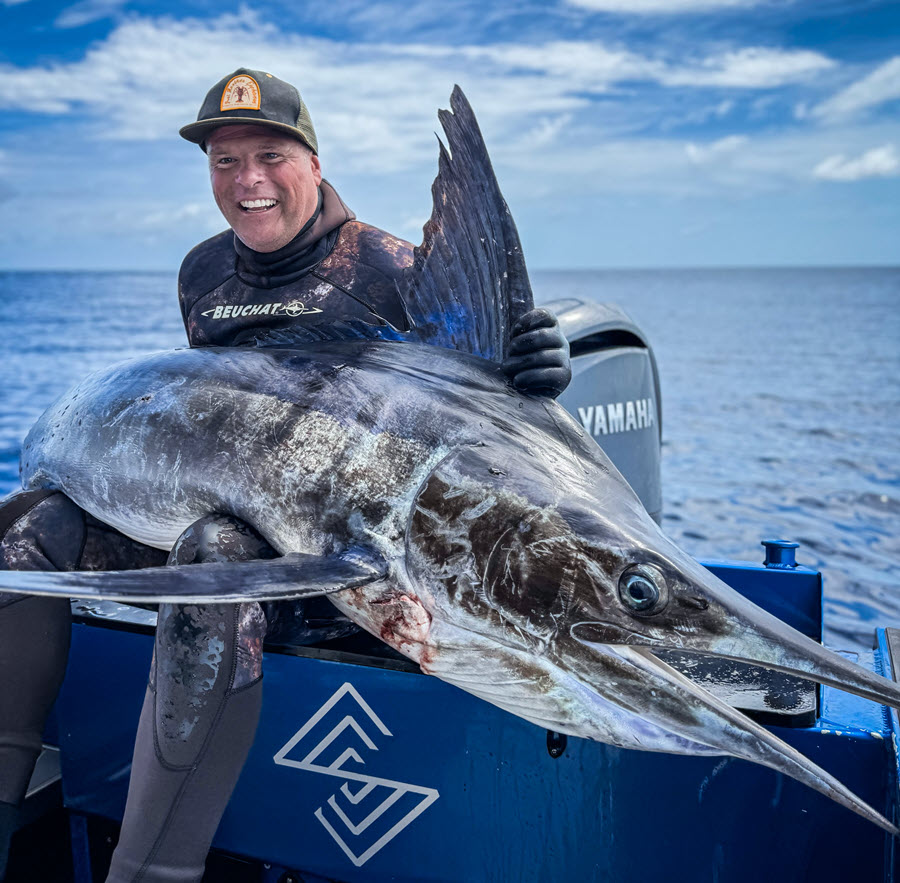
And everybody’s different. I’m a big guy, so in theory I should run a stiffer fin, but it’s not the case. Like Dwane was saying about how guns are configured to suit divers, fins are an individual choice as well.
A parting note
And the final pieces of advice – be inquisitive, ask questions, make use of social media (the NZ Spearo Forum on Facebook is a great resource) to get answers to your questions from those with a bit more experience. The spearfishing community is welcoming and willing to share, so why not make this the season you take the plunge and see what all the fuss is about?
- By Dave Shaw
Fishing Reports Visit Reports
Outer Hauraki Gulf Fishing Report 17/09/26
Spring wind the handbrake. Spring is starting to make its presence felt in the outer... Read More >
Top of the South Fishing Report - 17/09/26
Early snapper in Tasman Bay. Well, spring is finally here, and the days are getting... Read More >
Bream Bay Fishing Report - 17/09/26
Good snapper catches reported. After Tangaroa turned off the fish tap for a month or... Read More >
Bay of Islands Fishing Report - 17/09/26
Pacific bluefin tuna for the lucky few. The last fortnight has seen more fishable days... Read More >


Wednesday 23 September 2026
Major Bites
 - -
- - Minor Bites
 - -
- - Thursday 24 September 2026
Major Bites
- - Minor Bites
- -
Comments