
Softbaiting for trout
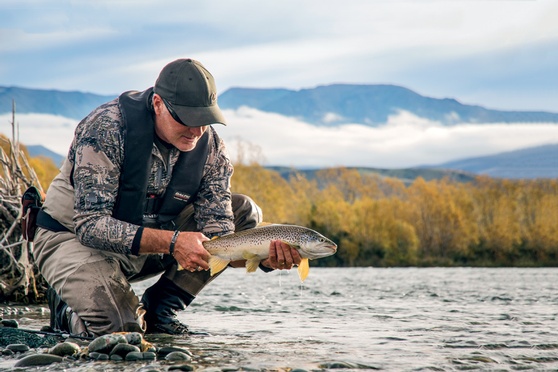
Having put many of these fish through the smoker in my time, I’ve always been intrigued by their gut contents. I’ve pulled everything from cigarette butts to Barbie Doll legs from the gut of trout, but it’s worth keeping in mind that most of what they eat on a daily basis is quite small and – for the most part – insignificant to most lure anglers.
Trout eat tiny bugs, both aquatic and terrestrial, for one good reason – they’re easy to catch. If a trout could eat 10 bait fish a day forever, it would. Trouble is, in most cases it can’t and doesn’t. Reason? Bait fish (of all types) are hard to catch. So trout, in their wisdom, will only attempt attacks on small fish if those fish are present in huge quantities or if a single bait fish looks injured beyond repair. This is where us lure anglers come into play!
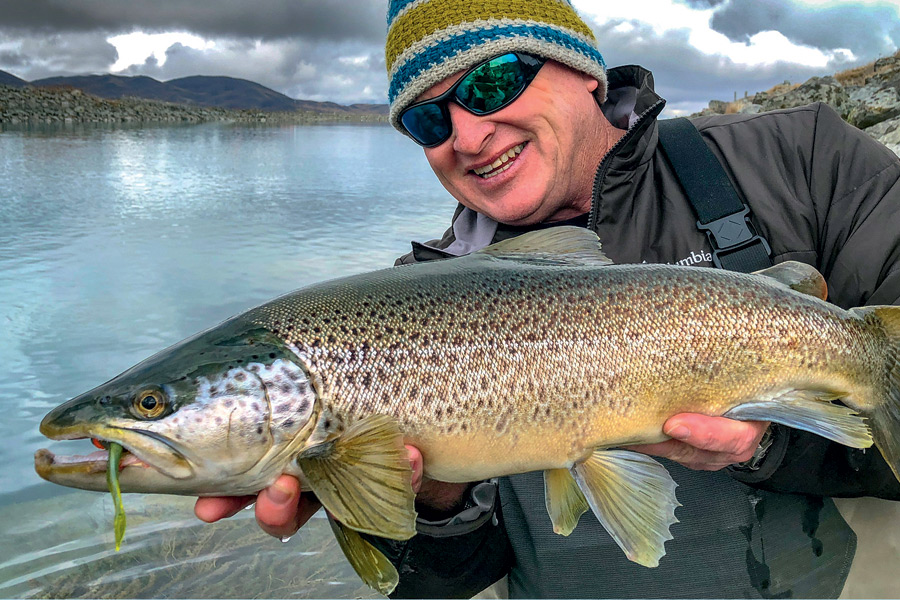
Work it baby
Because we anglers can’t represent a few million bait fish in one cast, we need to look at option 2 – the mortally wounded bait fish option. This we can do, and if you’re half the angler you think you are, you’ll be pickin’ up what I’m throwing down!
Look at the physical differences between a hard-bodied lure and a soft bait – one is as hard as a rock while the other is soft as a freshly picked booger. Don’t get me wrong, hard bodies have their place in your box, but no other lure allows you to change and diversify action, depth, scent and size like a soft bait.
If you have a 7cm hard-bodied lure but you need one of 4cm, your knackered. Not so with soft baits. If you want it smaller, get you braid scissors out and cut it up – done!
What about movement? Obviously you know one of these has all the tricks – it’s the soft bait, right? So as regards making a lure look as wounded as possible, soft baits have it over hard baits every day of the week… but you gotta work it!
Your rod tip is key here. What your rod tip does directly relates to what your soft bait does in the water. The best thing for you to do is learn what does what.
How you do this is to get some clear water and work the soft bait in front of you, looking at everything it does as you tweak and twerk the rod tip. For this exercise, use a very light jig head or even try no jig head at all by just using a hook. This will give you an understanding of how well the soft bait can swim without the restriction of the jig head.
That’s right, I said restriction! The lighter the jig head, the better your soft bait will swim. The more weight you add, the more mechanical or human it looks. Human is bad…we don’t want that!
The take-home here is: learn how to work your soft bait so that it looks like a dying bait fish. Use your rod tip and as light a jig head as you can to help it look natural. Don’t use you whole rod, just the tip. Slow, fast, soft, hard – these are the terms you need to have in your head as you’re working the bait back. Vary the action. Never stick to the same routine – dying bait fish didn’t go to dance class, so mix it up!
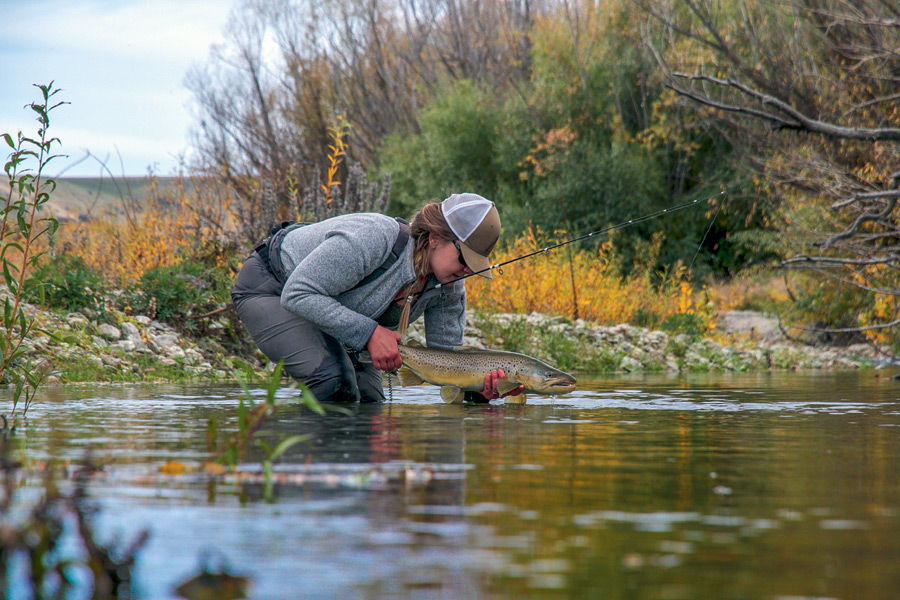
Try me
There are a lot of soft baits on the market these days. So which ones are good? To be honest they all catch fish, every one of them! But maximising the fish response and your time of the water is key. So you need to tap into a few different elements and work outwards from there.
The water – the water you fish will give you an indication of what you should be throwing. An estuary whitebait and an upland bully look very different, so start with the size and profile.
Then, when you think you’ve got that sorted, look at what action the soft bait has. Some have inbuilt actions and some don’t (see pictures A). The difference is in the subtleness of the action. Trout can be very cautious at times and too much movement could get you a follower but not much else!
On the other hand, in slightly discoloured water or poor light, the tail action of the lure is often enough for the trout to work out where it is and how to attack it. That’s why you need to try lots of different baits and have options.
Smell the cheese
Fish can smell in parts per million – that’s one drop of water in 50 litres. That’s pretty good going! So what do they think of your lure after you’ve just munged down half a bucket of KFC and popped on some sunscreen? Let me tell ya – not bloody much! Simply put, anglers almost never think about smell. Do you stalk deer while covered in Lynx spray and talking loudly like you’re at a night club? No! Well, do yourself a favour and help eliminate the human from your lure box by using soft baits that have their own scent.
The two front runners here are Berkley PowerBait and Berkley Gulp!. If I had to choose just one of these, it would be Gulp! every day of the week. Not only is Gulp! 100% biodegradable, but it’s body material is saturated in fish feeding stimulant. This liquid scent works directly on the fish’s chemoreceptors in its brain, telling it that these lures are food. This helps you to not only get you more bites, but it also masks any human odours.
Scent is a very powerful and key element in lure fishing. If it’s available, you should be using it.
Get it together
Looking for suitable water to fish a soft bait is like looking at the beach for some sand. You can fish anywhere with a soft bait! From still water lakes to fast running rivers; from the surface to tens of metres down – a soft bait is the most adaptable fishing lure ever!
To be truly proficient, you need to understand what trout want and need – food, oxygenated water, a place to hide and preferably all of these things together in one place.
Rivers: Always look for deeper depressions or darker water which will inevitably be deeper. Trout are not always in these places, but they will be nearby. Wasting time casting to the same place 10 times is exactly that – wasting time! So cast once or twice and move on. Trout are good at what they do and they don’t miss much.
Fishing upstream is preferred, but if you are fishing a large river you can just as easily fish downstream. Trout will always expect their food to be coming downstream to them.
Lakes: Fishing lakes is a little trickier on the eye. You don’t have the running water to indicate where to cast. But if you look closely at a lake, there are little signs that can give away a trout’s position.
Structure is key in a lake. Structure can be in the form on a fallen tree, a water fall, creek entrance or a rocky point. These are all good places to look. They create a difference in water movement and surface lake current and because of this, trout will hang around.
Weedy bays are one of my favourite places to fish. Of course they are difficult to fish because of the weed but by fishing them, you’re casting right inside a trout’s grocery store! Picking gaps and lines in the weed is key and using very little weight and even sometimes no weight at all is a good plan.
Rocky points on a windy day are another excellent place to try. Fishing right on the point and casting out into the sheltered side will get you bite more often than not.
Trout are suckers for a soft baits and because of the softness of them, you get more time to set the hook than you think. Trout and soft baits is a match made in piscatorial heaven! Rig them straight and cast them far and you’ll soon see what you’ve been missing!

|
----- Advertisement -----
|

Fishing Reports Visit Reports
Outer Hauraki Gulf Fishing Report 17/09/26
Spring wind the handbrake. Spring is starting to make its presence felt in the outer... Read More >
Top of the South Fishing Report - 17/09/26
Early snapper in Tasman Bay. Well, spring is finally here, and the days are getting... Read More >
Bream Bay Fishing Report - 17/09/26
Good snapper catches reported. After Tangaroa turned off the fish tap for a month or... Read More >
Bay of Islands Fishing Report - 17/09/26
Pacific bluefin tuna for the lucky few. The last fortnight has seen more fishable days... Read More >


Saturday 26 September 2026
Major Bites
 - -
- - Minor Bites
 - -
- - Sunday 27 September 2026
Major Bites
- Minor Bites
 - -
- -
Comments