
Soft-Baiting Different Zones

For Jack Lusk, soft-baits can catch fish almost anywhere, but every scenario requires a modification in technique. Jack explains how he fishes soft-baits in a variety of locations.
Since I started soft-baiting, I’ve been surprised at the incredibly wide range of conditions and situations soft-plastic lures are successful in. From shallow tidal harbours to deep reefs, soft-baits get the job done, but each zone demands a different approach.
Harbours and estuaries
New Zealand’s tidal harbours and estuaries are underrated places to soft-bait. From boat or shore, you can turn up some great fish. I like to fish harbours near the top or the bottom of the tide when there’s still some water movement, but the current isn’t pulling too hard. It’s generally shallow water, so it’s all about using light jigheads to work the edges of sandbanks and other bits of structure. Paddle tail lures seem to be really effective as they flutter in the current even when you’re not actively retrieving. Often, you’ll be casting your lure out across the current, and staying in contact as it bounces and rolls with the tide. It’s a bit like nymphing for trout, and relies on great contact with your lure to set the hook. These harbour and estuary zones seem to fish far better at dawn or dusk, particularly when combined with the right tides. In the shallow, clear water, I often find the fish turn off once the sun gets high.
Wash fishing around rocks and reefs
Rock fishers know how close good snapper (and other fish) get to shore. Throwing soft-baits into the wash around rocks and exposed reefs really gets the blood pumping. Again, you need a light jighead so the lure hangs in the strike zone for longer. If you’re fishing from a boat, you’ll also need to be able to cast a reasonable distance at the same time so you can keep the boat back from the fish. I find you need to land your lure within a metre of the rocks for the best results. Even the best casters lose some gear when they’re wash fishing, so it’s best to get your casting and contact with your lure sorted before you give it a try. I go up to 30lb leader when I wash fish, so I’ve got the grunt to get big fish out of nasty situations. It’s a challenging way to fish, but, when it’s on, it’s a heck of a lot of fun. It’s also worth noting that soft-baiting from the shore can be a really productive way to fish, and can sometimes bring with it the added bonus of sight fishing if you can invite the fish right in close. Your tackle and preparation needs to be bang on because the fish definitely know how to find the reef. It’s a fun way to fish!
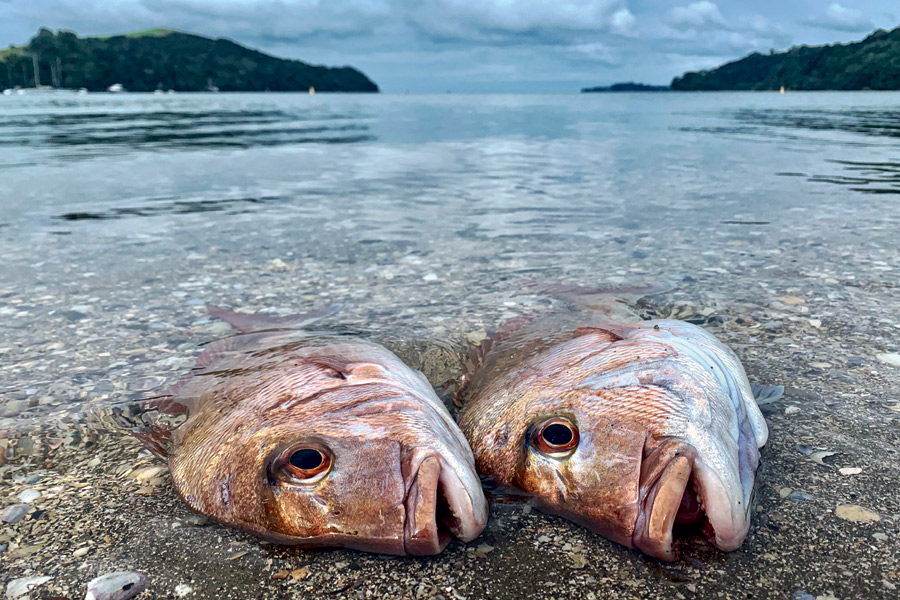
Shallow water snapper caught with a soft-bait on a dawn high tide.
5-15m zone
These shallow zones often produce excellent fish, especially through winter and early spring. You’re generally casting over reefy country, so again, you need to stay in close contact with your lure to avoid snags. Light jigheads and long casts away from the boat seem to work best. I move around quite a lot when I’m fishing these spots, covering lots of ground to find the fish. Often the fish will shut down when the boat’s right on top of them, so you need to try different drifts in similar country rather than working the same spot. I have four or five casts, then move twenty or thirty metres, then repeat. When the fishing’s hot, you can work a long coastline like this, covering lots of new water. Dragging soft-baits in these conditions is tough with all the snags, so it’s generally best to cast up into the drift and stay in good contact as you fish it back.
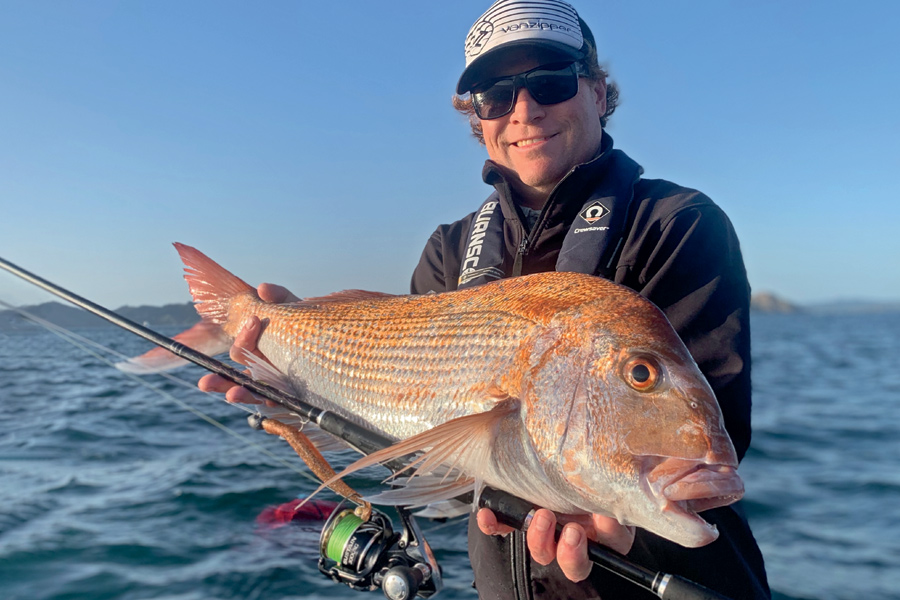
Snapper love structure - this fish was caught on a shallow reef edge.
15-30m zone
For me, this is the real sweet spot for soft-baiting. You’re generally over sand, and still at a depth where you have reasonable control over your lures. This is a great zone to start out soft-baiting when you’re getting used to feeling the lure sinking and hitting the bottom. Often, you’ll hook fish ‘on the drop’, which means the fish hit the lure as it’s sinking. Typically, that happens within a few metres of the bottom, so you need to be in good contact without too much slack line so you can feel the bites. If your lure does make it down without a fish, slowly fish it back to the boat, trying different paces of retrieve and movement to see what the fish are excited by. In this depth, you can generally run nice long drifts (with a drogue if the wind is up), covering lots of ground until you find the fish. Reading the fish finder is a real skill in this zone and people who do it well have a big advantage.
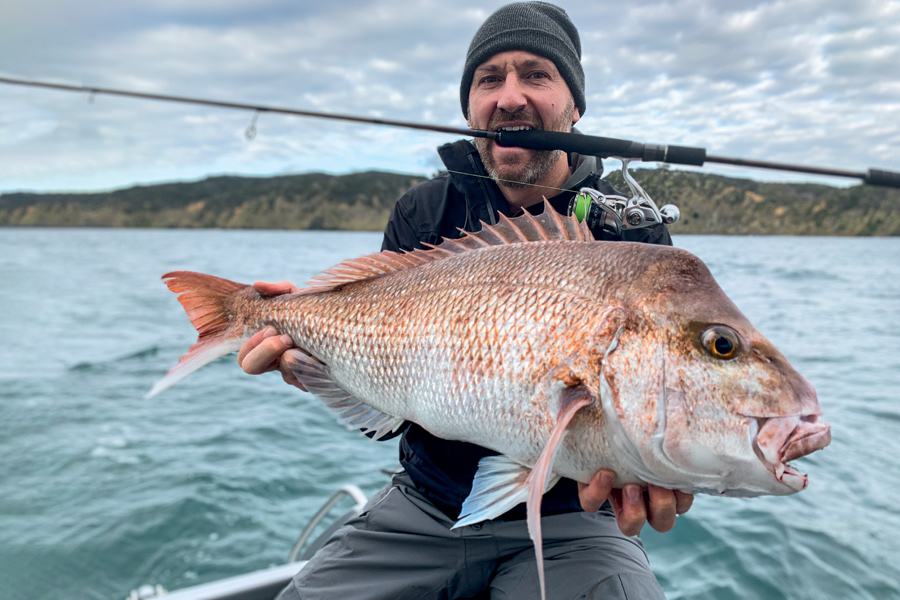
Solid fish can be pulled out of the shallows on light gear.
30-40m zone
This is starting to get to the deeper end of the soft-baiting scale, in my view. In strong wind and current, it can be challenging to fish into the drift. Less experienced people might need to drag the lure behind the boat instead. Dragging works really well at times, so it can be worth a try. In this zone you generally need a heavier jighead to stay in contact and get down to the bottom. If it’s completely calm and the drift is slow, lighter jigheads are possible and productive, but often conditions make the heavier jigheads – like 1oz – the best choice. I tend to head to this zone when the sun’s up high and it’s bright and still, because the fish in the shallows often seem to shut down in these conditions.
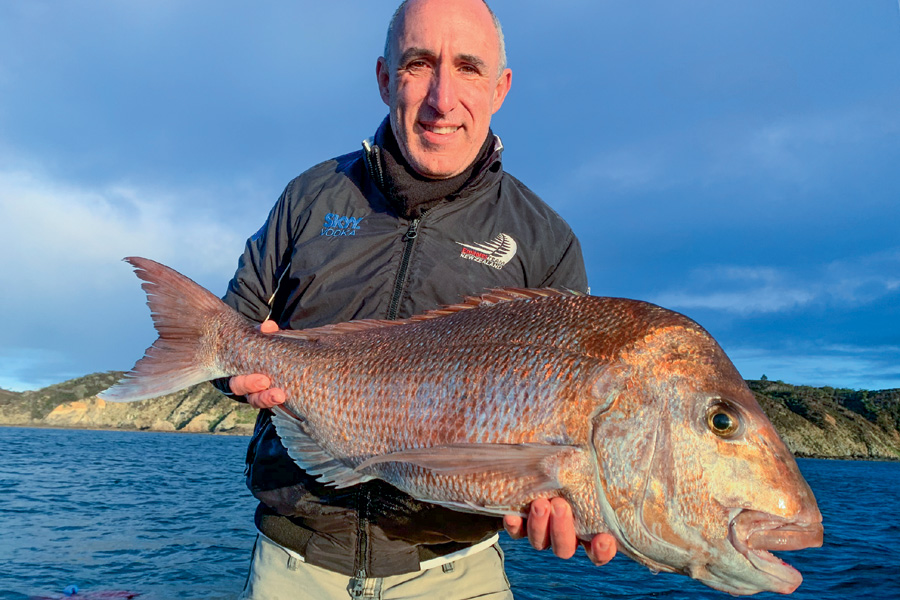
This snapper was caught in 18 metres of water, which is in the writer's favourite depth range for soft-baiting.
Deeper...
Soft-baits can be fished at any depth, and they work! I’ve caught fish in 70m – it just takes a while to get down, and it’s tough to keep contact and feel the hits. Often, the heavier metal lures are a better choice in these depths. When it’s workup season, the snapper will sometimes be really high in the water column, and the classic cast ahead soft-baiting is in play (if you can get past the kahawai!). Otherwise, it’s generally a case of pitching the lure slightly ahead of the boat and then farming it carefully down so you’ve got reasonable contact with the lure to feel hits on the drop, particularly in the last couple of metres before it hits the sand. Once at the bottom, work it up and then drop it back down, and watch out for strikes when the lure is static, lying at the bottom. Snapper seem to love a soft-bait lying prone, particularly at depth.
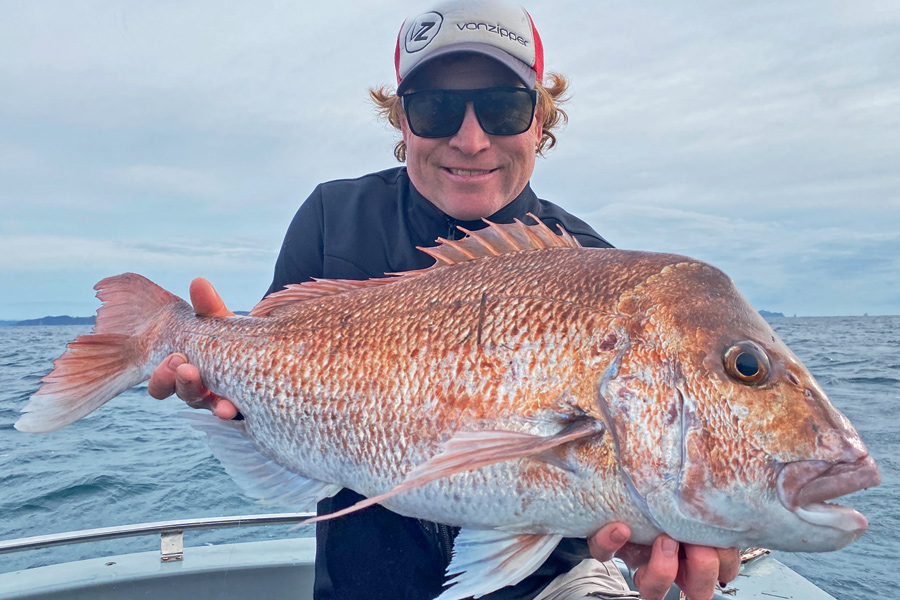
A snapper pulled from the 30m zone using a soft-bait.
Deep reefs
Snapper love structure, and there are some very big fish caught around the deeper reefs at the places where people target kingfish. You need to get the right conditions to target these spots because it can be difficult to fish effectively in high wind or big currents. It’s all too easy to get hung up in the reef, but the rewards can be great at the right times of year. I prefer targeting the deeper structure through the winter months.
In summary, you can soft-bait almost anywhere! You just need to modify your approach for the situation and be prepared to move from zone to zone to find where the fish are holding.

December - 2020 - Jack Lusk
New Zealand Fishing News Magazine.
Copyright: NZ Fishing Media Ltd.
Re-publishing elsewhere is prohibited
Fishing Reports Visit Reports
Outer Hauraki Gulf Fishing Report 17/09/26
Spring wind the handbrake. Spring is starting to make its presence felt in the outer... Read More >
Top of the South Fishing Report - 17/09/26
Early snapper in Tasman Bay. Well, spring is finally here, and the days are getting... Read More >
Bream Bay Fishing Report - 17/09/26
Good snapper catches reported. After Tangaroa turned off the fish tap for a month or... Read More >
Bay of Islands Fishing Report - 17/09/26
Pacific bluefin tuna for the lucky few. The last fortnight has seen more fishable days... Read More >


Saturday 26 September 2026
Major Bites
 - -
- - Minor Bites
 - -
- - Sunday 27 September 2026
Major Bites
- Minor Bites
 - -
- -
Comments