
Snapper Secrets - how to catch them
Despite snapper numbers being only a shadow of what they were a few years ago, snapper remain one of our most available and prolific fish species – and a lot of fun to catch.
They can be found in almost all types of terrain, from jagged rocks to sandy beaches, light foul and worm beds to deep water pinnacles – it’s up to you to catch them.
Seeking out 'Red Boys'
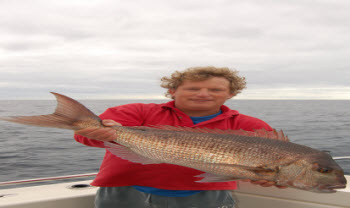
When looking for suitable snapper spots, there are some places that are more obvious than others, and if fishing from a boat, a fish finder is a huge advantage. Not only does the sounder provide information that may indicate snapper in the area, it also shows whether the terrain is likely to hold or appeal to snapper. Just because you can’t see haystack mounds of snapper sign on the screen doesn’t mean fish aren’t hiding in the gutters and weed. Nor does your sounder show you what might be enticed within range by some berleying.
Most snapper fishermen look for weed and rocks on the sounder as this provides shelter, protection and food for snapper. Like many other sea creatures, snapper feel vulnerable out in the open, especially when the water is shallow enough to be well illuminated by the sun. As a result, they either move into deeper water during bright conditions or hide in gutters and amongst areas of weed, waiting for darker conditions safely come back out and forage. This is largely why the times around dusk and dawn provide such good fishing and why the bite time is extended if conditions are rough or overcast.
Exposed rocks and headlands are always good possibilities, particularly when there is a swell pushing up onto them and mussels are seen on them. Other likely situations include any areas shellfish are known to inhabit, such as pipi beds, mussel-encrusted rocks, mussel farms (you may need to obtain permission first) and behind operating commercial scallop dredges (scallops get crushed in the process of dredging and the dredge tines uncover a lot of marine organisms sheltering in the bottom sediment, providing a ready-made berley trail for the snapper, and us, to take advantage of).
Any time gannets, dolphins or kahawai are seen working an area for a period of time, it is worth going over to see what is underneath the activity, particularly if the work-up is also slow moving. When schools of small baitfish are being attacked from all sides, many of the injured fish (or parts of them) drift down to the bottom, where snapper and other fish lie in wait. Jigs can work particularly well in this situation, but sometimes getting them past the kahawai, barracouta or mackerel can be a problem. To counter this, ignore the hits and strikes on the lure’s descent as most times the jigs will fall out of the unwanted fish’s mouth, provided no pressure is exerted by the angler. You are then free to fish the seabed where the vast majority of snapper will be holding.
Worm beds are also productive areas to fish – finding them, however, can be a different story. It is often a case of trial and error. If you are told or know of a worm bed, do the best you can to position the boat so that your lines will either be dropping into them, or so that your berley is positioned ahead of the area and the fish will follow the trail to you. If you end up doing no good but the boat next to you is doing well, take a note of their position for next time, as crowding in on their good fortune at the time is likely to lead to aggravation.
Keep in mind that most worm bed spots seem to fish far better when some current is present, as this helps to stir up sediment, serves to move baits around enticingly, and encourages snapper to bite more freely – or risk their prospective meal being swept away.

In the end, nothing finds spots better than good old ‘time on the water’ spent trying different areas in different tides and winds throughout the year. Not only will you find your own spots, but, just as importantly, you’ find other people’s spots as well!
Knowing a multitude of spots helps spread fishing pressure and gives secondary options when conditions prevent you fishing exactly where you want.
N.B. All spots fish better around dusk and dawn, particularly if the tide is still moving.
Suitable tackle:
There is no such thing as the perfect snapper outfit. A wide variety of conditions dictate that rods, reels and rigs must change in order to get optimum results. For example, when fishing shallow water for school snapper, the lighter the line the more bites the angler will get, but of course using one kilo line isn’t necessarily the answer either. The angler still needs to have enough line strength to set a reasonable-sized hook, effectively fight a decent fish and possibly withstand a bit of wear and tear from the terrain. The tackle used is also largely dependent on whether one view snapper as food, sport or a mixture of both.
To gain the most from this type of situation, competent fishers tend to use 4 to 6kg tackle as this thickness of line does not hold up much in the current and therefore requires a smaller sinker to reach the bottom (snapper fishing is almost always improved by using the least amount of weight to do the job).
To take full advantage of the thin line, the rod should have a light, sensitive tip to register bites or indicate that a fish has taken the bait and is sitting on it. Ideally, the rod should also be light to hold and measure at least two metres in length, as casting away from the boat is very important in shallow water because larger fish usually hang further down-current, away from the boat’s shadow and the noise of those on board.
The rod length also helps maximise hook-ups; light nylon is very elastic, so the more stretch that can be taken out by a striking rod in response to a bite, the better. I like a rod that has some degree of power throughout its length for good hook-up capabilities but which also ‘folds away’ somewhat when under pressure. This effectively shortens the rod giving better leverage and control over hooked fish. After removing some of the slack and stretch in the line with the rod, it is then used to maintain a degree of pressure through to the hook until the reel is used to take the remaining slack and stretch out of the system and the hook can be set properly.
The faster the retrieve of the reel, the quicker excess line can regained, thus reducing the incidence of hooks falling out. On most small reels designed to take 4 to 6kg nylon, the retrieve ratio should be at least 5:1 but preferably 6:1, as the small circumference of the spool needs to be compensated for by retrieve speed.
Because larger fish tend to be away from the boat, reels should be easy to cast. They can be either threadline (spinning) or freespool (overhead) in design, and should be of as good a quality as you can afford.
Although spinning reels can be a lot of fun when light tackle fishing, their design often leads to twisted nylon after a successful session. Consequently, I prefer freespools, especially those with graphite spools such as those found on the Daiwa Sealine SL20 and 30H, as well as some in the Newell range. This is because the material makes the spool so light that it is particularly easy to cast (fewer over-runs and backlashes) and also to control when a fish suddenly races off with your bait. As there is so little inertia, light pressure with the finger is all that is required to keep the line from over-running, making it less likely that the fish will be alerted to something suspicious until it’s too late.
There are times when spinning reels are effective, too. Although ‘Baitrunner’ and ‘Bait feeder’ type reels have made things a lot easier for the casual fisher, most of the really competent anglers still prefer ‘normal’ spinning reels for snapper. The reason for this is that, in order to prevent an over-run from a sudden, fast run, some tension has to be exerted on the baitfeeder drag. Sometimes the pressure proves to be too much, causing the fish to drop the bait and this is particularly true of the bigger, wilier fish – the ones you most want to catch!
Rather than use a baitfeeder reel, many snapper anglers prefer to set the main drag to the maximum tension and then flip the bail arm open. This allows fish to take and run off with the bait, without feeling any pressure. I like to let the line run very lightly between my thumb and forefinger as this serves to minimise the amount of unnecessary line in the water, making it more likely that a hook-up will occur when the bail-arm is flipped over to make the strike. I find that the bail arm is best flicked over manually rather than relying on the automatic trip when winding the handle because the hard ‘clunk’ seems to transmit along the line, often causing the fish to drop the bait.
For those who have never used a spinning reel before but would like to, try to get into the habit of winding with your left hand. This is considered to be the ‘wrong’ side in Auckland, but it actually makes more sense. As right-handed people are strongest in that arm, it should be the one to pump the rod. The weaker left hand simply turns the reel handle. This also means that one does not have to change hands after casting – an advantage when a quick pick-up and retrieve is needed.
Spinning reels are especially useful for casting large baits in shallow water, because fish are able to race off with the bait and yet feel no pressure until the strike is made. In all cases, whether a spinning or freespool reel is used, a held rod will always catch more fish than the one that is left alone in the holder to fish by itself. This is because ‘hands on’ allows the angler to instantly react to any fishy interest and as the bait is being moved around more by the angler, it is less likely to snag up or be taken by eels.
In deeper water, a stiffer rod and stronger line is used. The rod takes on an increased hook-setting role as, not only is there more line in the water (more stretch), there is also current to combat. Although the presence of current helps to make fish bite more decisively, it also serves to belly and bow the line. This means that, even if there is enough tension present to allow you to feel and react to bites, a hook-up will only be achieved if the bowed line is removed from the system. This involves either striking firmly with a long rod and then winding furiously to get rid of the excess slack (relying on the current to provide just enough pressure to hook the fish as the line is straightened out, or – upon feeling the run – engage the reel, let the fish pull all the slackness out of the system and then let ‘im have it!
The only disadvantage with the second technique is that sometimes your bait will be ripped off the hook(s) (particularly if soft baits are being used) or, if the fish are wary, they will simply let go of the bait before you can strike.
Although thin line is less affected by the current, most people still use a line weight of around 10kg for this type of fishing as it doesn’t tend to stretch as much as lighter lines and will control big snapper or occasional ‘big beastie’ surprises more effectively, even when they use the power of the current to their advantage. With this in mind, some of the more progressive anglers are experimenting with superbraid lines. These lines are around a third the thickness of nylon with a similar breaking strain, enabling smaller sinkers to be used, as the thin material cuts through the water extremely well. As they have virtually no stretch, they transmit all bites and nibbles beautifully – sometimes too well. I strongly suspect that the snapper feel us as well as we feel them and as a result will often leave the bait alone after a couple of exploratory nibbles. The use of long soft rods can help to overcome this problem.
Wth superbraids I leave my reel in gear, hold it up at a 45° angle and let the biting fish pull it back down to a level that is comfortable for striking. The more parabolic rods also make things easier on the angler, as stiff rods and superbraids tend to be a very unforgiving combination that wrench and pull anglers about.
A ledger (dropper) rig that incorporates circle hooks can also help as they are designed to instantly hook the fish – you just have to resist the urge to strike. Steady pressure is all that’s required to slide the hook into the corner of the fish’s mouth. But for best results make sure that the bait is not clogging the gape and barb of the hook.
The reels used for deepwater fishing tend to be larger than those used in shallow water. On the whole they should take between 400 and 500 metres of the selected line weight – not because all that line is necessarily used at once but rather because it is a long term storage facility that allows the angler to break off a few times on snags or big fish and still have enough line left on the reel to get a decent rate of retrieve and remain capable of beating large fish powerful enough to pull off some line.
As these reels generally have bigger spool circumferences than those made to handle 4-6kg, they need only have a retrieval ratio of around 5:1. This gives the best compromise of speed and cranking power. Most spools on reels of this size are made from aluminium alloy and this, combined with the weight of the spooled line, make them a little harder to control when a fish takes off with the bait at speed.
In all the above tackle options, my preferred length for rods is 7 foot 10 inches – a most unusual length for rods found straight off the shop rack. All three are Daiwas and provide me with tools that are long enough to incorporate all the features I like in a rod: length for casting and the setting of hooks, sensitivity in the tip for detecting bites and power in the mid and lower sections for driving home hooks and then lifting and controlling the fish. The shorter the rod, the fewer the features that can be packed into it, but if the rod’s too long the fish starts to use the rod as a lever against the angler. Long rods can also get in the way and be hard to transport.
The best baits:
Snapper are real scavengers and will take a wide variety of baits. However, they do prefer some over others, and their tastes often change over the course of the year. Baits that have their share of followers include sprats (herrings), grey mullet, piper, pilchards, skipjack tuna (incorrectly called ‘bonito’), crabs, crayfish tail, spotty (paketi) heads, shellfish (mainly salted pipis and tuatuas), slimy mackerel, yellowtail (horse) mackerel, koheru, squid, octopus tentacle, koi carp (usually sold as ‘Dorado’ in the shops) and fresh strips of kahawai or trevally.
I generally set off with a heap of frozen pilchards and maybe a skippy (bonito) or two. These baits are nearly always on the snapper’s list of preferred foods but as both are soft in texture, small snapper and pickers can be a problem. To combat this, either use bait elastic to keep your offering on the hook or change to a tougher bait. Most times, if berley is being used, various sorts of mackerel will be present in the trail along with our friends the kahawai. A small jig or a set of bait flies will quickly provide some fresh bait that is tougher to remove, yet still very attractive to the snapper palate.
Bait tips
i) Pilchards: pilchards are best left partially frozen rather than thawed, as they quickly deteriorate, making them very soft and susceptible to falling off. As a concrete-hard frozen pilchard is difficult to handle, the best condition for pilchards to be in is what I call ‘crispy frozen’, with just the edge of total iciness taken off. Generally a two-hook rig is used with pilchards, especially when the fish are not that big as it effectively doubles the chance of a hook-up. Should you wish to toughen them up a bit (and preserve them at the same time), pilchards can be coated in common, non-iodised salt (butchers or ‘sea’ salt), placed in a lidded container and stored in the fridge.
ii) Mullet: although mullet is a good oily bait, its tough skin makes hook-ups less consistent than with some softer baits. Most mullet users tend to scale the fish first before filleting and then cutting the fillets into strips. It is best not to thread the hook through the bait too many times as this makes hooking up harder. Most anglers only pierce the skin once or twice with the hook and prefer to use either hooks with bait holder barbs on the shank to keep the bait in place or Kahle style hooks fishing with their reel in gear. The remaining head on the skeleton makes a good big fish bait, especially with the guts still attached (in fact, mullet gut is an excellent bait in its own right).
iii) Mackerel: small mackerel, especially slimies, are often used whole, generally on a two-hook rig. Larger ones are either filleted and made into cut baits or butterflied and used whole. Although fresh mackerel works well, excess fillets can be soaked in fish oil and frozen for next time.
iv) Kahawai: when fresh, kahawai is best filleted and skinned, as often the skin is so tough that it chokes the hook and prevents clean hook-ups. This is another good candidate for soaking in fish oil and freezing.
v) Squid: small squid are used whole, sometimes with a whole pilchard fed up inside their mantle for added attraction. Large squid tend to have their mantles cut into strip baits or the base of the mantle is given vertical slashes in order to give the illusion of tentacles. The lower tentacle section makes excellent big snapper baits, with the tentacle clump usually divided in two. Large, individual tentacles work well on school snapper. When buying squid, avoid any that are dark pink-purple as this usually means they are stale and will be less effective. High quality squid tends to be a creamy brown.
vi) Octopus: the octopus tentacles are generally used, but for best results they need a bit of preparation. Use a knife to cut off the suckers and then remove the tough skin from the rest of the tentacle. A long, thin, white strip will remain which can now be cut into the size of bait you like to use. The advantages of using octopus are that it is highly visible, very tough and appeals to a wide range of quality food fish. It is possible to catch two or three fish on the same bait.
vii) Shellfish (pipis and tuatua): these are best toughened up a little by either lightly steaming them or coating them in non-iodised salt and storing them in a container for a while in the fridge. Failing that, fresh shellfish must be bound onto the hook with bait elastic or cotton if they are to be cast any distance.
viii) Crayfish: while some people would view using crayfish as sacrilege, it does make an excellent snapper bait. The tail or the larger legs are most commonly used, with the strip of tail having to be tied on with cotton.
ix) Spotty head: when the spotties are a pain in the neck, stripping off every bait within seconds, get your own back by chopping one in two and biffing out the head section with the gut cavity well exposed. This is a popular Wellington tactic and has resulted in some great fish.
x) Crab: rip a couple of legs off, including one big nipper, lightly crush the carapace so that the juices can escape and then pass the hook through the empty leg sockets.
xi) Koi carp: this is a relatively recent introduction to the sea fishing world but already it is making quite an impact. The carp’s flesh is very oily and is unusual in the fact that the oil is water-soluble. As well as the attractive oil emanating from the bait, koi skin is often brightly coloured, making the bait very visible.
The various rigs
The conditions, the size of the fish targeted and the type of bait used will determine which rig is best used, but in the end, three main styles are adopted: the floating, the picker’s doom (running sinker) and the ledger or paternoster rig.
When the water is shallow or there is little current present, a floating bait is employed as it offers the most natural presentation possible. Although there are occasions where no weight is used, most times a small sinker is placed directly on top of the hooks to overcome a light current as well as get the bait to the bottom a little quicker, especially when maomao, barracouta and kahawai are present. The trace length is very short – just enough to thread through the bait and then be well secured with a half-hitch or two. This serves to help prevent large snapper from crunching through the trace without detracting from the previously outlined advantages of using a light line.
A common strategy is to use a 6 or 8kg outfit until a bust-off or two indicates that a heavier outfit is necessary. Most times, however, if your knots are good and the tackle is of reasonable quality, the lighter outfits will get more bites and provide all the muscle necessary.
As the most important aspect to a floating bait is that it drifts down naturally, the term of ‘floating’ is not always strictly true as sometimes a reasonable amount of lead weight has to be added, purely to overcome the current and keep the bait near the bottom. Although it is possible to have up to 3 or 4-ounce sinkers directly on top of the hooks, they are best converted into a couple of smaller sizes so that they are less bulky, lessening the chances of interfering with the hook gape or of snagging up. Once the seabed is reached, do not assume your bait is going to stay there. It is in your best interest to constantly check the position of your bait by letting some line out and watching for a little hesitation as the bait hits the bottom. If this happens you must next slowly wind in some line until you feel a little extra weight. You have now wound out the extra belly in the line so that you have more direct contact with the bait, but you will also have lifted the bait slightly. Release line from the spool once more to place it nicely on the bottom again.
Repeat this procedure when necessary (the stronger the current and the lighter the sinker, the more often you’ll need to do it). As you release more and more line it will be increasingly caught by the current. There comes a point where it is better to wind in and start again as contact with the seabed becomes too difficult to sustain. When the current is strong, it is unnecessary to cast away from the boat, as the terminal gear will be carried away from the boat anyway.
Provided one keeps in reasonably direct contact, bites will not be difficult to detect. Most times there will a couple of experimental nibbles followed by a steady run. As soon as line is leaving the reel steadily, engage the reel, wait for a small amount of tension to come onto the rod tip and then strike firmly. Next, keep the tip up high and wind the remaining slack out of the line so that the secondary lift of the rod sets the hooks firmly.
Should the snapper refuse your offering after a couple of nibbles, very gently move your rod tip about six inches to a foot away from the fish. This little bit of movement suggests to the snapper that a potential meal is about to escape and will usually trigger a second, more confident attack.
When the current is strong and the fish of a reasonable size, it generally pays to change over to a running sinker rig (also known as Picker’s Doom). This particular rig has the mainline running through the middle of a sinker (usually a ‘ball’ model), connected with a swivel to some thicker trace line with the hook(s) of your choice attached to the end.
This allows snapper to run off with the bait without feeling much weight. Although some exponents have 20ft, or longer, leaders, I think it a little excessive. Really long leaders tend to make bites harder to detect and a lot of slack line has to be taken out of the system for a solid hook-up to occur. Because the eventual hook-up is delayed a little, many fish end up being hooked in the gills or gut, making the hook hard to remove and preventing catch and release. Also, when an active fish is brought to the side of the boat on a long trace, it cannot be effectively controlled and as a result often swims around other lines, tangling them.
I recommend a trace of around one metre in length. This is long enough to allow the bait to move around in the current a bit and is easily controllable when fish are brought alongside for netting or gaffing. It is also long enough to be grabbed so that the fish can be lifted on board. The trace should be as light as is practicable and very tough. I have mainly used 40 and 50lb Maxima Big Game trace in the past, or 60lb Jinkai, but Ande also makes a good product and the new ‘Hard’ Black Magic trace seems promising.
For those prepared to spend a little money, the new varieties of fluorocarbon leaders are tougher than anything else currently available and as a result it can be used in lighter breaking strains than normally necessary. However, the trace should always be stronger than the mainline. Do not risk losing your bigger fish simply in order to save a dollar or two over the day!
I never use hooks smaller than 4/0 as small fish may completely swallow them, making survival after release unlikely. Usually the 4/0 plays the role of a ‘keeper’ hook and the 5/0 or 6/0 is the main. These sizes work particularly well on whole single pilchards. When using multiple pilchards or large baits, the hook size goes up to 7/0 or even 8/0. Some serious snapper fishermen even use 10/0 when targeting big snapper, but I like to keep the amount of metal in a bait to a minimum and find the smaller sizes easier to set. Most anglers use ‘beak’ style hooks as they have a wide gape, a short shank and, as they are kirbed, they can be positioned in the bait so that the point and barb is largely exposed. There is no excuse for not using chemically sharpened hooks these days and I believe the only difference in the colours is how they look in your tackle box.
The third commonly used rig is the paternoster or ledger rig. This rig has the sinker on the bottom (usually a streamlined one such as a torpedo or tournament sinker) and however many branching traces or dropper loops the angler wishes to have above it. The traces should not be too long (four or five inches) as too much length will allow them to droop down and tangle with the rest of the trace. The dropper loops or branching leaders should also be far enough apart so that the hooks are unable to catch on one another. Most times these rigs are used when a mixture of school snapper and tarakihi is anticipated or in order to give increased sensitivity to bites. It is particularly effective when small tuna circle hooks (size 15, 16 and 17) are used in conjunction with shellfish or squid bait. For those who prefer their rigs to be made up for them, the very popular +Flasher+ rigs are an up market example of the paternoster rig and there is a huge range of them in all sorts of sizes and colours.
Unlike the previous rigs, a strike should be made on any hard bites because the fish tend not to run off with the bait. When using circle or kahle hooks, just hold the rod tip up and let them hook themselves. When the rod tip is pulled down hard, simply start smoothly pumping and winding.
Does Berley Work?
Absolutely! While there are some places that are so good that they do not need berley to fire, I always endeavour to start a trail if at all possible. In particular, it can make a huge difference to your success rate when fishing relatively shallow, reefy areas that have lots of weeds and rocks. The berley serves to stimulate the snapper hiding amongst the structures, luring them out and encouraging them to feed. Although I find the commercially-made berleys to be excellent, money can be saved by mincing up your old bait, putting it in an onion sack or mesh bag, and freezing it for later use. Try to keep the mesh size of the dispersion bag relative to the size of the berley particles held inside or, when employed, they will either disperse too quickly or even worse, not at all. Also, endeavour to keep the berley frozen until actually using it or it will disperse very quickly.
For those with berley pots, try to keep them full enough with berley material to avoid making excessive noise on the pot’s bottom with the berley ‘chonker’, especially if it’s metal, as this can be detrimental to catching the larger, warier fish. Putting a wooden ‘mat’ on the bottom of a metal pot to make it quieter can be worthwhile.
A couple of points to remember are: do not over-berley – the purpose of berley is to attract, not feed, so keep the trail steady and not too thick. Secondly, do not use snapper frames or fillets in the berley. Although I cannot for the life of me understand why snapper should not eat their own kind, I have witnessed too many hot bites close down when snapper was used, so it’s not worth the risk.
When there is a reasonable amount of current present, surface berleying is often a waste of time. If you do not believe that the berley will sink sufficiently quickly to reach where snapper are likely to be holding, and then attract them to where your bait is positioned, don’t do it!
In this situation it is better to put your berley into an onion bag, chuck a couple of dive weights or ‘puka bombs in as well, then attach it all to a rope. After noting which way the boat is hanging in the current, relative to the berley particles being released from the bag (to show which side it should be tied to), lower the bag to the bottom.
Remember to lift it up two or three feet as there is little or no current actually on the bottom. Tie the rope off a few feet up from the stern, in a position that will allow the current to waft the berley trail past where your bait is holding. It is not recommended that berley be tied to the anchor chain, as the wind can be stronger than the tide, resulting in the boat hanging at an angle different to that of the berley trail. This serves to attract fish away from where you are fishing.
For those who don’t like the hassle of smelly berley, there are some excellent long-life berley products available, with Berleymate probably the most popular. Products like these can be stored on the boat for months at a time, without refrigeration, until such time as they are needed.
There are times when snapper are very easy to catch, particularly when they are spawning. Keep only what can be realistically be used in the immediate future and if releasing fish, try not to harm them more than necessary. Our combined actions could well determine whether there are any fish left for the next generation...
A Blast From The Past!
|
January 1998 - by Mark Kitteridge |

Fishing Reports Visit Reports
Canterbury Fishing Report - 01/10/26
Freshwater season underway. Wow, it’s October already, and our freshwater season is underway, and the... Read More >
Top of the South Fishing Report - 01/10/26
Snapper about but not yet firing. It’s certainly nice to see daylight savings upon us... Read More >
Hauraki Gulf Fishing Report 01/10/26
Big reds in the shallows. The weather has made getting out on the water challenging... Read More >
Bay of Islands Fishing Report - 01/10/26
Snapper moving in. A few Pacific bluefin are still gracing the weigh stations with last... Read More >


Friday 9 October 2026
Major Bites
 -
- Minor Bites
 - -
- - Saturday 10 October 2026
Major Bites
- - Minor Bites
- -
Comments