
Snapper for beginners
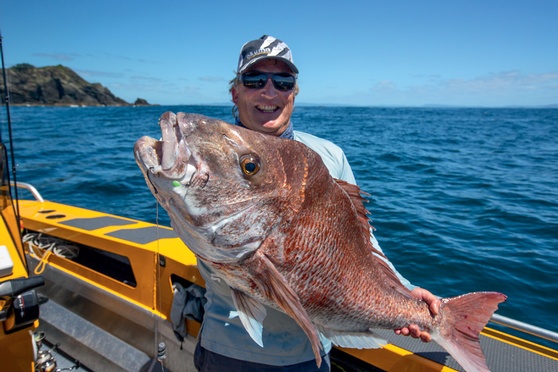
I blame myself: I let my daughters Holly and Zoe watch endless episodes of Spongebob Squarepants from an early age, mostly because I liked watching the programme myself. Now, a few years later, research indicates frenetic TV shows like Mr Squarepants are not good for juvenile development.
The research may be onto to something: if nothing interesting or exciting happens within half a minute or so, my daughters start fidgeting and looking around for other options. This is also about the same length of time Youtube videos have to impress my daughters before they move on.
It’s a world crammed with crazy, wonderful, spectacular and exciting events, with too little time to see everything. Consequently, stuck in real time with no fast-forward button available, fishing, often sedately paced, can suffer by comparison.
I’m not the only person grappling with this challenge, so here’s what I do to hold limited attention spans, maximise fishing excitement and dramatically increase the day’s catch. It works for anglers of all ages!
Let’s start with bait, and whenever I think of bait and simplicity, I always think of Flasher rigs.
I’ll always remember my early party-boat charter days, using the original Black Magic ‘Snapper Snatchers’ (essentially ledger rigs incorporating effective circle hooks and armed with fish-attracting bling).
Egos inflated by stray-lining successes and arrogantly believing this was always the way to go, we set the ‘learners’ up with these heavily weighted rigs (which kept them out of our way), gave them basic instructions and left them to it.
By session’s end, these guys had nearly always caught more than us and quite often the biggest fish, too. Eventually the penny dropped as we realised that in certain situations nothing could beat this method.
And it wasn’t hard to work out why: a flasher rig is suspended just above the sea floor, where it’s highly visible, its attractiveness enhanced by the seductive movement of its fluorescent and luminous materials, along with the scent of the bait.
Tips for fishing flasher-type rigs
- 5/0 hooks strike a good compromise in size when snapper fishing. They are too big to hook most small fish, but small enough for legal specimens to get their mouths over and strong enough to hold trophy sizes too.
- Use a reasonable weight – at least four to five ounces - of streamlined sinker; the weight helps to start the hook-setting process if the fish moves off with the bait, while the sinker’s slender shape makes it less likely to snag the bottom. More weight might be needed in deeper water and/or faster current.
- Keep baits slim and streamlined so they are easily inhaled. Strips of fish fillet and half pilchards, hooked just once at one end, and squid tentacle clumps ware good choices. Shellfish can be effective, but works better when salted or bound on with Bait Elastic.
- Avoid moving the rigs around too much; if the angler’s bored, place the rod in a rod holder with the sinker just on the bottom, the reel in gear and the drag backed off slightly. The rod should be able to bend over nicely – set it too vertical and it may snap when a fish is hooked.
- When a fish bites, don’t strike – this often bounces the hook out of the fish’s mouth. Instead, steadily lift, and if the rod starts loading up, lift higher and more firmly.
Two-hooked recurve rig
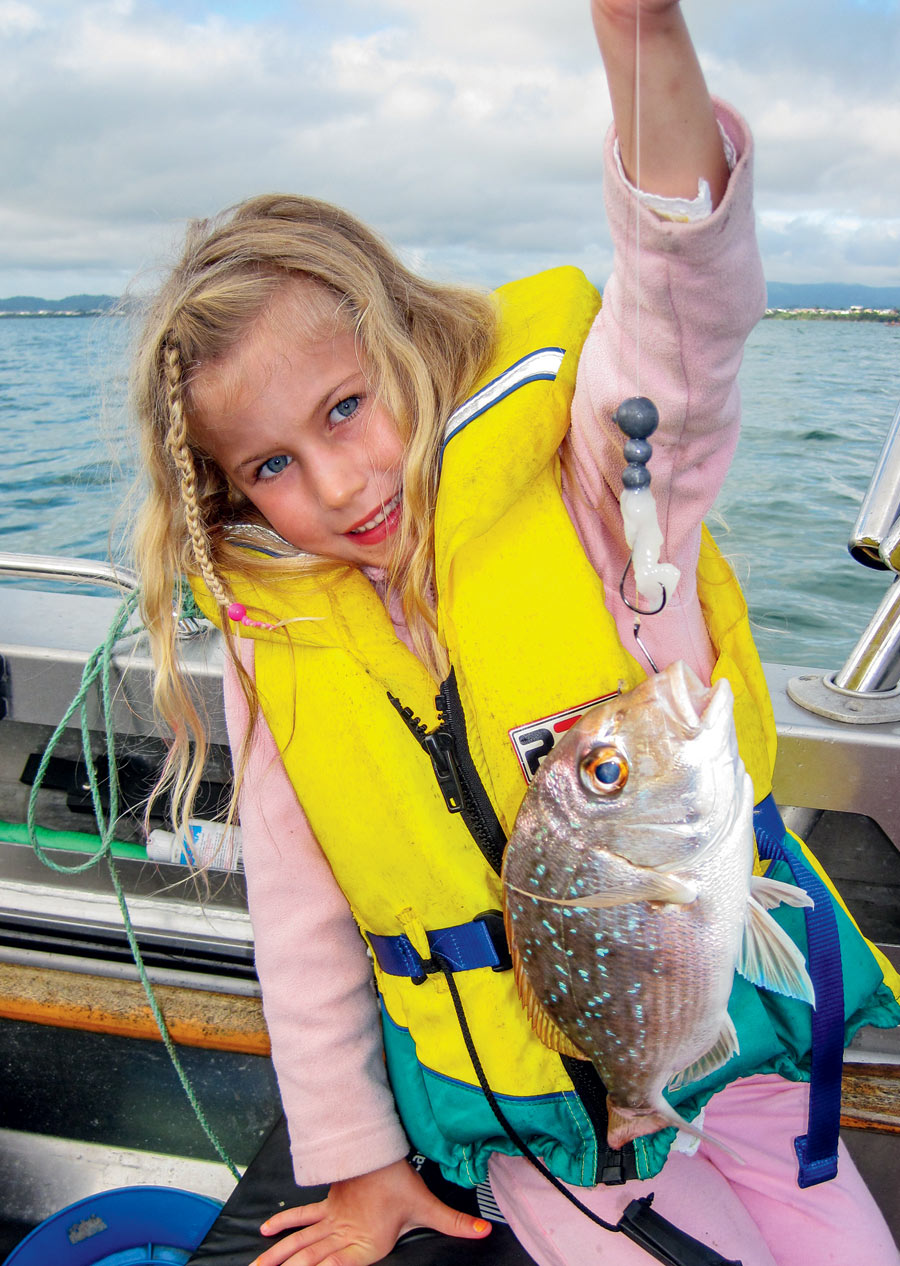
The effectiveness of the Flasher Rig’s circle hooks got me thinking: surely, circle hooks could be used in many other situations? And, of course, they can, with the two-hooked recurve rig providing impressive results for me, both in a stray-lined configuration and as a weighted running rig.
However, to do well with this rig, you need to pay attention to several important aspects. Yes, this rig will catch lots of snapper, even if you’re not a very good angler, but making up the rig and fitting it to your bait is critical.
- With a relatively small gape, circle hooks are easily choked, preventing hook-ups, so hook placement in the bait is critical. Some options have been included here from my book, Knots, Baits and Rigs – a Kiwi Guide.
- Circle hooks rely on the angler exerting steady tension to work properly, so a sliding ‘keeper’ is not a great option (a real shame, as the ability to change the distance between the hooks in order to better cover baits of different length would be very handy). Instead, the hooks are fixed, with the trailing hook tied using a Uni knot rather than a snood, so it can be ‘sewn’ through baits if necessary.
- The hooks should be placed in baits so there’s little or no slackness in the trace connecting them. That way steady pressure is transferred to both hooks equally for better hook-ups. Try and cover the bait with the hooks – don’t set them too close together, or you will miss fish. So, when tying up double-hook rigs (which you should do at home, to save time on the water), it pays to have a reasonable idea of how much distance to leave between the hooks for decent bait coverage. I often guess incorrectly, so measuring them up against a real bait can really help. However, it’s better to err on the short side than go too long.
- There’s no need for long, heavy traces, as circle hooks usually catch fish in the mouth. My snapper traces are generally 40-60lb (18-27kg) in breaking strain and just long enough to cover the bait. I finish off with two or three half-hitches around the bait to make the connection as secure as possible.
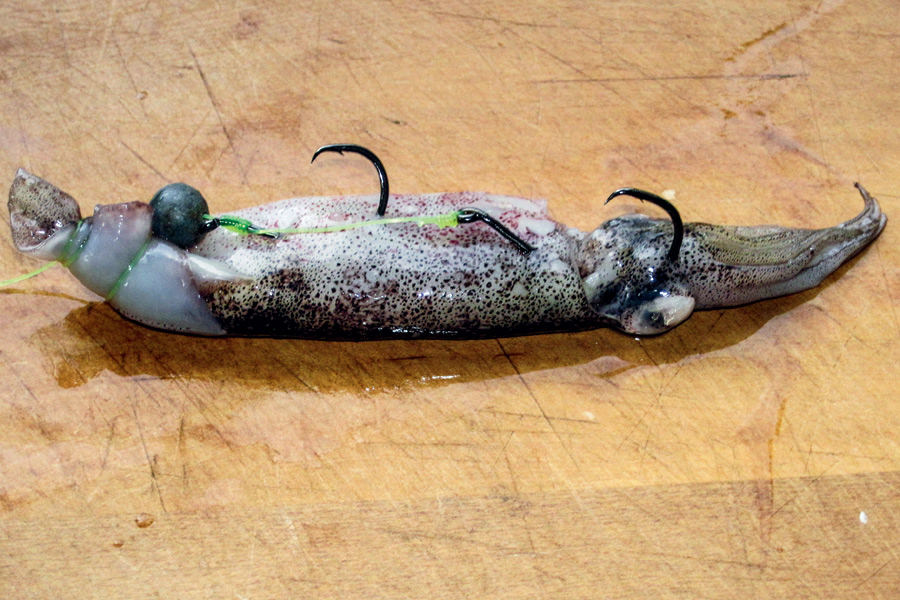
- Correct weighting is important: you want your baited rig to drift back down the berley trail as naturally as possible rather than plummeting straight down. Small ball/pea sinkers can be placed above the ‘keeper’ (rear) hook, but don’t use sinkers that are too big because the hook gape can become compromised/blocked, affecting the rig’s ability to hook fish. So instead of using a one-ounce ball sinker, use two half-ounce weights to keep the rig relatively streamlined. This also helps to reduce the incidence of snags.
- In a similar vein, it can pay to have a supply of JARA removable sinkers. They are available in weights from one-quarter ounce upwards and are easy to add or remove, according to the current strength at the time.
- If a sinker weight over 3oz is required, change over to a running sinker rig; the basic hook configuration still works, just the trace length increases – around a metre does the job – tied to a small swivel, with the sinker running freely above it.
- Incorporating a luminous bead or short section of luminous tubing into the rig can be advantageous, making your offering more visible in deep water or in low light.
- For best results, always stay in contact with your stray-lined bait, especially in weedy, reefy territory; the best anglers use compact overhead outfits, as overhead reels let anglers easily adjust the line length by letting line run out under their fingers or using their fingers to flick it back onto the spool again to pick up slack.
- Again, don’t strike when using circle hooks. Instead, when you feel a fish moving off with the bait, slowly lift the rod to set the hook.
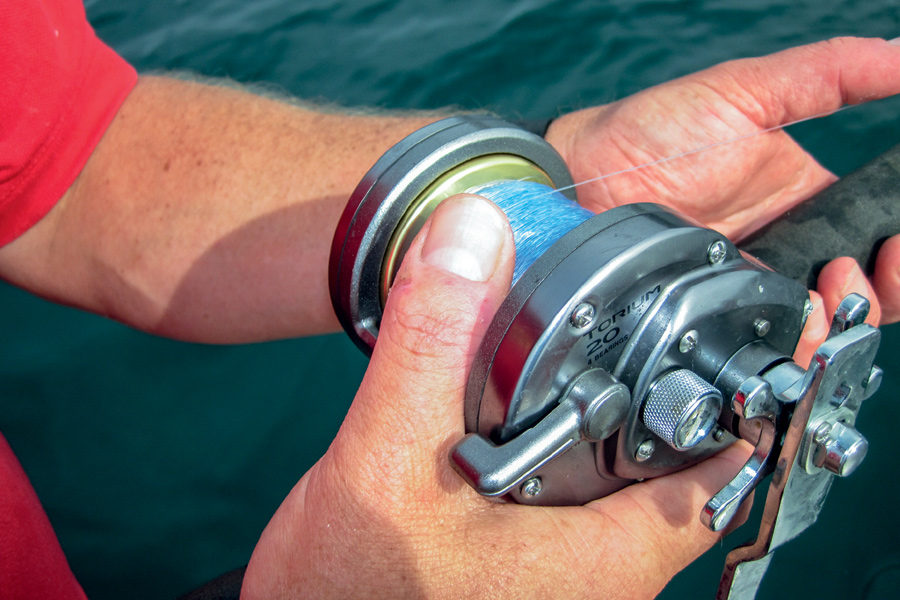
- Nylon monofilament line is recommended for stray-line fishing, as it is much more elastic than braid; this suits the style of hook too, which is set with steady pressure. Steadily increasing pressure on the line slides the hook up into position around the fish’s jaw latch. When snapper are feeding warily, anglers using braid who try tightening up often find their bait offerings dropped immediately.
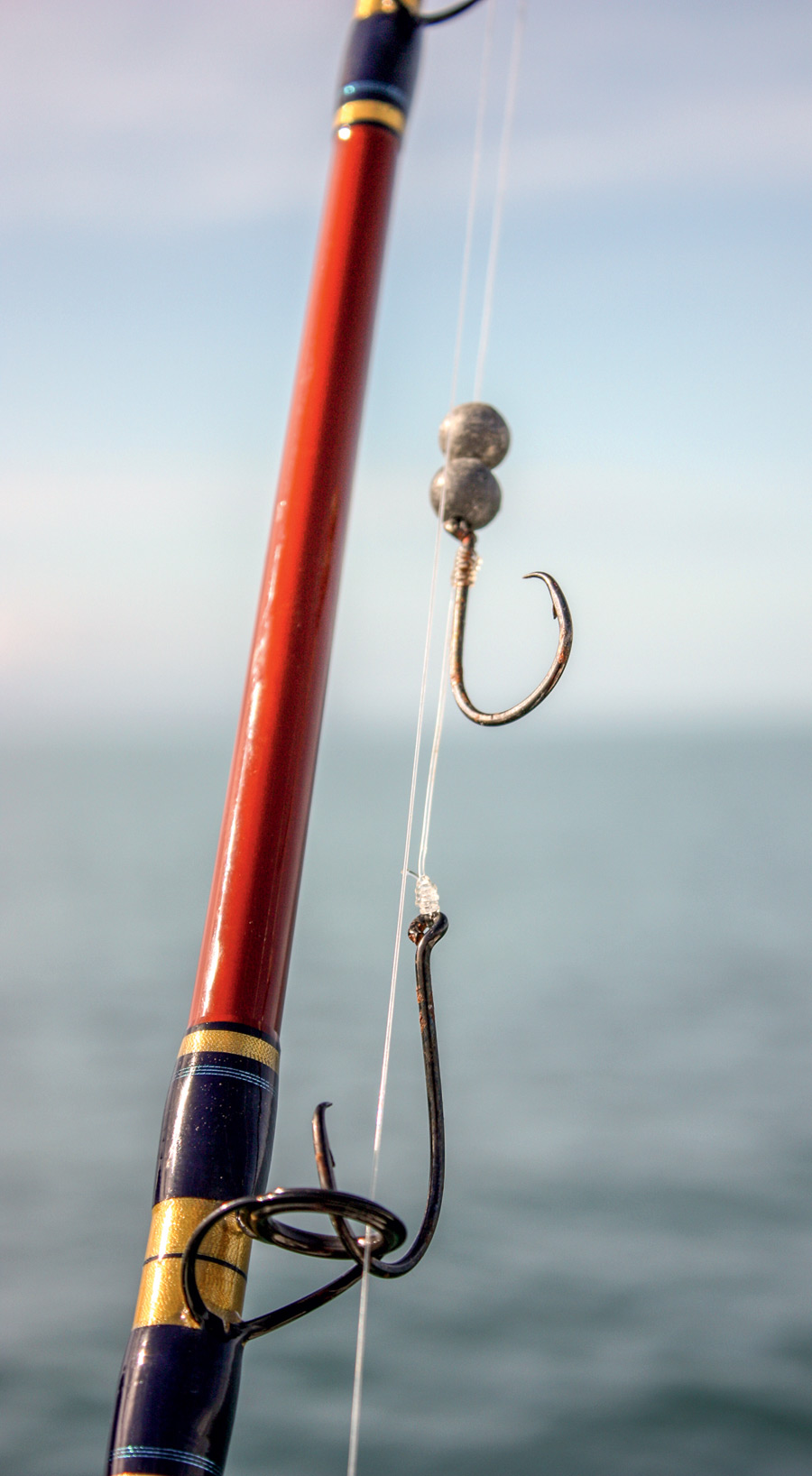
- Similarly, a rod with a relatively light, sensitive tip offers big advantages. When you slowly lift it in response to a bite, it combines nicely with nylon’s elastic properties to steadily increase hook-setting pressure without alerting snapper that something’s wrong - until it’s too late. In fact, stray-line fishing is a great opportunity to go old school, reverting to nylon and 7-foot and longer fibreglass rods such as the Daiwa VIP series.
|
|

Fishing Reports Visit Reports
Outer Hauraki Gulf Fishing Report 17/09/26
Spring wind the handbrake. Spring is starting to make its presence felt in the outer... Read More >
Top of the South Fishing Report - 17/09/26
Early snapper in Tasman Bay. Well, spring is finally here, and the days are getting... Read More >
Bream Bay Fishing Report - 17/09/26
Good snapper catches reported. After Tangaroa turned off the fish tap for a month or... Read More >
Bay of Islands Fishing Report - 17/09/26
Pacific bluefin tuna for the lucky few. The last fortnight has seen more fishable days... Read More >


Friday 25 September 2026
Major Bites
 - -
- - Minor Bites
 - -
- - Saturday 26 September 2026
Major Bites
- - Minor Bites
- -
Comments