
Snapper for beginners - lures
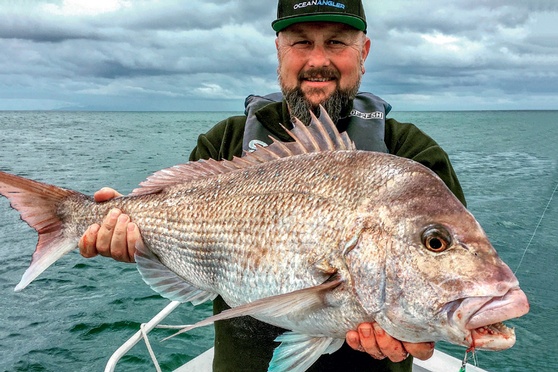
Slow-jigs have changed the face of fishing (sorry, I’m lumping all the assist-rigged lures together here!).
Talk about stunningly effective! I’ll always remember the first time I saw and used the innovative and rather evil-looking Lucanus many years ago.
At the time we caught good numbers of snapper on a motley assortment of colours, and since then the Shimano lure-design boffins have come up with colour combos that are even more effective.
There have been some other great slow-jig designs since then, including Bay Rubber, Bottom Ship, Colt Sniper, Jitterbugs, Pirates and Sliders. The basic rules to fish all of them effectively are fairly similar, but as you will discover, there are some important differences.
Rods
Light, whippy rods work best, absorbing the sudden bumps and lunges fish make so the lures’ small hooks are less likely to straighten or pull out.
Reels
Reels can be overhead/baitcaster or spinning models, but they should be small, compact and capable of holding at least 200 metres of 5-8kg braid (which hopefully actually breaks around 9kg). Nylon is stretchy, relatively thick and not very sensitive and therefore not as effective as braid.
Braid
Your braid should be attached to a couple of metres of 25lb fluorocarbon trace, as the trace gets a bit of a hiding and a kingfish bycatch is always on the cards, especially in work-up situations.
Technique & lure selection
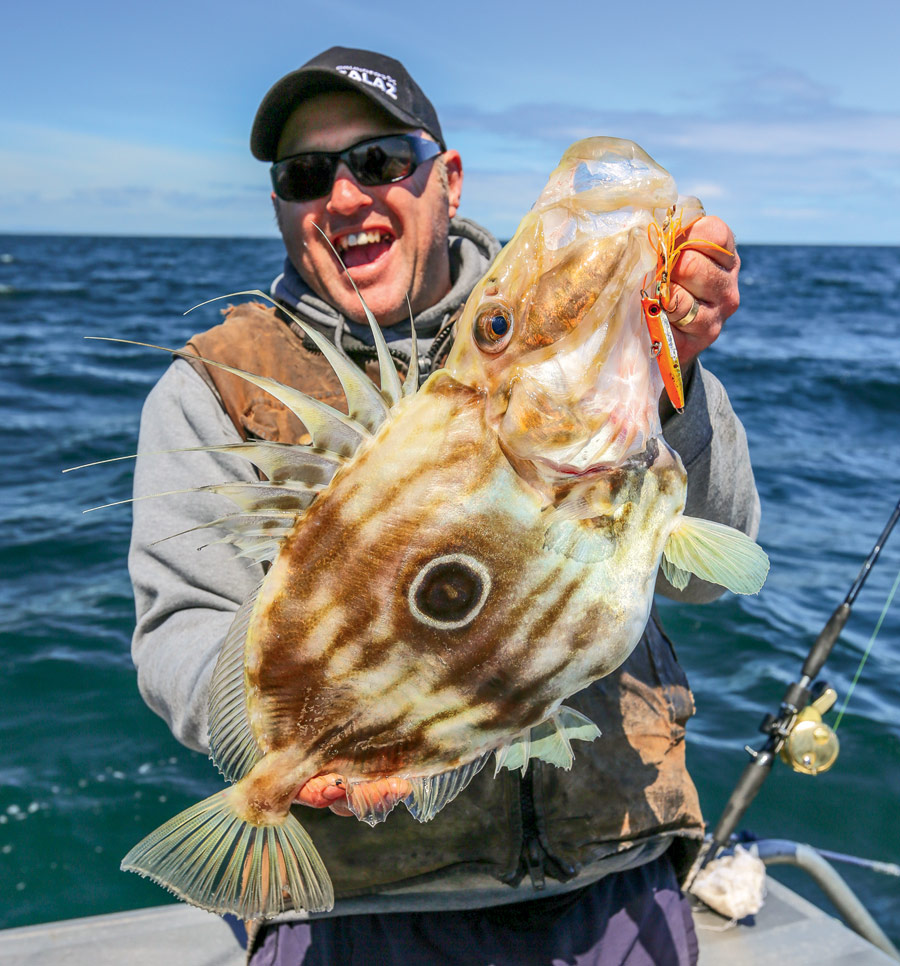
Slow-jigs work best when the boat is drifting in water over 15 metres deep, but it’s possible to catch fish on them when anchored, too. If the drift is too fast, deploy a drogue (sea anchor) to slow your drift speed down.
Drop your selected slow-jig straight down; snapper mostly feed on the bottom and prefer not to leave its relative security, so it’s important to fish close to the bottom. However, if the lure keeps lifting off the sea floor, forcing you to let more line out to keep the lure on the bottom, try lobbing it up ahead of the boat’s drift direction. The slow-jig will remain in the most effective part of the water column longer.
Inchiku-style jigs (Bottomships, Jitterbugs etc.) work best fished in a relatively vertical manner – slow lifts, medium jiggles, and steadily winding up from the bottom for a few metres, before dropping back down again. A super-slow mechanical-jigging motion works well, too, but I can’t stress the importance of the slow part enough. These different tactics all work at times, so it pays to experiment, but in every case when the line angle becomes too acute, causing the lure to be pulled more sideways than upwards, wind in and start again.
Round-headed slow-jigs (i.e. kabura and madai types) armed with rear-mounted assist rigs, also work well when manipulated in a vertical manner. Again, simply winding them slowly upwards for several metres often does the job, as does the very slow mechanical winding motion. However, this style of lure can also be dragged along the bottom, so it bounces or slithers along the sandy floor, kicking up puffs of sediment.
Many well proven elements are incorporated in slow-jigs, with most incorporating luminous, fluorescent and/or ultra-violet reflective coatings, along with assist rigs that include tentacles or plastic squid designed to waft and undulate enticingly. I personally find it’s almost a case of ‘the brighter the colour the better’ with fluoro pinks and oranges often coming up with the goods.

If the fishing is super-slow, it’s possible to ‘tip’ your slow-jig’s leading hook with a sliver of natural bait. Not horrified? Or at least a little interested? Read on…
Mixing lures with baits - unbeatable!
I used to think adding bait to lures was ‘cheating’, and besides, the addition of a bulky bait often upset the lure’s enticing movement, nullifying any advantage. This all changed while on a lure-fishing charter several years ago with anglers of widely varying ages and capabilities. At the time we were, rather ironically, demonstrating just how effective slow-jigs could be, but had struggled for two hours with only a handful of very small snapper coming on board.
Then the very experienced and savvy skipper quietly started tipping various slow-jig assist rigs with small, slim pieces of squid. The transformation was incredible, with bent rods all around the boat and a succession of modest but very eatable-size snapper coming on board.
Interestingly, when the bait was left off the hooks an hour or so later, the lures continued to produce, but the experience still opened my eyes to what a big difference the addition of bait can sometimes make.
Since then, ‘tipping’ slow-jigs has become my go-to method when taking youngsters out fishing, especially on inshore waters such as those around Rangitoto and in the Waitemata Harbour below the bridge.
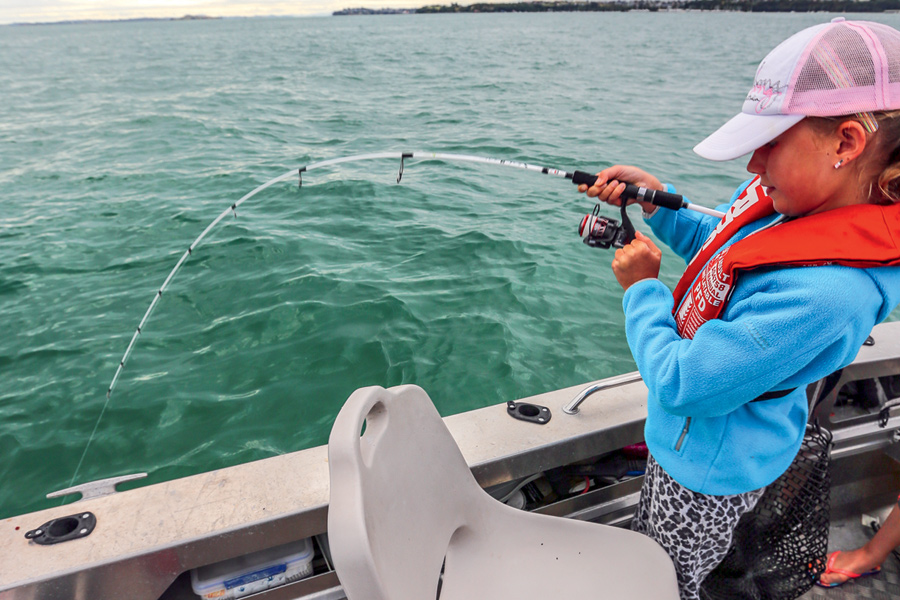
I simply wanted my daughters’ spindly rods bending over on a regular basis, keeping them occupied and happy. I figured most of the fish hooked would be reasonably small, but they wouldn’t care about that. Sure enough, the system worked fantastically well, with almost non-stop action. Yes, some small fish were caught, but mouth hooking made them easy to release, and there were plenty of good-sized fish among the catch, too! In short, this lure-bait combination method is the most effective I’ve ever come across.
This is hardly surprising, as the scent provided by natural bait must add greatly to the slow-jig’s highly visible colours and coatings, enticing, wriggling tentacles and range of weights so they get down quickly and then stay on the bottom.
I find the small to medium sized (60-90g, say, depending on the wind and current) ‘madai’ and slider/kabura designs seem particularly suited to dragging behind the boat while fishing inshore waters, even at a significant angle.
The trailing ‘octopus’ skirt and/or tendrils play a big part in the lures’ overall attractiveness, wafting and undulating enticingly.
However, it is the sliver of squid (which can be a single tentacle, a small tentacle clump or strips cut from the mantle) on the jig’s assist rig’s leading hook, in amongst the skirt, that makes all the difference. It adds ‘real fish flavouring’ to the already effective combination, and results in snapper of all sizes fighting over the lure. (N.B. Lures equipped with smaller assist-hook rigs are more effective, but also more prone to being swallowed, especially if you add too much bait, so keep the baits small and slim.)
Micro for big catches of fish!
My good fishing buddy John Eichelsheim had been onto the micro-jig concept way earlier than me, using them regularly over the years. But although I’d seen him catch plenty of fish, nothing particularly impressive had been caught – not when I’d been with him, anyway.
My first experience with their effectiveness started when I bought some Little Jack Shirasu jigs from GoFish on the North Shore about six years ago. Not only are they devastatingly effective on the koheru I’m targeting, they are frequently taken away from me by bruiser trevally and kingfish. And, although perhaps not a true micro-jig, I’ve also seen smaller models of the Shimano Colt Sniper do really well at times – a ripper of a lure.
But when I was invited to fish the Flea, a range of tiny lures, the heaviest just 28g, made from tungsten, a material that’s heavier than lead, making them even smaller than other lures of the same weight, I was less than enthusiastic - who wanted to massacre a bunch of small snapper? But if I wanted to go fishing, I would have to put them through their paces…
What a surprise! Yes, it’s true that if dropped down amongst small snapper, that’s what I caught, but equally, if placed my Flea in front of a big trevally, snapper (the biggest caught so far weighed over 9kg and was hooked 51 metres down!) or even kingfish, they usually grab hold, too – along with kahawai, gurnard, blue cod, john dory.
In short, provided there are fish present, you are assured of almost non-stop action when using these little lures, making them perfect for short-attention span kids of all ages with a liking for multiple hook-ups!
So how do you fish little jigs like these?
- It pays to have a very whippy rod, because otherwise the tiny lure’s proportionately small hook may rip or bend out, even though it’s relatively strong (well known hook brand Owner is perfect for this role).
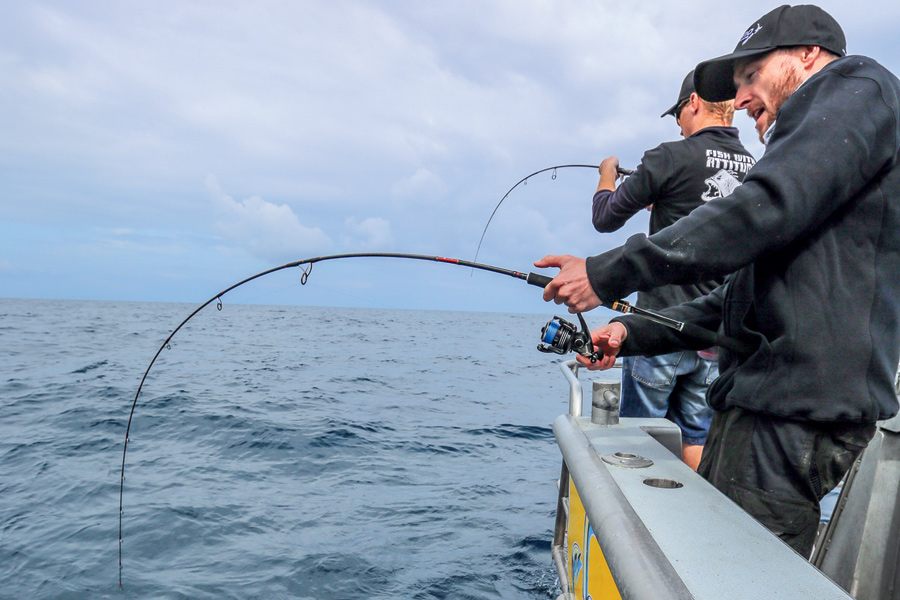
- Use two or three metres of light fluoro trace around 5.5 (12lb) to 7.5kg (16lb) breaking strain. While you will still catch fish using heavier trace, it inhibits the lure’s natural movement and may encourage you to exert excessive pressure.
- Attach it to the assist rig’s solid ring rather than the lure body’s loop; a Rapala Loop Knot is best for this, providing freer movement.
- Set the reel’s drag to no more than 2kg; it doesn’t sound like much, but you’d be surprised, with kingfish up to 17 kilos being caught.
- Little is more! No need for big sweeping rod lifts here – just little jiggles, gentle lifts and plenty of pauses. You can also cast micro-jigs out and jiggle them back along sandy/silty bottoms like a soft-bait. And if you want to do relax or do something else, drop the lure down until it’s just off the bottom, then place the rod in a holder so the boat’s natural movement repeatedly lifts and drops the lure. Deadly, but make sure the rod angle is such the rod so it can bend over without breaking under hook-up pressure.
|
|

Fishing Reports Visit Reports
Outer Hauraki Gulf Fishing Report 17/09/26
Spring wind the handbrake. Spring is starting to make its presence felt in the outer... Read More >
Top of the South Fishing Report - 17/09/26
Early snapper in Tasman Bay. Well, spring is finally here, and the days are getting... Read More >
Bream Bay Fishing Report - 17/09/26
Good snapper catches reported. After Tangaroa turned off the fish tap for a month or... Read More >
Bay of Islands Fishing Report - 17/09/26
Pacific bluefin tuna for the lucky few. The last fortnight has seen more fishable days... Read More >


Saturday 26 September 2026
Major Bites
 - -
- - Minor Bites
 - -
- - Sunday 27 September 2026
Major Bites
- Minor Bites
 - -
- -
Comments