
Rock Fishing - Getting Started
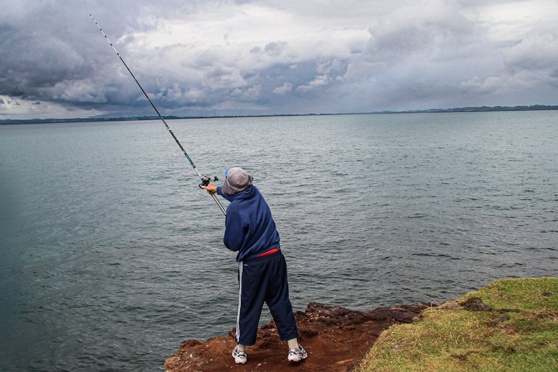
Fishing environments and locations vary from inshore and offshore boat fishing to beach and wharf fishing, but Adam Clancey reckons the most utilised locale is the rocks.
Rock fishing is where most anglers learn their trade as far as fishing goes. It can be as simple as standing on the rocks around the Auckland waterfront, or as advanced as tramping to ledges in the Far North that drop into deep blue water or across the wild West Coast headlands that get pumped by big swells. When you break it down, rock fishing offers real variety and requires different techniques and tactics for each area and species.
One of the most common questions I see floating around on social media is “Where can I go rock fishing?” While many people just want to access a little deeper water, others are looking to find where big fish may be hanging out. These can be one and the same, but it depends on a few key elements. Shallower, easy-access spots tend to get a lot of pressure from anglers and will generally fish better on a rising tide that coincides with change of light. There are plenty of good spots around most main centres in NZ where good fishing can be accessed a few minutes from where you park your car.
A good way to identify spots further afield is using technology. Google Earth can provide a lot of information, and many apps like the Lowrance app will give you great water-depth data and reef structure detail.
Tackle tactics
The approach you take when fishing different rock spots will make a lot of difference to your success. If you are fishing a shallow harbour spot where you expect mainly school snapper, trevally and kahawai, and where the terrain is not going to be too hard on gear (few snags and little foul), the lighter approach will always get you more bites. But this is not to say you won’t have encounters with big fish.
It pays to use a few different rods suited to different techniques. There are three outfits that will cover all your bases: a 2.5m light spin set rated for 3-6kg line matched with a 2000-4000 size reel that can be used for catching bait and casting small lures like soft-baits and metal lures. A rock rod around 2.5-3m length rated for lines 8-15kg matched with a 5000-8000 sized reel will handle all your bait fishing and casting of stickbaits and poppers. Finally, a dedicated live-baiting rod is also handy. Again, use a 2.5m-plus rod with 15-24kg rating and line to suit. This is the sort of rig you should put out when using a live-bait or large dead bait and a balloon or even a slide-baiting rig.
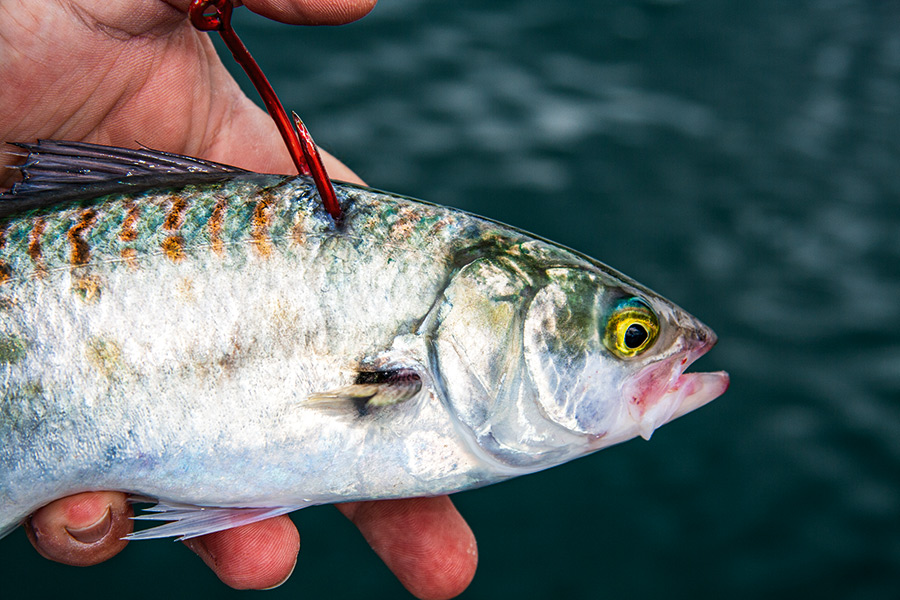
Kingfish will take live-baits of all sizes; small kahawai are ideal.
You will need a range of terminal tackle and lures as well. Make your choices based on what is durable and fulfils many functions. Both mono and braid lines have their place. Use mono for bait fishing but braid has the edge for live-baiting and lure fishing. The best option is to have multiple spools for your reel so changing line is easy.
Spot the spot
Once you have decided on your location, check the tides and weather. When you arrive at your spot, assess what is going on and where you think the best locations to fish may be. Look for features like a reef slightly offshore that forms a deeper channel out in front of where you will fish, and where you are able to safely land a big fish, avoiding snags and weed. Any spot that is getting hit by current or lots of wave action can be a prime area to fish and if there is an area holding baitfish, that will be where the predators will hunt.

If a spot looks fishy, it probably is.
Having assessed your rock fishing location, the very first thing to do is set up some form of berley. Hanging an onion sack with fish frames or a berley bomb in the water is a good method, or make up a ‘porridge’ with pilchards, fish oil and oats, and throw the odd handful in the water. The purpose of berley is twofold when rock fishing. One is to attract big fish to where you are fishing; the other is to attract baitfish so you can supplement your bait supply with fresh baits and live-baits.

Good berley is often essential when rock fishing.
With a good berley trail working, set up your tackle. Casting unweighted or lightly-weighted baits close to shore is a good start as fish come in close to the rocks. If you have several rods, set one up for bait catching and the other for live-baiting. One rig I like for bait fishing is a small piece of pilchard about a metre under a float, which I cast out past the berley. This works well to catch any kahawai that are passing by. Another effective technique is casting and retrieving a metal lure. If smaller bait fish are present (like sprats, piper, or mackerel), scale down your hooks to suit or use a set of sabikis (bait flies). Set your live-baiting rod up with a trace of 37-60kg that’s about three metres long, and attach it to your mainline with a swivel or FG knot. Add a party balloon or polystyrene float and a live-bait hook to suit the size of the bait you catch. Sizes 4/0-10/0 will cover most options.
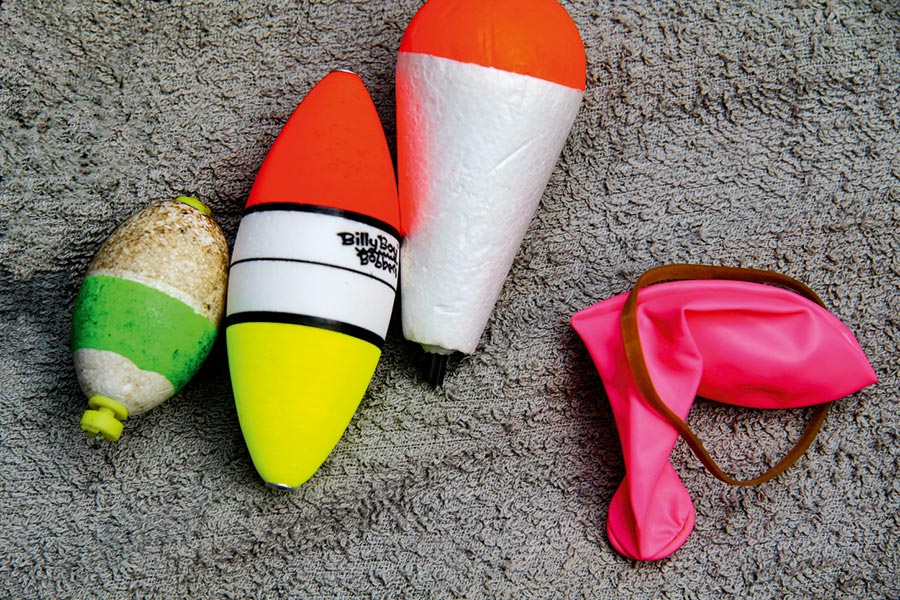
Floats and balloons are handy for rock fishing.
What I have described is a typical way to approach rock fishing, although for those who are looking for a more challenging and energetic style of this discipline, you could adopt a lure-based approach. Set yourself up with a good portable popper rod and a lighter spinning rod. Carry a small pack with a mixture of casting lures, soft-baits and poppers. Find some likely locations and then walk the shoreline casting and retrieving lures. Seeing a pack of kingfish chasing a stickbait to your feet and hooking up right in front of you is very fulfilling, as is casting a lightly weighted soft-bait into a shallow gutter and having a good-sized snapper grab it as it drops. Good fishing can be accessed from the rocks – all it takes is a little effort and thought and you can become a rock star!

March 2022 - Adam Clancey
New Zealand Fishing News Magazine.
Copyright: NZ Fishing Media Ltd.
Re-publishing elsewhere is prohibited
Fishing Reports Visit Reports
Raglan Fishing Report - 12/11/26
Big spring snapper. With the more settled weather over the last couple of weeks there’s... Read More >
Mercury Bay Fishing Report - 12/11/26
Snapper hit and miss. Most reports have been telling us it’s becoming more difficult to... Read More >
Northland Fishing Report - 12/11/26
The switch has been flicked on! Call it what you want, El Niño, global warming,... Read More >
Tauranga Fishing Report - 12/11/26
Snapper and kahawai in close. Again, we start on a positive note, with some nice... Read More >


Saturday 21 November 2026
Major Bites
 - -
Minor Bites
 - -
Sunday 22 November 2026
Major Bites
- - Minor Bites
- - Popular Articles

Softbait Fishing - Part 1 - gear selection
John Eichlesheim writes an article about selecting the right equipment for softbait fishing... Read More >
Softbait fishing Pt 2 - tips and tricks
Techniques, tips and tricks of softbait fishing – getting the most from your soft baits.... Read More >

Surfcasting - setting yourself up
Gary Kemsley helps sort out the necessary gear for intending surf fishers.... Read More >

Squid - How to catch them
Squid fishing is a rapidly growing aspect of fishing - Paul Senior shares some hints and tips to get started.... Read More >
Comments