
Rigging Lures Correctly
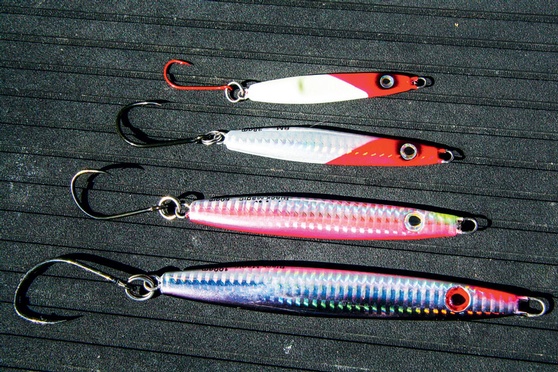
One of the real keys to making any lure work effectively starts well before it hits the water. Rigging it correctly will have a big influence on the lure’s effectiveness, advises Adam Clancey.
It’s great to have a tackle bag full of the best lures when heading out for a fish. We spend a lot of time discussing the various merits of certain lures, especially paying close attention to which colours are working or are in vogue. However, rigging a lure properly is almost as important as the lure choice itself. Improperly rigged lures are often ineffective. This starts with the very basic lures right up to those that require more complex rigging.
There is nothing worse than having a fish come off a lure because a split ring pulls open as it was too flimsy for the job. Top brands of lures rarely suffer from this, but it is common with cheaper ‘knock-off’ lures. Re-rigged, however, these cheaper lures can still catch fish. Little things can make a big difference.
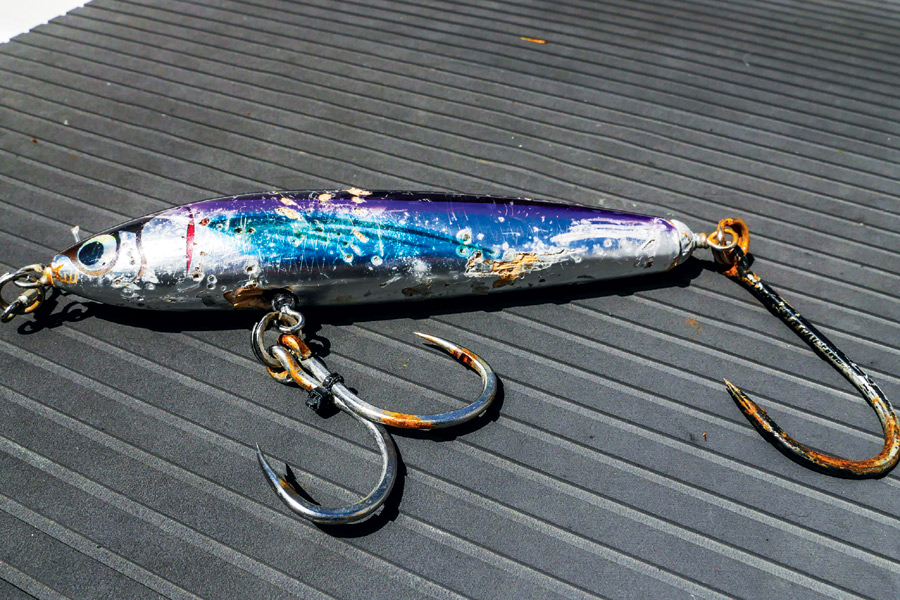
Battle scarred but not broke, due to good rigging with quality components.
Going light
It is tempting to rig all lures as heavy-duty as possible so they can take a beating. This is fine with certain types of lures which have an action unaffected by heavy-duty hardware, but other lures require the rigging to be balanced so the lure will swim with the right action.
One example of this is leader weight. Tie a relatively heavy leader direct to a bibbed minnow and it will not only affect the lure’s swimming action but also the depth it will dive and the speed it can be trolled at. In this situation, using a loop knot or adding a split ring to the attachment point will free up the action. Alternately, scale down the leader and fish the lure on light tackle and it will perform much better.

Having the right hardware is essential.
Hook selection
Good hook selection is vital on all lures from the smallest trout lure to the biggest marlin lure. The hook must fit the overall profile of the lure.
In the case of many lures, a straight hook with no offset should be used to prevent the lure from spinning unnaturally. The hook should be of sufficient gauge to handle the tackle you are using and the species you are targeting. It is quite interesting how much hooks affect the actions of stickbaits and poppers. Some work better with trebles while others swim best with heavy-duty singles.
The only way you will find this out is trial and error. Test different hook rigs and see how your lure swims and sits in the water.

Double hooks are good for trolling for smaller tuna with small lures.
The point of the hook can also be something to keep an eye on when you’re setting up rigs. If the hook has a long point, it is more likely to roll, meaning fish won’t hook up cleanly. There is a trend when marlin fishing to use lighter gauge hooks these days, and you hear both good and bad things about these rigs. On one hand, the hook-up ratio is better with fine gauge hooks but on the other, hook failure, especially around tracing time, is also more common. I suppose if you are tag-and-release fishing, light-gauge hooks can be well-suited for game fishing, but if you are hunting your first marlin or are hooked to an absolute monster, you would want the most robust hook you could fit in your lure. One trick I know most successful game fishers use is to file the point of the lure hooks down so the barb is low profile and the point ultra-sharp.
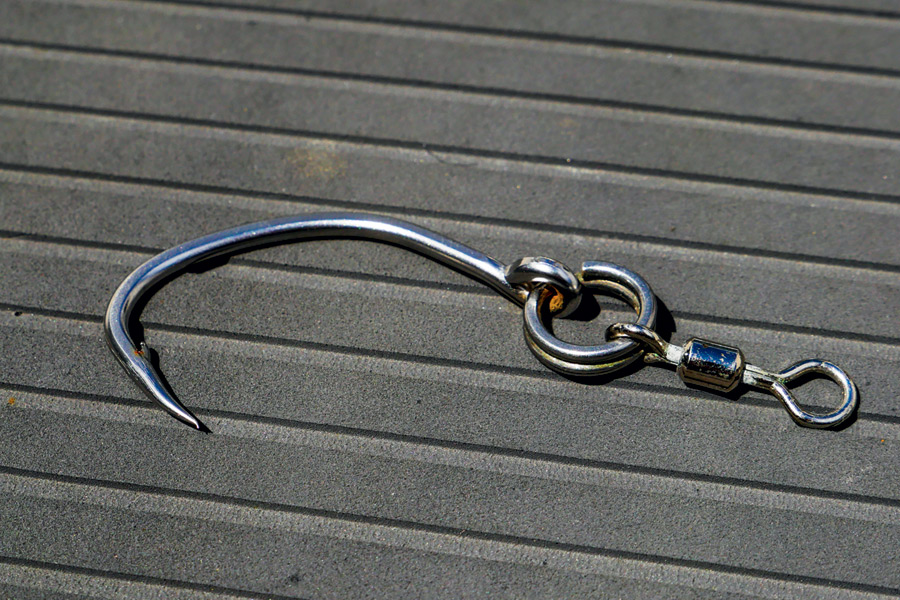
This hook was not up to the job - it has bent and the point rolled.
Rigging assist hooks
The rigging for various kinds of jigs has developed a lot over recent times. It used to be a case of a treble or single hook attached by a split ring in the tail of the jig, whereas these days it is far more common to see kingfish and snapper jigs rigged with some form of assist rig attached to the top eye of the lure.

In-line hooks are designed for lures rigged with split rings.
To work out the best rigging for an assist rig, firstly it helps to understand how it is supposed to work. When a fish chases a lure, it will flare its gills and try and inhale the lure so an assist rig, which is lighter than the lure, is the first thing that will be sucked into the fish’s mouth, which helps hook the fish cleanly. Knowing this, make sure that when rigging up an assist rig, the hook size marries up with the size and weight of the jig.
To make an assist rig, attach a hook to an assist cord and then loop it on to a solid ring and a split ring. Adding some electrical shrink tubing to an assist rig will stiffen it up and is good on big rigs aimed at large predators. The small lures that feature assist rigs like micro jigs, inchiku lures and kabura style lures are often embellished with rubber strands, octopus skirts and fish skin teasers. All of these are good fish attractors, but again make sure that the hooks, split rings, solid rings and assist cord match the size and weight of the lure.
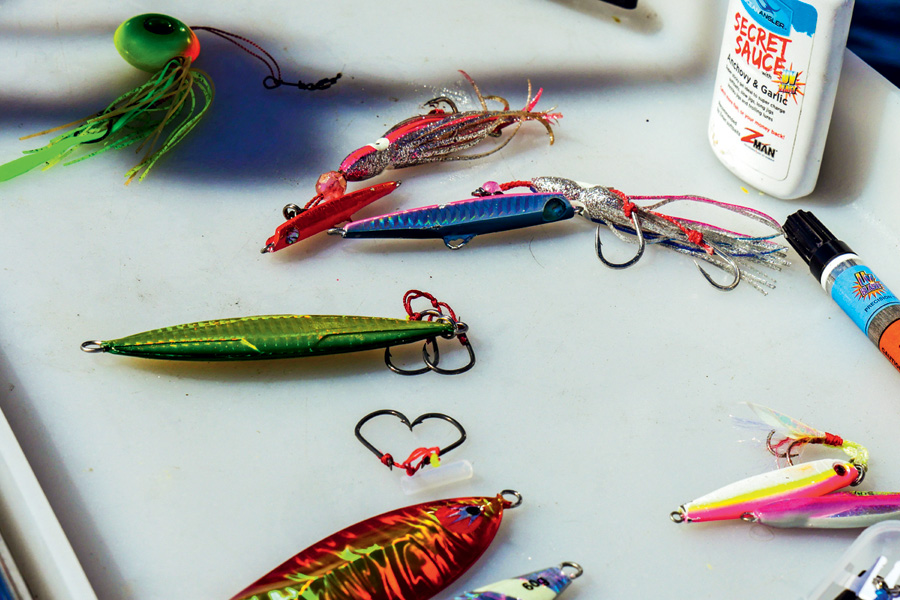
Assist rigs work well on smaller lures.
Quick change
We all want the ability to quickly change from one lure to another. This has seen countless clips be produced over the years which fasten a lure to the line. Many did not stack up strength wise but these days you can get some amazingly strong small clips for all sorts of lures and there are some really good heavy-duty ones around for the big gear as well.
The key again is matching the clip to the lure and size of tackle you are using. For example, if you are fishing light braid on a slow jig, attach a small clip (around 10kg breaking strain). In this situation, a clip like this won’t let you down. But if you were stickbaiting with heavy braid, the best attachment is an extra heavy-duty spilt ring with an extra heavy-duty swivel, both of which should have a very high breaking strain.
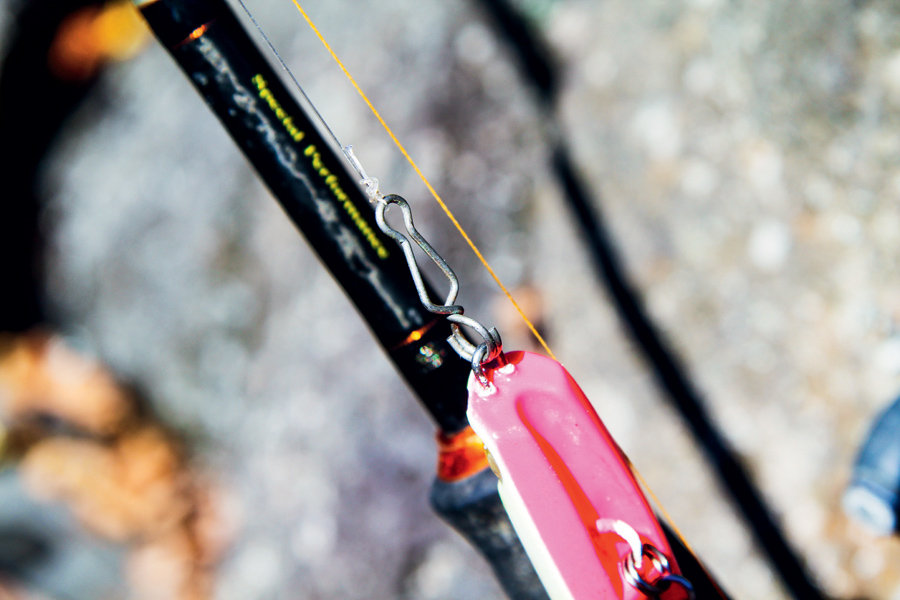
Modern clips are very strong and allow the lure to have more action.
Making the connection
The way you attach your lure to the line should also be considered. For most lure-casting situations, connecting a trace to the mainline with a swivel can reduce the action of the lure and make it hard to cast, so using a shock leader tied with an FG or back-to-back uni knot is best. This allows you to wind the leader onto the reel and cast without causing wear on your mainline.
Trolling setups usually feature a trace and swivel. This is so the lure will not create line twist if it starts to spin.
When leaders are getting above 30kg, knotting can become bulky and affect the lure action. In this situation, the use of alloy crimps is a much better option as these are strong and allow a loop so lures and hooks can swing. There are a number of small accessories you can add to the trace loop to prevent wear on the trace material. Using this chaff protection is highly recommended when fishing on heavy gear and when using lures and rigs that may be trolled for long periods of time and have to endure bills and teeth.
Pro Tips
- Use a net or a gaff to lift fish out of the water – using the lure or trace can damage the rig
- Use only top-quality rigging accessories to prevent disappointment
- When using soft-baits, tie a loop knot to give the lure action, especially with heavier leaders
- Don’t use clips on kabura lures – they are supposed to slide up and down the line
- Use crimps and line chaff protectors on game lure leaders
- Double hooks are great when using small lures for tuna
- Change hooks and rings after a bit of use
- Keep hook size in proportion to the lure
- Have a selection of good tools for rigging including split ring pliers, a crimping tool and leader cutters.
|
|

Fishing Reports Visit Reports
Outer Hauraki Gulf Fishing Report 17/09/26
Spring wind the handbrake. Spring is starting to make its presence felt in the outer... Read More >
Top of the South Fishing Report - 17/09/26
Early snapper in Tasman Bay. Well, spring is finally here, and the days are getting... Read More >
Bream Bay Fishing Report - 17/09/26
Good snapper catches reported. After Tangaroa turned off the fish tap for a month or... Read More >
Bay of Islands Fishing Report - 17/09/26
Pacific bluefin tuna for the lucky few. The last fortnight has seen more fishable days... Read More >


Friday 25 September 2026
Major Bites
 - -
- - Minor Bites
 - -
- - Saturday 26 September 2026
Major Bites
- - Minor Bites
- -
Comments