
Rigging Livebaits
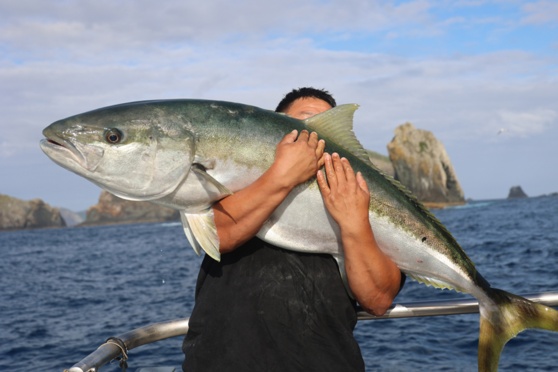
Using live bait is often lethal, but different fishing situations and different baitfish species mean livebaits need to be hooked in various ways to get the best results. Always keep in mind that the smaller the hook and the lighter the trace, the livelier the bait will be – but go too light, and you might not hook up, the hook might bend, or the trace could break, so it’s a balancing act.
Upper shoulder hooking
This is probably the most popular way to hook relatively tough live baits such as sprats, kahawai, yellowtail mackerel, koheru and trevally. The method suits a variety of techniques, including fishing baits under floats and balloons, attached to sliding-sinker rigs and allowed to swim freely on just a hook. It can also be used to very slowly troll a bait, perhaps putting the boat in and out of gear to keep the speed down.
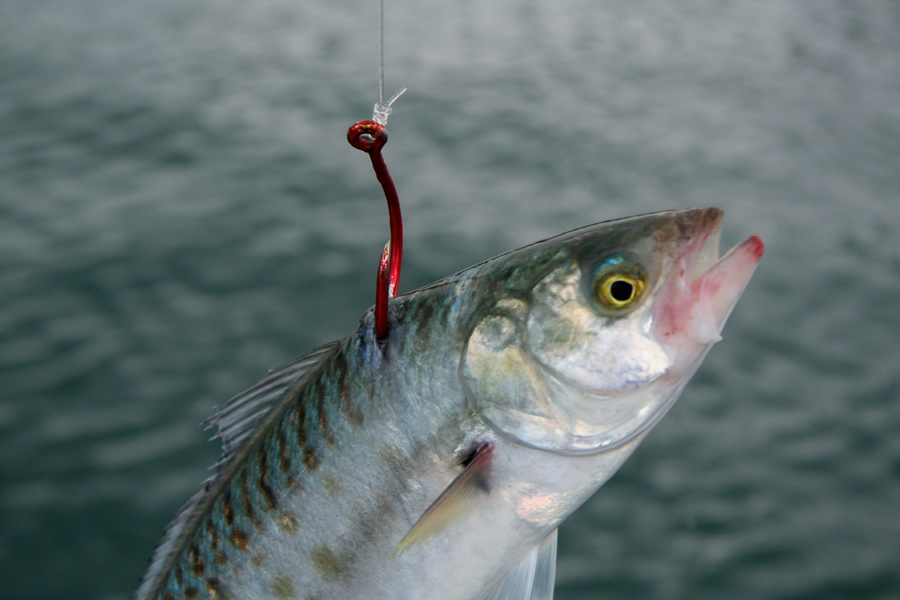
Upper shoulder hooking is the most popular way to hook relatively tough live baits such as kahawai.
Advantages:
• Upper shoulder hooking keeps the baitfish’s head pointing into the current, allowing it to get enough water over its gills and stay in good condition for long periods of time. It’s a position that seems to encourage mackerel livebaits to swim downwards, too.
• This style of hooking works with quite small hooks, making the presentation more subtle and natural looking, but with a good hook up ratio, which is great when targetting sharp-eyed fish like yellowfin tuna.
• Later, when it is being retrieved, the bait is brought in headfirst, allowing it to swim relatively naturally (baits pulled in backwards soon die) and frequently attracting bites in the process. When done correctly, this hook location offers a high hook-up rate, rarely hooking back into the bait when swallowed.
Disadvantages:
• This technique results in only a modestly streamlined rig, so isn’t ideal for deeper water locations with strong currents; a large, powerful live bait can struggle so hard it doesn’t get down in time (if at all) for predators to detect and bite when fishing over specific structures. Having said that, if you can get the bait down, those strong, frantic movements make it very attractive to predators and encourage enthusiastic bites!
Hooking tips:
• The upper shoulder is best; you want to insert the hook on an angle across the bait’s shoulder, so its point ends up nearer the bait’s head than the shank. But first, if using an offset hook, make sure its point ends up angling well away from the bait’s body, not closer into it.
• Focus on how deeply you hook the baitfish – too far down the body can badly injure smaller baits, making them less effective, or choking the hook so it can’t hook-up effectively. On the other side of the coin, hooking baits too lightly makes the hook susceptible to being ripped out on the strike.
Nose hooking
The preferred method when wanting to deploy live baits in deep water, in places affected by significant current, or as a simple way to slowly troll around. It works well with more fragile live baits, such as slimy/blue mackerel, skipjack tuna, flying fish and pilchards, along with yellowtail and koheru. If you count bridle-rigging (recommended when chasing billfish, as they often smash conventionally-rigged baits off the hook) as nose-hooking, the method also suits kahawai and trevally in addition to the various mackerel, skippies and koheru mentioned already.
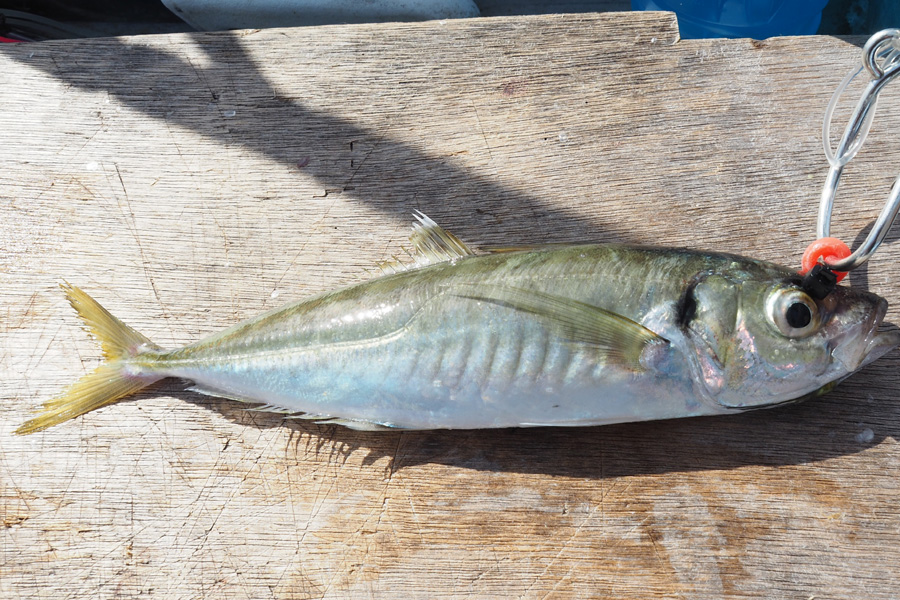
Wriggling baitfish can make a huge difference when fished deep for ‘puka and bass – here's one securely bridle rigged with a cable die and docking ring.
Advantages:
• Nose-hooking results in a streamlined form that holds the baitfish nicely head-first into the current, allowing it get down nice and deep in minimal time and remain healthy (but look at Disadvantages for the big exception!) while it’s being fished and also during the retrieval. This rigging method attracts strikes as the bait is being wound in.
• Because the hook is placed through the baitfish’s relatively tough nasal cartilage, it’s possible to lob it away from the boat with less chance of the hook ripping out.
Disadvantages:
• The hook often doubles back into the bait’s head, burying the hook’s point so the bait dies and/or a hook-up becomes unlikely. Also, the hook can simply fall out of the nasal cartilage at any time. Both frustrating scenarios are a waste of bait – and potential catches.
Hooking tips:
• Place the hook just in front of the bait’s eyes: too deep and the baitfish can be badly injured, especially if the hook is bigger than necessary; too lightly and the hook can rip out.
Anal fin hooking
This particular hook placement is primarily for piper/garfish, because this delicate fish is easily ripped off the hook or badly injured when hooked through the shoulder while nose-hooking makes them sluggish and less attractive. The style is perfect for deploying free-swimming piper or piper under a float.
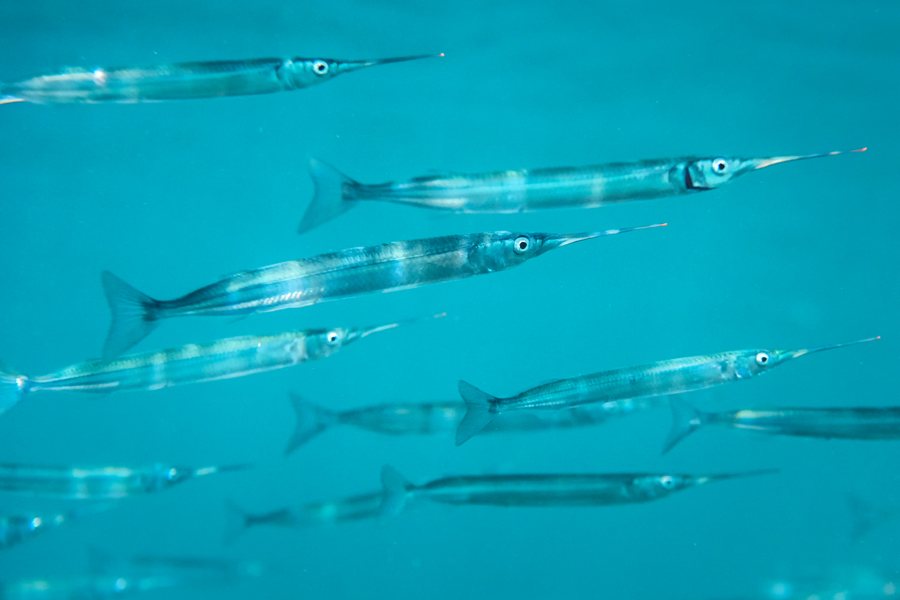
Placing the hook by the anal fin is common for live piper as this delicate fish is easily ripped off the hook or badly injured when hooked through the shoulder, while nose-hooking makes them sluggish and less attractive.
• Advantages:
It’s the only way I know to keep piper alive and on the hook for any length of time!
Disadvantages:
• Although this is the best way to hook piper, their flesh is relatively soft, so allow them to head out under their own steam if possible, rather than cast them out. Also, as they will be retrieved backwards, a bad thing, only wind them in if you must.
• The hook position encourages the piper to come up near the surface, which is a good thing for predatory fish to see, but bad if a gannet spots it first!
Hooking tips:
• Use the smallest live-bait hook practical, so there is minimal damage and less weight for the bait to drag around, resulting in a livelier piper.
.jpg)
Not much beats a well-presented livie!
- By Nick Jones
Fishing Reports Visit Reports
Outer Hauraki Gulf Fishing Report 17/09/26
Spring wind the handbrake. Spring is starting to make its presence felt in the outer... Read More >
Top of the South Fishing Report - 17/09/26
Early snapper in Tasman Bay. Well, spring is finally here, and the days are getting... Read More >
Bream Bay Fishing Report - 17/09/26
Good snapper catches reported. After Tangaroa turned off the fish tap for a month or... Read More >
Bay of Islands Fishing Report - 17/09/26
Pacific bluefin tuna for the lucky few. The last fortnight has seen more fishable days... Read More >



Friday 25 September 2026
Major Bites
 - -
- - Minor Bites
 - -
- - Saturday 26 September 2026
Major Bites
- - Minor Bites
- -
Comments