
Preparing tasty fish and shellfish meals
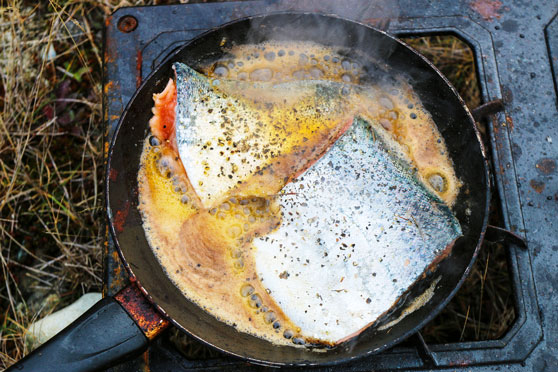
Although I would still prefer to spend my time fishing rather than in the kitchen, the ability to prepare or cook snacks outdoors is an aspect of fishing/foraging I’m enjoying more and more.
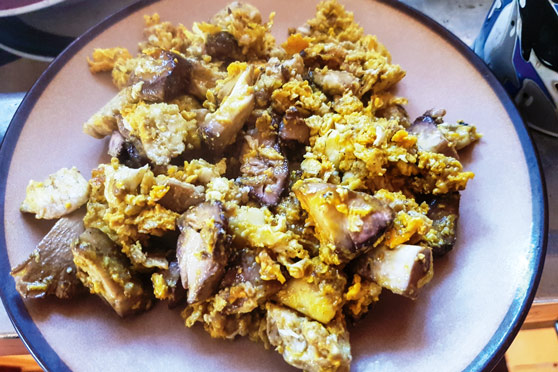
In this article I will outline some quick and tasty ways to prepare seafood using the minimal gear I can carry – often just a portable gas cooker, a small frying pan, a few pots, some cooking oil, sauces and seasoning kept in a chilly bin.
You can't go past raw...
Despite my growing repertoire of recipes and processes, I still find it hard to go past fresh sashimi; eating the freshest of fish raw unlocks the true essence of its flavour. Consequently, I always take a portable sashimi kit out with me when boat fishing.
The belly of the fish is the fattiest and especially delicious, but an extremely sharp knife is required to carve the flesh away from the rib cage.
I enjoy dipping the finely-sliced fish in a mix of soy sauce and mirin (sweet rice wine vinegar seasoning) blended with some wasabi and a little picked ginger. A squeeze of lemon and a little sea salt adds extra flavour.
Another way to prepare raw fish is to slice it finely, then drizzle over some olive oil (always use a good quality extra virgin olive oil), followed by a sprinkle of cracked pepper and sea salt and a squeeze of lemon. This simple dressing works well for oily fish – fresh skipjack tuna bellies are really delicious! Sashimi tip: chill the fish down on ice for an hour or so to firm up the flesh before slicing into sashimi.
Don't be an egg, brine eggs
For fishers, being able to quickly prepare a filling breakfast is important; omelettes only take a few minutes to cook and can be prepared in a frying pan. Place a few slivers or chunks of fresh fish in the omelette with a little cheese (oily fish can be used instead of cheese). Then, as a keen forager, I often add fresh herbs from the shoreline, such as Italian parsley (as well as wild mushrooms if I can find them). I like to cook my omelettes in butter to give them an extra golden colour.
Otherwise, bits of left-over fish can be chunked up and scrambled with some eggs and a few herbs to make a tasty, satisfying breakfast – plate up with a wedge of lemon and some aioli to finish the dish.
It therefore pays to ensure you always have eggs on hand. Sometimes you can buy them from roadside stalls, which are especially useful when you are out and about, and it supports the locals. For a flavour boost, give duck eggs a go – they are often available and for sale in spring.
It's a wrap
Wraps are hard to beat. They now come in a range of flavours at only a dollar each from most supermarkets and provide a cheap and practical way of preparing seafood. Better still, they can be made, wrapped in Gladwrap, and placed in the fridge until needed.
Possible fillings are endless, but I often simply pan-fry pieces of fish and fill the wrap with some coleslaw or assorted salad items. Again, I like to incorporate a range of foraged ingredients if possible. Wraps are also great when filled with sashimi.
Couscous, of course!
Couscous is a fine-grained pasta with a crunchy texture that goes well with fish and provides a very practical option for campers and travellers. Couscous is very easy to prepare: just add boiling water (water that’s been used to boil mussels or tuatua is especially tasty, and can also be used for cooking rice), allow it sit for 10 minutes to absorb the water, then use a fork to fluff it up a bit.
However, although I like the lightness and fine texture of couscous, as well as the easier and quicker preparation, rice makes a great alternative if preferred.
Rice is nice
I always have short-grain rice on hand to make sushi and use the simple absorption method to cook it. Nori (seaweed) sheets are available at most supermarkets and Asian specialty foods stores; it needs to be spread on a flat surface so a layer of rice (or couscous) can be spread over it, along with a selection of foraged herbs, a piece of fish and some avocado. Now dip in soy sauce.
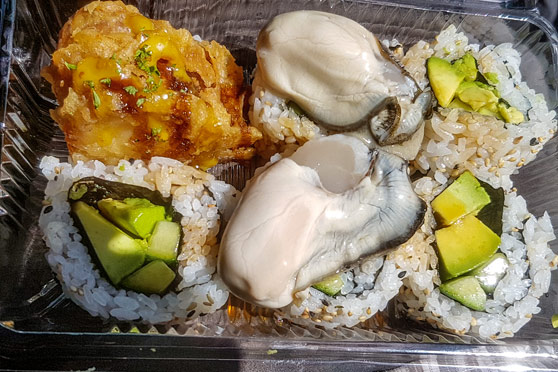
Another option is to buy vegetarian option sushi and top it with a fresh piece of fish or shellfish caught by you – pimping the sushi!
Addicted to smoking
A portable smoker is very useful and a practical way of cooking food on the run. I love smoking a whole split fish, as you get to eat the whole fish and snack on the pieces of succulent flesh between the bones. However, you can actually use the smoker to cook up a whole meal – vegetables, mushrooms, seaweeds and meats can all be added to the smoker along with the fish. Most seaweeds smoke up well, too.
Better still, a compact smoker provides a space-saving measure, as having one means you won’t need to take a gas cooker.
Plan Z
If all else fails and you have had an unsuccessful day’s fishing, a trip to the fish and chip shop may be in order. However, by keeping a ‘fish-and-chip survival kit’ in the car, it’s possible to save yourself a bit of money. I suggest carrying a bottle of tomato and/or chilli sauce, a few lemons and cans of drink in a small chilly-bin, along with basic seasonings – the extras can really add up.
And, to remain true to my modus operandi, I often forage some greens to balance out the meal. The native beach spinach is a favourite of mine, as its crunchy texture and flavour goes well with fish and chips.
Creating your own snacks on the run is particularly satisfying, because in addition to the just-caught seafood generally being fresher than store-bought food, it also tastes better and can cost less. Happy summer snacking!
|
|
This article is reproduced with permission of |

Fishing Reports Visit Reports
Tauranga Fishing Report - 28/05/26
Tarakihi on the bite Trips are few and far between at this time of year,... Read More >
Canterbury Fishing Report - 28/05/26
Fresh and salt turning it on! It is not very often I get to say... Read More >
Bay of Islands Fishing Report - 28/05/26
Lures paying dividends We finally had a break in the SE winds that have been... Read More >
Manukau/West Coast Fishing Report - 28/05/26
Snapper and gurnard in the harbour The weather has finally taken a turn for the... Read More >



Major Bites
Minor Bites
Major Bites
Minor Bites
Comments