
Preparing for Surfcasting Success

Like with most forms of fishing, preparation and persistence are the keys to surfcasting successfully. Gary Kemsley explains…
Surfcasting is a wonderful sport you can play any way you like. Just go to the beach with a rod, reel and bait and you are able to try for a fish. Nothing is certain and you may get lucky. But another approach is to research your fishing area, find a good spot and learn everything you can about it. That could mean driving there and having a good look at it at all stages of the tide to see where and when the fish are most likely to turn up. Watch other surfcasters and see how they get on. Is there a certain time in the tide when they are catching?
Check out the maps
Another great thing to do before heading to a new location is to search websites that offer more information on your chosen area. Check out sites like WAMS (Walking Access Maps), which are great for getting a feel for an area. WAMS will give you topographic and road maps, as well as satellite photography that will show you where the hot spots may be.
Google Maps will also offer maps of your area but without detail like access points. Study them carefully and look for permanent features in your chosen area that may attract fish, such as weedbeds and rocks in or close to the surf. You should also look for river mouths, creeks and estuaries that may attract fish.
Simple things like a corner in your beach may indicate a feeding area. WAMS will show you all the public access points to the water. Check the tide times for your visit and try to get there before low tide. With the tide down, you will get a good overview of the water and you will be able to study the waves to sort out where you will fish. High breaking waves will indicate shallows like sandbars and dark coloured water will indicate where there is some depth. Get these two things together and you may have found a good starting point, as long as you can cast to the deeper water next to the sandbar.
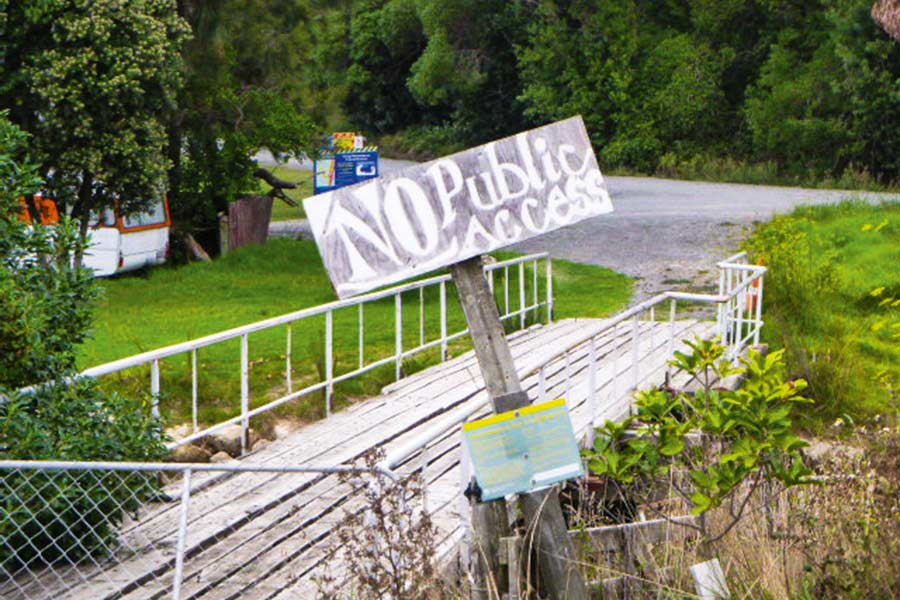
Getting to a fishing spot isn't always easy and it's important to respect private land.
Take notes
Now you are ready to wander down there and armed with some info, you may be successful – maybe not the first visit but it is all learning. When you get home, take a note of where you fished, when you fished during the tide, as well as the weather and water conditions. Draw a map of the beach, noting where you fished and all the relevant info gained from your visit. Note your catch or lack of it and what baits were successful. I assure you that you will never regret keeping a diary. You will end up referring to it often during your fishing career. It will put you in the right areas for years to come. Fish are traditionalists, turning up at the same places year after year for a number of reasons such as spawning, intercepting other species they feed on, migrations routes and annual influxes of food at certain spots, such as paddle crabs on ocean beaches.
A single rock within casting distance of shore can be a beacon attracting fish small and large alike.
My wife and I were scouting Ocean Beach south of Cape Kidnappers one winter day after a particularly savage southerly swell had ripped along the beach. We drove the sandy shore looking for inspiration. It had all changed from out last visit the previous week. First, a deep channel fifty metres out which was backed by a breaking sandbar attracted our casts. I used a floating leader which kept the bait a metre off the seabed with a whole pilchard as bait. I cast to the sandbar side of the channel probably about 80 metres out. Five minutes later, the rod went over and I landed a good fat kahawai over two kilos.
The next spot we stopped at was a flat section of beach where the waves were small over a slightly deeper patch of water fifty metres out. In the deeper patch was a large rock, probably ten metres long and half that wide. The water depth was probably two metres to the top of the rock. We find blue moki in areas like this, so I changed our rigs from floating baits to bottom baits and changed the pilchard approach to delectable crayfish tail baits.
I cast close to the visible rock and imagined the bait settling down a metre or two away. In two minutes, the rod went over and I quickly brought in another kahawai. It wasn’t what I expected but it was proof that the rock was offering a haven for larger fish. I sorted out another bait for my rod and one for Sue’s. Out they went and it wasn’t long before I was playing a stubborn, fat bellied moki. We took some photos as the wind increased. Sue’s rod went over next and she too had the fun of catching a 2.5kg moki. That was it as we were blown off the beach, but I noted the spot, bait, conditions and catch in my diary. In other areas, that sort of spot could have produced snapper, banded wrasse or other rock happy species. Kingfish too will use rocks as way points on their daily wanderings.
Rigging up
Your rigs can be simple. A pulley rig (Gary’s Long Cast Rig or Extreme Distance Rig) is ideal when you want to hit spots over 100 metres out. Most shops have them or something similar. For the closer rock spots, you can use a ledger rig with one or two hooks.
Try a variety of bait such as crabs, crayfish prawns or shellfish if you suspect moki are there.
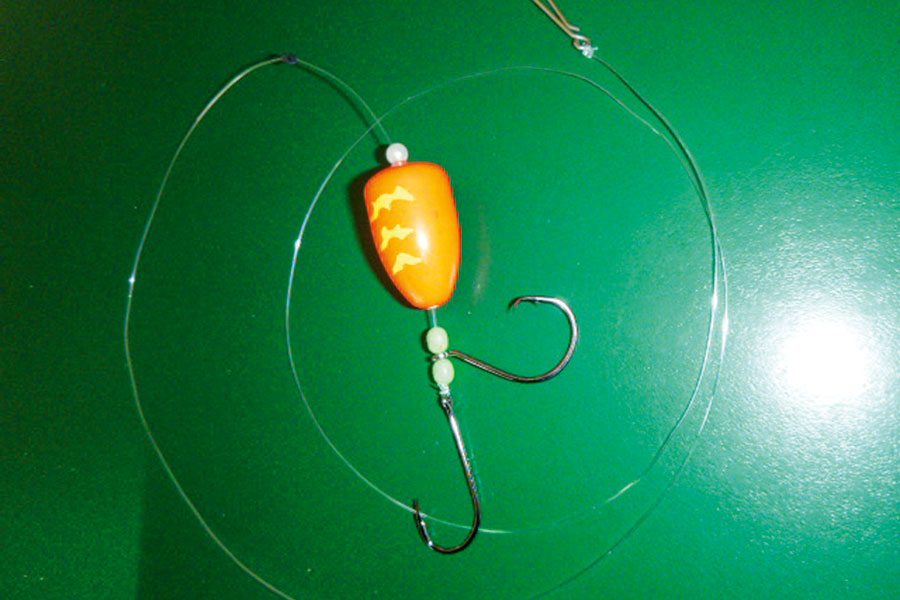
A large floating rig for pilchard baits.
Flying into Napier Airport one day when the sea was flat calm and crystal clear gave me a great opportunity to have a good look down the coast from Whirinaki through to Gill Road. These are popular waters for surfcasters, but I wondered how many were aware of the rocks I was seeing as we came down the coast. Off Gill Road there were two big house sized rocks that appeared to be within casting range. It answered a long asked question about the blue moki that showed up there every year. From shore you would never have suspected their existence. Nowadays, Gill Road is closer to the top of my local spots list.
On a big beach, look for the rips where water is being pulled from the beach out to sea. This can be subtle sometimes and as obvious as a thundering river mouth other days. These rips deliver a lot of food out to waiting fish in the first deeper waters past the inshore break. I love such places as this for gurnard fishing.
Look for the obvious spots like deep water close to shore, edges where channels run parallel to the beach (fish highways) and really any other features that seem out of place on your beach. Try them all in different tides and conditions, with a number of different rigs and baits. You will end up cracking the code eventually. Put everything in your diary and refer to your notes often.
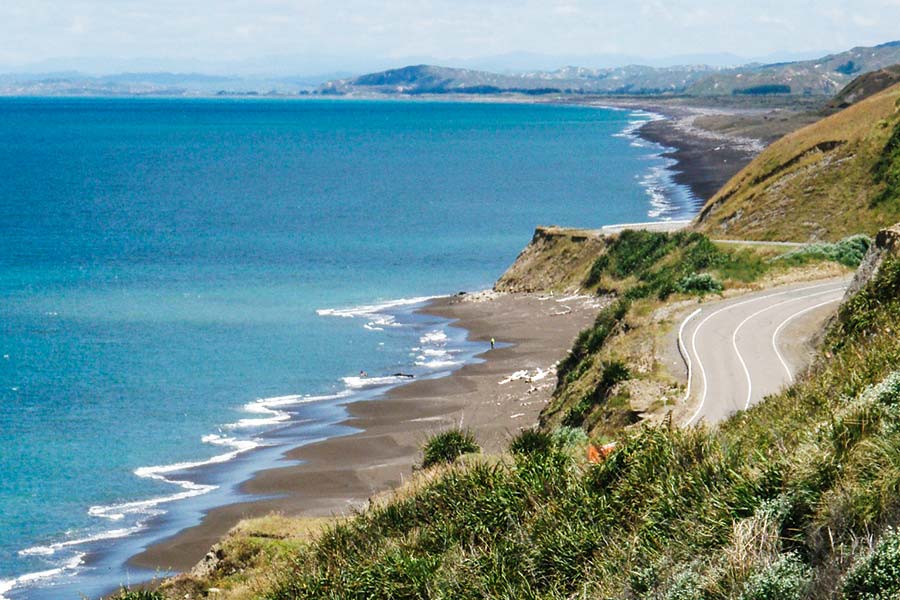
Finding a high point to survey your water from will help with the detection of holes, rocks, rips etc.
There is nothing to this surfcasting game – you just need to be thorough, persistent, prepared and patient.

May 2021 - Gary Kemsley
New Zealand Fishing News Magazine.
Copyright: NZ Fishing Media Ltd.
Re-publishing elsewhere is prohibited
Fishing Reports Visit Reports
Outer Hauraki Gulf Fishing Report 17/09/26
Spring wind the handbrake. Spring is starting to make its presence felt in the outer... Read More >
Top of the South Fishing Report - 17/09/26
Early snapper in Tasman Bay. Well, spring is finally here, and the days are getting... Read More >
Bream Bay Fishing Report - 17/09/26
Good snapper catches reported. After Tangaroa turned off the fish tap for a month or... Read More >
Bay of Islands Fishing Report - 17/09/26
Pacific bluefin tuna for the lucky few. The last fortnight has seen more fishable days... Read More >


Friday 25 September 2026
Major Bites
 - -
- - Minor Bites
 - -
- - Saturday 26 September 2026
Major Bites
- - Minor Bites
- -
Comments