
Nymphing for trout
With another winter season almost upon us I thought it would be a good idea to remind you of the cardinal rule of winter fishing:
Fishing at the right depth
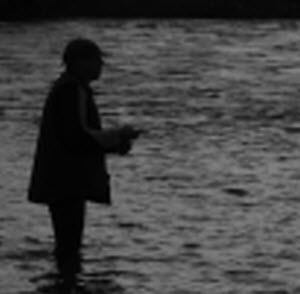 Generally speaking, winter is the time of the year when most adult trout are moving to their spawning grounds in the headwaters. Once there, they are out of our reach for the next few months. However, in the lower reaches of most prominent rivers you can intercept these trout in prime condition during their annual migration.
In the lake districts of the North Island, winter fishing is an important part of the annual trout fishing cycle. There, significant stretches of feeder streams remain open to fly-fishing all the year round. The best known is the Tongariro River.
The evolution of the weighted nymph
How things have changed! When I switched to nymphing this famous river in the early 1980s, the flies everyone was using seemed light in comparison to those we frequently cast today. Since those days the typical Tongariro bomb has gradually become heavier. This adding of weight has been an evolutionary process that has closely followed the improvements in rod design and casting skills.
Weight is not the only answer
More weight does not automatically equate with more fish – on the contrary! I have seen moderately weighted nymphs out-fish bombs too many times to advocate hard-and-fast rules for this river. The old saying ‘horses for courses’ also applies to fly-fishing on the Tongariro.
Why then use heavily weighted flies or high-density lines? The answer is dead simple: when the water is deep and the current is fast, only weight will get a fly down into the strike zone quickly enough to do much good.
Let me give you a graphic example. A few seasons ago several of our group fished the Breakaway Pool at first light. Mike started in front and should have had the best shot at every dumb trout in the pool. As he worked his way up the pool he carefully fished all the known lies without a single strike.
Following him in the line-up was Martin. He too knew how to fish this pool. About halfway he hooked a fish, landed it, and almost straight away was into another. To cut a rather long – and for us onlookers frustrating – story short, he milked nine trout from that single lie, the same lie Mike had unsuccessfully fished through only minutes before.
When it was my turn to move into the bucket, it was empty. Martin had cleaned it out. When I checked with them at morning tea break, I found that both had used a small Globug but Martin’s second nymph was a lot heavier. Obviously, Mike had fished right over the top of this pod of fish while Martin’s fly drifted at the right depth.
Let me continue this story to show you lesson number two.
As you can imagine, Mike did not take this whitewash lying down. That night at the fly-tying vise, he manufactured some truly lethal bombs. Martin also replenished his depleted arsenal with equally intimidating depth charges. Nobody said much about the next day but to me it was clear that a very competitive situation was in the making.
By then it was getting late so we tackled-up for the morning and hit the sack. Since I was last up I did a little espionage and had a close look at their rigs. As I had suspected, both leaders sported maximum lead.
Since I was obviously going to be dragged into this contest I had to prepare my own strategy for the morning. Personally, I don’t go in for fishing competitions but in situations like this, I don’t relish being Tail End Charlie either.
I had a strong intuition that we would end up at the Breakaway before daybreak, starting at the tail at first light. This is what I figured out.
The tail of the Breakaway is shallow and very bouldery – precisely the setting that eats over-weighted rigs. So before I retired, I changed to a much lighter nymph to which I tethered my unweighted champagne-coloured Globug with a longish dropper. This would allow me to thoroughly cover all the lies in the tail without snagging between boulders.
The alarm went off at an ungodly hour, feet hit the deck a minute after, and then everything unfolded as planned. At the Breakaway it was still night, and judging by the amount of ice on the puddles, very cold. Never mind – the important thing was that we had got there first. After a long wait on a hard rock the night slowly faded. My two friends were getting restless.
We started with barely enough light to make out the indicators. The two contestants went first and second. I needed plenty of room to fan my casts, so I purposely stayed back and watched.
After a few casts Martin leaned back, his bent rod outlined against the pale light. I thought it was all on again but seconds later a muffled curse told me that it was a false alarm. Martin had collected the first of many snags. Impatiently, he yanked the line until the whole rig broke at the indicator. Within minutes Mike also retired to the bank to replace his gear by torchlight.
That gave me a chance to get into the water. Two casts later my indicator vanished and I was into my first fish, then into another, and another before my friends rejoined me.
Alas, their troubles were only just beginning since both had re-rigged with the same weight. In quick succession they snagged more boulders, and now very strung-out, lost several more sets of flies.
I carried on sweeping the broad tail with gusto. I caught fish on the dead drift and on the slow swing. When I got into deeper water I exchanged my light nymph for a heavier one and continued catching fish – fish that should have fallen to my friends had they not spent so much time on dry land.
I am only telling you about this little episode to show that, when fishing any sort of river, you constantly need to analyse the water conditions in front of you. No pool or run is the same. What was a hot lie last month or last year should not be taken for granted. This is particularly so when you are fishing for spawning-run trout, which have lost interest in food even before they enter their native river. There is little point in doggedly sticking to a standard set-up if changing river conditions call for adaptation and flexibility.
The dos and don’ts of going deep
Getting to the bottom with any weighted set-up is easier if you can eliminate as many drag producing elements as possible.
The Problems of sinking a wet line or a nymph
Take a HI-DI wet line as an example. You cast 90 degrees across the current. Then you wait until the line has been swept down, say, 45-degrees before you start the swing/retrieve. No strike, not even a bump on the bottom.
To the those in the know this is not a good sign. It says that if your fly has not got down deep enough to be troubled by a snag, it probably did not reach bottom-hugging fish either.
What went wrong? If you repeated the experiment you would notice that, from the second your line landed, it was under tension as the current carried it downstream. In other words it was planing near the surface the whole time you thought it was sinking. When you started the retrieve the line was dragged to even closer to the surface.
This would not have happened if you had fed (mended) slack line between the line landing and the retrieve. The line would have continued to sink until you re-established tension at the start of the swing.
One final thing: As you concentrate on rapidly feeding out slack line, make sure you are not trapping loose loops in dead water right in front of you. Instead only feed enough line into the fast water that can be taken up by the drift without prematurely tensioning the sinking line. This is best accomplished with a high rod hold that allows you to span across the slack water.
With weighted nymphs you need to be even more careful. In this instance your nymph ought to sink while your line and indicator remains on the surface; an incompatible situation because the current speed inside the vertical water column is fastest at the top and gets slower and slower until, near the bouldery bottom, it hardly moves at all.
Imagine you have done a good quartering upstream cast that ends with the leader neatly stretched out straight. You now watch the line coming down towards you in great big slack coils. Your indicator shows no sign of drag. According to popular theory you are having a drag-free drift and your bomb has sunk all the way to the bottom.
Not so. The problem lies with the tensioned leader. Because it is attached to the floating indicator which rides the fast surface current the nymph struggles to sink deep. Only a heavier nymph and/or a slack leader will overcome some of this disparity in current speed within the water column.
Another trick that aids sinking is to construct the main leader from the thinnest diameter nylon of your chosen breaking strain. This significantly reduces leader drag as your nymph drops towards the bottom. For this reason do not use a tapered leader as the thicker rear portion drags badly.
What about a weighted tapered leader? The trouble with that is it sinks best at the wrong end. It could also drag the indicator down while, at the thinner end, it lacks the density to assist the nymph to sink.
Another significant factor in getting your gear to the bottom is the construction of your weighted nymph. Or if you are using a tandem rig their combined weight/volume ratio is what’s important. This is what to watch out for: an over-dressed nymph will sink slower than a slim one if both weigh the same.
I purposely do not recommend lengthening your leader in an attempt to achieve more depth. The disadvantages outweigh the gains. In my experience the longer the leader the more it drags and the more lethal it is to cast with weighted nymphs.
Last but by no means least, if – on top of all the underwater problems –you also get caught with a dragging floating line, you are really putting the brakes on your nymph’s sink rate.
Summary
I fear this is too much to retain in one bite so let’s condense how best to get our fly to the bottom.
Wetfly: With a wet line the aim is to sink line, leader and fly down to almost a two-dimensional level. Use an ultra-fast sinking line, a short leader and a sparsely dressed fly. Alternatively, incorporate lead wire along the shank or fit lead eyes.
Feed genuine slack during the sink period. (This is between the line landing and the beginning of the retrieve.)
Avoid prematurely tensioning any part of the line during the sink period.
Nymph: To sink a nymph while your line and indicator remains on the surface is a bit more complicated because you are always operating in a variable three-dimensional environment.
• Avoid surface line drag through frequent mending.
• Use thin leader nylon to offer the least resistance to the variable current speeds between top and bottom.
• Fish with at least one high-density nymph
• Keep unweighted nymphs small
• Create slack in your leader
What more can I say, except that the rest is up to you.
Good winter fishing.
A Blast From The Past!
|
May 1998 - by Herb Spannagl |

Fishing Reports Visit Reports
Raglan Fishing Report - 12/11/26
Big spring snapper. With the more settled weather over the last couple of weeks there’s... Read More >
Mercury Bay Fishing Report - 12/11/26
Snapper hit and miss. Most reports have been telling us it’s becoming more difficult to... Read More >
Northland Fishing Report - 12/11/26
The switch has been flicked on! Call it what you want, El Niño, global warming,... Read More >
Tauranga Fishing Report - 12/11/26
Snapper and kahawai in close. Again, we start on a positive note, with some nice... Read More >


Monday 16 November 2026
Major Bites
 -
 -
Minor Bites
 - -
Tuesday 17 November 2026
Major Bites
- - Minor Bites
- -
Comments