
Micro-jigging techniques and tips
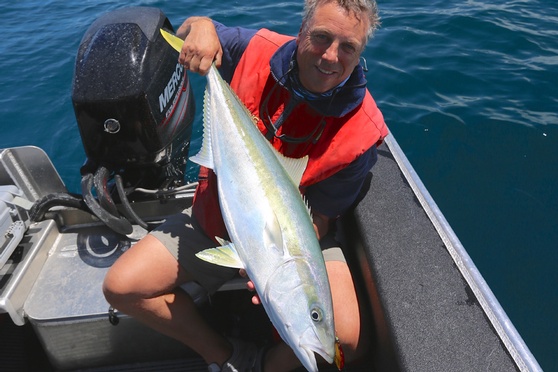
A new lure fishing craze seems to sweep the sport fishing scene every couple of years: soft-plastics, slow-jigs, inchiku jigs, kabura jigs, the list goes on. This summer the craze was micro-jigging reports John Eichelsheim.
 Micro-jigging isn’t really new; like so many innovative fishing techniques that eventually find their way to New Zealand it was developed in Asia, where it burst on the scene several years ago. It’s currently big news in Europe, particularly amongst anglers targeting a variety of Mediterranean species, and it has arrived in New Zealand already fully formed after years of development overseas.
Micro-jigging is an attractive and very effective vertical fishing style using small, fish-shaped metal jigs to target a variety of marine fish species. In many respects it’s a modern take on the snapper jigging that was in vogue 30-odd years ago, but which gradually fell out of fashion with the passage of time.
The biggest difference between then and now is the tackle: micro-jigging gear is lightweight and high-tech compared to the seven-foot hollow fibreglass rods, nylon monofilament lines and overhead jigging reels we used to jig for snapper in the late 1980s and early 1990s. Today’s lures, armed with sticky-sharp assist-style hooks rather than the rear-rigged trebles of old, are generally smaller and prettier than the 60-100g Lethal or Grim Reaper jig that was the business ‘back in the day’.
In New Zealand micro-jigging is very, very effective on schooling snapper and other species. A whole range of specialised tackle has grown up around micro-jigging: specially shaped and coloured metal jigs between 10g and 120g; small, lightweight spinning or overhead reels; cored braided lines that sink rather than float; and specially designed rods with specific tapers and actions. Micro-jigging rods are made from super-lightweight graphite, tend to be 2m or less in length with light tips, fairly parabolic actions and longer butt sections than, say, soft-bait rods, and most have braid-friendly micro-guides.
Some micro-jigging enthusiasts consider jigs over 60g too heavy to qualify as ‘micro’. Fishing with 60-120g jigs is usually undertaken using slightly heavier tackle, so is perhaps better described as ‘light jigging’. Compared to the gear used to jig for snapper in the 1980s and 1990s though, all modern tackle is super-lightweight, compact and brilliantly sensitive.
For me it’s the ultra-light end of the jigging spectrum that’s the most fun, but in certain conditions heavier jigs are required to get down to the fish, so carrying jigging outfits to suit various jig weights can be an advantage.
The micro-jigging system
 The rod: usually 2m in length or less, made from graphite with small-diameter guides designed to minimise instances of braid looping around them as the rod tip is lowered to allow the jig to flutter. The reel seat is set higher up the rod than a soft-bait rod so that the relatively long rod butt tucks nicely under the forearm. Rods tend to be flexible and fairly parabolic under load, with sensitive tip sections that work to impart action to the lure. It’s important to match rods with line and jig weights: line classes, usually given as a PE rating, and sometimes maximum jig weights, are printed somewhere on the blank. A typical light jigging rod may be rated for PE 0.5 to 1.5 (5 to 15lb/2-7kg) breaking-strain line suitable for jigs up to 40-60g; a heavier micro-jigging/light jigging outfit might be PE 1.5 to 3 (15-30lb/7-13kg) for jig weights up to 120g or more.
Rods are configured for either spinning or overhead reels, but in the lighter classes spinning outfits are more popular as spinning reels allow the jig to descend with less resistance from the line coming off the spool. A jig’s built-in action can only be properly expressed when free-falling.
Some boutique-brand Asian-made rods, particularly those out of Japan, are spectacularly expensive, but most mainstream manufacturers are now offering micro-jigging rods at more realistic prices; $300 should buy something decent.
THE REEL: either spinning or overhead, with spinning reels the more popular option. For most micro-jigging applications, braid-ready spinning reels in 2500, 3000 and 3500 sizes are perfect. If you prefer overhead reels, look for good quality baitcasters with 5:1 retrieve ratios or higher. Line capacity should be around 200m of the appropriate breaking-strain braided line, and a good drag system is mandatory.
THE LINE: fused or braided gel-spun polyethylene (GSP/PE) line to suit the rod’s specifications. For a PE1.5-3.0 rated rod, 20lb/10kg braid is a typical choice. Lighter braid is generally thinner in diameter, so jigs work better as they fall. However, there is considerable variation in diameter between lines, with the differences not always relating to breaking strain. Some of the thinnest, best quality braids are also the strongest.
Some micro-jiggers prefer lines marked by colour changes at 10m intervals. That way they can count down the colours to present jigs at precisely the depth fish are showing up on the sounder. More guesswork is involved if you use monochrome lines, but an effective alternative tactic involves working the jig up from the bottom until fish marked on the sounder’s screen are contacted.
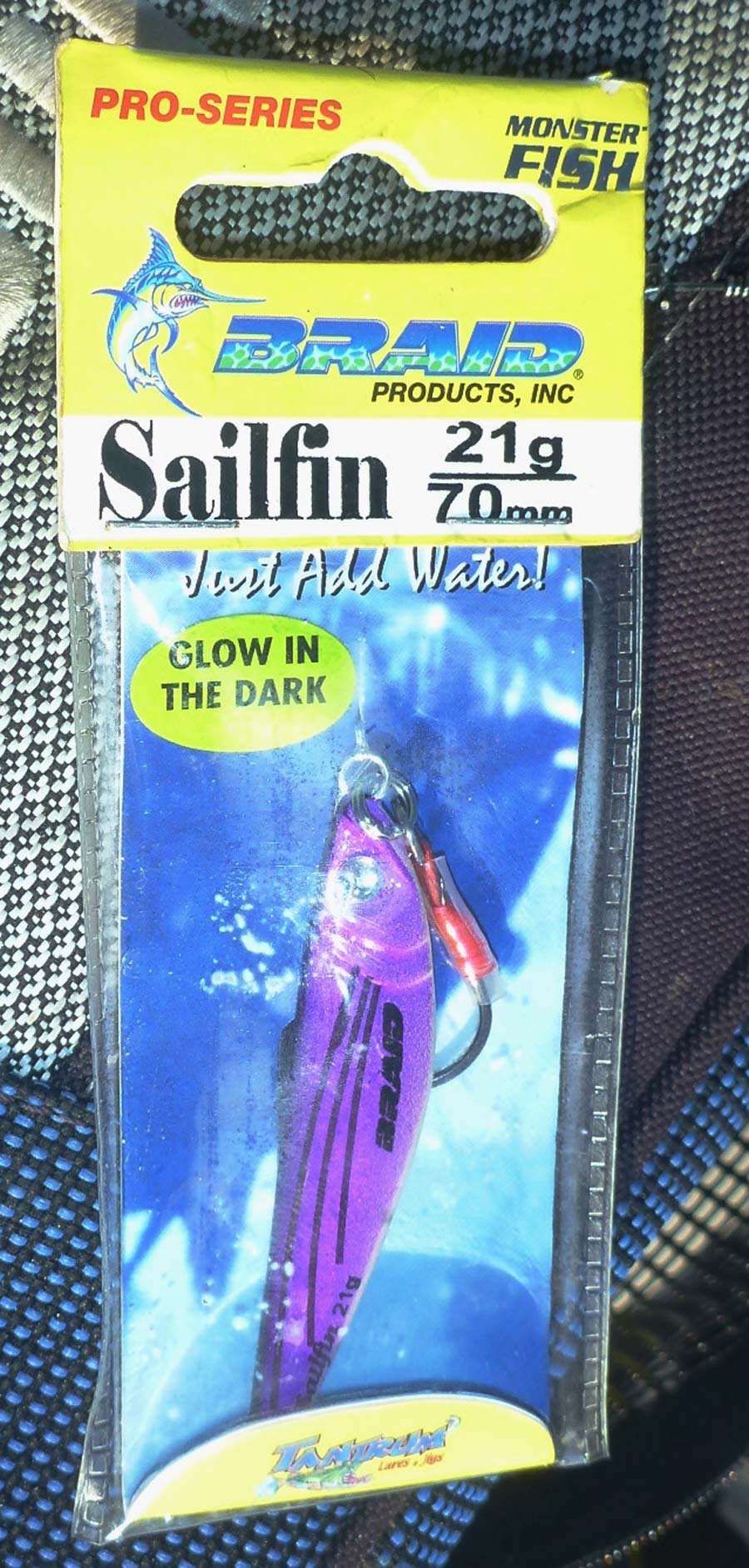
THE JIG: micro-jigs come in a huge variety of patterns, colours, weights and shapes. Most are designed to flutter or move erratically on the descent; some are equally effective on the retrieve. Unlike traditional snapper jigs, which had a treble or single hook attached to the lure’s tail, modern micro-jigs have one or more assist hooks looped around a solid ring and are attached to the top of the lure with a split-ring. Some anglers hang a treble or another assist hook from the tail of the lure as well. For most of my fishing, jigs of between 20g and 60g cover the bases.
Using micro-jigs
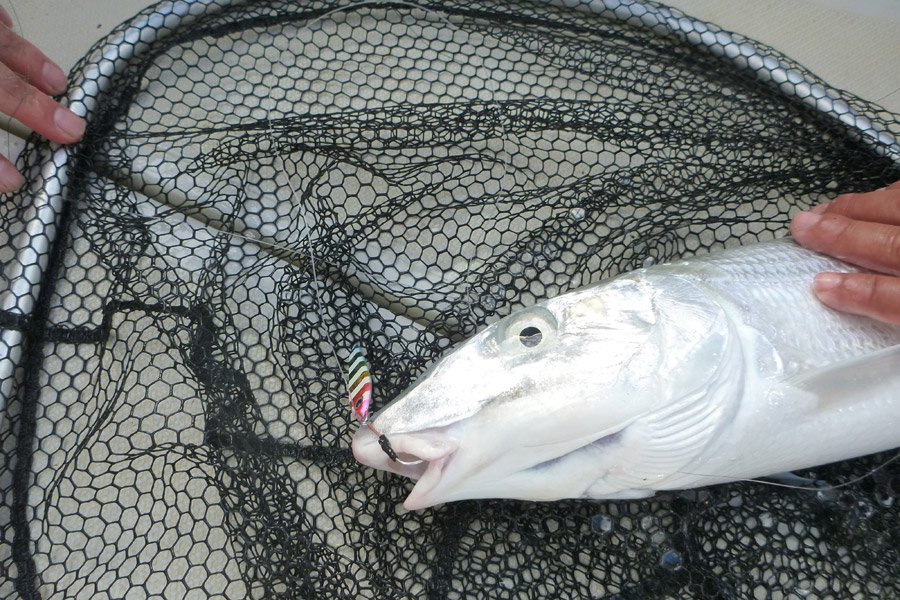 I still have plenty to learn about jigging styles and fishing various jig patterns correctly, but in my experience probably the most important thing is to select the right jig weight for the water depth and wind/tide conditions on the day. Using a jig that’s too light makes it difficult to reach the bottom before the line angle becomes too acute. Like all forms of jigging, micro-jigging works best when the lure is fished in the vertical plane. As soon as the line angle gets close to 45°, retrieve the jig and start again.
That’s not to say micro-jigs don’t work in the horizontal plane: some patterns are especially effective when cast and retrieved. In ‘shore jigging’, the jig is cast from the shore, allowed to sink and then worked back using the rod and reel to make the lure hop, jerk and flutter during the retrieve. The same technique can be used to fish the jig near the surface or in mid-water from a boat, though longer rods are usual for this style of fishing.
With practice I’ve become better at judging which jig to use in the prevailing conditions. Small, light jigs and/or jigs that flutter/fall more slowly are the way to go in shallow water, while heavier, tail-weighted jigs get down quicker in deep water and stay there longer. I soon learned to work various jig styles differently: slim, tail-weighted jigs work best with short, sharp lifts of the rod and mechanical-style retrieves; wider, more leaf-shaped jigs work better with sweeping lifts of the rod, allowing a fluttering descent.
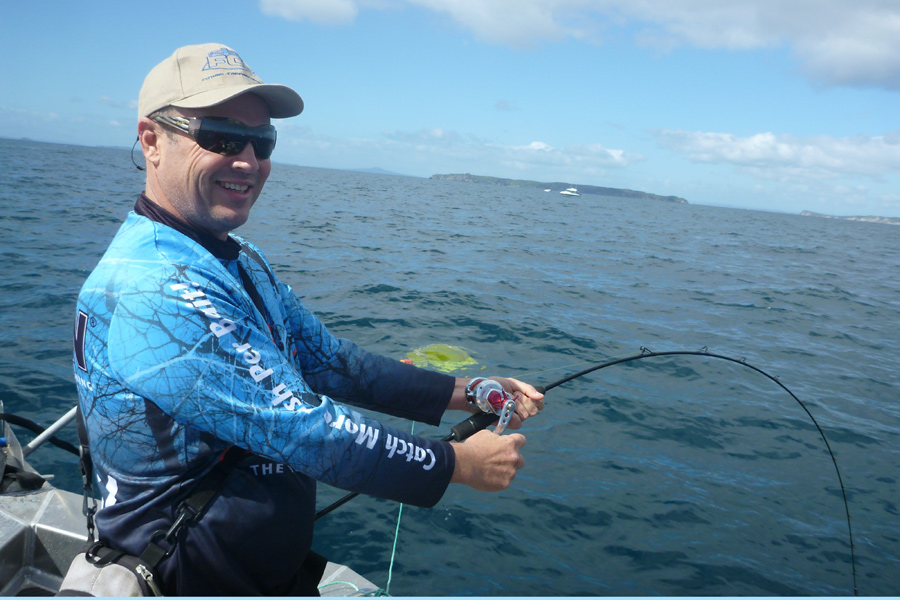 It pays to experiment with jig types until you hit upon something that’s catching.
Micro-jigging is usually practised from a drifting boat. The lure is often pitched up ahead of the boat and allowed to flutter to the bottom. Watch the line carefully on the descent for any acceleration or hesitation that might indicate a bite, and be prepared to close the bail arm and strike at any time.
Once the jig touches the sea floor, use the rod to work the jig near the bottom, or use a mechanical-style retrieve to bring it back up through the water column. Often snapper and other fish hold up off the sea floor, and they will also move off the bottom to follow a lure for some distance before biting. Sometimes they’ll bite a lure that’s lying motionless on the bottom, so try that too.
Fish that show in mid-water on the fish-finder can also be targeted with micro-jigs worked right in front of their noses. Either work up from the bottom until you get a bite or feel confident you’re fishing at the right depth, or count down to the right depth using jigging braid with colour changes every 10m.
Vary the retrieve speed, the height and frequency of rod lifts, and be sure to monitor your line whenever the lure is free-falling – most bites come on the drop and most hook-ups come as you lift the rod at the end of a drop when a fish has already bitten the lure as it falls. Bites on stationary jigs are quite common too, so don’t be afraid to pause once in a while.
|
|

Fishing Reports Visit Reports
Outer Hauraki Gulf Fishing Report 17/09/26
Spring wind the handbrake. Spring is starting to make its presence felt in the outer... Read More >
Top of the South Fishing Report - 17/09/26
Early snapper in Tasman Bay. Well, spring is finally here, and the days are getting... Read More >
Bream Bay Fishing Report - 17/09/26
Good snapper catches reported. After Tangaroa turned off the fish tap for a month or... Read More >
Bay of Islands Fishing Report - 17/09/26
Pacific bluefin tuna for the lucky few. The last fortnight has seen more fishable days... Read More >


Friday 25 September 2026
Major Bites
 - -
- - Minor Bites
 - -
- - Saturday 26 September 2026
Major Bites
- - Minor Bites
- -
Comments