
Micro jigging basics
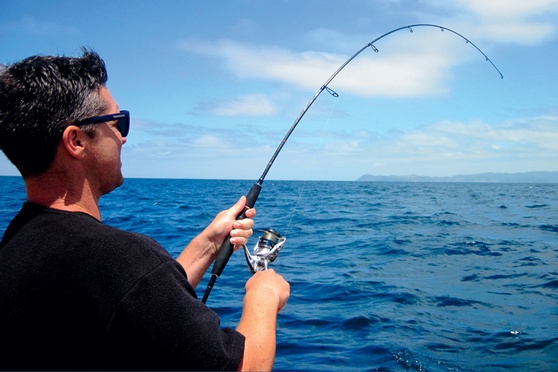
I have to admit my hand was forced when it came to giving micro-jigging a serious shot: before heading to Waipu Cove for the annual Christmas holiday, Shimano NZ handed me five ‘inshore’ Backbone Elite rods to fish, two of which were Colt Sniper ‘micro-jig’ outfits – one spin, the other overhead.
The fishing at the beach had been patchy leading up to Christmas, with some great action interspersed with average days. So, feeling a little under pressure, I re-read some of our back-issues where the likes of Mark Kitteridge, Paul Senior and John Eichelsheim had written features offering plenty of advice on micro-jigging, before leaving.
Then, appropriately armed with a selection of suitable Shimano Colt Sniper jigs in various colours and weights, along with a number from my own collection, daughter Miah and I set out for what was to be the first of a number of Backbone Elite trial sessions.
The red-gold colour combination has always worked well for me, so a 55g Colt Sniper in those colours was tied to the first outfit – an overhead rod with a Shimano Curado 200 baitcaster reel attached.
Our first port of call was over some relatively deep foul off Bream Head which comes up to 43 metres – it is marked on the chart. Sticking with the tried and true, Miah and I fished soft-baits in order to get a few runs on the board. This saw several nice 40cm ‘pannies’ ending up on ice before the action slowed over the low tide, so we headed to another slightly deeper pin.
Upon arrival, with good snapper sign on the sounder, it seemed like the ideal time to give micro-jigging a shot, so the Colt Sniper outfit was brought out and the jig dropped to the bottom.
At this point the drogue had yet to fully deploy, so we were drifting along at around 1.5 knots, the line streaming behind us. No sooner had I engaged the reel and begun the slow ‘mechanical-jigging’ action suggested in several of the articles, when the line came up tight and I was on.
For the first few moments, while winding the last of the bow out of the line, my call was another pannie – until the fish woke up and braid fairly sizzled off the spool. It took some time to turn the fish, and all the while the distinctive beat of a big snapper tail was transferred up the line.
Purpose-designed micro-jig rods are built with a relatively parabolic action with plenty of lifting power through the butt section. I needed all of that lift as I worked the fish up from 55 metres and finally into the net. From hook-up to landing had probably taken around 10 minutes.
In addition to enjoying a great introduction to micro-jigging – an 8kg fish on the first drop – we had our ‘smoker’ for the family’s Christmas dinner table.

Over the holidays and beyond, I went on the catch a number of double-figure fish on both the overhead and spin slow-jig combos. The following are a few lessons I learned along the way…
Overhead vs spin
Regardless of the depth (we fished from 12 metres down to 60-plus metres), I found the majority of hits occurred on the drop, with the overhead rod enabling better lure control during the descent and, in turn, a higher rate of successful hook-ups.
When it came to fighting the fish, I preferred the spin outfit, as it was less tiring to use. I could jam the butt on my hip or ‘under the verandah’ and take the weight of a hard-running fish far better than when using the overhead version stuck under my arm.
The right rod for the job
I have fished micro-jigs on my soft-bait outfit and caught fish, but found these rods relatively cumbersome, especially when using the slowed-down mechanical jigging style the experts recommend.
So if serious about giving this fun and effective way of fishing a shot, invest in the right gear for the job: a rod under two-metres in length with a parabolic action is ideal. In doing so, you’ll also discover another enjoyable micro-jigging aspect: as everything is scaled downwards in size, and with the rods being manufactured from graphite, specialist combos can be fished for long periods without tiring the angler.
Also, my jet-ski/kayak fishing buddies tell me this style of rod is particularly well suited to their craft when deploying soft-baits and inchuku jigs, as well as micro-jigs.
What lure?
I think of micro-jigs as being anything from 60g down to 10-12g. Even smaller versions are ideal for catching the likes of ‘marlin candy’ – koheru – which can be very picky at times.
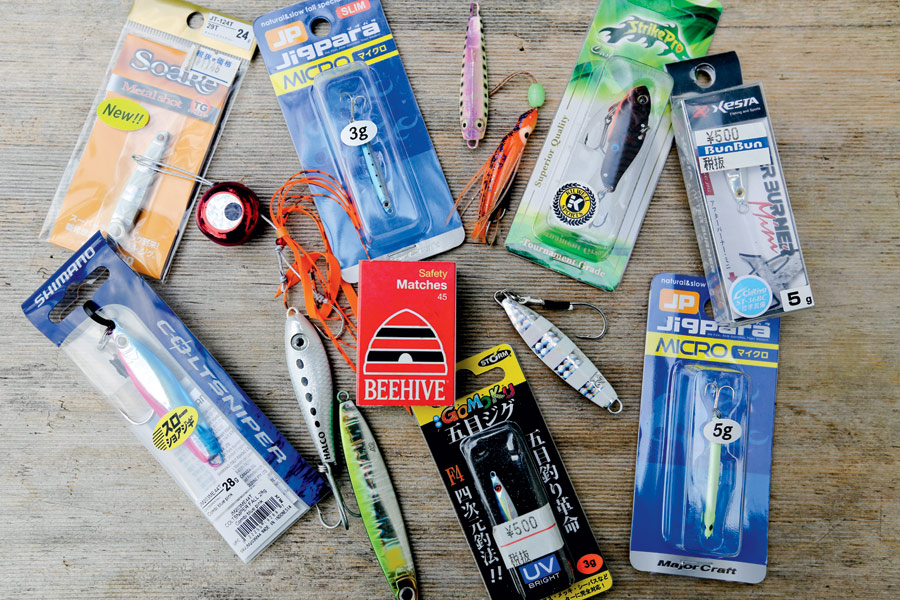
There is a myriad of lures out there that fit such criteria in a huge range of colour combinations and shapes. In general, though, they have one, sometimes two, assist hooks attached to the top of the lure. (At Christmas I was getting frustrated at my inability to hook fish on the retrieve, so added a second hook to the bottom of the lure in traditional jig style. This quickly upped my hook-up rate.)
Colt Sniper jigs, for example, come in two styles: tail-weighted for deeper water action and another option designed to flutter on descent. Both styles proved successful, but whichever lure chosen, make sure the hooks and rings are robust.
Personally, I found the lighter the lure I used in shallow water the better my success. Another tactic I used involved spreading a ‘bait additive’ over the lure every second or third drop to enhance its attractiveness – hard to beat action and smell!
What weight trace?
Heavier trace is likely to inhibit the action of light micro-jigs, so I used Shimano Ocea 25lb fluorocarbon leader when fishing deep, but dropping down to 15lb Black Magic leader in 20 metres of water or less. While I can’t prove the theory, there is probably a case for a more supple trace when fishing lighter jigs to get the best action out of them.
I also fished a two- or three-metre trace, which provided a bit of ‘give’, especially when fishing deeper and where the fights were longer.
What action works best?
You will get plenty of hits as the lure descends – some micro-jigs are designed specifically to ‘flutter’ on the descent. So be ready, especially where the sounder shows fish in mid-water, as is often the case during the spawning season. Kingfish, in particular, are attracted to micro-jigs as they descend through the water column.
Once the lure is on the bottom a ‘slow-mo’ version of mechanical jigging has proved fruitful for me – five or six lifts of the rod with accompanying winds before thumbing the lure to the bottom again and starting over once more. Keep in mind, too, that the fish are not always tucked tight on the bottom, so it can pay to work your jig further towards the surface every now and then.
Micro-jigs are designed to be fished reasonably vertically, so once the line assumes a 45-degree angle, retrieve the lure and redeploy.
We have a MotorGuide electric motor on our Stabicraft project boat. When we encounter fish, we’re able to hit the ‘anchor’ button, which allows us to stay over the action and fish vertically for longer.
Having said that, I did hook one nice fish with the rod left in the holder and the lure streaming well behind the boat in the tidal flow. In this case the lift and sway of the boat gave the lure enough action to entice a strike.
MICRO-JIGGING is a fun way to catch fish and is also now firmly ensconced in my snapper-fishing armoury. The tackle is light, as an angler you are actively working to attract a bite, and there is nothing quite like that feeling upon raising the rod and coming up solid on a big red!
|
|

Fishing Reports Visit Reports
Outer Hauraki Gulf Fishing Report 17/09/26
Spring wind the handbrake. Spring is starting to make its presence felt in the outer... Read More >
Top of the South Fishing Report - 17/09/26
Early snapper in Tasman Bay. Well, spring is finally here, and the days are getting... Read More >
Bream Bay Fishing Report - 17/09/26
Good snapper catches reported. After Tangaroa turned off the fish tap for a month or... Read More >
Bay of Islands Fishing Report - 17/09/26
Pacific bluefin tuna for the lucky few. The last fortnight has seen more fishable days... Read More >


Friday 25 September 2026
Major Bites
 - -
- - Minor Bites
 - -
- - Saturday 26 September 2026
Major Bites
- - Minor Bites
- -
Comments