
Live baiting techniques
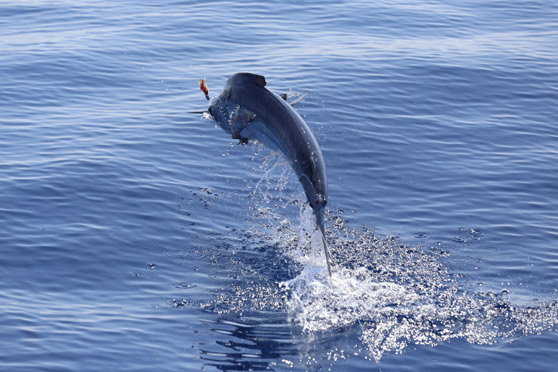
Keeping bait fish alive and in good condition is not as simple as filling a bucket with water. And since the best live baits are the liveliest ones, it’s in your interest to ensure your baits are healthy and vigorous.
Although I joke about the bucket, it is possible to keep live baits healthy in a fish bin or large container provided you are prepared to continuously replace the old, stale water with fresh – perhaps using a bucket or even a vessel’s wash-down hose. However, this is labour intensive, tedious and not viable if you want to keep baits alive for any real length of time. Instead, most live-bait fishers rely on a live-bait system to keep baits alive over an extended period.
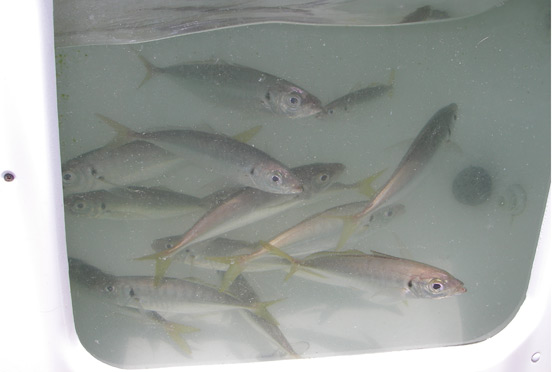
A good live-bait system can support baits indefinitely, provided there is sufficient water flow. Although a few systems don’t refresh the water, relying instead on a small pump to push air into the water through a stone, thereby ‘aerating’ it to replenish the oxygen used by the baitfish, this is a short-term solution that only really works for small baits or relatively inactive species.
Land-based fishers sometimes use buckets or portable live wells with aerators to transport live baits to rock platforms, but these baits are usually deployed immediately, because they soon die if left in the container.
A lack of oxygen is one reason bait in a tank sicken or die, but there are many others. For example, fish produce waste products, including CO2, and unless flushed away by constantly water replacement, a build-up in the tank can be fatal to its occupants. As already mentioned, recirculating the water, even if aerated, doesn’t cut it for long, so the best live-bait systems use pumps to constantly refresh the water in the live well.
Baits also die from the effects of stress and from damage sustained by capture, handling and buffeting inside the container. Well-designed live-bait tanks minimise such damage.
However, even the best live-wells and pumps won’t keep fish alive if the tank is overcrowded.
Overcrowding adds to the stress levels inside the tank, can overtax the tank’s ability to supply the bait with sufficient oxygen, and can cause physical damage to the baitfish due to them coming in contact with each other and the sides of the tank. Contact damage becomes much worse when the sea is rough.
Nor is it a good idea to place fish in a tank when they are obviously too big for it - or mix large bait species with smaller ones.
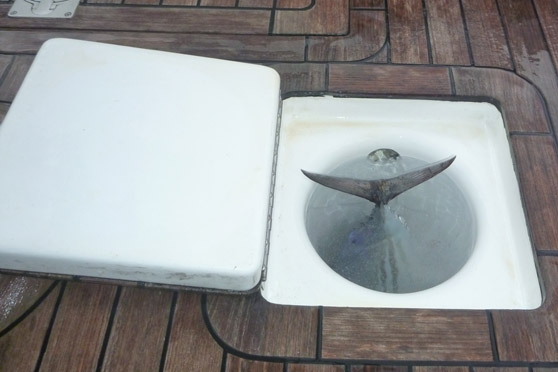
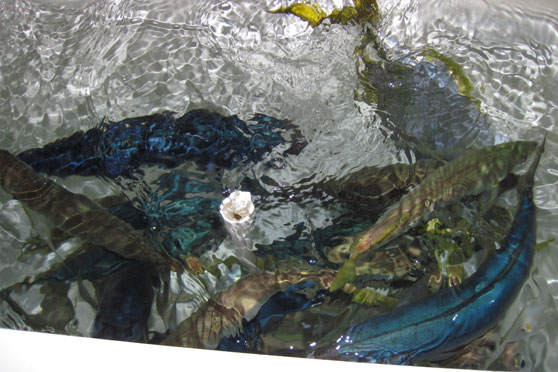
That’s where tuna tubes come in, a variation on a live-well. Tuna or other baitfish are inserted into these tubes headfirst, where they are then held relatively immobile while seawater is pumped in from the bottom, ensuring a constant supply of oxygen. Tuna tubes will keep vigorous baits that are too big and too active to survive in a live-bait tank, such as skipjack tuna, alive for hours.
Which is best?
Live-bait tanks or wells are commonplace these days, on small vessels as well as large. A live well can take many forms, from simple enclosures built into a duckboard at water level with holes in it to allow water to circulate, to large, freestanding live-bait tanks able to accommodate hundreds of baits. All work, but some designs are much better than others.
We asked a couple of well-known charter skippers what they looked for in a live-bait tank.
Tony Orton currently runs Offshore Adventures out of Mangawhai, targeting a wide variety of fish species, many of them on live baits. He has years of experience fishing live baits for dozens of species in exotic locations around the world. Here are his thoughts:
“A good live-well should have rounded corners so you get a good directional water flow [current] and the fish can all swim facing the same way. This is very important for staying healthy and strong, and stops them bumping into each other or into the sides of the well, causing damage.
“A good flow of oxygenated water with a high water turnover helps keep the bait healthy, too. I use a 1100gph pump to service a 120-litre live-well, and my jack mackerel stay in prime condition for a full 10 hours. Any unused baits always swim away strongly when we release them at the end of the day.
“I like to position my live-well in the centreline of the boat so it balances the hull and keeps the live-well’s water as level as possible. Good drainage is important, so the tank’s easy to drain and doesn’t build up pressure in tank.
“For tuna tubes I like a pump of between 800-1000gph for each tube, taking into account my tubes are 120mm diameter and made for large kahawai and medium-sized skippies. A centrifugal pump is required for tuna tubes, and it’s all about volume not pressure!”
Geoff Lamond is a highly successful and well-respected charter captain who, for the last 15 years, has fished baits exclusively when targeting gamefish. He uses dead baits as well as live baits, but live bait is always his first choice.
“I like a cylindrical or oval-shaped live-bait tank with no sharp corners or edges. This design creates a current inside the tank which the baitfish can swim into and helps them to breathe. In my experience, fish held in rectangular tanks don’t last as long, soon becoming battered and beaten, especially if there is no flow.
“I am not a big fan of live wells set into the duckboard. These are still quite common, but don’t keep baits healthy for long. They work quite well with the boat tied up in the marina or riding at anchor, but as soon as the boat gets underway, fish in the tank are knocked around by the turbulent water. Also they’re rectangular, which I don't like.
“I sometimes have to catch bait a long way from where I’ll be using it. For instance, I’ll often catch jack and slimy mackerel in Whangaroa Harbour to use at the Three Kings. Therefore, I need to keep my live baits healthy for long periods, sometimes several days or more.
“A good bait tank is the best way to keep baits healthy. Aboard Arenui I used a continuous flow pump moving 110 litres of water per minute, but the size of the pump required depends on the size of the tank. Mine is quite large. Water volume is really important, so specify a decent-sized pump.
“A vertical pipe with holes in it runs vertically up the middle of my live-well to direct fresh sea water into the tank. The holes help circulate and turn over the water in the tank. As fresh seawater is constantly added, the tank overflows through a drain at the top.
“The key to keeping live baits for long periods is to look after them. Remove any dead baits, or any baits that seem lethargic or show signs of damage, fin rot or disease. Don’t be tempted to ‘recycle’ baits: if you’ve use a live bait once, don’t put it back in the tank because it will only make the other baits sick.
“After a couple of days you can feed your baits, which helps keep them healthy. Use a bit of skipjack tuna, or similar, cut into small slivers. Make sure the food is eaten by them though, because you don’t want to foul the tank with uneaten fish pieces.
“With tuna tubes, it’s all about the volume of water. Make sure they are pushing through plenty of water if you want your tuna to survive for long.”
Both skippers agreed a good live-bait tank should have the following attributes:
• Cylindrical/oval designs with rounded edges
• Ample water flow providing a fast refresh rate
• A directional flow inside the tank.
In addition, live-bait tanks should not be too small or crowded with too many baitfish. Live baits shouldn’t be re-used and any dead or dying individuals should be removed from the tank as soon as possible. Look after your live baits and they will look after you.
Many of the live-bait tanks built into the transoms of today’s trailer boats are not designed for bait welfare. Most are rectangular and/or have relatively weak pumps.
The majority are too small for anything other than a handful of mackerel. However, most of us have no need to keep baits alive for more than a few hours and the majority of trailer boats have live wells that will fulfil that purpose just fine, provided we don’t overload them.
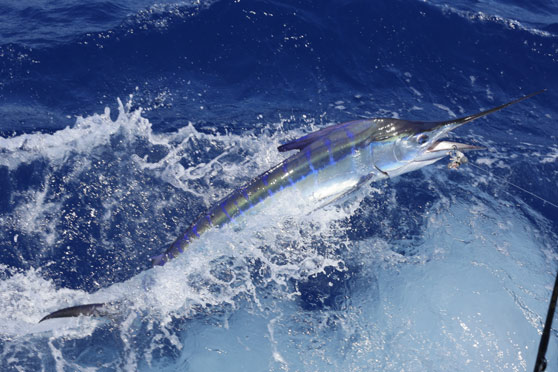
Just remember to keep fewer baits when its rough or whenever you need to travel long distances: better a few strong, healthy live baits when you start fishing than a well full of dead or dying baits.
Fishing Reports Visit Reports
Saltwater Fishing Reports
Outer Hauraki Gulf Fishing Report 17/09/26
Spring wind the handbrake. Spring is starting to make its presence felt in the outer... Read More >
17 Sep 2026
Saltwater Fishing Reports
Top of the South Fishing Report - 17/09/26
Early snapper in Tasman Bay. Well, spring is finally here, and the days are getting... Read More >
17 Sep 2026
Saltwater Fishing Reports
Bream Bay Fishing Report - 17/09/26
Good snapper catches reported. After Tangaroa turned off the fish tap for a month or... Read More >
17 Sep 2026
Saltwater Fishing Reports
Bay of Islands Fishing Report - 17/09/26
Pacific bluefin tuna for the lucky few. The last fortnight has seen more fishable days... Read More >
17 Sep 2026


Friday 25 September 2026
Major Bites
 - -
- - Minor Bites
 - -
- - Saturday 26 September 2026
Major Bites
- - Minor Bites
- -
Comments