
How to select soft-bait braid
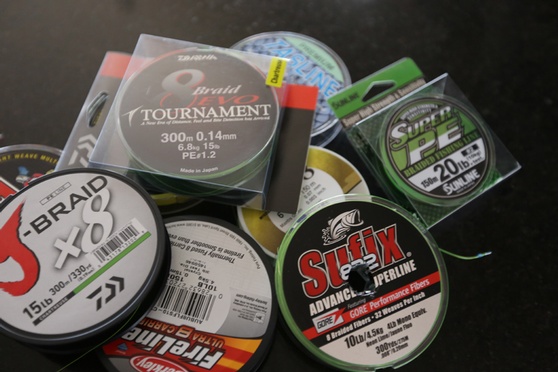
Around two years ago Mark Kitteridge wrote an article bemoaning the lack of really good quality soft-bait braids. Since then, several companies sent samples for him to test, and oh how things have changed!
My desired criteria for the ideal line has stayed relatively simple: I need a low-stretch, high-visibility line (which stays that way) that casts, knots and handles nicely, and offers good longevity. So why are these qualities so important?
Minimal stretch
Fortunately, all brands of braid have relatively little stretch, so provided some tension is maintained, they efficiently telegraph bites to the anglers who, in turn, can set the hook effectively – if their basic technique and choice of tackle are correct.
High visibility
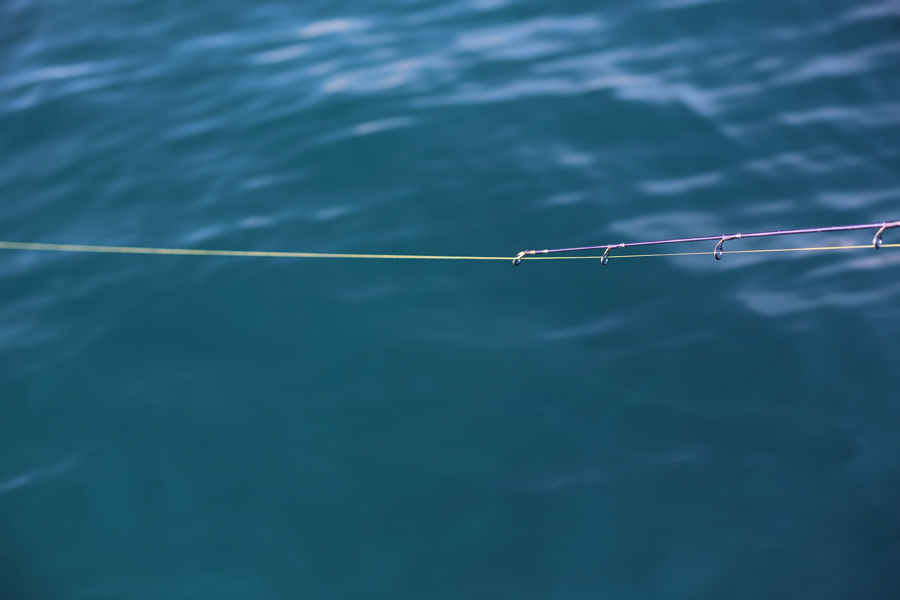
High-visibility lines are essential for good success. In particular, fluoro lime/chartreuse, yellow and pink colours work well, as they stand out against the sea and sky. This means we can see and react to any bites more easily, indicated by the line jerking, suddenly slackening or streaking away, well before they physically register on the rod tip. Around two-thirds of my hook-ups come from responding to ‘line bites’ rather than ‘rod bites’.
Unfortunately, polyethylene (PE) material lines don’t readily absorb colours (as you have probably discovered when spooling up, with colour residue accumulating on your hands and fingers). Some brands retain their colour better than others, but most become so faded after half a dozen fishing sessions it can pay to remove and reverse them to take advantage of the brightness offered at their other end, too.
This problem led to me suggesting two years ago that instead of using colours that quickly fade, perhaps the line should be left in its natural bright-white state instead. Several white lines were sent to me as a result, with a couple indicating good potential, and another that has been fantastic! (More on these later.)
Another suggestion I put forward was inspired by trout fishers’ bite indicators, which can incorporate half yellow/lime and half pink/orange colours to maximise visibility throughout the day’s everchanging conditions. After all, different bright colours become more or less prominent according to the sun/glare and colour of the water at the time, with no one colour working well in every circumstance. I would therefore love to see a specialist soft-baiting braid dyed in contrasting yellow/lime and pink/orange colours that alternate each metre. (And, while I’m at it, how about a lumo option in the future too, guys?)
Castability
While braids with more fibre carriers often cast better, their softness can make them prone to disastrous tangling, so it pays to use a spinning reel possessing a spool lip designed for controlling braid. Also, place the line on firmly when initially spooling up, and don’t overfill the spool.
Some braids leave the spool more readily than others. Finding yourself with a ‘sticky’ line on a spinning-reel’s spool is a real pain as it can dramatically reduce casting distances. Now, having used a wide variety of lines over prolonged periods of time, it seems that the smoother, more slippery lines incorporating eight or more strands (carriers) of PE material tend to cast better than the rougher-feeling lines with just three or four carriers. However, some braids start to stick later on; possibly they are affected by crystalised salt or greasy softplastic scent additives over time and use.
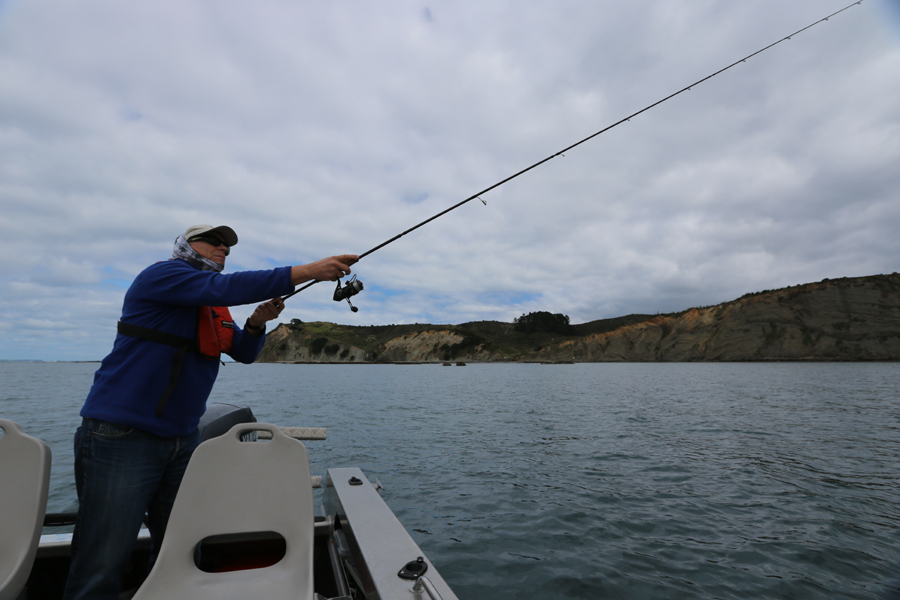
The line’s diameter can also have a bearing on castability. The thinner it is, the slower the spool’s line level decreases, so less friction is produced and longer casts result. But that doesn’t necessarily mean you should always go super-thin, as we will discuss next…
Diameter
Thicker and thinner lines have their respective pros and cons. For example, in addition to casting well, the thinner, rounder lines (i.e. those with a 2-4kg stated breaking strain) will cut through the wind and water more effectively, but can be hard to see and offer reduced abrasion resistance. Consequently, anglers without the sharpest eyesight and/or who fish gnarly territory, will probably benefit from using thicker, stronger lines (5-8kg, say).
The big positive about diameter is that it equates to relative consistency in actual breaking-strain between braid brands, rather than what the labels may claim. Unfortunately, thanks to some bizarre ideas and strategies known only to the companies making and/or distributing the product, the stated breaking strains of braids can be miles from their true strength. On the positive side, they tend to be much stronger, rather than weaker. Muddying the water further though, a few companies are sticklers for accuracy, so rate their product accordingly. What a mess!
Abrasion resistance
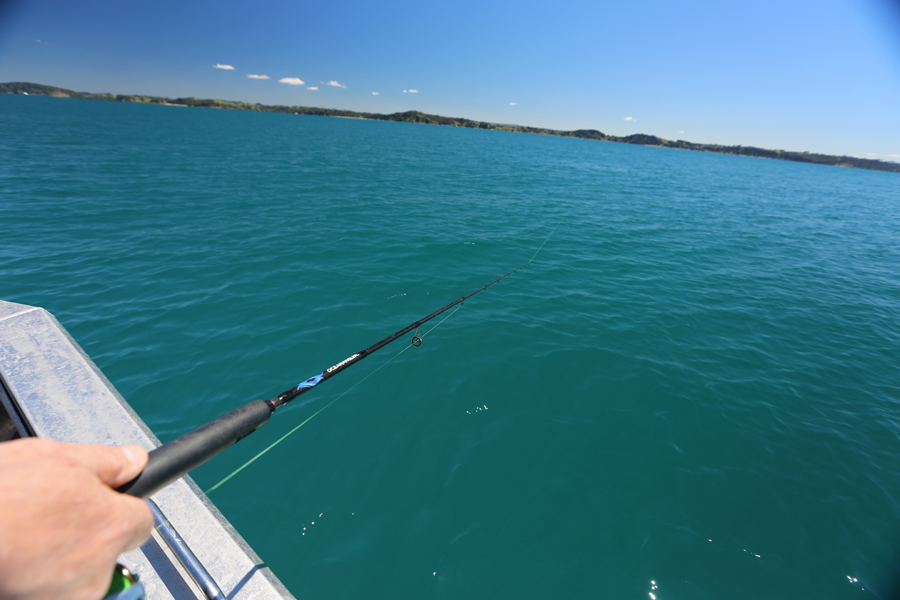
While braid is usually significantly tougher than mono of the same diameter, it’s much thinner than mono of the same breaking strain. This extreme thinness means any abrasion damage caused by rocks, a reef or other lines, tends to be significant, especially when put under pressure, often resulting in a broken line.
Consequently, when fishing over unforgiving ground for large fish, it can pay to use a slightly thicker line than would normally be deployed, with the extra diameter equalling greater durability.
Knotability
Is there such a word? The perfect braid should provide strong, streamlined, hassle-free and dependable knots when connected to various trace materials.
Over the years I have found knotting the different braids and fused lines to nylon and fluoro traces produce widely ranging results, including some incredibly bad ones (either slippage or inexplicably parting). Fortunately, much of the risk involved with joining the various lines together has been removed, thanks to great knots such as the PR and FG knots. Yes, they are a pain to learn (and tie on a rocking boat), but regular practice sees the time spent tying them shorten dramatically. If time is short, the ‘Adapted Albright’ knot provides a good option.
Positive buoyancy This attribute wasn’t specifically mentioned in the introduction, but deserves inclusion, especially as some braids are now specially manufactured to sink. Personally, I find a line that floats is an advantage: by watching its behaviour on the surface, while the remainder is dragged down by the lure’s weight, you can see when something’s going on, well before actually feeling anything.
The chance to impress
The more prominent fishing-tackle suppliers were asked for their best quality high-vis braid over a year ago, and were warned that ‘pretty good’ wouldn’t cut it. The other criterion was that the line should have around 20lb (9/10kg) actual breaking strain. The result was a heap of lines in all sorts of poundages, thicknesses, characteristics and qualities, indicating even the companies themselves may not know exactly what their products offer!
Consequently, the ensuing testing sometimes doesn’t compare ‘apples with apples’; instead, I simply appraised the respective lines on their comparative performance in the field over extended periods of time. In the process, some braids impressed and some did not.
Setting the bar high was a prototype line I received two years ago. Made here in New Zealand to a wholesaler’s requirements and suggestions, it came in the bright white I wanted to try and has proved excellent. My oldest samples are over 18 months old now and have been given an absolute thrashing.
This product casts beautifully, is a delight to handle and see, and is obviously durable. The only downside is that its whiteness dulls over time, but not to a useless degree. Plus, it’s not bloody available – possibly the manufacturing proved too labour-intensive and/or expensive to do in the end. Disappointing.
However, it does demonstrate what’s possible, and provided a handy benchmark for the other lines to be compared against – and I’m pleased to say that a couple of the lines tested reached a similar standard.
The following braids are the best ones tested – the ones that ‘made the grade’ – in no particular order...
On-the-water results
Daiwa Tournament Evo 8, 15lb (Chartreuse): This line is significantly thinner than most of other lines sent in, but probably tests closer to its stated breaking strain, too.
The Tournament Evo casts very nicely and initially demonstrated a moderate amount of memory, the line gently undulating on the surface. However, this characteristic diminished as time went on, with the line becoming increasingly pliable, arguably casting better than ever, and lying straighter in the water, demonstrating the benefits of a long-term trial period.
Coloured ‘Chartreuse’ – a bright light green – the Tournament Evo really lights up in sun, but can be hard to see in dull conditions (perhaps due, in part, to this line-weight’s fine diameter).
Eventually, after four months of hard use, the line’s finish was not quite as smooth and seemed a little reluctant to leave the spool after being stored for a while. I suspect salt residue was the culprit, as this niggle diminished after a few casts.
Interestingly, the Daiwa Tournament Evo kept its colour well over the test period, but still ‘bled’ on my fingers a bit when exchanged for another line.
Overall, an impressive performance. Daiwa Tournament Evo (15lb), 150m: $79.99 (RRP).
Sunline Braid 5 (multi-colour), 15lb (‘8.8kg max’ on label): This line was initially slightly crinkly leaving the spool, indicating some memory, but straightened with very little pressure exerted. (I don’t mind a little ‘wiggle’ in the line, as this sees bites generating more obvious line wakes on the surface.)
While a little thicker than some other braids of similar breaking strain, it was easier to see, aided further by the various brightly-coloured 10-metre sections. Surprisingly, the colours chosen showed up well, even the bright-blue section, which I suspected would merge into the sea and sky. Having said that, I’m sure the white nips marking each metre helped in this respect, too.
After four tough sessions, the colours started to become less vivid, and after six the braid was getting quite hard to see, especially in dull or glary conditions. (Normally, I swap lines around end-to-end at this point – especially as the Sunline remained good structurally – enabling more good fishing to be enjoyed before considering re-spooling again.)
The line also become a little reluctant to leave the spool over time, but improved somewhat over subsequent casts. Overall, though, the Sunline remained a good caster.
Sunline Braid 5 (15lb), 200m spool, $44.99 (RRP) – not available at all retail shops but can be bought on-line at www.kilwell.co.nz for delivery to your preferred dealer.
Sunline Super PE 20lb test (Bright Green): The second of two Sunline offerings, but with different characteristics.
This line is also relatively thick and has a rougher texture in comparison to some of the other lines – but not to a detrimental extent. There was no residue while loading, indicating it should hold its colour well.
I was pleasantly surprised by the casting capabilities. Although quite noisy, there was no hesitation going out, resulting in good distances achieved, and it lay nice and limp on the water as well.
The bright-green colour was easy to see in most conditions, but started to fade (and feel slightly rougher) after half-adozen tough sessions. Fortunately, this fading tended towards a whitish colour, allowing good visibility to be maintained, aided somewhat by the line’s relatively thick diameter.
When hooked to a fish and under pressure, the Sunline was quite noisy through the guides, but performed well overall.
150m spool, 20lb: $24.99 (RRP). NB: not available at all retail shops, but can be bought on-line at www.kilwell.co.nz for delivery to your favourite dealer.
J-Braid x8 (15lb): This line has a silkysmooth finish that translated to lures casting out like bullets, the line spiralling off whisper-quiet behind them. It is also very limp, and behaves wonderfully well in the air and on the water. Better still, the J-Braid’s bright-green colour is easy to see in most conditions.
Now, after several months of use, the smooth finish has remained, but some of the vibrant colour has been lost. Also, the J-Braid has become more reluctant to leave the spool – salt crystals and/or greasy Secret Sauce scent additive are potential suspects, as the line frees up a bit over subsequent casts. (Just goes to show, it may pay to be careful with greasy soft-bait scent additives…)
J-Braid x8 (15lb), 150m: $29.99 (RRP); 300m: $59.99 (RRP).
Sufix 832 660-010L Neon Lime, 10lb test (eight carriers; 32 weaves per inch): This line arrived rather late, preventing exhaustive testing, but after five trips it has acquitted itself very well, so seems likely to be amongst the best…
There was very little leaching of dye while loading up this Sufix 832 line – a good start.
The trips since have built on that early promise, with the line readily leaving the spool during casting and remaining beautifully limp on the water. In short, a delight to handle – and the ‘Neon Lime’ colour shows up well against most backgrounds, too.
While a bit more testing would have been desirable, I suspect this line will continue to deliver…
Sufix 832 (10lb), 150yd: $39.99 (RRP); 300yd: $64.99 (RRP).
Berkley FireLine Ultra ‘Crystal’ 14lb (eight carrier): This Berkley FireLine line is something of an ‘odd man out’ in this line-up, being thermally fused rather than braided. However, despite a marked difference in its feel in comparison to the others, it stacks up pretty well.
The Ultra is noticeably wirier than the others being tested – a characteristic that is apparently intentional, enabling the line to lift off the spool more readily (that’s certainly true of nylon – to a point), reducing friction and enabling longer casts. This also means the Ultra has a slight wiggle coming off the reel, but mostly disappears on the water while the lure descends. However, I did find this springier line occasionally slips back over the rear of the spool skirt, potentially causing problems (I had a couple of casting tangles), but also possibly exaggerated by a slightly over-filled spool.
I found this line VERY easy to see, thanks to its whitish colour and the thickness of line selected (Fireline is well-known for significantly over-testing the labelled strength; I suspect this one actually breaks over 30lb!), but that same thick diameter probably cost me a few metres when casting. (I probably should have gone lighter/thinner, as Craig Robinson, the sales rep for Pure Fishing, recommended!)
Four months later, while changing it over to another line, the Fireline was noticeably dirty, no doubt reducing its visibility, but remained in decent shape structurally.
Berkley Fireline, 150m spool 14lb (6.5kg): $39.99 (RRP); 300m: $69.99 (RRP).
Edge Fishing PE ‘Lime Green’ 8.85kg (eight carrier): Unfortunately, I only received this line a few weeks out from the write-up, so it hasn’t had the same punishment as the others. These are my thoughts after four trips…
The Edge Fishing product has a slightly harsher coating than some of the other eight-carrier lines, but casts really nicely and offers good handling qualities, resulting in some great snapper to six or seven kilos being landed during the testing process.
However, the ‘Lime Green’ colouration is often hard to see, especially in dull conditions or against jade-coloured waters.
Edge Fishing PE ‘Lime Green’ 8.85kg (15lb): $29.99.
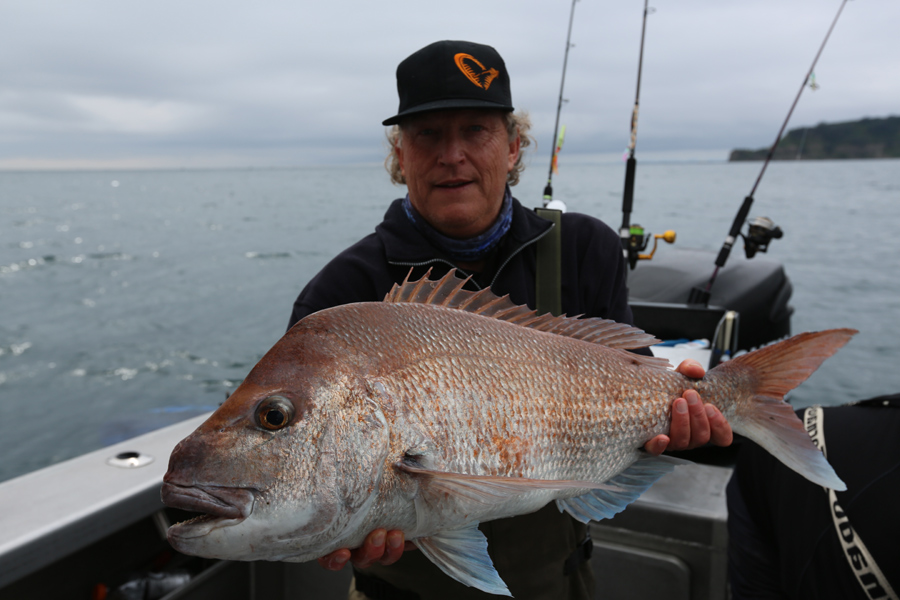
SO, THERE YOU HAVE IT – a dramatic lift in the quality of soft-plastics specific lines. In fact, all the afore-mentioned lines are at least as good as the very best on offer two years ago. And as for the best of the best, two candidates really were knocking on the ‘perfection’ door – but I will leave it up to you to determine which ones.
Another exciting and encouraging aspect, which I mentioned early on, is that although not available commercially, a braid-making manufacturer in lil’ old En Zed used specially imported materials to successfully make a fantastic soft-plastics braid that is still going strong after 18 months to two years of hard use. So, it is possible.
Can’t wait to see what the next year or two brings!
|
|

Fishing Reports Visit Reports
Outer Hauraki Gulf Fishing Report 17/09/26
Spring wind the handbrake. Spring is starting to make its presence felt in the outer... Read More >
Top of the South Fishing Report - 17/09/26
Early snapper in Tasman Bay. Well, spring is finally here, and the days are getting... Read More >
Bream Bay Fishing Report - 17/09/26
Good snapper catches reported. After Tangaroa turned off the fish tap for a month or... Read More >
Bay of Islands Fishing Report - 17/09/26
Pacific bluefin tuna for the lucky few. The last fortnight has seen more fishable days... Read More >



Friday 25 September 2026
Major Bites
 - -
- - Minor Bites
 - -
- - Saturday 26 September 2026
Major Bites
- - Minor Bites
- -
Comments