
How To Net Flounder
Flounder, flatfish, camo backs, yellow-bellies – whatever you want to call them – are an outstanding table fish that can be caught relatively easily throughout the entire country. Shay Ward shares how and when he targets them…
With the trailerboat industry booming, some of our more delicate-tasting inshore and harbour species are being forgotten about. Flounder, rig, grey shark and mullet are just a handful of fish that are abundant throughout most of New Zealand’s inshore waterways and are easily accessible to anyone with a dinghy, kayak or a pair of waders. They are also great fun to catch and the whole family can get involved.
We have a number of flatfish species in NZ. From the very sought after turbot off our South Island’s West Coast all the way through to brill, New Zealand sole, lemon sole and the most common flatty of them all, the yellow-belly flounder, these species are all flat and all delicious (except the ‘witch’).
Like most fish, flounder spawn at sea in 20-40m of water and the eggs float off into the ocean and wait for nature to take its course. The thing that makes flounder unique is they start their lives the same shape as regular fish, but once bigger than five millimetres or so, their left eye slowly moves to the right side of the body to join the other eye, a process that can take up to ten weeks. They then roll onto their bellies, move to the sea floor and head to inshore waters.
Flounder are ferocious feeders – small crabs, shrimp, whitebait, worms, snails and even pipi tongues are on the menu. If they can fit it in their mouth they will eat it. Some people catch them on small pieces of bait with a very small hook and even pieces of corn can entice a bite.
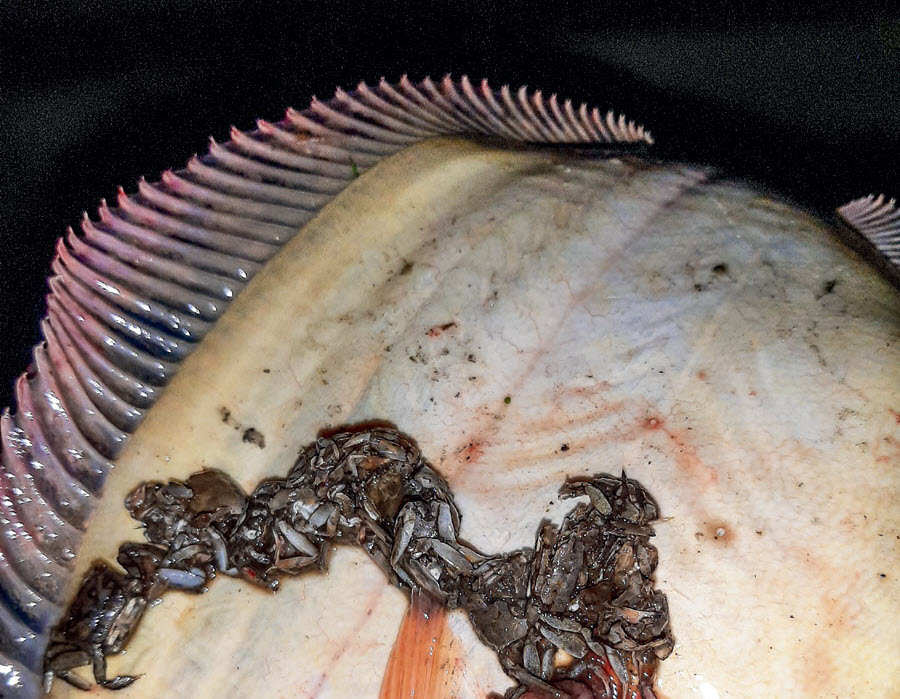 Small crabs are the most common food for esturine flounders.
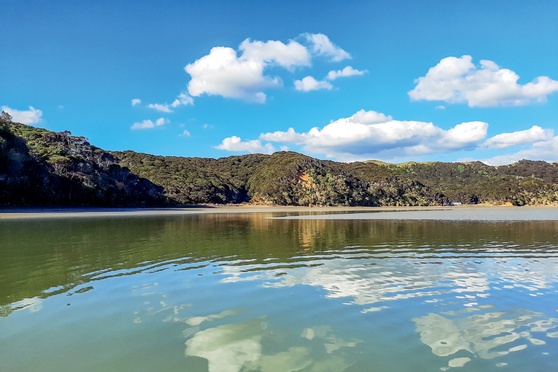
My closest place to target flounder is Kawhia, which is a perfect flat-fish playground. All of our west coast harbours and beaches have great flounder fisheries and finding out exactly where the fish are is just a matter of trial and error.
The trial and error process
In the harbour we look for flat sandy or muddy areas which hold crabs, worm holes and snails, or discolouration and disturbances in the sand caused by flounder. At low tide look for a main channel that feeds onto the flat area. These channels are normally very narrow and some can be surprisingly deep. To set the net, put the anchor of the net into the small channel and walk the net across the water line until you’ve reached the other end. Secure the anchor and tie a decent float at the other end. Now you’re fishing.
I like to retrieve the net with the tide still coming in. The change of tide can turn the net inside out, letting the fish swim away. The wind direction determines which end I start hauling. Starting at the downwind end is preferred as it prevents the net from going under the boat or kayak.
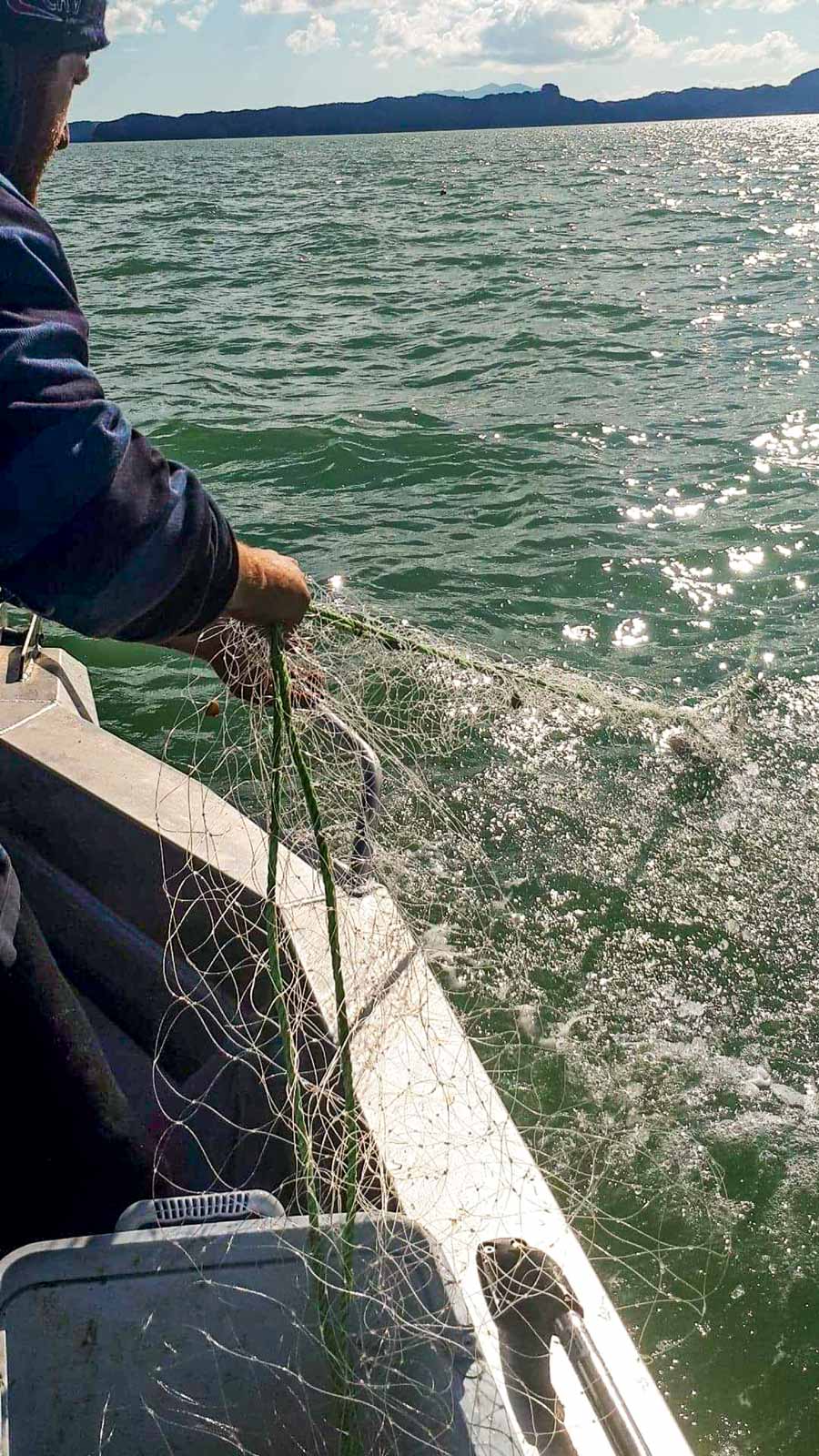 Pulling the net from the downwind end.
A life jacket is a must. Getting tangled in the net on the mud can have disastrous results, even if you are just a stone’s throw from shore.
One thing I’ve learned about targeting flounder – and all other species of fish, for that matter, is that it’s possible to find a great looking place to cast the net but still not have any luck in actually catching anything. Finding a place to set the net is the easy part – trial and error is what comes next.
A simple change in direction when setting the net can be all it takes to be successful. If you set your anchor in the main channel on your first go (as advised above), do the same again but walk your net in the opposite direction to your last set – the results can be incredibly different. Small changes to the way you set the net can be all it takes to catch a feed. Remember what you do on the times you don’t catch and on the times where you do – what was different? Even just a little more angle when setting the net can make all the difference.
Some of my most successful sets have been literally a net’s length away from the last fruitless set. I’m sure we would all get bored if it was easy all the time, so patience and perseverance is the key. A cunning little trick you can try is setting the net at low tide right on the waterline for three hours of the incoming tide, pulling it to see if your catching and, if not, moving to another area and fishing there for the last three hours. Two sets on one tide can help find where and when the fish are coming up out of the main channels and onto the flats.
Sometimes the fish will come up on the flats in the last couple of hours of the tide; at other times they will do this the whole tide (I’ve had flounder in the net by the time I’ve walked back to the boat). So don’t give up on that first spot – you might just strike it lucky with a bigger or smaller tide in that very place. Again, it’s just trial and error.
Please check on your area’s mesh size and net lengths. Some places have total net bans. Other places will have dedicated areas for net fishing, but check your local regulations before purchasing a net and fishing with it.
I’ve found that the finer the nylon mesh the better the catch rate is. The down side to the finer mesh is that it breaks very easily. Stingrays are a flounder fisherman’s worst enemy. An average sized ‘ray will blow some nets apart, making a really big escape hatch for your flatties. This, however, is still better than having a ‘ray roll up the entire net and die in it. In my opinion, a finer mesh size is the way to go.
I avoid setting the net after a lot of rain. The first reason for this is that fine mesh can be ripped apart by logs and other debris coming from the rivers. Your day will be spent cleaning the sticks from your net. Secondly, a lot of the places I set in the harbour are river-fed mud flats, so the high concentrations of freshwater and silt caused by the rain decreases the catch rate. But watch these areas as the rushing tides can uncover and replenish new feeding grounds to target once the rain has eased.
Just like with all of our other favourite eating fish, it is essential to get your flatties gutted and on ice quickly. A small incision from below the fish’s belly fin to the anus is all that’s required for gutting. The skin, especially on their backs, can dry out very quickly, ruining the quality of the meat and skin. A lot of commercial guys haul their nets straight onto the deck then head home to process the catch as the moisture in the nets keeps the fish wet and in good condition.
 Some fishermen just pull the net and head for home - th water held by the net helps keep the catch damp and cool.
Don’t leave the rods at home
The six hours of incoming tide is my preferred time to fish all harbours as it consistently gets the best results whether using rod or net.
Our last harbour mission saw us catch two rig and 11 flounder in the net, and one snapper, three gurnard and ample numbers of kahawai with the rods. Believe it or not, we also helped catch a wild pig en route to our net, which was kindly donated to us for helping retrieve the dogs, hunters and pig. Six hours on the water and enough of a feed to last me and the family for some time – this was just another great day’s fishing on one of our inshore coastlines.
It took me a few sets, days and tides to start catching, but once I did, it was a very satisfying feeling. Both the flounder catches and the bycatches of mullet keep my bait freezer stocked well, but the real bonus for me is the occasional bycatch of rig, one of my favourite eating fish and a fish that keeps very well in the freezer.
For me and especially my partner, flounder is right up there as a favourite fish to eat. Chucked whole on the BBQ and cooked hot and quick to get the skin crispy is a great social way to feed a tribe of people. No scales, meat falling off the bones with ease and very little wastage, it is definitely my preferred way to eat flounder.
If having a whole fish looking at you while you’re eating it isn’t your thing, then filleting flounder is also an easy option. You can fillet it much like you would a john dory. The skin can be left on or off – a quick look on YouTube will give you very good instructions on filleting flounder in many different ways. A super sharp tip on the knife is essential as this part does all the work.
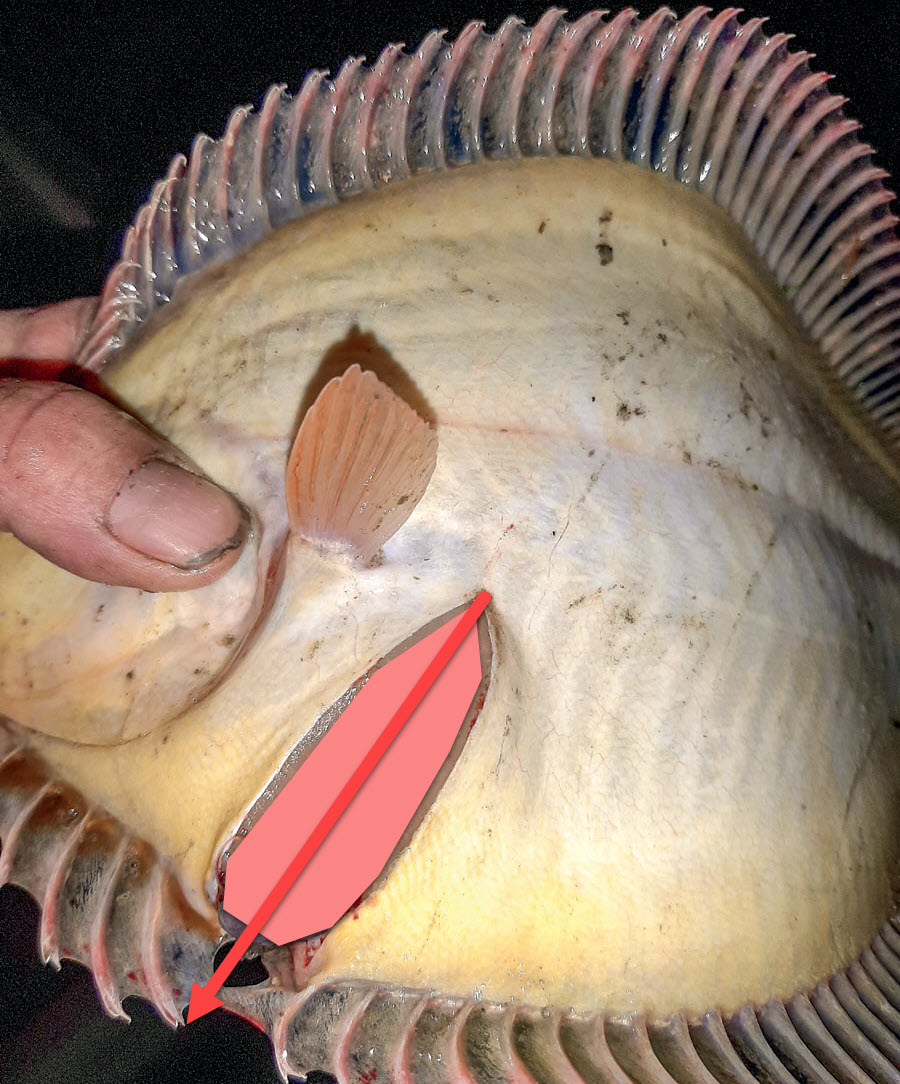 One cut is all it takes to gut flounder.
So before you put hundreds of dollars towards petrol, bait, lures, food and drink to try catch a feed of snapper, consider some of your inshore options. They provide a more affordable way to feed the family and you just might end up with some pork for your trouble!
|
----- Advertisement -----
|
|

Fishing Reports Visit Reports
Tauranga Fishing Report - 28/05/26
Tarakihi on the bite Trips are few and far between at this time of year,... Read More >
Canterbury Fishing Report - 28/05/26
Fresh and salt turning it on! It is not very often I get to say... Read More >
Bay of Islands Fishing Report - 28/05/26
Lures paying dividends We finally had a break in the SE winds that have been... Read More >
Manukau/West Coast Fishing Report - 28/05/26
Snapper and gurnard in the harbour The weather has finally taken a turn for the... Read More >


Major Bites
Minor Bites
Major Bites
Minor Bites
Comments