
Gamefishing - Using a Dredge Part 1
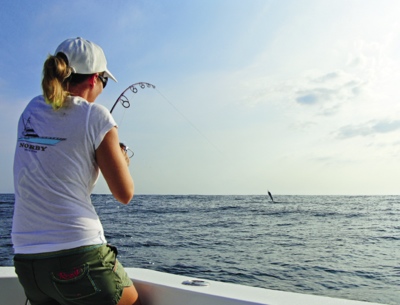 In the process, while looking down at the spread from high up in the tower, the water’s so clear and calm I can see the marlin repeatedly swimming past the lures and baits to get to the dredges we’re towing!
Yes, these devices are VERY effective, getting the marlin super excited so they’re far more likely to take a well-positioned bait afterwards – especially as we’re also using light leaders armed with circle hooks. Consequently, the angler puts the drag up very lightly to set the fine-gauged circle hook, and often the fish is so worked up it doesn’t even know it’s hooked. But it does know it’s just got a quick, easy meal, so a lot of hooked fish simply swim back up to the dredge looking for something else to snack on, rather than tearing away at high speed. In fact, on occasions we’ve mistaken one of these fish for a second one checking out the dredge, pitched another bait, and put a second hook into the same fish!
Dredge-style fishing has to be one of the most productive ways to raise billfish. Indeed, if you are not pulling two double dredges in big money tournaments overseas, you may as well not leave the marina. Fishing in areas where there are very high numbers of billfish releases each day, the top boats are always pulling dredges. So why has this not caught on in New Zealand?
There are lots of possible reasons, but probably the main one is that people tend to stick to what they know;
 days on the water are very limited, making fishermen reluctant to abandon tried and true lure trolling to experiment with something very different. Also, dredges can be expensive and require constant attention, which may not be some people’s idea of a relaxing day out.
While these are valid reasons, most anglers already spend a lot of time, energy and money chasing these magnificent fish, so going that one step further isn’t a big deal, yet the rewards can be phenomenal.
Over a few months I will explain the basics of dredges and the tackle required for dredge-style fishing aboard all sizes of sport-fishing vessels from trailerboats to big launches.
The basic principles
Firstly, billfish are attracted to the noise and vibration of a boat – but some more than others. Secondly, they are attracted by what they see. Third, their animal instincts kick in and they must eat.
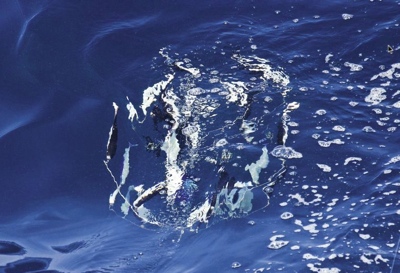
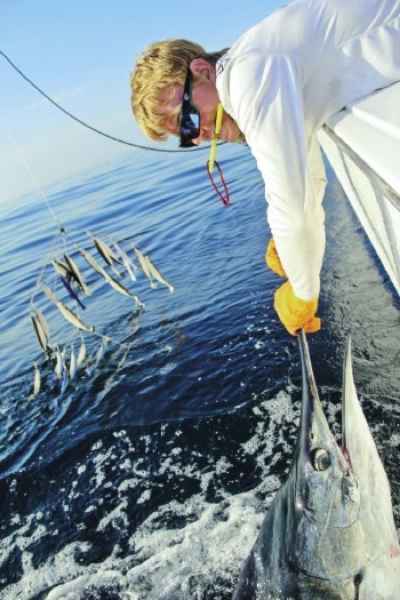 Your boat is your boat, and it’s hard to change the sound it makes, but pulling your own private school of fish helps in the secondary part of the equation. A lure on the surface can be one-dimensional and hard to see, but drop a dredge just below the surface, add 10-30 artificial or dead baits to it, and you’re opening up a much larger, more visually appealing target. When a marlin sees your mobile bait ball, its feeding instincts are far more likely to be triggered than by a single lure or even a daisy chain
There are many different ways to run a dredge – anything from simply tied off the boat’s stern cleat (as we have done in the past on charter boats in tournaments) to off the outriggers using expensive high-power electric reels with auto-in/auto-out capabilities.
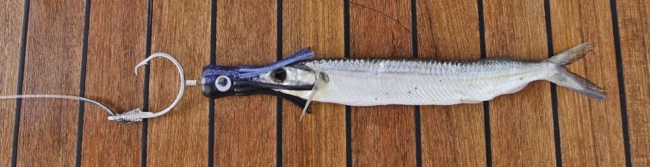
Once the fish is teased up behind the dredge you must have something to offer it – hopefully something with a hook in it! This can be a dead swimming or skipping bait, or even a small rubber cup-faced lure or soft plastic. We do not ‘switch’ baits back to the fish, instead we have them swimming just a couple of metres behind the dredge, with the reel in free-spool (this is the difference between dredging and switch-baiting), the clicker on, and the line held down low on the stern by a release clip, which has just enough tension on the clip to hold the bait but still allow for an easy release.
However, if you know the fish is hard on the dredge and looking keen, you can release the clip beforehand and then hold the rod high, ready for when the fish sees your lone baitfish apparently struggling just behind the rest. Then ‘BANG’, the marlin often strikes, and when this happens, drop your rod quickly so a moment of slack line is created, allowing the marlin to take the bait properly.
This scenario is easier for trailer-boat crews, as they do not need to be as observant as when switch-and-tease style fishing. Having the reel in near free-spool helps, as when the fish strikes, it’s able to easily take the bait and turn with it, giving the angler time to get to the rod, feel the acceleration of the line when the fish has turned, and to then put the drag up to set the hook.
This setup can be very simple, so a crew of two can handle it, or more complex, where you need a minimum of three or four in the cockpit to handle multiple large dredges, teasers and baits. However, this is a subject for next month, when we go over setups that suit trailer boats and larger game launches.
|
|
This article is reproduced with express permission of Originally published in New Zealand Fishing News ----- Advertisement -----
|

Fishing Reports Visit Reports
Tauranga Fishing Report - 28/05/26
Tarakihi on the bite Trips are few and far between at this time of year,... Read More >
Canterbury Fishing Report - 28/05/26
Fresh and salt turning it on! It is not very often I get to say... Read More >
Bay of Islands Fishing Report - 28/05/26
Lures paying dividends We finally had a break in the SE winds that have been... Read More >
Manukau/West Coast Fishing Report - 28/05/26
Snapper and gurnard in the harbour The weather has finally taken a turn for the... Read More >



Major Bites
Minor Bites
Major Bites
Minor Bites
Comments