
Four top baits for surfcasting
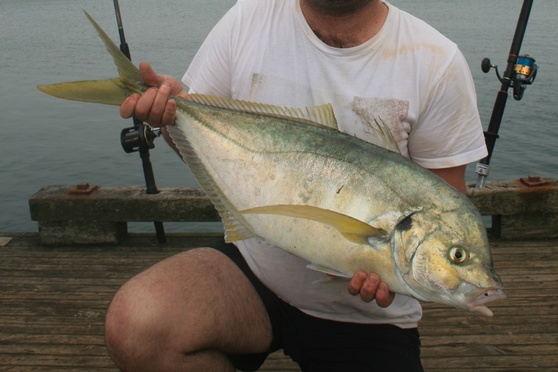
Andy Macleod reveals his four favourite bait choices, along with the main applications and a few choice tips!
Bait is one of the most commonly discussed topics in fishing, and land-based anglers are no exception in this regard. In fact, fishing on the shallow fringe of our coastline for wary fish means it’s probably even more important for the land-based angler to use the right bait than just about any other aspect of fishing.
Over the years I’ve fine-tuned my bait preferences, so decided to write about four mainstays in my surf-casting and rock-fishing arsenal. (It could actually have been five, but I’ve probably waxed lyrical enough about paddle crab over the last few months!)
Before I get into the details of my four chosen baits, let me just say that the old maxim ‘fresh is best’ is absolutely true in my experience. When fish enter the comparatively shallow and welllit water that land-based anglers are generally restricted to, they are often bait shy and will only bite if everything looks, feels and tastes just right.
If you don’t believe in the importance of fresh bait, experiment with it for a while and see if the results change your mind. Source edible-quality bait from fish shops or supermarket delis (instead of freezer-burned stuff at the bottom of a service-station freezer) and I’m sure you’ll experience better success. Added to that, genuinely fresh bait (straight out of the water or off an ice slurry) will out-fish fresh-frozen bait.
To illustrate my point, I once fished alongside a mate who brought live paddle crabs on a trip whilst I used some nicely thawed fresh-frozen ones, and he out-fished me 10 fish to one for a mixture of moki, gurnard and spotty sharks.
Trevally
Trevally is relatively easy to get hold of in fish shops, and as such is vastly superior to the poor quality stuff I normally see sold as frozen ‘bait grade’ trevally. Buy it fresh off an ice slurry and it makes a superb fish bait used off the beach or the rocks. Species that regularly fall for it include snapper, gurnard, kahawai and trevally. It comes with a nice firm skin (great for baiting up) and decent oil content to help spread scent around the vicinity.
Smaller specimens (say under 1kg) make the best, tenderest bait. With fish of this size I usually take two nice fillets off them, then use scissors to cut the thumb-sized baits that work equally well surfcasting off the beach or straylining down a berley trail off the rocks. The head can be kept as bait for big snapper or sharks.
If only able to find bigger trevally at the fish store, I don’t let that put me off using them, but there is a technique to cutting good baits. Although trevally are a laterally compressed species, the fillets on larger ones are generally too thick to present as subtle, streamlined baits for casting. With this in mind, I usually cut baits off the bone one at a time, only cutting as deep as I need to and leaving plenty of meat around the frame. This excess meat can be used as berley or as bait later on.
In areas where trevally are common, like the Bay of Plenty and Northland, I regularly put my first one aside for bait and find it’s often very effective at catching even more trevally!
Crayfish
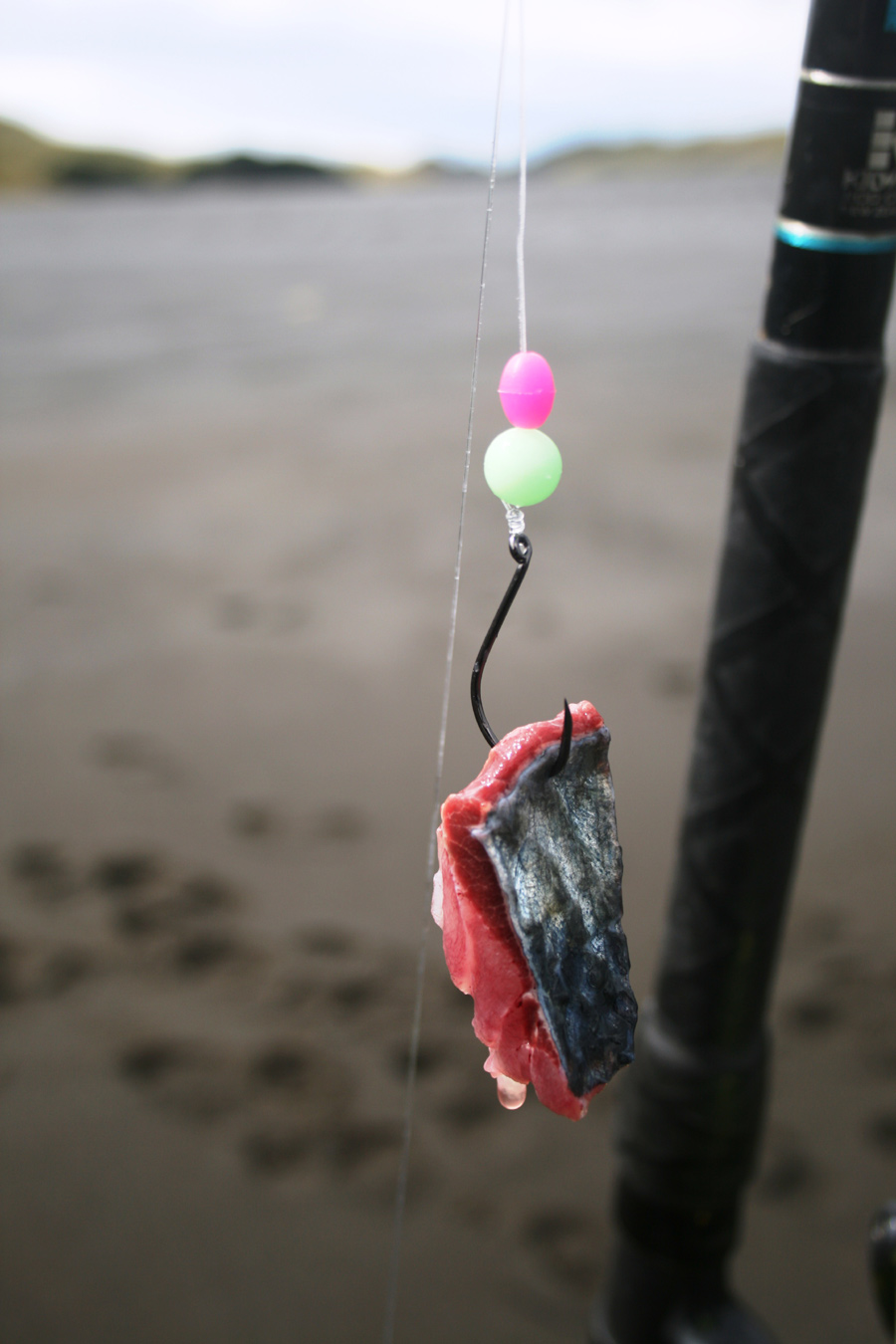
Crayfish is a superb land-based bait, if you can bear to use it for that purpose (boat fisherman tend to look shocked, but crayfish doesn’t seem to offer them the same benefits as it does to us landlubbers). Indeed, such is its effectiveness, I’ve deduced it must be as highly regarded in the fish world as it is in the human world. It’s hard to think of a fish that doesn’t take it, but easy to think of a few that will eat cray, but seldom take a whole bunch of other offerings (think moki, spotty sharks and butterfish).
Fresh crayfish is an almost transparent colour, and this is the best time to use it. However, it’s very gooey like this, so requires bait cotton or elastic to bind it together and to the hook.
I usually work my way up the tail bit by bit, taking one or two baits off each segment, depending on the size of the cray tail. Having cut off a piece about the size of my thumb, I immediately wrap elastic around it to firm it up before tying it to the hook. Don’t even think about not using cotton or elastic, as you’ll simply see the precious cray fly off during the cast.
Most people use fresh-frozen cray for bait; lightly thawed is the best state to work with it. Then you can cut it easily to size and wrap it up in cotton or elastic without it falling apart in your hands.
A regular supply of cray bait will immediately improve your results. I can thank it for some of my best catches, including big moki, spotty sharks and snapper – and a New Zealand land-based record for tarakihi.
Pilchards
Pilchards must be just about the most common fishing bait in New Zealand. And why not? They are perfectly-sized baits, either whole or cut in half, and extremely effective on some of our most popular Kiwi species such as snapper, kahawai and kingfish.
The trouble I have with pilchards is that they are specifically packaged for fish bait in this country and get treated accordingly. It’s not unusual for them to be thawed and refrozen as they are shipped around or left in unreliable freezers in assorted service stations and tackle stores. Don’t get me wrong, they still make superb bait, but in my experience it is noticeable that they are often out-fished by other, fresher fish baits off the shore.
Many experienced fishermen have never come across fresh or fresh-frozen pilchard baits which are not mushy and missing bits of skin like the ones we’re often used to purchasing. In fact, they are bright with a healthy sheen and firm skin and flesh. However, pilchards that meet this description are becoming more common, thanks to the efforts of a couple of northern suppliers.
As for baiting up with pilchards, I use them in two main applications: as bottom baits when surfcasting and as straylined baits off the rocks. Depending on the size of the pilchards, I usually cut off the bait’s head and the tail and leave the middle section (mostly guts) for berley. However, it is possible to get a third bait from the upper part/spine of the fish directly above its stomach cavity.
Off the rocks pilchards are deadly, but do tend to fall to bits in the face of attention from the many bait- and reef-fish species generally present, so a lot of re-baiting is required. For this reason I generally use tougher kahawai or trevally for bait once I’ve managed to catch one. From this point on, you can cube your pilchards for berley, because they are extremely effective for bringing fish around.
Kahawai
Kahawai is not generally well regarded as a bait. The flesh is not particularly oily so doesn’t have the olfactory benefits of many other baits, but does possess firm flesh and skin, making it very easy to use, and a wide variety of fish are willing to eat it.
Consequently, kahawai is one of my ‘go to’ baits off the rocks with the tough skin keeping it on the hook during hot stray-lining sessions. And, of course, it can be fished down a strong berley trail, which helps to overcome a lack of oil and smell in the bait itself.
It is a particularly good bait for big snapper in rocky territory when fresh, staying on the hook well, and the solid size of most kahawai allows them to be converted into several large fillet/steak baits, along with the head.
Off the beach I use it when targeting gurnard and kahawai (yes, just like trevally they have no problem turning on their own kind). The tough skin means you can do away with bait cotton or bait elastic, which is a real luxury for surfcasters. If the fish are biting boldly, I simply thread the tip of the hook through a thumb-sized strip of kahawai and let it hang there, making no effort to conceal the shank or eye of the hook. Presented like this, it can waft around in the current, and I believe this helps attract attention some days. On others, when the fish are wary, I will go back to a more subtle bait presentation.
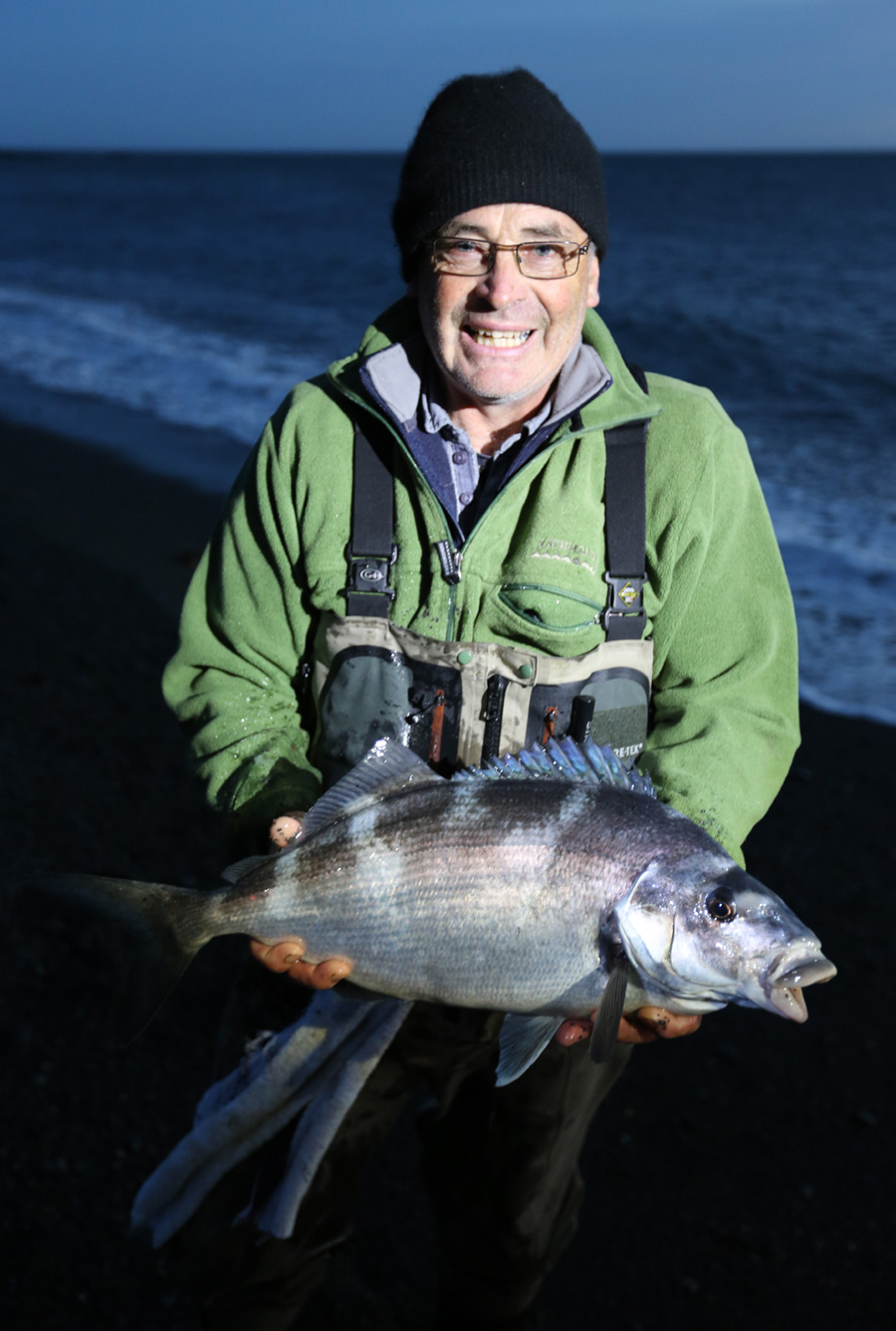
I could have mentioned many other worthy baits here – skipjack and green-lipped mussel for example – but the four mentioned above can effectively cover most land-based fishing scenarios in this country, and I have caught plenty of fish across a range of species using them. So if you are not currently using one of the above offerings, give them a go – they sure do work!
|
|

Fishing Reports Visit Reports
Outer Hauraki Gulf Fishing Report 17/09/26
Spring wind the handbrake. Spring is starting to make its presence felt in the outer... Read More >
Top of the South Fishing Report - 17/09/26
Early snapper in Tasman Bay. Well, spring is finally here, and the days are getting... Read More >
Bream Bay Fishing Report - 17/09/26
Good snapper catches reported. After Tangaroa turned off the fish tap for a month or... Read More >
Bay of Islands Fishing Report - 17/09/26
Pacific bluefin tuna for the lucky few. The last fortnight has seen more fishable days... Read More >


Friday 25 September 2026
Major Bites
 - -
- - Minor Bites
 - -
- - Saturday 26 September 2026
Major Bites
- - Minor Bites
- -
Comments