
Fishing Ultra-Light Line
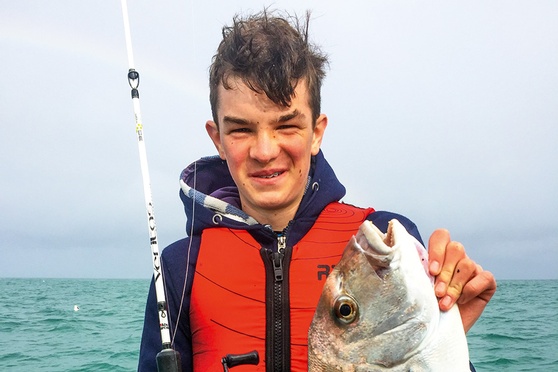
In recent times, Hayden Speed has been turning his attention to the challenges of light tackle angling. He shares some ideas on how to catch fish with ultra-light line.
Fishing using ultralight line is a little bit unique and can seem like a lot of effort for little reward. It’s great fun and a great challenge for both angler and tackle as the margin for error is so small. This style of angling can turn a slow, or normal, day’s fishing into something special – and if you’re lucky enough you might even bag a record!
Targeting fish on ultralight tackle opens up a whole lot of line weight records that 90% of anglers won’t have a chance to claim. I will always be fishing with a target in mind, whether it be for a club or a national record. The IGFA rules, NZ and World Records can be found in the New Zealand Sport Fishing yearbook or online at www.nzsportfishing.co.nz.
When fishing light line, I like to use a baitcaster style reel matched to an appropriately lightweight rod. You could also use a small spin or overhead reel, but for value, baitcasters are great. They are small, light and have plenty of drag with lots of adjustment available to fine tune the drag setting.
I like to adopt the principles of straylining when fishing with ultralight line. I use a trace or leader of about two metres in length, with a very small sinker (sometimes only one or two pieces of split shot lead) and a single circle hook. Circle hooks allows the fish to hook themselves as ‘striking’ could actually snap the line. When fishing these rigs, I will use the reel in free spool, resting my thumb on the spool while I wait for any bites or runs. Once bit, let the fish run with the bait for a moment before clicking the reel into gear. I then quickly, but as smoothly as possible, wind the reel constantly to take up the stretch in the line and create the tension required to roll the hook in the corner of the fish’s mouth.
In regard to knots, I use a spider hitch to create a double in the mainline. Tying a double into your mainline is important as it improves the breaking strain of all knots. A knot tied with a doubled line will be stronger than a knot tied with a single line. I then just use the uni knot to tie the doubled line onto the swivel, and also for the knots on the leader.
Knowing your drag settings is also crucial. In theory you’re trying to set your drag to one third of the line weight – which allows for some loss in breaking strain due to knots, and has a bit of reserve strength in case the line bumps into a piece of weed or another fish which yes, can snap your line also. A good way to test your drag setting on one kilo line is to set the drag just tight enough to barely lift a 330ml can of drink off the ground. A similar system with heavier weights can be used for 2kg, 3kg and 4kg line as well.
Fishing over sand is way easier than over a reef as it removes the stress of getting busted off and losing a fish that you have been fighting for a while. Shallower water is also better as this reduces the amount of line out, and the amount of drag on the line as it’s getting ripped through the water.
Playing a fish on ultralight line will obviously take longer, so be prepared to settle in and enjoy the moment! I recently played a 5.32kg snapper on 1 kilo line for 2 hours – patience is definitely required when fishing light line! It’s also worth considering when it is appropriate to fish ultralight line. Sending a bait down on one kilo line 30 minutes before you’re due home probably isn’t the smartest idea!
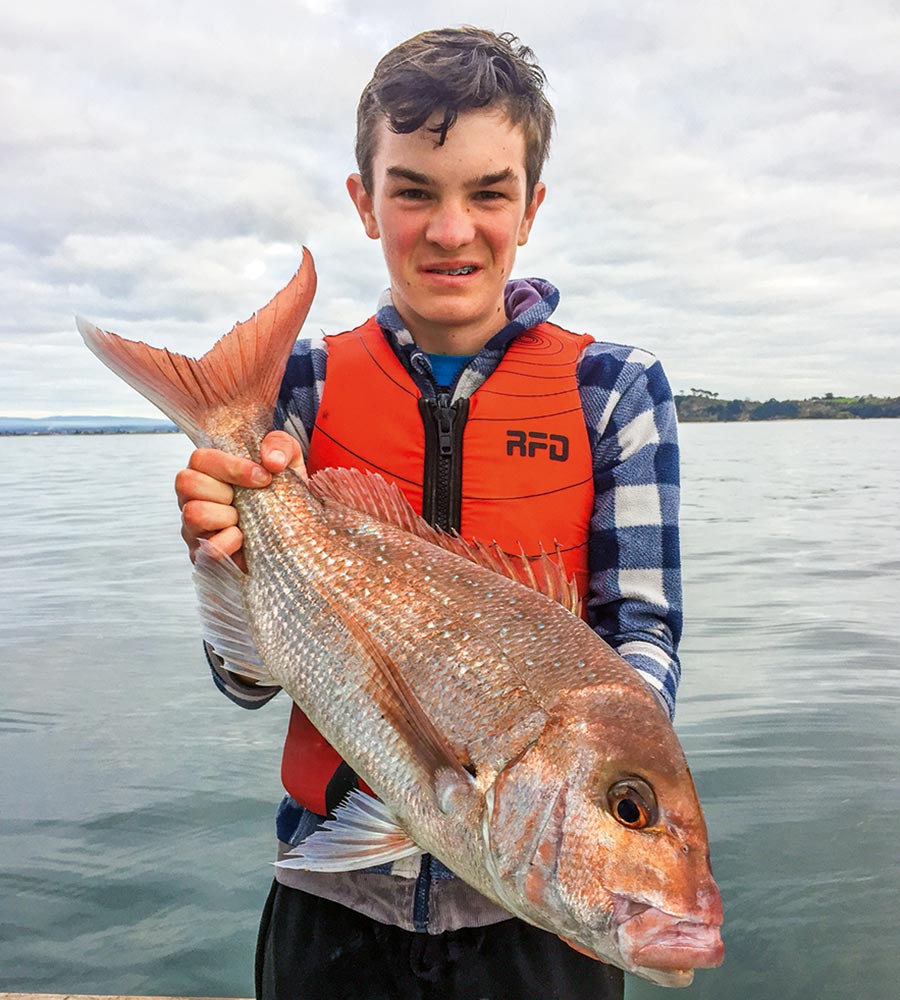
Even catching pannies on ultra-light line can be pretty exciting and will hone your skills!
Sometimes you won’t be able to stop a fish and will have to chase it. Unless the fish is absolutely smoking you, it works best to back up on the fish as it will be easier for the driver to keep the fish off the back corner of the boat. Another trick is to keep some line angle on the fish which may help lead the fish towards the surface.
If you have hooked the fish while at anchor, having the anchor set on a cast away buoy will help you quickly commence a chase. Taking a GPS mark of where you have dropped the anchor also helps when retrieving it.
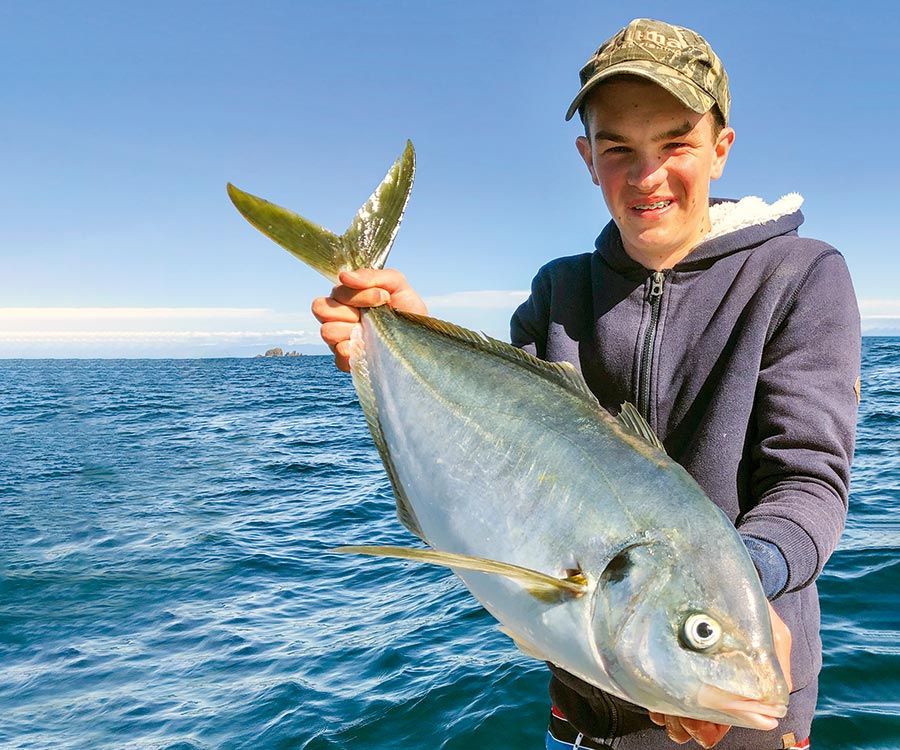
Hayden's next challenge is to target a trevally on ultra-light line - this one was caught on three-kilo tackle.
My next goal for ultralight line is to land a two-kilo plus trevally on one and two kilo line. I’m also after a metre-long kingfish on 3kg line. I’ll keep you posted on my successes – and failures too!

January 2021 - Hayden Speed
New Zealand Fishing News Magazine.
Copyright: NZ Fishing Media Ltd.
Re-publishing elsewhere is prohibited
Fishing Reports Visit Reports
Tauranga Fishing Report - 28/05/26
Tarakihi on the bite Trips are few and far between at this time of year,... Read More >
Canterbury Fishing Report - 28/05/26
Fresh and salt turning it on! It is not very often I get to say... Read More >
Bay of Islands Fishing Report - 28/05/26
Lures paying dividends We finally had a break in the SE winds that have been... Read More >
Manukau/West Coast Fishing Report - 28/05/26
Snapper and gurnard in the harbour The weather has finally taken a turn for the... Read More >



Major Bites
Minor Bites
Major Bites
Minor Bites
Comments