
Fishing the Rangitoto Channel
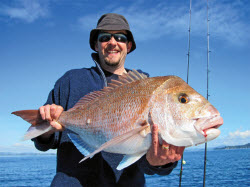 The Rangitoto Channel is a fantastic fishery just mere minutes away by boat from the Auckland CBD.
Consequently it is easily accessible from many parts of Auckland, but especially popular with fishermen who live on the North Shore, as it’s right on their doorstep.
When the fish are running in the channel, the boat ramps become very busy, as do the local tackle shops, and the banter amongst anglers also starts up. It’s great times fishing in close proximity to other fishermen and boats – there are lots of waves to each other, ‘giddays’ at the boat ramps, and comparing catches at the end of the day. There’s a real buzz in the air when the Rangi’ is firing.
Quite a few techniques are used to catch snapper in the Rangitoto Channel, and most work well. However, I reckon the most productive and fun way to catch them is with soft-plastic lures – especially as there is now more than one way to fish them, thanks to the sport having grown and advanced in New Zealand.
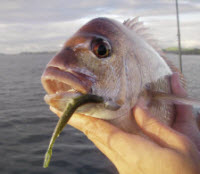
What I am going to discuss now though is ‘jerk-shadding’. This style of soft-plastic fishing suits the shallow waters of the Rangitoto Channel and, as the name suggests, involves literally jerking plastic baitfish imitations through the water close to the bottom, imitating a darting baitfish. Snapper go crazy for this technique.
The kick off
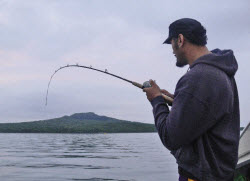 Snapper start to move into the Rangi’ Channel around December. The first fish are the lump-headed males, and this early in the season the bite times can be short because they feed only spasmodically. The best time to fish is when the sun is setting, so if slow during the day, wait until the light starts to fade, as this usually triggers the snapper into feeding through till darkness. It can be the only bite time of the day.
Over the Christmas break, the daytime fishing is often very slow, possibly due to all the traffic in the channel. However, it’s not long before the fishing really starts to heat up at the end of January, with the bite times getting longer and the fish occasionally biting throughout the day – sometimes for days on end, with only the slack tides slowing them down. (The fishing usually shuts down around the change of tide, so try to plan your trips to avoid these periods if possible.)
There are some good-sized fish amongst the general run of pannies, and I have heard of the occasional 9kg (20lb) fish coming from the Rangi’ Channel. Personally, I have caught a number of fish in the 5-6kg bracket here, but the average size tends to be around 1-3kg – perfect for eating.
From the end of March through to the end of autumn the channel can be full of anchovies, which you will know is happening due to the thousands of seabirds running up and down the channel and along the East Coast Bays. When you see this type of action, head on over and flick a few jerk shads amongst the action, as there will often be hungry snapper in attendance.
Optimal conditions
 As far as tides and wind go, I believe it’s best to have the wind and tide going in the same direction; in a SW wind, fish the outgoing tide, and in a NE wind, fish the incoming. However, keep in mind that southerly winds can funnel down the channel, making the fishing conditions unpleasant, and also shutting the fishing down at times.
My favourite conditions involve: light northerly winds, an incoming tide, and fishing the Rangitoto side of the channel. However, I also like light SW winds and fishing the last three hours of the outgoing tide on the channel’s North Shore side.
The moon plays a part in the bite times, too, and to simplify this, I look at the recently-released Wave Dancer calendar, which has bite times listed for each day – and believe me, often these bite times are bang on, right down to the minute.
As with all fishing, if you can plan your trip to put as many of the odds in your favour as you can, it will greatly increase your chances of catching fish. By using the Internet for your weather and tides, and combining it with bite times based on the moon, you have an excellent chance of catching fish.
Setting up
 To fish your soft-plastic jerk shads effectively in the Rangitoto Channel, you need the right equipment – especially an assortment of soft-plastics in the jerk-shad style. The most popular is the Gulp! range of jerk shads. These lures are scented, and I believe this makes a big difference in the shallow waters of the Rangi’ Channel, as they work particularly well. However, and excitingly for me personally (as I import them), there is also a new scented jerk-shad range on the market called Z-man JerkShadZ that is proving deadly effective, too. In addition to attracting plenty of bites, they are also very durable so do not fall apart, which saves you money.
But not everyone uses jerk-shads for this type of fishing; there’s a pretty healthy following for Z-man and Gulp! lizard-type soft-plastics, too.
Effective colours include the very popular Nuclear/Electric Chicken colours, as well as the more natural baitfish hues, especially light blues and greens. Another worthwhile colour to use is New Penny – a colour scheme that probably imitates squid.
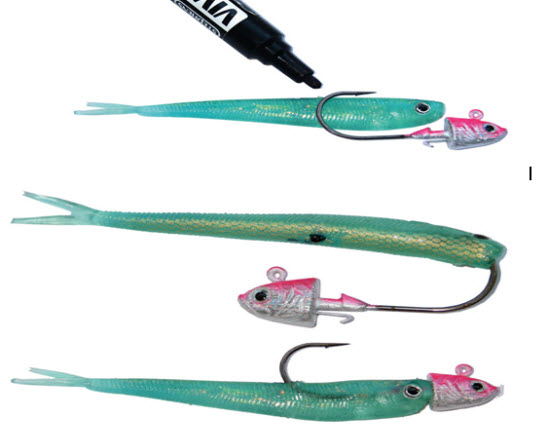
There are two methods of rigging jerk-shads (see the rigging sequence pics for both hereabouts). The first and most popular is to use a jig head, and if just starting out, I would recommend using a 5/8oz head to ensure you get to the bottom, armed with a 2/0-3/0-size hook. Once you have a bit of practice under your belt, you can start to use lighter jig heads in the 3/8 and ½oz sizes. The lighter heads attract more strikes during the initial descent, but these are harder for new chums to detect.
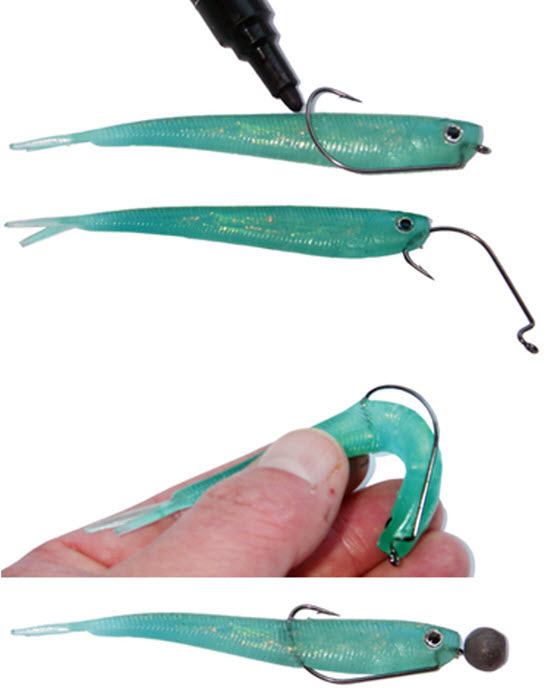
The second way is to use a worm hook and a running sinker. If you have not rigged these before, I recommend asking your local fishing-tackle retailer to show you how this is done. Both methods are easy and work well – I believe it comes down to what works for you, so try both.
You will also need a rod designed for jerk-shadding, and there are quite a few around. The main feature of these rods is their extremely light weight, which is very welcome when actively moving the rod over long soft-plastic sessions. Also, the rod’s tip needs to be reasonably stiff, because when you twitch your rod, you want that action to transfer effectively down to your shad; if your rod is too bendy, all your effort just flexes the rod instead of moving the lure. And a reasonably stiff rod will aid with hooking biting fish as well.
Obviously, a spinning reel is also required, and I recommend you get a 2500 size for fishing in the Rangi’ Channel. There are many brands and models to choose from, and as you pretty much get what you pay for, get the best you can afford. Cheap and nasty reels corrode quicker than good quality ones, and do not last long.
Next, spool it up with a braided line – I suggest using 200m of 4-6kg braid with 15kg Dacron used as backing underneath so the reel’s spool is filled to just below the rim (do not overfill, or large tangles can result). Good tackle shops will have the necessary braid on a bulk spool, and can spool the reel for you.
Fluorocarbon leader rated at 7kg (15lb) will serve nicely as the trace material – about one rod length of this is needed when fishing the Rangi’ Channel.
Other items that will enhance your enjoyment and increase your chances of catching fish include a sea anchor and a rubber-mesh net. As soft-plastic fishing is best done by drifting rather than anchoring, a sea anchor is used to slow your drift.
So where are the fish?
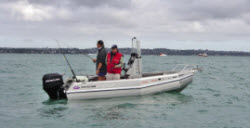
Once you’re set with the necessary gear, the next aspect to sort out is the whereabouts of the fish. I always solicit a bit of information from returning anglers at the boat ramp – this can save you time trying to find the fish, and most people do not mind telling you. Another way is to head for groups of boats and see if they are catching fish. If they are, join in the fun. (However, when drift fishing with other boats, do not cut in front and start downwind of them. Instead, position yourself so you are to the side or following them.)
You can also look for seabirds feeding – this is always a good place to start. If you have a good sounder, you can use it to mark fish. Once you have an idea where the fish seem to be located, start a drift so you pass through that area.
Two soft-plastic techniques work particularly well in the Rangitoto Channel. The easiest one to deploy, if just starting out, is to drag your weighted soft-bait along the seafloor. Simply drop your lure straight down, then let out around 30-40m of line so your lure is dragging along the seafloor. I find twitching or lifting your rod tip up every now and then to create a bit more action is worth the effort. You may find the current lifts your lure off the bottom, especially if it’s underweighted, so try letting out more line occasionally.
If unsure your lure is getting to the bottom, increase the size of your jig head or slow your drift speed by using your sea anchor until you can feel your lure bumping along the seafloor.
The second method takes a lot more skill. Cast your lure well up ahead of the boat, towards where it is drifting. If a reasonable caster, you might like to engage the reel right away so you can see and react to any strikes that occur on the way down, signalled by jerks and sudden tightenings of the line. Then, once the line slackens or the descent suddenly slows, indicating the bottom has been reached, wind it back in towards the boat by twitching the rod tip up and winding the reel handle. Keep in mind that you want to keep the lure close to the bottom, so once your lure is past the boat, you’ll probably need to wind it in and cast out again.
You will see other fisher folk in the Rangi’ Channel drifting and using soft-plastics. Watch them, learn from their techniques, and take note of where they start drifting. If they are repeating their drift by motoring back to the same start point each time, this usually means they are catching fish – so you know what to do!
Rigging Lead heads:
Rigging Worm hooks:
Acknowledgement: I would like to say a big thank you to Nik Key, who has been fishing the Rangitoto Channel for 30 years and provided me with some of the information used in this article. And watch out for Nik’s new book about fishing in the Rangi’ Channel!
 |
This article is reproduced with express permission of |
Fishing Reports Visit Reports
Tauranga Fishing Report - 28/05/26
Tarakihi on the bite Trips are few and far between at this time of year,... Read More >
Canterbury Fishing Report - 28/05/26
Fresh and salt turning it on! It is not very often I get to say... Read More >
Bay of Islands Fishing Report - 28/05/26
Lures paying dividends We finally had a break in the SE winds that have been... Read More >
Manukau/West Coast Fishing Report - 28/05/26
Snapper and gurnard in the harbour The weather has finally taken a turn for the... Read More >



Major Bites
Minor Bites
Major Bites
Minor Bites
Comments