
Finding snapper off the rocks
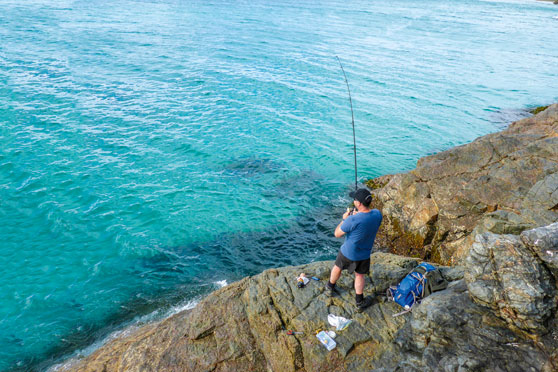
Once a rock fisher is committed to a spot, it’s a lot more difficult to move if the fish don’t play ball, so knowing what terrain your target species prefers, while it doesn’t give you any guarantees, sure helps. This month, for the benefit of rock fishermen, I’m going to cover the preferred terrain of New Zealand’s favourite species – snapper.
Let me start by saying that snapper are a wide roaming and adaptable species. This week I’ve caught golden coloured fish with needle-sharp teeth over the sand and deep-red, kelpy snapper with bumps on their heads and blunt teeth from reefy country. To the uninitiated such contrasting fish don’t even look like the same species!
What is interesting to me as a rock fisherman is that different areas with different terrain tend to produce snapper of different sizes and in varying numbers to others. Listed below are my observations – general patterns I’ve noted over time – and how I draw on them to make decisions about where I fish and what I can expect to catch.
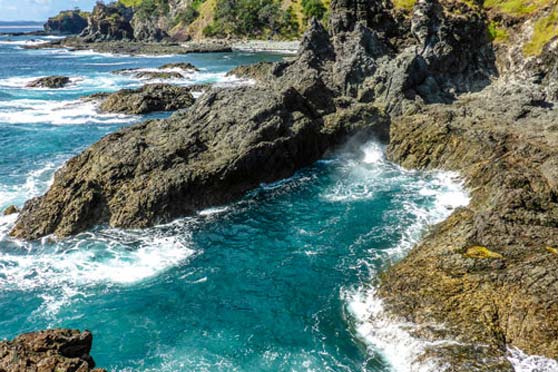
Three classes
Snapper make up around 20% of my catch on an average day’s rock fishing and on some days I might land 20 or so, with the option of catching more had I wanted to.
This is not unusual or particularly difficult in the places I fish, but the bulk of these fish tend to be reasonably small, probably less than 35cm in length. The next class of fish is snapper in the 1-4kg range – what most people would class as ‘pannies’. There are times and places where it is possible to get into good numbers of fish like this.
Fish over the 4-5kg mark are good fish from the shore, and getting better with every ounce! Of course, every Kiwi angler wants to catch a ‘twenty pounder’ (9.1kg). Naturally these bigger fish are harder to come by.
These three broad categories of fish size have different habits in my experience, commonly turning up in different places in different numbers, and it’s this that I want to share. Of course there are exceptions to the rule, but I believe there are some clear patterns.
Many but small
Aside from being the most numerous, small snapper seem to be the most widespread and are likely to turn up anywhere. They turn up in numbers on deep rock platforms in rugged, weedy territory at times, beating all comers to even large stray-lined baits. On occasions it is possible to catch these fish one after the other all afternoon if you put your mind to it.
To help you picture and understand the territory I mean, I’m talking about types with adjacent reef structures, bull kelp, plenty of current and the potential to produce big kingfish and big moocher snapper.
But these small snapper will also turn up in shallower locations with sandy bottoms. I vividly remember fishing over the sand off rocks in eastern Bay of Plenty some years ago and catching small snapper in amongst trevally of similar size, gurnard and some rogue porae. Get the picture?
These small fish can turn up around virtually any type of rock, and assuming you’re a reasonable distance from heavy fishing pressure, they frequently do.
Bigger but scarcer
Fish in the medium-sized category are harder to find. Like their smaller cousins, fish of this size like to school, so where there’s one there’s often more for the rock angler to pick off.
In my experience, snapper of this size, when present in numbers, favour locations with sandy bottoms. Fishing locations with big volcanic rock platforms dropping off onto clean, sandy bottoms (especially in west coast locations) can produce such fish in numbers, ensuring memorable fishing days. You might walk out without a trophy in your pack, but believe me, a morning or afternoon returning 3kg snapper to the water one after the other (and keeping a few for fresh fillets too, mind!) is a day to remember in my book.
In these places the other fish species encountered will probably include kahawai, tope and trevally. Bottom fishing is usually the best way to catch the snapper and sometimes it can be better to hold off on the berley to keep the sharks away. A baitrunner function can be deadly because it allows the fish to position the bait with their first run. Strike hard at the second run to set the hook with the main drag.
These medium-sized fish sometimes turn up in rugged, reefy locations most associated with big moochers, but usually they do so in smaller numbers, or sometimes as individual fish. I believe these fish are imitating their bigger brothers and sisters and are setting themselves up for a life of reef dwelling and developing the deep-red colours to go with it – many are already well on their way to being kelpies.
Such fish are also some of the more aggressive feeders you will see from the rocks, moving high up in the water column and even showing the confidence to chew on the berley bag on occasions.
Moochers
I hear people say that big snapper can turn up anytime, anywhere, but mostly they don’t. When I’m targeting big snapper from the bricks, I look for rugged, reefy territory that is not overly deep.
This last part might surprise some people, but it is true. Really deep current-swept rock platforms where it feels like anything might turn up might get the blood pumping, but these are rarely the best places for big snapper. The most consistent locations are less than five metres deep and surrounded by large complexes of weedy, reefy territory.
My first inkling that this was the best big snapper territory came when fishing alongside an experienced member of the land-based ‘Twenty Pound Club’ on the Coromandel.
Fishing into the some of the most mouth-watering water I’d seen up until that point, we pulled in small snapper one after the other, some not even legal. My companion managed a fish of around 3kg, the best of the day, and big snapper were totally absent. He remarked that his first impressions of the spot were that it was too deep to hold the fish we really wanted.
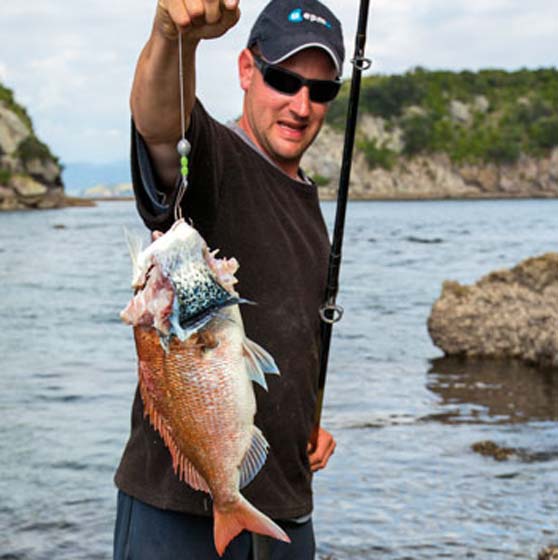
Because these spots are not deep, you will often find that the best fishing occurs during low light periods. However, in untouched locations that don’t experience much fishing pressure or boat noise, low light matters a lot less. One of my favourite shallow water spots is a banker for big fish in broad daylight: I’ve caught them there bang on midday.
Spots with sandy bottoms and expansive areas of sand in the wider area (think of rocky points at the end of surf beaches) seem to produce far fewer big snapper. Some of my favourite west coast rock spots fit this description and regularly produce fish as big as 5-6kg, but the really big fish just don’t seem to turn up.
These are patterns that I’ve observed over years in the places I fish. When I plan a fishing trip or wake up in the morning to consider the conditions, time of year and what I want to catch, this knowledge comes in very handy.
Of course it pays not to get too strict with fish, because they have a habit of not keeping to the script, but I’d rather have a clear picture of what I can expect, where, than leaving it all to chance.
|
|
This article is reproduced with permission of |

Fishing Reports Visit Reports
Outer Hauraki Gulf Fishing Report 17/09/26
Spring wind the handbrake. Spring is starting to make its presence felt in the outer... Read More >
Top of the South Fishing Report - 17/09/26
Early snapper in Tasman Bay. Well, spring is finally here, and the days are getting... Read More >
Bream Bay Fishing Report - 17/09/26
Good snapper catches reported. After Tangaroa turned off the fish tap for a month or... Read More >
Bay of Islands Fishing Report - 17/09/26
Pacific bluefin tuna for the lucky few. The last fortnight has seen more fishable days... Read More >


Friday 25 September 2026
Major Bites
 - -
- - Minor Bites
 - -
- - Saturday 26 September 2026
Major Bites
- - Minor Bites
- -
Comments