
Falling lures for snapper
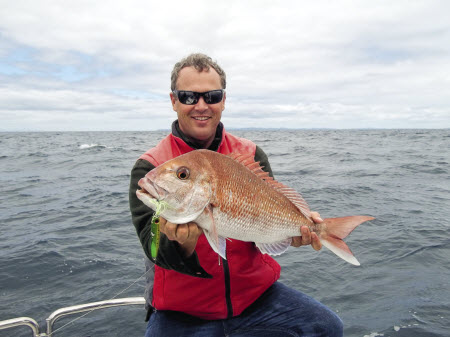 Predators love lures that drop through the water column like dead or dying prey.
Snapper are suckers for falling lures – soft-baits, slow-jigs, inchiku jigs, metal jigs, hard-bodied crank-baits, blades and stick-baits, even saltwater flies – but so are many other species. Kahawai, kingfish, blue cod, trevally, tuna, john dory, mackerel, various tuna species – the list is as long as you want to make it; all hit lures ‘on the drop’.
The more soft-plastics fishing I do, the more convinced I become of the importance of controlling the speed and manner in which my lure drops and then responding to bites while it’s falling.
This is just as true whether I’m fishing behind the drifting boat, dragging my soft-bait along the bottom, or casting up ahead of the boat and working my lure back towards me. It’s also true of fishing with inchiku jigs and, to a lesser degree, with madai slow-jigs (Bay Rubbers, Lucanus et al) or saltwater flies.
True, not all your bites come while the lure is falling – you’ll get bites while retrieving and ‘on the lift’ as well – but the majority come when the lure’s dropping, and it’s quite often the better fish that bite this way.
Fishing shallow
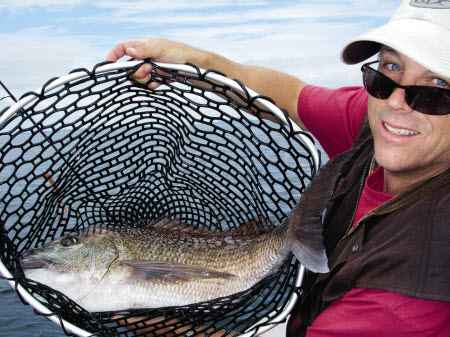 Nearly all my snapper bites come while the lure is falling when fishing shallow water with soft-plastics and saltwater flies. The same thing happens with sinking stick-baits (something I’ve been playing around with a bit lately) and also with blades.
That’s not to say the bite always comes when the lure is making its initial descent. While that happens a lot, especially in really shallow water, bites also come further into the retrieve process, after I’ve given the plastic, fly, stick-bait or blade a few lifts/jerks, pulls or tugs. But the interesting thing is that the bite usually registers as the lure is dropping back again, or sometimes when I lift the rod to manipulate the lure once more (as a solid weight), which probably means I missed the bite as the lure was falling…
Snapper, in particular, seem to prefer to inhale a lure as it drops back towards the bottom rather than chasing it down as it squirts/swims away from them.
For this style of shallow water fishing it’s important not to use too much weight. I use 1/4 ounce or less, depending on the depth, but you can adjust both the size of the bait and the weight of the jig to fine-tune your lure’s sink rate. It comes down to making your lure available to any fish in the vicinity for as long as possible.
If fishing in water only a couple of metres deep, a heavy jig-head is not the best option. It will plummet to the bottom in seconds, and apart from the fact you’ll get sick of replacing snagged lures, the short time it takes to drop to the bottom offers little opportunity for a fish to notice the lure.
Light heads are best for shallow water fishing, but you may need to use more weight in windy conditions, in deeper water, and when the boat’s drift rate is unusually fast. That’s because wind can put a belly in your line, preventing the lure from sinking properly, while a fast drift rate can mean the boat’s already on top of the lure before it’s had a chance to sink. The same thing can happen in deeper water. In such situations a little more weight is in order, or you could try a smaller soft-plastic on the same weight jig-head, which will sink more quickly. Of course the opposite ploy works just as well if you want your lure to sink more slowly: upsize the plastic tail and its greater surface area will ensure it drops at a more leisurely rate.
The same principles also apply when using blades, flies, sinking stick-baits and micro inchiku jigs: heavier lures for windy days and lighter/smaller ones on still days.
Snapper and many other species will engulf anything that’s around the right size and appears to be falling towards the bottom dead or wounded, and my success with stick-baits suggests that lure action is not always the most important factor – but I like my soft-plastics to show a bit of life. At times a bit of wiggle makes all the difference, so I choose lead-head jigs with small hooks – 3/0 or smaller; the shorter shank lengths involved enable my plastic tails to have greater freedom to move around. You still want strong hooks, though.
Deep water too
While fishing lures in deeper water – especially soft-baits and slow-jigs/inchikus – generally requires rather different techniques to shallow-water fishing, many of the bites still come while the lure is dropping. Much of this fishing is vertical or nearly so, and even when the lure is ‘dragging’ behind the drifting boat, giving the soft-bait or slow-jig a lift and drop every now and again can really improve your hit rate.
With soft-baits, it’s almost always while dropping the lure back towards the bottom, or immediately upon tightening up again, that you get bites. When the lure is straight under the boat, once again, most of the bites happen not when you are making the lift, but while the lure is dropping, even if you don’t necessarily realise you’ve been bit until you go to lift the lure again!
When you’re dragging soft-plastics, inchiku jigs or madai slow-jigs, regularly releasing line so the lure falls back towards the bottom is the key to consistent success. In the case of slow-jigs and inchikus (and some soft-plastics), a retrieve through the water column is important too, but pay particular attention to the line leaving your spool when you drop back down again, looking out for bites. Any speeding up or sudden slackening in the line is a bite, so set the hook(s)!
If you’ve selected the right weight for your soft-plastic, you may be able to stay in contact with the bottom for long periods as the boat drifts along. You should feel your lure bumping along the sea floor, hopefully sending up little puffs of sand to catch the attention of any fish grubbing in the bottom nearby. You know your lure is in the strike zone and you will catch plenty of fish this way, but you’ll also experience a lot of pulled and shortened tails and missed bites.
Drop back
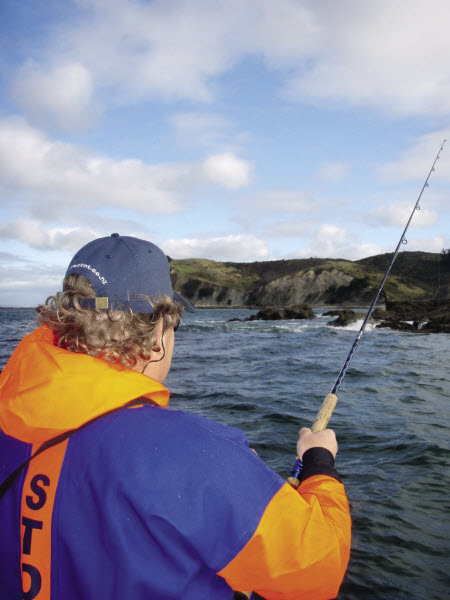 To improve your strike rate, try giving the soft-bait some life with the rod: a few jerks or even a slow lift (good with paddle tails) to bring the soft-bait up off the bottom so it’s more easily seen from a distance, then dropped back by lowering the rod and releasing line from your spool so the lure free-falls back towards the seafloor.
For me, this drop-back technique is the key to successfully fishing lures near the bottom behind a drifting boat for snapper. Carefully monitor your line during the free-fall process and strike if it suddenly speeds up or hesitates. That’s easier to do with a free-spool reel, but you soon learn to clamp your palm over a fixed-spool reel, too – you can sort out how to get the bail arm closed after you’ve hooked the fish! Actually, no matter which reel you use, you develop a sort of sixth sense that tells you when the free-falling lure is very close to the bottom. That’s when you should close the bail arm or engage the thumb/gears and lower the rod tip for the final metre or two of the lure’s descent. Most snapper bites come at this point, or else as the line tightens up, which – as I have already speculated – probably means the fish had the lure in its mouth and you simply missed the bite on the drop…
With a few minor adjustments, the same tricks work well with inchiku and madai jigs, though it’s often worthwhile continuing the slow retrieve through the water column, because snapper (and other species) often bite slow-jigs well off the bottom, both on the retrieve and on the drop.
 |
This article is reproduced with express permission of
written by Paul Senior - 2013 Originally published in New Zealand Fishing News ----- Advertisement -----
|
Fishing Reports Visit Reports
Outer Hauraki Gulf Fishing Report 17/09/26
Spring wind the handbrake. Spring is starting to make its presence felt in the outer... Read More >
Top of the South Fishing Report - 17/09/26
Early snapper in Tasman Bay. Well, spring is finally here, and the days are getting... Read More >
Bream Bay Fishing Report - 17/09/26
Good snapper catches reported. After Tangaroa turned off the fish tap for a month or... Read More >
Bay of Islands Fishing Report - 17/09/26
Pacific bluefin tuna for the lucky few. The last fortnight has seen more fishable days... Read More >


Friday 25 September 2026
Major Bites
 - -
- - Minor Bites
 - -
- - Saturday 26 September 2026
Major Bites
- - Minor Bites
- -
Comments