
Expert Livebaiting Tips

It doesn’t matter how good a lure might be, or a natural dead bait for that matter, they will never truly emulate the real deal – a livebait.
Whether it be one of the popular inshore species – kingfish, john dory, and snapper – or a pelagic – tuna and billfish – they’re all suckers for a well-presented live dinner presented to them on a plate.
While I don’t claim to be an expert on the subject, livebaits have produced some of my most memorable catches – google eyes for sailfish and roosterfish in central America; skipjack tuna for striped and blue marlin both here and overseas; small reef dwellers for giant trevally and dogtooth tuna throughout the Pacific; and on the home front, kahawai, jack and slimy mackerel, tarakihi and scarpies for kingfish, john dory, snapper, and hāpuku. And did I mention less desirable interlopers like bloody sharks?
My personal best kingfish, estimated at just under 40kg (based on a length measurement) was caught off the rocks at Henderson Bay in the Far North, an XOS kahawai doing the business. It was my first time landbased gamefishing and it was in the company of the legendary Wellington guide Pete Lamb. A couple of trips with another of the LBGF gurus, Mark Draper, to Lottin Point and Cape Runaway in the East Cape region, firmly cemented livebaiting in my angling armoury. Watching several kingfish arguing over who was going to get my livebait, set out under a balloon of the bricks, was a thrilling sight firmly etched in my memory banks. It is like a drug, with those addicted needing their regular fix.
Landbased anglers earn their fish, often trekking some distance carrying silly amounts of tackle, bait, and berley to satisfy their cravings. These days I prefer to deploy my livebaits from the relative comfort of a boat – the bigger the better!
.jpg) Livebaits have produced some of the writer’s most memorable catches.
Livebaits have produced some of the writer’s most memorable catches.
One who swears by the power of the livebait is Tightlines Media’s Matt Watson. He places so much importance on having enough livebait for his missions he will fish for them to ensure he has enough on board at the expense of regular fishing time.
“Without livebaits, we are not in the game,” is a mantra I have heard Matt express many times over, and ain’t that the truth.
Former Mangawhai-based charter skipper Tony Orton made a career out of hosting trips to the Mokohinau Islands and had a similar philosophy to Matt. I have seen Tony spend several hours chasing the sometimes hard-to-locate Bream Bay mackerel stocks before heading east to the magical Mokes with just half a dozen baits in the tank. He used to treat them like gold.
In some locations, we have purchased livebaits off the bait boats. Fishing for striped marlin out of Cabo San Lucas, Mexico, our first stop each morning as we left the harbour was to purchase livebaits. When they were scarce you could pay as much as US$2 per bait. To us Kiwis that was outrageous but given the overall cost of a five-day trip to this striped marlin Mecca, it was a small price to pay for what was an almost 100 percent guarantee of success.
And it maximised our time targeting the billfish, not the baitfish, especially on a charter boat where your fishing time was limited to eight hours.
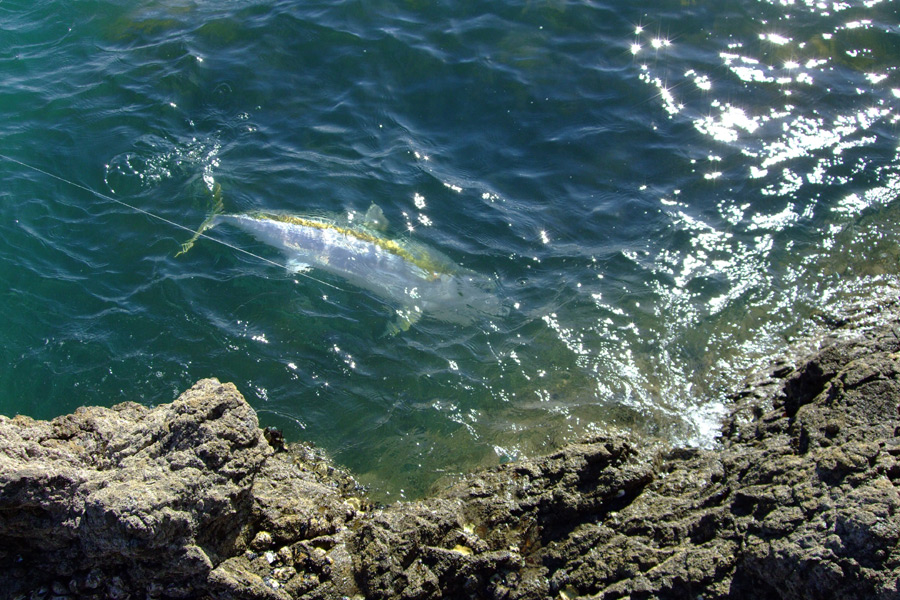 Landbased livebaiting for kingfish can be a thrilling experience.
Whilst plentiful, the Mexican stripies were not big – a 90kg model being a true trophy fish. I have been onboard when all four anglers have been hooked up in the cockpit with the crew casting livebaits to the feeding billfish off the bow. For the skippers It was very much a numbers game, but a huge amount of fun for the anglers on 15kg and lighter tackle!
For this feature, I contacted several prominent anglers and skippers who regularly deploy livebaits as part of the repertoire to get their spin on this productive technique.
Adam Clancey
Adam Clancey from Fishy Business TV has been an avid angler all his life. Livebaiting is one of his go-to techniques for big kingfish. As well as being an accomplished landbased angler for many years, Adam enjoys the challenge of light tackle fishing for kingfish which has seen him win many National championship titles. Piper is his favoured bait when targeting kingfish.
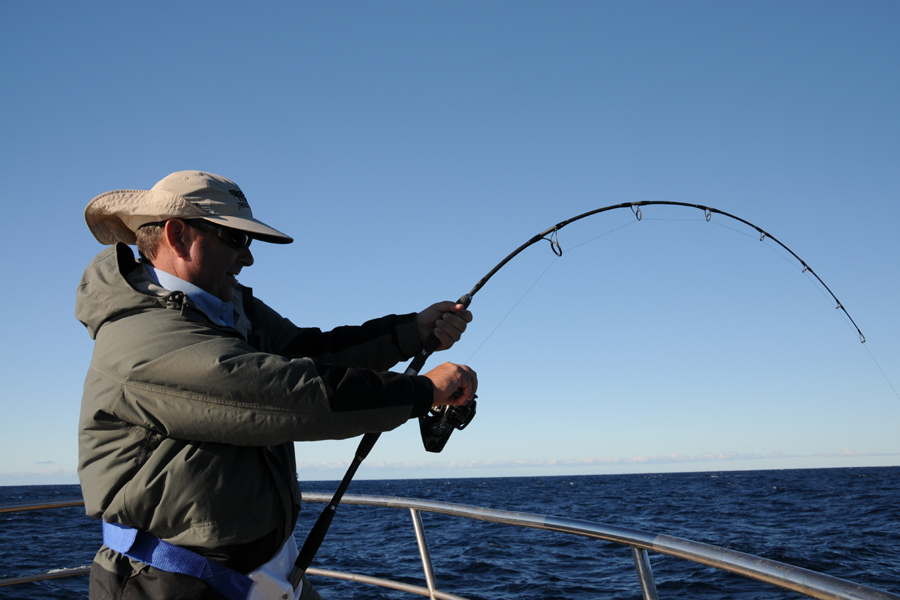
Best bait and how to catch
Kingfish will eat a wide variety of prey but one thing’s for sure they prefer a livebait. Piper (garfish) are definitely very high on the kingfish list of favourite food. These can be caught inshore around jetties and headlands or in harbours, especially where there is plenty of eelgrass. The best way to catch piper is with a good burley trail of bread and oats mixed with some pilchard. The real trick to catching piper is to use a very tiny hook. Size 12 trout hooks are great or pink shrimp sabikis in size 10. Piper prefer a high tide when the current has eased off.
Livebait rigging
The two best ways to rig a piper are either down through the beak if you are trolling it or fishing in a strong current; or just below the anal vent if you are free swimming the piper or have it rigged on a float. Always handle piper carefully when catching and baiting up as they are not as hardly as some other species. Make sure you have some way to keep you livebaits alive. A good livebait tank is essential on a boat and if you are landbased, a bucket with an aerator or small inflatable paddling pool work well.
Location
The three main things to look for in a great livebaiting spot are structure that will attract and hold bait fish; good water movement whether from current, tide or wave action; and the abundance of the right kind of habitat for piper. Most piper live baiting is done inshore in harbour entrances and estuaries with eelgrass or off wharves and rocky headlands.
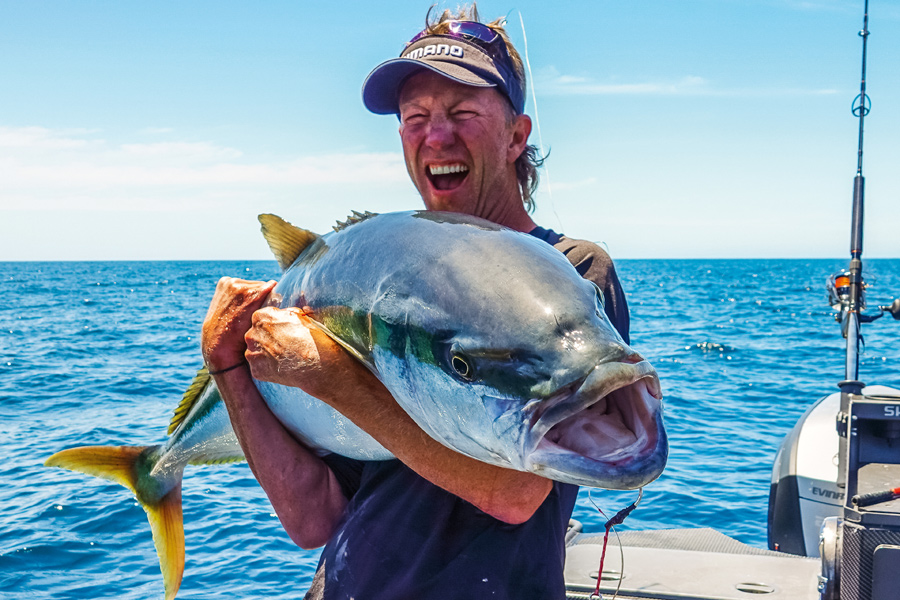
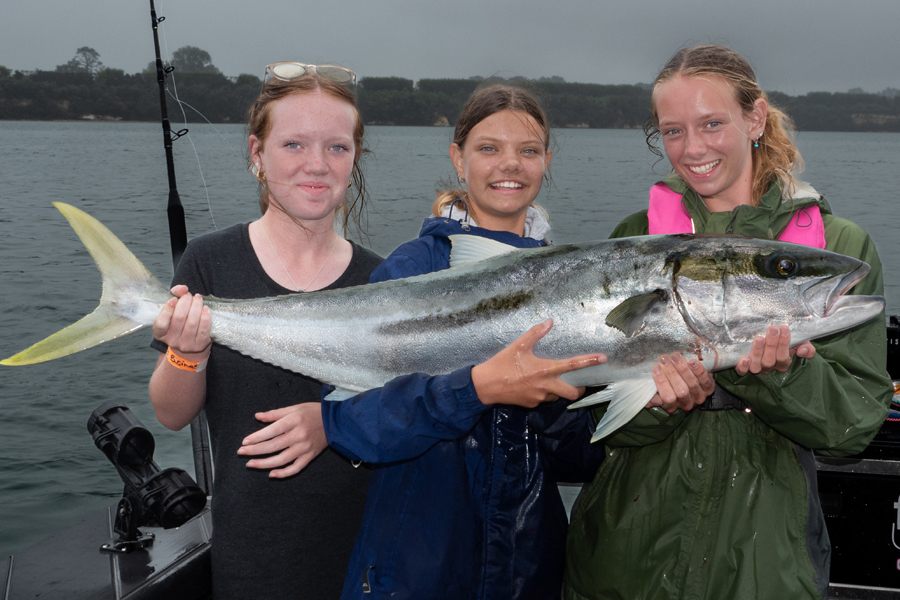 From Tauranga Harbour - this nice kingfish caught on a live piper.
Terminal tackle
When rigging piper you have to use a delicate approach as they are a smallish size live bait. Generally, I fish with no more than two metres of 80lb trace material maximum, secured to the main line with a small, strong ball-bearing swivel.
Hook choice is one of the biggest decisions. The smaller hooks get more bites and are less likely to kill your live piper. The best choice is a 3/0 to 5/0 circle, and if you are fishing heavy mainline then you should use a small but heavy gauge hook that is super strong.
If using a float or balloon keep it small so as not to create too much weight for the piper to drag around. Slow trolling piper at two knots using a downrigger is a very successful technique and will get strikes when other techniques fail.
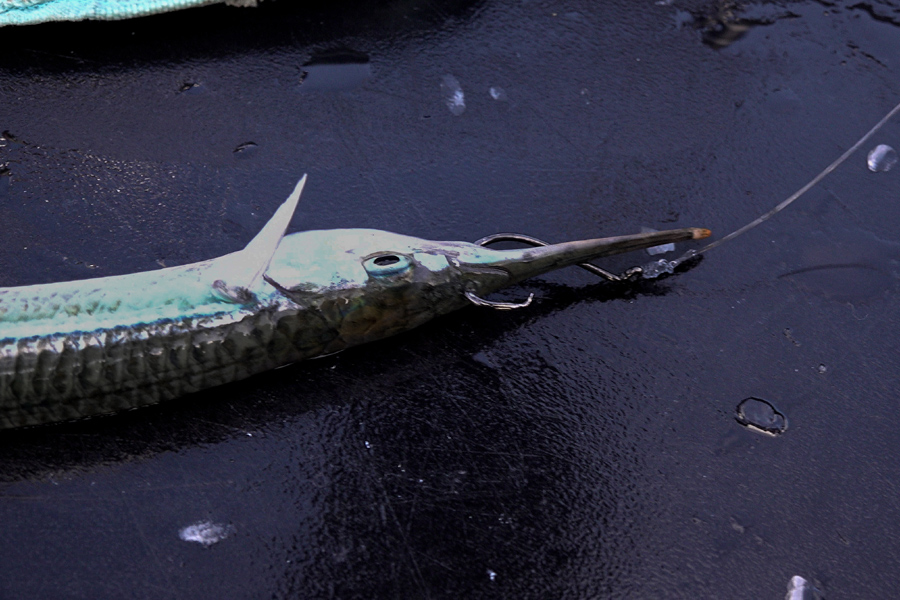 The little silvery piper flash is normally irresistible for kingfish. Hooking up through the beak is the best way to rig a live piper.
Rod and reel
To livebait with piper you need a rod that is around 6’-6’6" long and will fish between 10-24kg line. It should have a bit more flex than a jigging rod. Match this with either a small lever drag reel that can hold 400 metres of your chosen line weight (braid is the best choice for livebaiting) or if you like spinning reels, a bait-feed type option that gives you the ability to free spool your livebait when it gets eaten. My personal choices are the Okuma Tournament Concept X 24-37 652 O/HEAD 24-37KG matched with an Okuma Alijos 12 and 24kg braid and in lighter spinning gear the Okuma Tournament Concept X 702 SPIN 6-10KG matched with the Okuma Coronado 80 Baitfeeder with 10kg braid.
Eric Wong
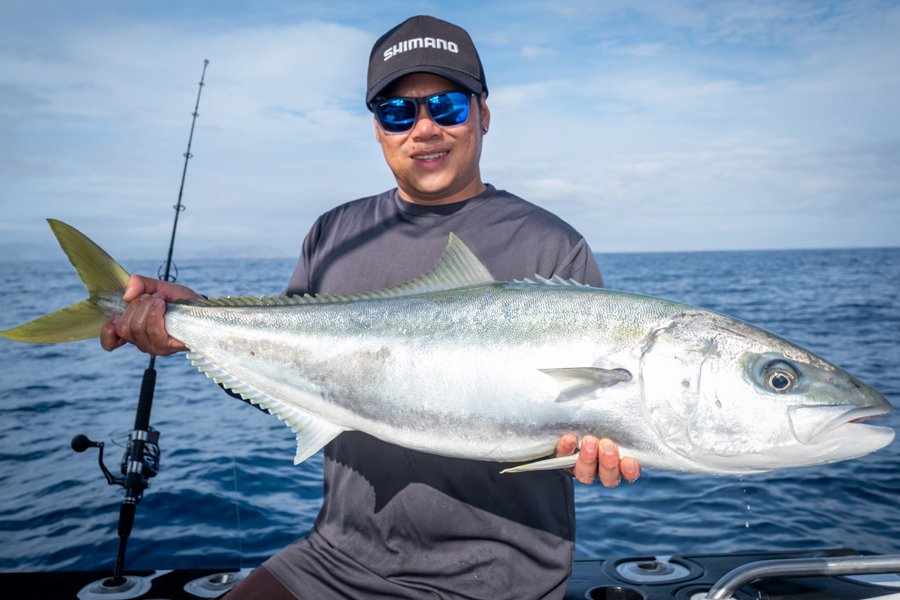
Auckland angler Eric Wong was born in Malaysia where sailfish are one of the most targeted recreational species and the use of livebaits features prominently. He grew up in a family of hunter/fishers and gatherers, the lifestyle in his country of birth being like that enjoyed by many Kiwis. Arriving in New Zealand aged five, Eric like many Kiwi kids started fishing with his dad, uncles, brothers, and cousins. He and the family had to quickly adapt to the different fisheries and angling styles. His dad, who is known in the surfcasting community as the ‘Trevally Whisperer,’ did not take long to figure out the new rigs, baits, and locations.
As the years went by, Eric was exposed to a range of adventures with his dad and other like-minded fishers, starting from rock fishing followed by boat fishing. His passion saw him explore many options, starting with straylining and then lure fishing for bigger pelagics. Livebaiting for kingfish now features high on his list of go-to techniques. Eric works in the tackle trade as a regional representative for Shimano NZ.
Best bait and how to catch
The most common livebait I use is jack mackerel. They are easily found early in the morning if you know where to look. My favourite haunts include structures such as channel markers and over foul where I will drop or cast sabikis for them. Most sabikis come with six flies. I like to cut these into two rigs of three flies each, with a 3–4-ounce clip-on sinker at the bottom. These shortened rigs are easy to handle and less likely to tangle.
Another favourite livebait is koheru. A little bit more difficult to find and catch, koheru are kingfish candy so are worth the effort to get. I look for little reefs, anchor on the up-current side, and get a berley trail going with some chum. Once you get them around, the best outfit is your softbait rod with a very small hook and a little bit of bait. Before putting your bait in the water, mush up some pillies to create a mini chum trail and drop your offering in with it. Koheru are great scrappers, but they have a soft mouth, so using a net to secure them is advisable. They can at times be suckers for a small jig, too.
Livebait rigging
There are many ways from using rubber bands, bridle rigging and straight through the nose. My favourite quick and easy method is the nose job. If the fish are on the bite and you lose a bait, you can quickly get back into the game. Kingfish like to chase fresh, active baits.
Location
Current, bait and structure are the three key ingredients. Kingfish are usually found in high current or tidal environments with underwater structures, reefs, and pinnacles.
Bait schools are also another giveaway as kings will follow these closely, picking out the weakest one in the school. A well-presented livie run just outside the bait school will increase your hookup rate as it will be seen as easy prey.
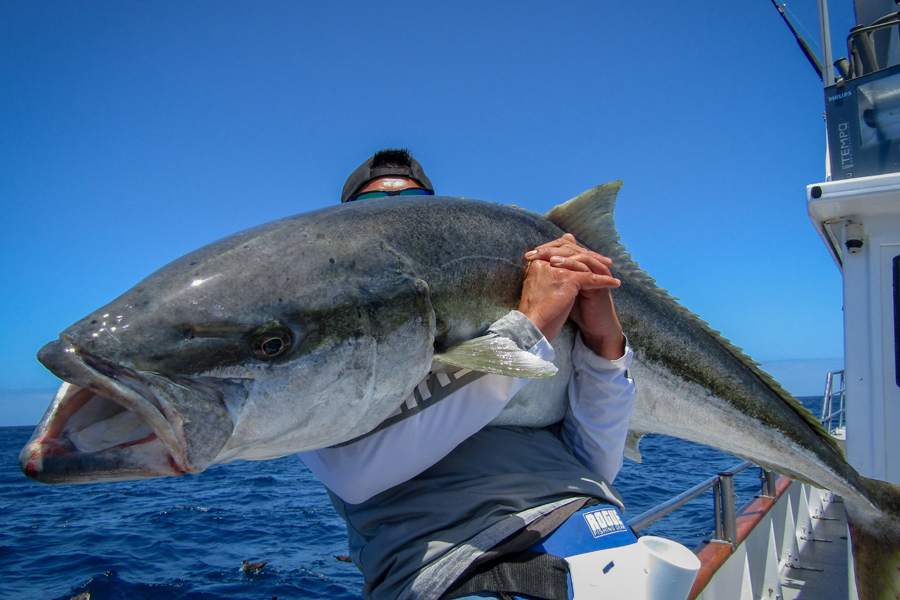 Eric’s PB kingfish from the Three Kings Islands.
Terminal tackle
Buy the best gear you can afford; it is worth paying the extra dollars for something that will last that extra mile. I use Shimano Ocea fluorocarbon with BKK livebait hooks – I have yet to have one of the latter bend out or break. In the Hauraki Gulf where the fish average around 10-15kg, my braid to mono will be 80-100lb with 120lb fluoro trace. I step it up a little for the outer Gulf with 140-150lb leader in anticipation of larger specimens or the possibility of a billfish. The leader is attached to the mainline via NT swivels. Keep the rigs simple – mainline, sinker, swivel, trace, and hook. There’s no point over-complicating the terminal tackle.
Rod and reel
I have always been a spin reel fan; it is what I grew up with. I have tried to fish with an overhead reel, but it feels wrong to me. My current setup is a Shimano Twin Power 10000/Game Type J PE8 rod with PE6 Ocea8 braid 102lb/46kg, a combination that has plenty of stopping power. The reel has up to 25kg of drag and the rod strong enough to deal with those trophy kingfish. There is that saying, ‘Never take a knife to a gunfight.’
With the spin reel, I preset my drag and when slow trolling I have my bail wire open and braid held by my fingers. On the bite, I count down from five, flick the bail wire over, and wait until the tension loads the rod and sets the hook.
Darren Knapping
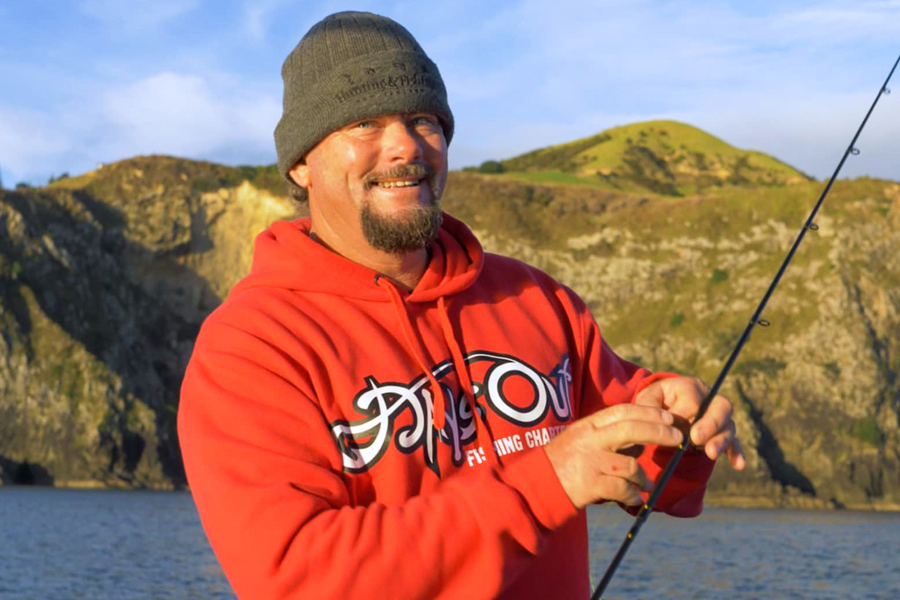
Darren Knapping is a Bay of Islands-based charter boat owner and operator, running an Extreme 885 Centre Cab Days Out II from which he puts his clients onto a range of popular species – kingfish, ‘puka, and snapper – with livebaiting his go-to technique for all three. He is particularly well known for putting his clients on PB snapper. A quick look at his Facebook page will attest to this. Darren has worked for other charter companies in the Bay of Islands for 15-20 years. Before this he was in the commercial fishing industry, targeting tuna and snapper on commercial longlining boats.
Best bait and how to catch
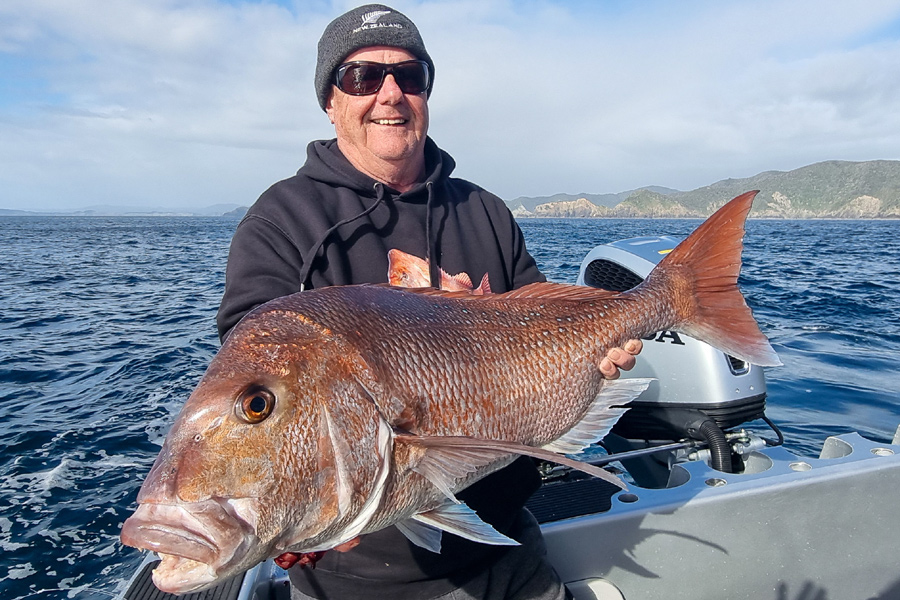
Jack and slimy mackerel, live pilchards or small kahawai are all great snapper livebaits. These can be caught in bays and estuaries, sometimes requiring a little strip of bait on the sabikis to sweeten them up – squid works well. Hook sizes #10-#14 work great for our area (and most others as well).
Livebait rigging
There are many ways you can rig your bait – nose hook if trolling or casting, or as a livebait for big snapper with the main hook set in the shoulder. A double hook rig works well with the second hook attached close to the back tail spine or anal vent. You can control your livebait’s depth by clipping either the top or the bottom of the tail, depending on whether you want it swimming near the surface or down deeper.
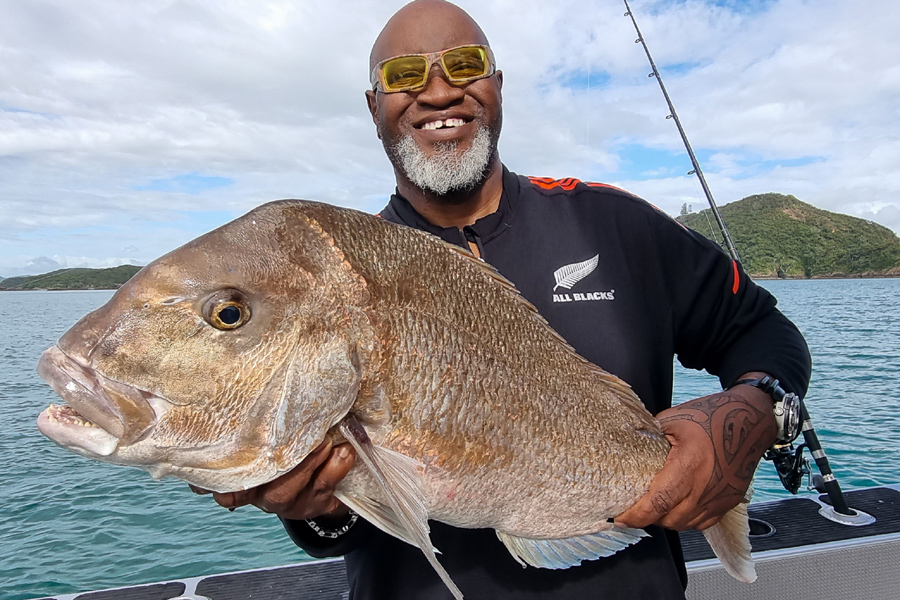 Big snapper are suckers for livies.
Location
Up in ‘The Bay’ (Bay of Islands) there is a great deal of structure and current with attendant trevally and kahawai. The gutters and kelp give snapper a safe place to hunt and stay hidden from any predators. Gannets are also a great sign, and you can find some bigger fish hanging on the edges of the bait schools.
Terminal tackle
I mostly fish 10kg mono mainline, but if out in the deeper water or in the shallow reefy areas I prefer sturdier 15kg mono. I match 30lb trace with 10kg mainline, or 60lb with 15kg. The reason for using the heavier trace is many of my clients do not have the knowledge, techniques, or experience to fish lighter terminal tackle. It gives them a better chance of catching their dream fish. Sinker weight depends on tide flow and depth, remembering always to keep your bait as natural as possible.
My hook preference is either a recurve or full circle in sizes 8/0-10/0. This style of hook is designed to catch in the mouth, making releases more successful. A hell strike is not required to attain the hookup, but rather the reverse – wind down on the fish to take up the slack and roll the hook into the corner of its mouth.
Rod and reel
A good combo for charter work is a Shimano Baitrunner 8000 or 12000 on 15kg Shimano Vortex rods. The Baitrunner function, as the name suggests, is ideal for livebaiting as it allows the snapper time to run with and eat the bait before the handle is turned to set the hook.
Matt Watson
One Kiwi angler that needs little introduction is the Bay of Island’s Matt Watson. The creation of a short video as part of a Lion Red promotion was the launching pad for a stellar career in the fishing media. For the next 20 years, Matt dedicated his life to bringing us the very best of recreational fishing footage using innovative filming techniques to produce the ‘money shots’ shared on The ITM Fishing Show. Today Matt is still doing what he loves, but on a slightly different platform - ultimatefishing.tv – which specialises in a wide range of ‘how-to’ and destination-style material.
Best bait and how to catch
Blue koheru are easily the best livebait. Typically, you catch them first thing in the morning using berley and a wee jig. You need good clean water and a drop-off nearby. If you cannot be bothered putting in the work to catch blue koheru, jack mackerel caught on a string of sabikis will work fine.
Livebait rigging
Here are several ways you can do this but my go-to is a bridle rig with a #32 rubber band.
Location
If I am dropping my baits down, I am looking for baitfish sign on the sounder in mid-water, or even above. So, in 90 metres, if the bait is pushed up to 40 metres, I am getting confident of a bite. And of course, I am looking for kingfish on the sounder too. We have a video that shows what I am looking for on the sounder at ultimatefishing.tv
Terminal tackle
Simple is good – 1.5 meters of 100lb fluorocarbon leader, with a circle hook snelled on.
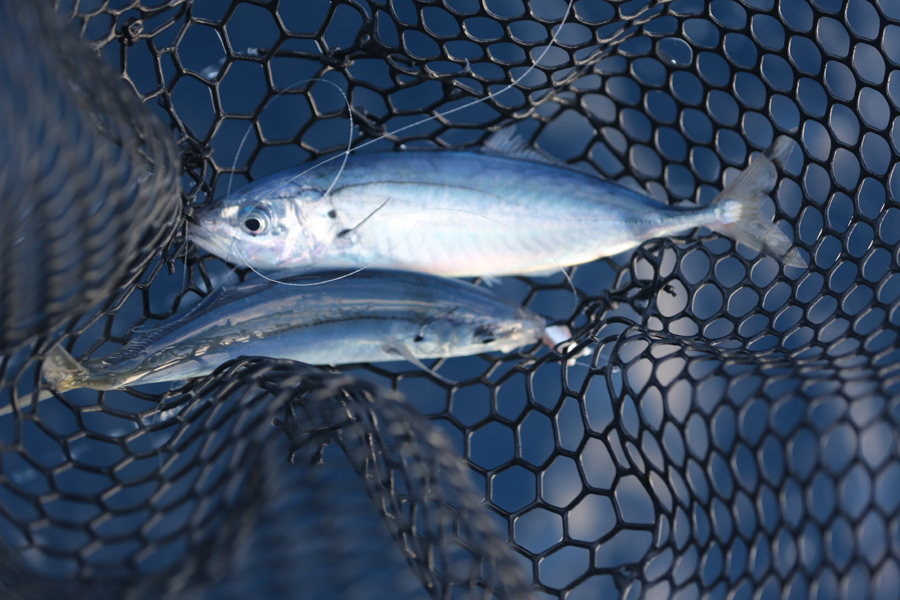 “Blue koheru are easily the best livebait,” says Matt.
Rod and reel
A Shimano Talica 12 with PE6 multi-colour braid mainline, to which I add 10 metres of hollow-core braid which acts as another 10-metre section of colour. To this, I splice on a top shot of 40 metres of 80lb mono. From there I tie a bimini twist or a plait so I can add a 150lb wind-on leader. After that goes my swivel, leader, hook, with optional sinker that runs on the wind-on leader above the swivel. It sounds like a complicated setup, and it is.
Mono is way better for livebaiting than braid, the trouble is you cannot judge your depth with mono when fishing in the deep. With this setup, I can drop a livebait and know I am at 40 metres when I get to the hollow braid, and then I just count the colours. Forty metres of mono is enough to give you the benefits of the stretch for a cushioning effect, but not so much you cannot feel what is going on if you were to fish a full spool of mono. I can also troll a livebait on the surface with no sinker, which I usually set about 20 meters back, and I am fishing straight mono, which is what you want in the shallows where fish can more easily go to ground.
I have a full step-by-step on how to set this up. It is a bit of upfront time to get the tackle set up, but you have the best all-round kingfish set once you are done.
- Grant Dixon
Fishing Reports Visit Reports
Outer Hauraki Gulf Fishing Report 17/09/26
Spring wind the handbrake. Spring is starting to make its presence felt in the outer... Read More >
Top of the South Fishing Report - 17/09/26
Early snapper in Tasman Bay. Well, spring is finally here, and the days are getting... Read More >
Bream Bay Fishing Report - 17/09/26
Good snapper catches reported. After Tangaroa turned off the fish tap for a month or... Read More >
Bay of Islands Fishing Report - 17/09/26
Pacific bluefin tuna for the lucky few. The last fortnight has seen more fishable days... Read More >



Friday 25 September 2026
Major Bites
 - -
- - Minor Bites
 - -
- - Saturday 26 September 2026
Major Bites
- - Minor Bites
- -
Comments