
Dapping
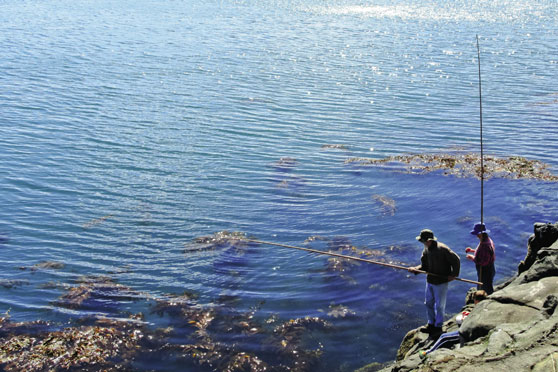
Greg Morton stumbles across an old and interesting technique that awakens memories of his own.
The fishing term ‘dapping’ involves letting a baited hook or fly fall gently onto the water, with the line itself mostly kept off the water. It is usually applied to dry-fly fishing.
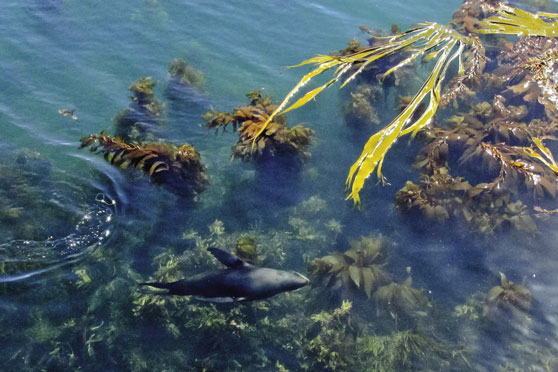
Recently I was intrigued to see a sea-fishing husband and wife fishing in this manner using long bamboo poles without reels. The location was the Moeraki Peninsula located in North Otago. This destination is famous for having a healthy population of yelloweyed penguins, several blue penguins, a large population of fur seals, and lots of nesting seabirds.
At certain times of the year land-based anglers target salmon here, as well as reef and kelp fish year round. Snorkel divers can do well too when conditions allow, with the main target being the greenbone (butterfish) that inhabit the abundant kelp. It is a noisy place, with screeching birds, crashing waves and bellowing seals.
 My wife and I had parked up at the lighthouse car park and wandered down the track to see the returning penguins. With that mission achieved, I noticed several people fishing, so strolled over to see how they were faring. The mainstream anglers using long casts, sinkers and ledger rigs were failing badly, the snags and kelp eating their gear at an alarming rate. It was the older couple with the bamboo rods who were doing best. Each rod was at least four or five metres long, and attached to each rod tip was a short length of limp line ending in a baited hook. There was no sinker. The bait came out of a large white bucket, which I imagine held sea worms, some type of small shellfish or perhaps bait suited to greenbone.
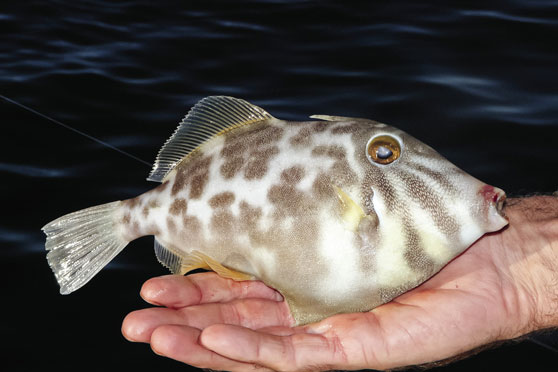
The technique was simple but very effective. Reach out with the long pole and dap the bait into clear patches of water amongst the kelp beds that covered the shoreline. Over an hour or so I saw them catch about ten fish, most small, but the occasional one was definitely an eater. Species landed included spotties, leatherjacket, wrasse and one that looked like a greenbone. The rod-and-reel brigade fishing nearby caught nothing.
Both long-pole anglers were continuously busy teasing fish in the open patches, creating a sense of competition amongst the fish that lived there. The long rods allowed them to change spots at will, dapping for a minute or two and then moving. I heard them say to a neighbouring angler that the fishing was slow, so obviously on a good day they do even better.
Fishing doesn’t always have to be hard, and I imagine this couple had imported the technique from their European homeland. The rods were aged and bent, very unwieldy, but effective – and, later in the carpark, I saw them tie the long poles down the side of a quite ancient car and head home like a knight with lances poking out in front.
So what is dapping?
Apparently dapping a fly on the water is an old, well-proven way of fishing – it is said by many that dapping is the purest form of dry-fly fishing, dating back to ancient Macedonia. John Bailey, in an article on dapping, described it this way: Dapping is traditionally associated with the big Irish loughs [lakes] in the spring when the mayflies are up. Boats drift with the wind across comparatively shallow, rocky ground where the mayflies proliferate. Long rods are used, along with silk lines that catch the breeze. At the end of the leader, live mayflies are commonly attached to a hook, or failing that, imitative patterns are used.
Tony Bishop, in another article on fly-fishing, stated there are three keys to dapping a fly:
- First, there must be a good breeze blowing.
- Second is the use of a dapping line – a silk or silk substitute line that is braided so that it is flat. This line is around six metres long, and this is attached to braided mono backing.
- Third, the key is to use a long rod, five or six metres or more. There are rods made specifically for dapping.
Thinking back on my own fishing experiences, I realised I had fished in a modified dapping way to catch Canterbury sea fish. The difference is that I used mono line and reels. The coastline around Banks Peninsula is very snaggy and, like Moeraki, can have lots of kelp adorning the rocks. Most anglers target red cod, kahawai and shark species out in the bays, but lose a lot of gear in the process.
 I often took a couple of my children fishing off the rocks when conditions were calm, and found the fishing they enjoyed most was chasing the more numerous, though smaller, seaweed fish right under our feet. To catch them, it was necessary to dispense with the sinker and repeatedly dip a suspended hook near the seaweed. Alternatively, a float could be used. A long rod helped to place the bait where it was wanted.
The bait we used was crushed mussel off the rocks, as I guessed this was a food the local fish often targeted. The broken shells were also thrown in as berley. It worked well, and the kids landed yelloweyed mullet, leatherjackets, spotties, wrasse and even small kahawai. From an eating point of view the catch was meagre, with the leatherjackets probably the pick of the bunch. Wrasse were the most enthusiastic scrappers.
It was all about happy kids, cheap bait and no lost gear.
|
|
This article is reproduced with permission of |

Fishing Reports Visit Reports
Outer Hauraki Gulf Fishing Report 17/09/26
Spring wind the handbrake. Spring is starting to make its presence felt in the outer... Read More >
Top of the South Fishing Report - 17/09/26
Early snapper in Tasman Bay. Well, spring is finally here, and the days are getting... Read More >
Bream Bay Fishing Report - 17/09/26
Good snapper catches reported. After Tangaroa turned off the fish tap for a month or... Read More >
Bay of Islands Fishing Report - 17/09/26
Pacific bluefin tuna for the lucky few. The last fortnight has seen more fishable days... Read More >



Friday 25 September 2026
Major Bites
 - -
- - Minor Bites
 - -
- - Saturday 26 September 2026
Major Bites
- - Minor Bites
- -
Comments