
Crossing a bar - important points
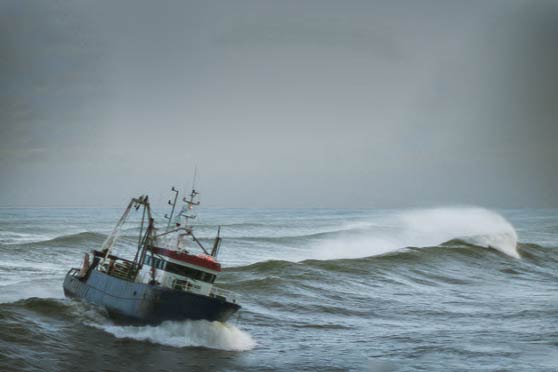
There’s no such thing as good luck when it comes to crossing bars. Check out this recent instructional video from NZ Coastguard:
Think of bars as underwater hills, for that is what they are. Formed over many years, they are a combination of sand, silt and mud which hs washed down a river to its coastal entrance. Swells moving in from the sea hit these mounds, causing them to break as crashing waves or swells that can be amazing to look at – from a distance. Up close, these waves create a potentially dangerous situation for any vessel crossing them. Another danger lies in the ever-changing shape and location of the channel through the bar. It can change rapidly, even in the space of a day.
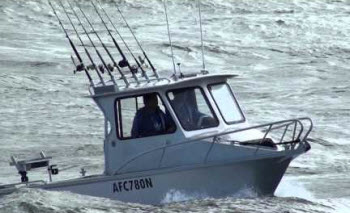 A good skipper should possess a specific knowledge of the bar he or she is crossing, as well as a working knowledge of bars in general. That means being able to interpret the conditions sensibly and objectively.
The skipper who does not assess the conditions of the bar, the weather or the sea state is literally risking life and limb in attempting a crossing.
Before you leave
• Talk to those who know about the bar – the locals, fishermen, local coastguard, game fishing clubs or boating clubs.
• Check the weather forecast. Find out the state of the tide for the times that you intend to leave and return.
• Have a look for yourself. Walk down along the seawalls or beach head and inspect the bar and surrounding water at low tide.
• Give your boat engine a routine check.
• Any water in the bilge should be pumped out. It can affect the stability of your craft.
• All moveable equipment such as anchors, fuel tanks, batteries and oars should be stowed away or securely lashed.
• A LIFEJACKET must be worn on bar crossings. In fact, they should be worn at all times.
• Tell someone where you are going and when you expect to be back.
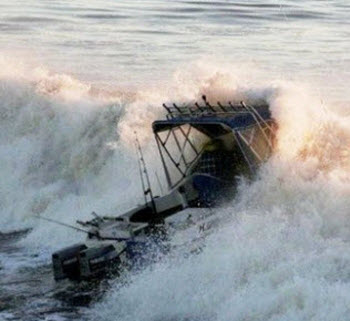 Before you cross the bar
• Run your boat inside the bar for about 10 minutes. It'll give you a feel for the crossing you're about to make.
• Perform some tight turns to test the steering mechanism. Throttle back and accelerate quickly to test performance.
• Close and secure all hatches, including the anchor hatch.
• Assess whether a bar crossing is possible and if so, the best route to take.
• Only come in or go out over a bar on a slack tide. Where necessary, or if uncertain, wait inside or offshore until the tide has turned.
• Once you have committed your craft to crossing, you have little choice but to continue. Turning back may result in disaster
Going out
• The trick is to inch your way down to the action: hold station for as long as it takes to get your bearings and pick up the rhythm of the waves. Don't hang around. Once committed, tough it out and never back out halfway through!
• When you see the opening, apply the throttle and run through.
• If a big wave rears up unexpectedly, get the boat’s bow up fast and hit the wave at an angle of about 10 degrees off head-on with sufficient throttle. Once through, back off the throttle and work out your approach to the next wave.
• Always look for the lowest point of the wave, the saddle, and be prepared to alter course early, to cross the wave at that point.
• Be careful when applying power in the frothy residue of the breaking waves. If cavitation and loss of power occur, back off the throttle until cavitation stops and re-apply power gradually.
Coming in
.jpg) • If in doubt, don’t do it. Wait it out.
• If in doubt, don’t do it. Wait it out.
• If a bar is in a dangerous condition, the best advice is not to cross it.
• The golden rule for crossing a bar is to do it at slack tide – this is usually at the height of a low or high tide. This is the safest time for crossing bars. Avoid mid-tide.
• Move up as close as conditions allow and pause for a few minutes to study the waves.
• Inch up behind the first set of breakers, pick the biggest wave coming through and, as it slides under your boat (remember you have been sitting just off the breaker line), accelerate behind the wave, holding the boat about halfway up its back. Always concentrate on keeping your craft on the back of the wave.
• In a small runabout, everyone else should be on the floor along the centreline, wearing their lifejackets. Make sure the boat is trimmed to run bow up and, above all else, be as ready to slow down as you are to accelerate.
General boating tips
Weather
Before you set off, check out the weather forecast. Watch out for expected changes in the weather and the sea conditions. It may be fine when you go out over the bar, but later the bar might be impossible to cross due to a weather change. Wind against tide produces a rougher sea and remember that afternoon sea breezes on a hot day will cause an off-shore wind and may change the conditions.
Know the area
If the bar becomes impossible to cross when you return from your trip, it is important to know of alternative launching areas where you can land your boat and crew safely.
 Know your boat
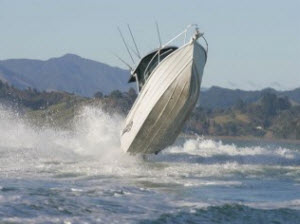
Is the design of the boat suitable for taking out over a bar? It should be capable of 20 knots or more. Does it have a self-draining cockpit? Canopies or windscreens should be strong enough to take the weight of a breaking wave. Always carry fuel in reserve in case you have to head to another location or wait outside.
Alchohol
Alcohol and boating is a lethal brew. It will impair your judgement when you need it most.
Radio
Many bars are monitored by Coastguard Radio. Listen to these stations for information on weather and sea conditions, and also to the conversations of other vessels intending to cross the bar.
Remember...
- Seek out local advice through a fishing or boating club, local fishermen, or the local Coastguard.
- Look for alternatives to making a dangerous crossing such as: staying offshore until the tide turns; travel to another port or entrance; anchor out overnight.
- Always wear your lifejacket.
- Time your crossing of a bar with a slack tide.
- Always tell someone where you are and when you expect to return.
A Blast From The Past!
|
February 1998 - John Eichelsheim |

Fishing Reports Visit Reports
Outer Hauraki Gulf Fishing Report 17/09/26
Spring wind the handbrake. Spring is starting to make its presence felt in the outer... Read More >
Top of the South Fishing Report - 17/09/26
Early snapper in Tasman Bay. Well, spring is finally here, and the days are getting... Read More >
Bream Bay Fishing Report - 17/09/26
Good snapper catches reported. After Tangaroa turned off the fish tap for a month or... Read More >
Bay of Islands Fishing Report - 17/09/26
Pacific bluefin tuna for the lucky few. The last fortnight has seen more fishable days... Read More >


Saturday 26 September 2026
Major Bites
 - -
- - Minor Bites
 - -
- - Sunday 27 September 2026
Major Bites
- Minor Bites
 - -
- -
Comments